




Table of Contents
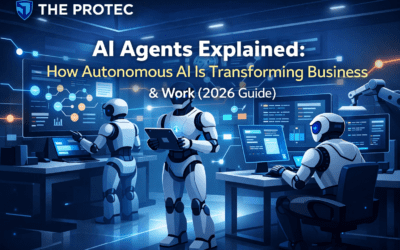
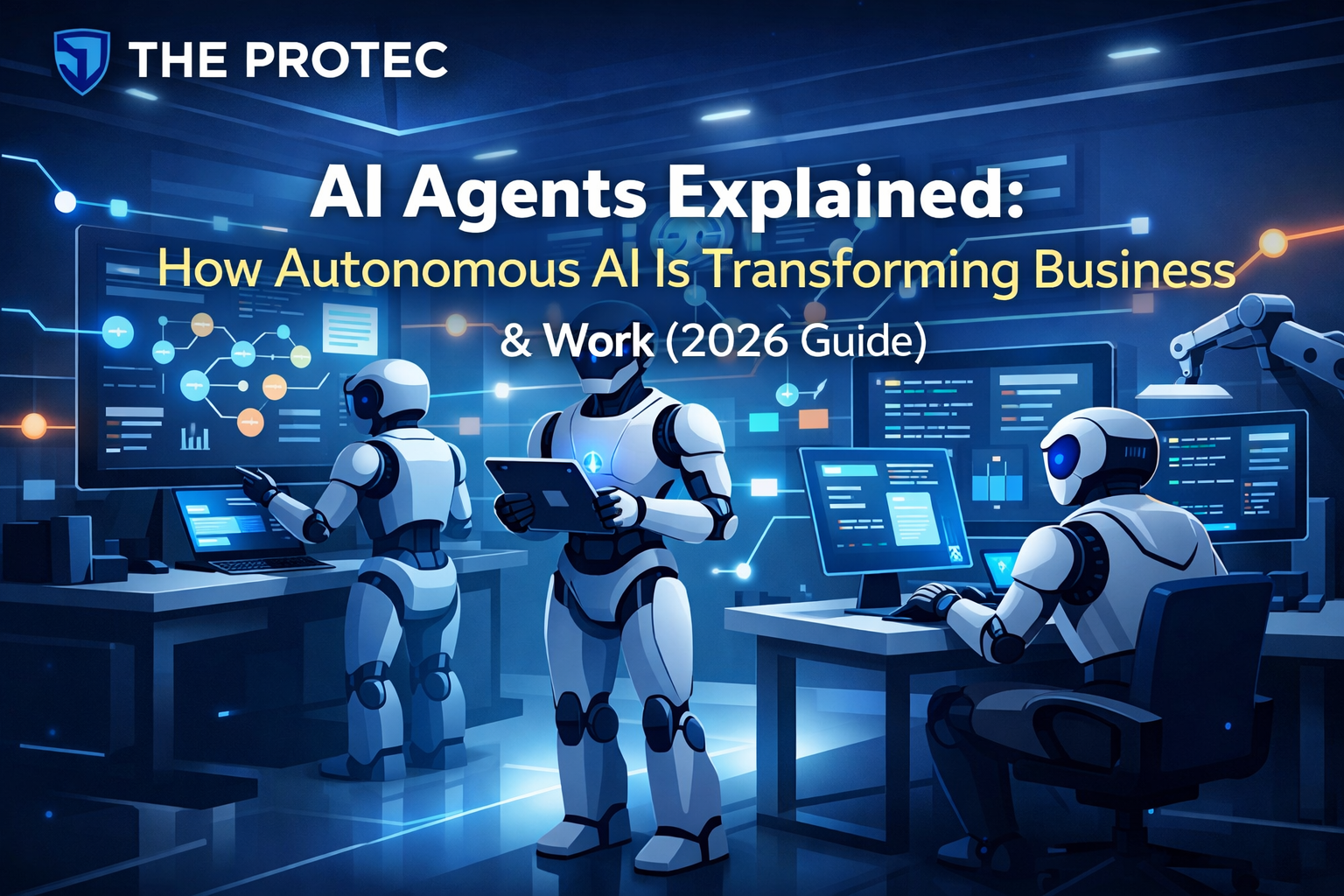
Artificial Intelligence is evolving rapidly. However, the biggest shift in 2026 is not just smarter AI — it is autonomous AI agents.
Unlike traditional AI tools that wait for commands, AI agents can think, plan, and act independently. As a result, they are transforming how businesses operate, how developers build systems, and how individuals manage daily tasks.
In this guide, you will learn what AI agents are, how they work, and why they are becoming one of the most important trends in modern technology.
What Are AI Agents?
AI agents are intelligent systems that can perform tasks autonomously. In other words, they do not just respond to prompts — they make decisions and take actions based on goals.
For example, instead of asking AI to write a single email, you can assign an AI agent to manage your entire inbox. It can read messages, draft replies, and even prioritize important conversations.
Therefore, AI agents act more like digital assistants rather than simple tools.
How AI Agents Work
AI agents operate using a structured workflow. First, they understand a goal. Then, they break it into smaller tasks. After that, they execute those tasks while adapting based on results.
This process usually includes:
- Goal understanding
- Task planning
- Execution using AI tools
- Continuous learning and improvement
As a result, AI agents can handle complex workflows without constant human input.
Key Features of AI Agents
- Autonomous decision-making
- Multi-step task execution
- Integration with tools and APIs
- Real-time adaptation
- Continuous learning
Because of these features, AI agents are far more powerful than traditional chatbots.
Real-World Use Cases of AI Agents
AI agents are already being used across multiple industries. For instance:
1. Business Automation
Companies use AI agents to automate customer support, manage emails, and handle repetitive tasks. Consequently, teams can focus on strategic work instead of routine operations.
2. Content Creation
Bloggers and marketers use AI agents to generate content, optimize SEO, and manage publishing workflows. If you are interested in content automation, you can explore our guide on AI tools for content creation.
3. Software Development
Developers use AI agents to write code, debug applications, and even build entire projects. As a result, development cycles become faster and more efficient.
4. Data Analysis
AI agents can analyze large datasets and generate insights automatically. Therefore, businesses can make faster and more informed decisions.
AI Agents vs Traditional AI Tools
| Feature | AI Agents | Traditional AI |
|---|---|---|
| Autonomy | High | Low |
| Task Handling | Multi-step | Single-step |
| Learning Ability | Continuous | Limited |
| Human Input | Minimal | Required |
Clearly, AI agents offer more advanced capabilities compared to traditional AI systems.
Tools Powering AI Agents
Several platforms are enabling AI agent development. For example:
- Google AI Studio
- Google Gemini AI assistant
- Open-source frameworks like LangChain
These tools allow developers and businesses to build intelligent systems quickly and efficiently.
Benefits of AI Agents
- Increased productivity
- Reduced operational costs
- Faster decision-making
- Improved accuracy
- Scalable automation
As a result, organizations adopting AI agents gain a competitive advantage.
Challenges and Limitations
Despite their advantages, AI agents also have challenges.
- Data privacy concerns
- High computational requirements
- Dependence on accurate data
- Risk of incorrect decisions
Therefore, proper monitoring and ethical use are essential.
Future of AI Agents
The future of AI agents is promising. In the coming years, they will become more intelligent, more personalized, and more integrated into everyday life.
Moreover, AI agents will collaborate with humans instead of replacing them. As a result, productivity and innovation will reach new levels.
Final Thoughts
AI agents represent the next evolution of artificial intelligence. Unlike traditional tools, they do not just assist — they act.
If you want to stay ahead in technology, understanding and using AI agents is no longer optional. Instead, it is a necessity in the modern digital world.
Frequently Asked Questions
What is an AI agent?
An AI agent is a system that can perform tasks autonomously by understanding goals, planning actions, and executing them without constant human input.
How are AI agents different from chatbots?
Chatbots respond to prompts, while AI agents can plan, act, and complete multi-step tasks independently.
Are AI agents useful for businesses?
Yes, AI agents help automate workflows, reduce costs, and improve productivity across different industries.
Can beginners use AI agents?
Yes, many tools like Google AI Studio and Gemini make it easy for beginners to start using AI agents.
If you want to explore practical AI content automation, check our guide on
AI tools for content creation .