










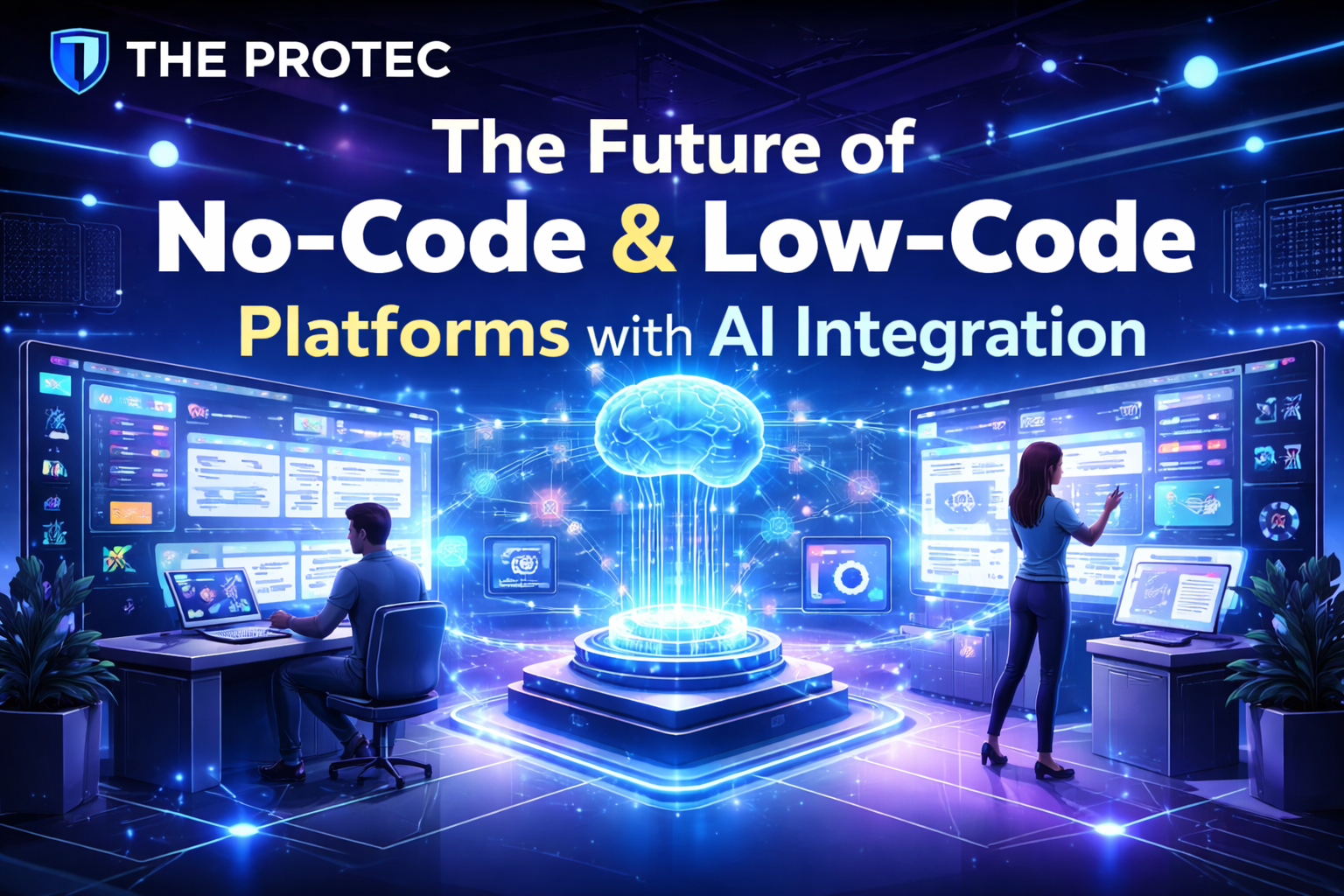
Technology is evolving at an incredible pace. However, one of the biggest shifts in recent years is the rise of no-code and low-code platforms combined with artificial intelligence.
In the past, building applications required deep programming knowledge. Today, that is no longer the case. With no-code and low-code tools, anyone can create apps, automate workflows, and launch digital products without writing complex code.
Moreover, AI integration is taking these platforms to the next level. As a result, businesses and individuals can build smarter solutions faster than ever before.
In this guide, you will learn how no-code and low-code platforms work, how AI is transforming them, and what the future holds.
What Are No-Code and Low-Code Platforms?
No-code and low-code platforms are development tools that allow users to build applications with minimal or no programming.
- No-code platforms require zero coding and use visual drag-and-drop interfaces.
- Low-code platforms allow some coding for customization while still simplifying development.
Therefore, these platforms make app development accessible to a wider audience, including non-developers.
Why No-Code and Low-Code Are Growing Rapidly
The demand for faster digital solutions is increasing. At the same time, there is a shortage of skilled developers. Because of this, companies are turning to no-code and low-code platforms.
Additionally, these platforms offer:
- Faster development cycles
- Lower development costs
- Easy scalability
- Reduced dependency on developers
As a result, businesses can launch products quickly and stay competitive.
Role of AI in No-Code and Low-Code Platforms
Artificial Intelligence is transforming how these platforms work. Instead of manually building every feature, users can now rely on AI to assist or even automate the process.
For example, AI can:
- Generate app layouts automatically
- Suggest workflows and automation rules
- Write backend logic
- Optimize user experience
- Analyze data and provide insights
Therefore, AI makes no-code and low-code platforms smarter and more powerful.
Key Benefits of AI Integration
1. Faster Development
AI can generate components instantly. As a result, development time is reduced significantly.
2. Improved Productivity
Teams can focus on strategy instead of repetitive tasks. Meanwhile, AI handles automation.
3. Better Decision Making
AI-powered analytics help businesses make data-driven decisions.
4. Accessibility for Beginners
Even non-technical users can build complex applications with AI assistance.
Real-World Use Cases
AI-powered no-code platforms are already being used in different industries.
1. Business Automation
Companies use these tools to automate workflows such as customer support, email responses, and task management.
2. Website and App Development
Users can build websites and mobile apps without coding knowledge.
3. Content Creation
AI helps generate content, manage publishing workflows, and optimize SEO. If you are interested in AI-based content creation, check our guide on AI tools for content creation.
4. Data Analysis
Businesses use AI to analyze large datasets and generate insights automatically.
Challenges of No-Code and Low-Code Platforms
Despite their benefits, these platforms also have limitations.
- Limited customization for complex applications
- Dependence on platform providers
- Security concerns
- Scalability issues in some cases
However, AI integration is gradually addressing these challenges.
Future Trends to Watch
The future of no-code and low-code platforms looks promising. Several trends are shaping this space.
- AI-powered auto development
- Integration with advanced APIs
- Voice-based app creation
- More enterprise-level solutions
In addition, AI agents will soon be integrated into these platforms, making them even more autonomous.
No-Code vs Traditional Development
| Feature | No-Code / Low-Code | Traditional Development |
|---|---|---|
| Development Time | Fast | Slow |
| Cost | Low | High |
| Skill Requirement | Low | High |
| Flexibility | Moderate | High |
Clearly, no-code platforms offer speed and accessibility, while traditional development provides deeper control.
Final Thoughts
No-code and low-code platforms are reshaping the future of software development. With AI integration, these tools are becoming smarter, faster, and more powerful.
Therefore, businesses and individuals who adopt these technologies early will have a competitive advantage.
If you want to build apps, automate workflows, or improve productivity, now is the best time to explore no-code and AI-powered platforms.
Frequently Asked Questions
What is a no-code platform?
A no-code platform allows users to build applications without writing code using visual interfaces.
What is a low-code platform?
A low-code platform requires minimal coding and allows customization for advanced features.
How does AI improve no-code platforms?
AI automates tasks, generates code, suggests workflows, and improves overall development efficiency.
Are no-code platforms the future?
Yes, they are expected to play a major role in the future of development, especially with AI integration.