Skip to content
Sunday, November 22, 2026
  • Can Europe Build an Open Social Web Beyond Meta’s Platforms?
  • Brazil Open-Source Tax Calculator: A New Model for Government Tax APIs
  • Leonida GTA 6 PC: Can Gamers Run GTA 6 Without an Xbox?
  • How to find a job after long-term unemployment: a restart plan

The Protec Blog

Guarding Your Future, One Byte at a Time.

Contact Us
Latest
  • Home
  • Cybersecurity
  • Artificial Intelligence
    • AI Tools
    • AI Agents
    • AI Automation
    • AI Development
  • Technology
    • Blockchain
    • Green Tech
    • Business Technology
    • Neurotech
    • Internet of Things
    • Technology Trends
    • Quantum Computing
    • Wireless Technology
    • Gaming
  • Development
    • Software
      • Backend Development
      • Frontend Development
      • Mobile Development
    • Website
      • Web Hosting
      • Web Security
      • WordPress
  • Reviews
    • Software Reviews
    • Tech Reviews
    • Buying Guides
Latest
  • Can Europe Build an Open Social Web Beyond Meta’s Platforms?

    Can Europe Build an Open Social Web Beyond Meta’s Platforms?

    38 minutes ago3 hours ago
  • Brazil Open-Source Tax Calculator: A New Model for Government Tax APIs

    Brazil Open-Source Tax Calculator: A New Model for Government Tax APIs

    2 hours ago3 hours ago
  • Leonida GTA 6 PC: Can Gamers Run GTA 6 Without an Xbox?

    Leonida GTA 6 PC: Can Gamers Run GTA 6 Without an Xbox?

    3 hours ago44 minutes ago
  • How to find a job after long-term unemployment: a restart plan

    How to find a job after long-term unemployment: a restart plan

    10 hours ago1 day ago
  • Build PostgreSQL extensions in Go Without Hand-Written C Code

    Build PostgreSQL extensions in Go Without Hand-Written C Code

    1 day ago1 day ago
  • DreamCoder AI coding IDE Reimagines How Developers Work With Agents

    DreamCoder AI coding IDE Reimagines How Developers Work With Agents

    1 day ago1 day ago
  • Slopstrap CSS framework: Turning Any Website Into Glorious AI Slop

    Slopstrap CSS framework: Turning Any Website Into Glorious AI Slop

    1 day ago1 day ago
  • Google Nest app shutdown: What Camera and Thermostat Owners Must Do

    Google Nest app shutdown: What Camera and Thermostat Owners Must Do

    1 day ago1 day ago
  • Was the FBI database hacked? Inside the Suspected NCIC Breach

    Was the FBI database hacked? Inside the Suspected NCIC Breach

    1 day ago1 day ago
  • How 15 million web servers on one VM push Linux beyond its limits

    How 15 million web servers on one VM push Linux beyond its limits

    1 day ago2 days ago
  • Home
  • decentralized social networks

decentralized social networks

Can Europe Build an Open Social Web Beyond Meta’s Platforms?
  • Technology Trends

Can Europe Build an Open Social Web Beyond Meta’s Platforms?

Aaron Thomas38 minutes ago3 hours ago09 mins

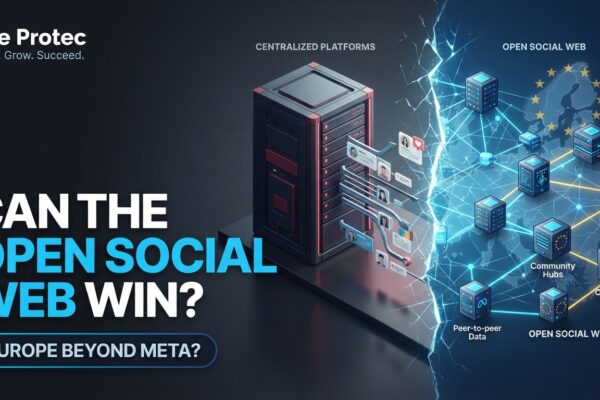
Europe’s Open Social Web vision could link independent networks through shared protocols, portable identities and public-interest digital infrastructure.


Read More

Watch Our Videos
GTA 6 is one of the biggest games in the world—but what if PC gamers didn't have to wait for Rockstar to bring it to Windows?

An independent open-source project called **Leonida** is exploring a very different route: taking the Xbox Series version of Grand Theft Auto VI and attempting to transform it into a Windows-compatible program.

And the technical idea is fascinating.

Xbox Series consoles and modern gaming PCs share the x86-64 CPU architecture. That gives Leonida a potential starting point for *static recompilation*—an approach that analyzes existing game instructions and adapts them for another software environment.

But that's only one piece of the puzzle.

In this video, we explore how Leonida's approach differs from traditional emulation, how Xbox graphics shaders could be translated into SPIR-V for Vulkan, and why recreating console services, memory management, graphics pipelines, assets, audio and input is an enormous engineering challenge.

Most importantly, we'll separate technical progress from the hype.

*Leonida has not demonstrated a complete GTA 6 launch or playable gameplay.* Shader translation and asset extraction are meaningful technical components, but they do not amount to a working PC port. This is an independent community project—not an official Rockstar Games release.

Could this approach eventually work? And what would Leonida need to prove before PC gamers could actually play?

Watch until the end for the reality check.

👍 Like the video if you enjoy deep dives into gaming technology, and subscribe to *The Protec* for more stories about the technology changing gaming, software and the digital world.

*Would you trust an open-source community project to bring GTA 6 to PC before Rockstar does?* Tell us in the comments.

Read the full article:
https://www.theprotec.com/blog/leonida-gta-6-pc-xbox-static-recompilation-vulkan/

#GTA6 #Leonida #PCGaming #Vulkan #GamingTechnology
Leonida GTA 6 PC: Can Gamers Run GTA 6 Without an Xbox?
Imagine giving an AI your entire software project—not just one file, not just a few functions, but thousands of connected files, dependencies, configuration settings and documentation.

Could it understand how everything works together?

Google's Gemini 4 Neon arrives with a headline feature that could change how developers work: a *one-million-token context window*. But having room to process an enormous amount of information doesn't automatically mean an AI can understand it.

In this documentary, we investigate what Google's new AI model could mean for software development—and whether it can move beyond code autocomplete to genuinely useful project-level reasoning.

We'll explore:

🧠 *The Million-Token Context Window* – What one million tokens actually means, how much information it can hold and why capacity isn't the same as comprehension.

💻 *Understanding Entire Codebases* – How developers could use Neon to map repositories, follow dependencies, trace bugs across services, refactor applications and generate tests.

🤖 *AI Coding Agents* – How agentic workflows can plan tasks, inspect files, use tools, edit code, run tests and revise their work.

⚙️ *Google Antigravity* – Where Google's development environment fits into the workflow and how it differs from the underlying AI model.

📊 *Gemini vs ChatGPT vs Claude* – How to compare coding models fairly without assuming that one benchmark or context-window size determines the winner.

💰 *The Real Cost* – Why processing hundreds of thousands of tokens can become expensive, how repeated agent calls affect usage and why Google AI Pro access does not automatically mean unlimited API access.

⚠️ *The Limitations* – Hallucinations, missed details, long response times, unreliable code changes, security risks and why developers still need to review AI-generated work.

We'll also separate Google's own benchmark claims from independently verified results and examine what developers should actually test before trusting a model with a large project.

A million-token context window is impressive. But can an AI find the right details, understand their relationships and make changes without breaking something else?

*Would you trust an AI with your entire codebase?*

Read the full article:
https://www.theprotec.com/blog/gemini-4-neon-million-token-ai-developers/

👍 Like the video, subscribe to The Protec for more technology documentaries, and stay tuned as we explore the next generation of AI coding agents.

#Gemini4 #GoogleAI #AICoding #AI Agents #SoftwareDevelopment
Google's Gemini 4 Neon: Can This AI Understand an Entire Codebase?
What happens when the internet disappears? Phones lose their connection. Websites stop loading. Mobile networks may go offline. But thousands of miles away, someone could still receive a message through a radio signal traveling through the sky.

That's the remarkable technology behind *High Frequency (HF) radio communication*.

In this video, we explore how HF radio signals can travel beyond the horizon by interacting with the ionosphere, allowing distant stations to exchange messages without relying on cellular towers, fiber-optic cables or conventional internet infrastructure.

We'll also explore two open-source projects from Rhizomatica:

📡 *HERMES* – A broader communications system designed to bring digital communication to remote and underserved communities.

💻 *Mercury* – An open-source HF software modem that converts computer data into signals that can travel over radio. It supports adaptive data communication and can run on Linux, Windows and Raspberry Pi hardware.

You'll discover:
- How HF radio differs from ordinary FM broadcasting and internet communication.
- How the ionosphere helps radio signals travel beyond the horizon.
- How computers, modems, transceivers and antennas move digital messages through the air.
- Why store-and-forward messaging can work even when a live connection isn't available.
- How open-source radio technology can support remote communities and emergency communication.
- Why HERMES and Mercury matter for independent communication infrastructure.
- The real limitations: bandwidth, interference, atmospheric conditions, antennas, equipment and radio licensing.

HF radio isn't a replacement for broadband internet. It can't deliver the same speed or convenience. But when conventional infrastructure is unavailable, the ability to exchange essential information over long distances can be incredibly valuable.

*Read the full article:*
https://www.theprotec.com/blog/open-source-hf-radio-communications-hermes-mercury/

If the internet disappeared tomorrow, would you know how to communicate?

👍 Like the video if you found it useful, subscribe to The Protec for more technology explainers, and join us as we explore the future of open communication technology.

#HFRadio #OpenSource #EmergencyCommunications #RadioTechnology #OfflineCommunication
How Can Radio Communicate Across the World Without the Internet?
Subscribe

Trending Now

What's New?

Technology Trends
Can Europe Build an Open Social Web Beyond Meta’s Platforms? 01
38 minutes ago3 hours ago
02
Software Development
Brazil Open-Source Tax Calculator: A New Model for Government Tax APIs
03
Gaming
Leonida GTA 6 PC: Can Gamers Run GTA 6 Without an Xbox?
04
Career
How to find a job after long-term unemployment: a restart plan
05
Databases
Build PostgreSQL extensions in Go Without Hand-Written C Code
06
AI Development
DreamCoder AI coding IDE Reimagines How Developers Work With Agents

Category Collection

Artificial Intelligence161 News
AWS2 News
Bitcoin3 News
Blockchain5 News
Design Tools10 News
Digital Courses3 News
Digital Currency2 News
E-Commerce3 News
EdTech8 News
Freelancing3 News
Mobile Technology34 News
Project Management3 News
SEO7 News

Popular This Month

Subscription Form

  • Cryptocurrency
  • Software Development
  • Hardware
  • CRM
  • SaaS
  • Design & Media
  • Career & Earning
  • CRM
  • Buying Guides
  • Privacy Policy
  • Contact Us
The Protec Blogs 2026. Flag Counter Powered By Computer Zila.