








AI Personalization Engines Are Changing What Websites Can Do
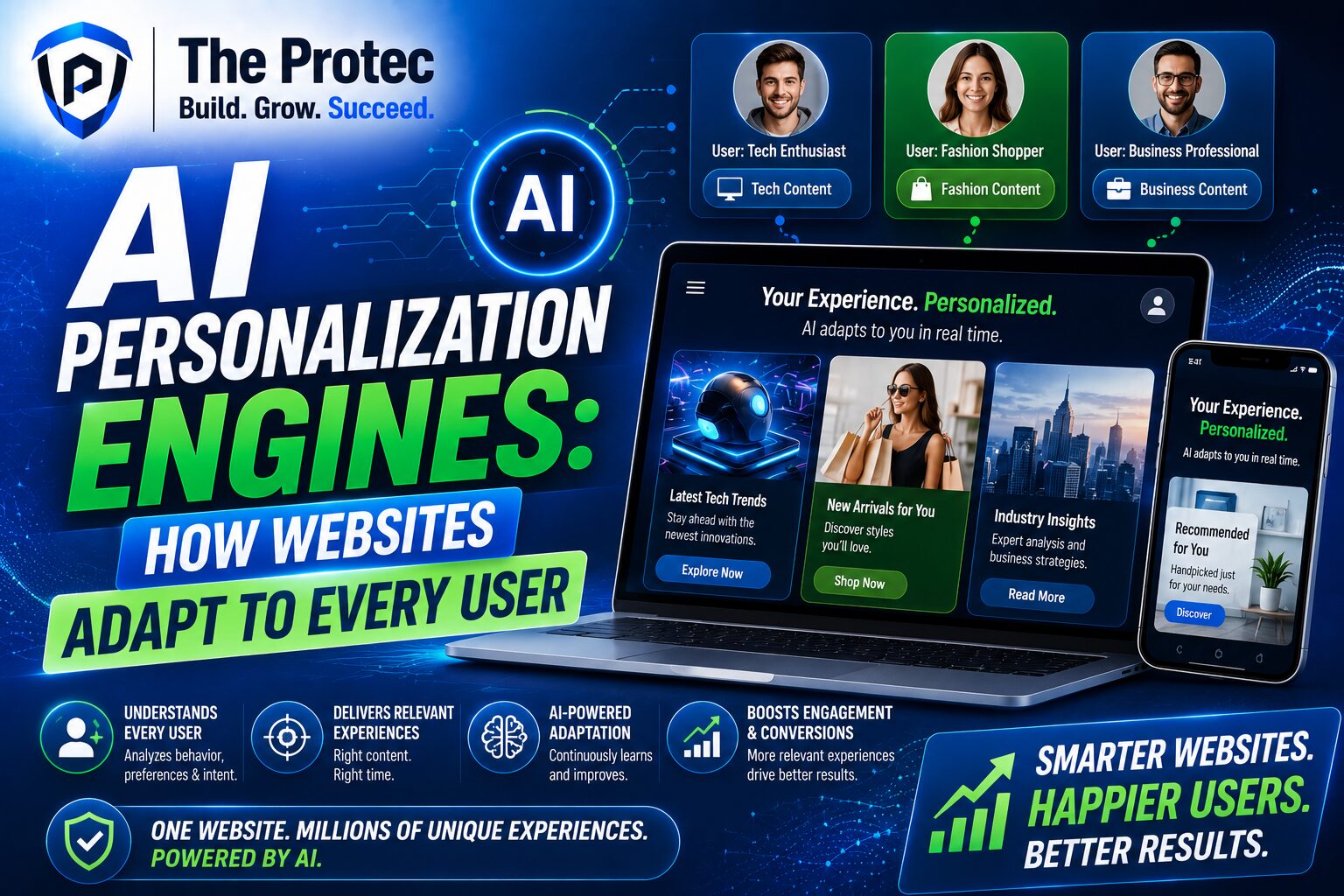
Website personalization has moved far beyond inserting a first name into an email or recommending a few related products. Today, AI personalization engines are making websites feel more responsive, more relevant, and more human. Instead of showing the same homepage, navigation, offer, or article to everyone, a dynamic website powered by AI can adapt to each visitor in real time based on behavior, context, intent, and predictive signals.
This shift matters because users now expect digital experiences to understand them quickly. They want less noise, faster answers, and content that matches what they are trying to accomplish. That is where user experience AI has become a major competitive advantage. The websites that succeed are not just attractive; they are adaptive. They learn from each session, refine content delivery, and improve engagement across the entire journey.
AI personalization is no longer a future-facing concept. It is actively reshaping commerce, publishing, SaaS, healthcare, finance, education, and service websites. From smarter recommendations to dynamic calls to action, the web is becoming more context-aware and behavior-driven than ever before.
What an AI Personalization Engine Actually Does
An AI personalization engine is a system that uses machine learning, predictive analytics, and behavioral data to tailor website experiences for individual users or audience segments. Unlike static rules-based personalization, which relies on fixed conditions such as location or device type, AI systems continuously learn from interactions and adjust what each user sees.
These engines analyze signals such as page views, scroll depth, clicks, dwell time, referral source, search terms, purchase history, session patterns, and sometimes even real-time intent indicators. The goal is to predict what content, product, layout, or next step will be most useful at that moment.
In practice, AI personalization can affect nearly every part of a website:
- Homepage hero banners and calls to action
- Product and content recommendations
- Navigation menus and search results
- Forms, pop-ups, and lead capture messaging
- Pricing page layout and social proof
- Article ordering, related content, and reading paths
The best systems do not simply react. They anticipate. That is the key difference between basic customization and true dynamic websites AI.
Why Dynamic Websites AI Matters for Engagement
Attention is expensive. Users decide in seconds whether to stay or leave, and generic experiences often fail to earn that attention. Dynamic websites AI helps brands reduce friction by showing the most relevant content sooner. When visitors see what they need faster, engagement rises naturally.
This improvement happens for several reasons. First, relevance cuts cognitive load. Users do not have to search as hard or sift through irrelevant information. Second, personalization creates a sense of recognition. When a website reflects a user’s interests or stage in the journey, it feels more useful. Third, AI can guide visitors toward the next best action, whether that is reading another article, requesting a demo, or completing a purchase.
For businesses, the impact is measurable. Better relevance can improve click-through rates, session duration, conversion rates, and return visits. It can also lower bounce rates and support more efficient customer acquisition because more visitors get value from the first interaction.
Modern user experience AI is especially valuable on websites with large content libraries, complex catalogs, or multiple audience segments. In these environments, static design often creates overwhelm. AI helps translate abundance into clarity.
How AI Personalization Tailors Content in Real Time
The biggest strength of AI personalization is its ability to change content while a user is still browsing. Real-time adaptation allows a website to respond to the visitor’s current intent rather than relying only on past data. That distinction matters because intent can shift quickly.
Behavioral Signals Shape the Experience
Behavioral data is often the foundation. If a user spends time on pricing pages, an AI system may prioritize cost-related content, testimonials, or comparison guides. If someone repeatedly reads beginner-level educational content, the site may surface foundational resources instead of advanced material. If a visitor arrives from a campaign about a specific use case, the homepage can highlight that use case immediately.
Context Adds Precision
Contextual information makes personalization smarter. Device type, time of day, geolocation, referral source, and session depth all help AI decide what is likely to be relevant. A mobile visitor may see a simplified layout and shorter form fields. A returning user may see content that skips introductions and gets straight to the point.
Predictive Models Recommend the Next Best Step
AI systems often use predictive models to determine what a user is most likely to do next. In an e-commerce setting, that may mean surfacing products with the highest probability of purchase. In a B2B setting, it may mean offering a case study, demo, or implementation guide. In publishing, it may mean recommending content that aligns with the user’s reading patterns and topical interests.
These decisions are not random. They are based on patterns learned from large volumes of interactions, allowing the website to serve content that feels timely and useful without requiring manual segmentation for every scenario.
The Latest Trends Shaping AI Personalization
As of May 2026, the most relevant personalization trends are centered on real-time adaptation, privacy-aware data use, and deeper integration with content systems. Brands are not just looking for recommendation widgets anymore. They want adaptable digital experiences that can respond to intent across the full journey.
Multimodal Understanding
Modern AI systems can interpret more than clicks and page views. They can incorporate text input, search behavior, image interactions, and conversational cues. This multimodal approach makes personalization more nuanced, especially for websites with product discovery, support, or guided selling experiences.
Generative Content Assembly
Generative AI is being used to assemble personalized page modules from approved content blocks. Instead of creating entirely separate pages for every audience, teams can generate variations of headlines, summaries, CTAs, and layout modules that are assembled dynamically based on user signals.
Privacy-First Personalization
With rising expectations around data protection, brands are moving toward privacy-conscious personalization strategies. This includes greater reliance on first-party data, consent-based tracking, and contextual inference rather than invasive cross-site profiling. Good AI personalization does not have to feel intrusive to be effective.
Cross-Channel Experience Continuity
Another major trend is continuity between channels. Users increasingly expect the personalization they receive in email, chat, ads, and on-site experiences to feel connected. If a visitor clicks an email about a specific topic, the landing page should reflect that context immediately. AI makes this coordination more practical by synchronizing intent signals across touchpoints.
Decisioning at the Edge
Speed matters. Some personalization logic is now being pushed closer to the user through faster decisioning layers and edge delivery. This reduces latency and lets websites adapt quickly enough to feel seamless rather than delayed.
For a broader view of the technology landscape behind these changes, see IBM’s overview of AI personalization and Google Analytics 4 documentation for event-based measurement concepts that support adaptive experiences.
Where AI Personalization Delivers the Most Value
Different website types use AI personalization in different ways, but the highest-value applications tend to follow the same pattern: reduce friction, increase relevance, and guide the next action.
E-commerce
Retail sites use AI personalization to recommend products, reorder category pages, customize homepage offers, and tailor discounts based on browsing patterns. This can improve discovery and reduce the chance that shoppers leave without finding the right item. AI can also identify when a user is browsing but not ready to buy, then surface educational content or reassurance signals instead of pushing for an immediate sale.
B2B and SaaS
For software and service sites, personalization is often about matching visitors to the right use case, industry, or maturity level. A first-time visitor may need problem-oriented content, while a returning lead may respond better to proof points, ROI content, or product tours. AI personalization can dynamically adjust messaging so the same website serves both audiences effectively.
Publishing and Media
Media sites use AI personalization to increase reading depth and retention. By recommending articles, topic clusters, and newsletter signups based on reading behavior, they can create more meaningful content journeys. Instead of treating every visitor like a generic audience member, the site becomes a guided discovery experience.
Education and Training
Learning platforms can use AI to recommend courses, adjust difficulty, and present next steps based on progress and engagement. The result is a more supportive experience that helps learners stay motivated and find content aligned with their goals.
Healthcare and Financial Services
In regulated industries, personalization must be careful, transparent, and compliant. Even so, AI can help users navigate complex information more efficiently by highlighting relevant services, FAQs, and resources while respecting privacy and policy boundaries.
What Makes a Personalization Strategy Effective
Successful AI personalization is not just about having the technology. It depends on strategy, governance, and content quality. An engine can only personalize what the organization has created and approved.
- Clean data: Reliable event tracking and identity resolution are essential.
- Clear goals: Decide whether the priority is engagement, conversion, retention, or support deflection.
- Strong content inventory: AI needs multiple high-quality options to choose from.
- Audience logic: Define where personalization should help and where a universal experience is better.
- Testing discipline: Compare personalized experiences against control versions to measure real impact.
- Governance: Ensure messaging is accurate, approved, and consistent across the site.
One mistake many teams make is over-personalizing too early. If the system does not have enough data, content variety, or clear signals, the experience can become unstable or feel inconsistent. The most effective approaches start with a few high-impact use cases and expand gradually.
User Experience AI and the New Standard for Website Design
User experience AI is changing how teams think about design. In the past, designers built a single experience that had to work for everyone. Now, they are increasingly designing systems that can adapt responsibly. That means planning for variation, not just consistency.
This does not eliminate the role of design. In fact, it raises the bar. Designers and marketers must define the rules, guardrails, content architecture, and decision points that allow AI to perform well. A personalized experience still needs a coherent brand voice, accessible structure, and intuitive navigation.
When done well, the user experience feels less like a machine making decisions and more like a website that understands the visitor’s goals. That is the real promise of AI personalization: not simply more data, but better service.
Challenges and Risks to Watch
AI personalization offers real value, but it also introduces risks that brands must manage carefully.
Overfitting the Experience
If personalization becomes too narrow, users may stop discovering new content or products. Websites should balance relevance with exploration, especially for new visitors and top-of-funnel content.
Privacy and Trust
Personalization must feel helpful, not creepy. Brands should be transparent about data use, respect consent, and avoid making assumptions that could damage trust.
Data Quality Problems
Bad data leads to bad decisions. If events are missing or mislabeled, the AI engine may optimize for the wrong behavior.
Content Bottlenecks
AI cannot create relevance out of thin air. Teams need enough quality content, product copy, or modular page components for the engine to use.
Measurement Complexity
It can be difficult to determine whether personalization truly improved outcomes or simply shifted behavior temporarily. Careful experimentation is essential.
How to Get Started Without Rebuilding Your Entire Website
Many organizations assume AI personalization requires a complete redesign. In reality, it often works best as a layer on top of existing content and systems.
- Start with one or two high-impact pages, such as the homepage, pricing page, or product detail pages.
- Identify the most important audience segments or intent states.
- Choose a limited set of content elements to personalize first, such as headlines, CTAs, or recommendations.
- Set up measurement for engagement and conversion metrics before launch.
- Use A/B testing or incremental rollouts to compare personalized and non-personalized experiences.
- Expand only after the system proves it can improve results consistently.
This phased approach reduces risk and makes it easier to learn what works. It also allows teams to build confidence in the technology and refine their personalization strategy over time.
AI Personalization Is Becoming the Web’s Default Experience Layer
The future of websites is not static. It is adaptive, contextual, and increasingly intelligent. AI personalization engines are helping brands deliver content that feels more relevant, reduce friction in the user journey, and improve engagement without forcing users to do all the work themselves.
As dynamic websites AI continues to mature, the winners will be the organizations that combine strong data practices, thoughtful content strategy, and a clear understanding of user needs. Technology alone will not create great experiences. But when AI personalization is applied well, it can turn a website into a responsive system that serves every visitor a little better.
The takeaway is simple: websites are no longer just pages on the internet. They are adaptive interfaces that learn, predict, and respond. And in a digital environment where attention is scarce, that adaptability can make all the difference.
FAQ
What is an AI personalization engine?
An AI personalization engine is software that uses machine learning and behavioral data to tailor website content, recommendations, and layouts to each user or audience segment in real time.
How do dynamic websites AI improve engagement?
They improve engagement by showing more relevant content sooner, reducing friction, and guiding visitors toward the next best action based on intent, context, and behavior.
Is AI personalization only useful for e-commerce websites?
No. While e-commerce uses are common, AI personalization also helps SaaS, publishing, education, healthcare, finance, and other websites that serve multiple user types or content paths.
Does user experience AI replace UX designers?
No. It changes the designer’s role by adding system design, content governance, and decision logic. Human strategy remains essential for brand consistency, accessibility, and trust.
What is the biggest mistake brands make with AI personalization?
The most common mistake is trying to personalize too much too soon without enough quality data, content variety, or clear measurement. A focused rollout usually performs better.