






The Rise of Digital Twins: How Virtual Models Are Transforming Industries
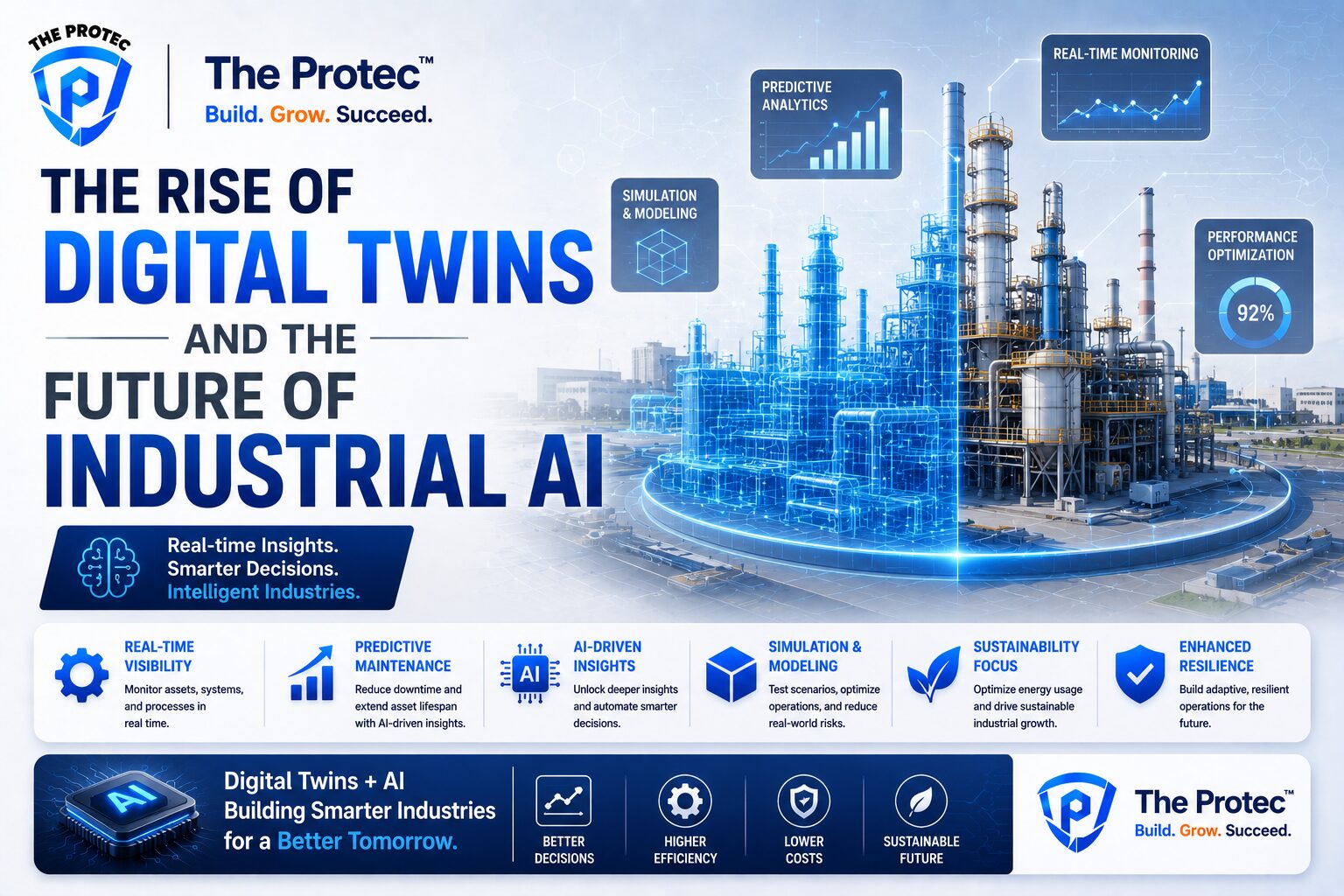
Digital twins have moved from a niche engineering concept to one of the most influential tools in modern industry. Companies are no longer relying only on static models, spreadsheets, or periodic inspections to understand complex systems. Instead, they are building living virtual replicas that mirror physical assets, processes, and even entire operations in real time. These digital twins help organizations simulate scenarios, test decisions, predict failures, and optimize performance before changes are made in the real world.
This shift is closely tied to the rise of industrial AI, edge computing, advanced sensors, and cloud-native analytics. Together, these technologies are turning digital twins into practical tools for decision-making rather than futuristic experiments. From manufacturing plants and energy grids to hospitals and smart cities, the use of virtual models is accelerating because businesses need more resilience, better efficiency, and faster responses to change. In a world where downtime is expensive and complexity keeps increasing, digital twins are becoming a core part of future technology strategy.
What makes this trend especially powerful is that digital twins are not just digital copies. They are dynamic systems that continuously ingest data, learn from conditions, and help teams anticipate outcomes. That capability is changing how companies design products, manage infrastructure, and deliver services. The result is a new operating model built on simulation, prediction, and optimization.
What Is a Digital Twin?
A digital twin is a virtual representation of a physical object, process, system, or environment. Unlike a traditional model that may be built once and updated occasionally, a digital twin is connected to real-world data and evolves over time. It can reflect the current state of a machine, the flow of a production line, or the performance of an entire facility.
At its most basic level, a digital twin includes three elements: the physical asset, the digital replica, and the data connection between them. Sensors, IoT devices, enterprise systems, and operational databases feed the model with real-time or near-real-time information. The digital twin then uses analytics, simulation engines, and increasingly industrial AI to interpret the data and produce insights.
This makes digital twins useful in two major ways. First, they provide visibility into what is happening right now. Second, they create a safe environment for experimentation. A company can test a new manufacturing schedule, simulate a weather event on a power grid, or model how a design change might affect performance without disrupting operations.
Why Digital Twins Are Becoming a Strategic Priority
The growing interest in digital twins is not just about technology adoption. It reflects a broader business need for better control over risk, cost, and performance. Modern operations generate huge amounts of data, but raw data alone does not solve problems. Organizations need context, prediction, and action. Digital twins provide all three.
One reason for the rise is the pressure on industries to do more with less. Companies are expected to reduce waste, improve uptime, lower energy use, and increase output while dealing with labor shortages and supply chain uncertainty. Digital twins make it possible to identify bottlenecks, optimize assets, and compare multiple scenarios before making expensive changes.
Another reason is the maturity of enabling technologies. High-quality sensors are more affordable, cloud platforms can process larger datasets, and industrial AI models are getting better at spotting patterns in complex systems. At the same time, organizations are becoming more comfortable connecting operational technology with information technology. That convergence has made digital twins more practical and more valuable.
Finally, digital twins are increasingly aligned with sustainability goals. Companies are under pressure to measure emissions, reduce energy consumption, and design more efficient systems. Virtual models allow teams to test sustainability initiatives with greater precision, making it easier to balance environmental goals with operational demands.
How Digital Twins Support Simulation and Optimization
The biggest advantage of a digital twin is the ability to simulate before acting. In a physical environment, testing a new process can be risky and expensive. A digital twin creates a controlled virtual space where teams can explore what-if scenarios without interrupting production or service delivery.
For example, a manufacturer can use a digital twin to simulate how different machine settings affect throughput and quality. An energy company can model how grid demand shifts during a heatwave. A logistics operator can test routing changes to reduce fuel consumption and delays. In each case, the twin helps answer a critical question: what is the best decision under real-world conditions?
Optimization is the next step. Once a digital twin has enough data, it can help teams compare outcomes and identify the most efficient path. This is where industrial AI adds significant value. AI models can analyze patterns too large or complex for humans to interpret quickly. They can detect anomalies, forecast maintenance needs, suggest process adjustments, and continuously improve recommendations as new data arrives.
The combination of simulation and optimization creates a feedback loop. The physical system produces data, the twin interprets it, the organization makes a change, and the results are measured again. Over time, this loop can improve productivity, reduce downtime, and create more resilient operations.
Key Industries Adopting Digital Twins
Manufacturing
Manufacturing is one of the most advanced adopters of digital twins. Factories are highly complex environments with interconnected machines, workers, workflows, and supply dependencies. A digital twin can represent an individual asset, such as a robotic arm, or an entire production line. This helps manufacturers identify inefficiencies, predict maintenance issues, and improve product quality.
In smart factories, digital twins are often paired with industrial AI to monitor equipment health and production flow. If a machine begins to show signs of wear, the twin can flag the issue before failure occurs. If a line is running below capacity, the model can help identify the cause and recommend improvements.
Energy and Utilities
Energy providers use digital twins to manage assets such as turbines, substations, pipelines, and transmission systems. These environments are expensive to maintain and difficult to inspect manually. A digital twin can help operators simulate load conditions, predict asset degradation, and optimize maintenance schedules.
In renewable energy, digital twins are also being used to improve wind farm performance, solar panel efficiency, and energy storage management. As grids become more distributed and complex, virtual models help utilities balance supply and demand more effectively.
Healthcare
Healthcare organizations are exploring digital twins to model patient journeys, hospital operations, and medical devices. A digital twin of a hospital system can help administrators understand patient flow, bed utilization, and emergency response capacity. On the clinical side, patient-specific digital twins are an emerging area of research, especially for personalized treatment planning.
While healthcare adoption requires careful governance and privacy protections, the potential is significant. Virtual models can help simulate treatment responses, improve equipment maintenance, and support more efficient care delivery.
Transportation and Logistics
Transportation networks depend on timing, coordination, and constant adaptation. Digital twins can model ports, rail systems, fleets, warehouses, and traffic flow. This gives logistics teams a clearer picture of how disruptions affect operations and how to respond quickly.
For example, a digital twin of a distribution center can simulate staffing levels, inventory movement, and loading schedules. A city transportation authority can use a twin to evaluate congestion scenarios or improve infrastructure planning. In both cases, the goal is to reduce delay and improve service quality.
Smart Cities and Infrastructure
City planners are adopting digital twins to manage infrastructure, utilities, and public services. A city-scale digital twin can model roads, buildings, water systems, energy usage, and environmental conditions. This helps governments plan development, respond to emergencies, and make better long-term investment decisions.
As urban systems become more connected, digital twins offer a way to coordinate data from multiple agencies and sources. That makes them a powerful tool for resilience, sustainability, and public safety.
The Role of Industrial AI in Digital Twin Systems
Industrial AI is one of the main forces making digital twins more effective. Traditional simulation models often depend on predefined assumptions and may struggle with real-world variability. Industrial AI changes that by allowing digital twins to learn from data patterns, adapt to changing conditions, and produce more accurate predictions.
AI can be used in several ways within a digital twin environment. It can detect anomalies in sensor data, estimate future performance, classify operating states, and recommend corrective actions. Machine learning models can also help fill gaps where physical measurements are incomplete or delayed.
More advanced systems combine physics-based modeling with AI-driven prediction. This hybrid approach is especially valuable in industrial settings where both scientific accuracy and data-driven adaptability matter. For example, a twin may use engineering equations to model a machine’s behavior while AI improves forecasting based on historical operating conditions.
As industrial AI continues to mature, digital twins will become more autonomous and more proactive. Instead of simply reporting current conditions, they will increasingly guide decisions in real time.
Benefits of Digital Twins for Business Performance
Organizations adopt digital twins because they create measurable value. The benefits extend across operations, finance, engineering, and customer experience.
- Improved decision-making: Teams can test scenarios before acting, reducing guesswork and risk.
- Lower downtime: Predictive maintenance helps detect problems earlier and avoid unplanned outages.
- Higher efficiency: Process bottlenecks and resource waste become easier to identify and correct.
- Better product quality: Simulation supports design improvements and more consistent production outcomes.
- Stronger resilience: Companies can prepare for disruptions and evaluate contingency plans in advance.
- Greater sustainability: Virtual testing can reduce energy use, emissions, and material waste.
- Faster innovation: Teams can experiment more quickly without risking physical assets or service continuity.
These benefits are especially important in industries where margins are tight and complexity is high. A well-designed digital twin can become a strategic asset that improves both short-term operations and long-term planning.
Challenges Companies Must Solve
Despite the momentum, digital twins are not simple to implement. The quality of the model depends heavily on the quality of the data. If sensors are unreliable or systems are poorly integrated, the twin may produce misleading results. This is why data governance and infrastructure readiness are essential.
Another challenge is scope. Some organizations try to build a very large digital twin before proving value in a focused use case. In practice, the most successful projects often start with a single asset, process, or facility and expand once the return is clear.
There are also security and privacy concerns. Digital twins often connect operational systems, cloud platforms, and enterprise data sources. That creates a larger attack surface and requires strong cybersecurity controls. In regulated industries, compliance requirements can further complicate deployment.
Finally, digital twin initiatives require collaboration across departments. Engineering, operations, IT, data science, and leadership must align on goals and responsibilities. Without organizational buy-in, even the best technology can fail to deliver results.
Emerging Trends Shaping the Future of Digital Twins
The latest wave of digital twin innovation is being shaped by several important trends. One is the move toward more intelligent and autonomous systems. Digital twins are increasingly being embedded with AI agents that can analyze conditions, suggest actions, and even trigger responses under defined rules.
Another trend is the growth of system-level twins. Instead of modeling one machine or one building, companies are connecting multiple twins into larger operational ecosystems. This enables cross-functional optimization across production, logistics, maintenance, and energy use.
Edge computing is also expanding the usefulness of digital twins. By processing data closer to the source, organizations can reduce latency and improve real-time responsiveness. This is particularly important in industrial environments where decisions need to be made quickly.
There is also growing interest in combining digital twins with spatial computing, immersive visualization, and advanced simulation tools. These interfaces help engineers and operators interact with complex systems more naturally. As the technology becomes more accessible, digital twins are likely to move beyond specialist teams and into everyday operational use.
To understand the broader technology landscape, it is helpful to see digital twins as part of a larger industrial transformation. They are not replacing human expertise; they are extending it with live data and predictive intelligence. For a useful overview of the digital twin concept, see IBM’s digital twin resource. For a broader perspective on industrial AI and connected operations, Gartner’s industrial AI glossary offers a helpful industry framing.
What the Future Looks Like for Digital Twins
The future of digital twins will likely be defined by greater integration, better intelligence, and wider adoption. As more devices, systems, and facilities become connected, organizations will have richer data to feed into their models. At the same time, AI will continue improving the speed and accuracy of predictions.
In the near future, digital twins may become standard for high-value assets and critical infrastructure. They will likely be used not only for maintenance and planning, but also for continuous optimization, sustainability tracking, and risk management. As future technology evolves, digital twins could also support more adaptive supply chains, personalized healthcare, and autonomous industrial systems.
For businesses, the strategic question is no longer whether digital twins matter. It is how quickly they can be deployed in the right places. The companies that succeed will be those that treat digital twins as a decision platform, not just a visualization tool.
Conclusion
The rise of digital twins marks a major shift in how industries operate. By combining real-time data, simulation, and industrial AI, virtual models are helping organizations make smarter decisions, improve efficiency, and prepare for uncertainty. Whether used in manufacturing, energy, healthcare, logistics, or smart cities, digital twins are becoming central to how modern businesses innovate and compete.
As this technology matures, the value of digital twins will continue to grow. Companies that invest thoughtfully today will be better positioned to optimize operations, reduce risk, and build resilient systems for the future.
Frequently Asked Questions
What is the main purpose of a digital twin?
The main purpose of a digital twin is to create a live virtual model of a physical asset, process, or system so organizations can monitor performance, simulate scenarios, and optimize decisions.
How do digital twins use industrial AI?
Digital twins use industrial AI to analyze data, detect patterns, predict failures, and recommend actions. AI makes the twin more adaptive and more useful for real-time decision-making.
Which industries benefit most from digital twins?
Manufacturing, energy, healthcare, logistics, transportation, and smart city planning are among the industries seeing the strongest benefits from digital twins because they manage complex, high-value systems.
Are digital twins only useful for large companies?
No. While large organizations often lead adoption, smaller companies can also benefit by starting with a single machine, production line, or operational process and expanding from there.
What is the biggest challenge in implementing a digital twin?
The biggest challenge is usually data quality and system integration. A digital twin is only as accurate as the data it receives, so strong infrastructure and governance are essential.