







Why Multi-Cloud Cost Management Matters Now
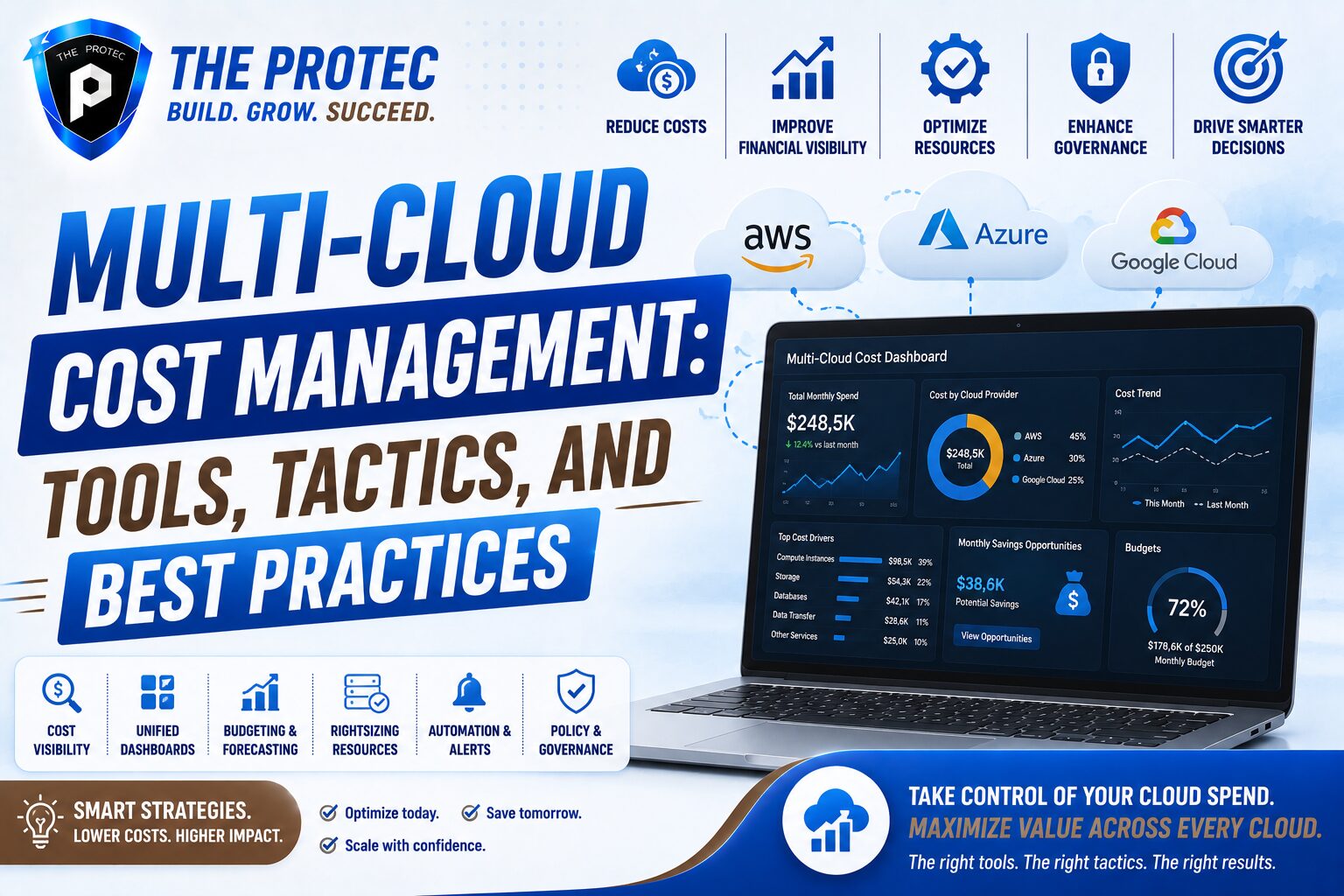
Multi-cloud is no longer just a resilience strategy. For many organizations, it is the default operating model. Teams run production workloads in one cloud, analytics in another, and edge or AI services wherever the best fit exists. That flexibility creates real business value, but it also makes cost control much harder. Every provider has its own pricing model, billing structure, discounts, and reporting logic. Without a deliberate approach to multi cloud cost management, spending becomes fragmented fast.
The challenge is not only higher bills. It is also the loss of visibility. A cloud team may optimize one environment while another quietly accumulates waste. Reserved capacity may go unused, data transfer charges may spike unexpectedly, and AI or managed database costs may grow faster than planned. In a world where cloud budgets are under constant scrutiny, leaders need a practical way to see across providers, allocate spend accurately, and optimize cloud spend without slowing innovation.
The good news is that cloud cost tools have matured significantly. Modern platforms can unify billing data, detect anomalies, recommend rightsizing actions, forecast spend, and tie costs back to teams, products, and business outcomes. Paired with FinOps discipline and strong governance, they can turn multi-cloud from a cost headache into a manageable, measurable operating model.
What Makes Multi-Cloud Cost Management So Complex?
Managing cost across multiple clouds is different from managing a single environment because the rules change from provider to provider. AWS, Microsoft Azure, and Google Cloud all have unique billing dimensions, discount programs, credit structures, and service catalogs. The same workload can produce very different cost patterns depending on where it runs and how it is configured.
Several forces drive this complexity:
- Fragmented billing data: Each provider exposes usage and cost information in different formats and levels of detail.
- Different discount models: Commitments, savings plans, reservations, and enterprise agreements are not directly comparable.
- Hidden transfer costs: Data egress, inter-region traffic, and cross-cloud communication can create surprises.
- Service sprawl: Teams adopt managed databases, observability tools, AI services, and security tools independently.
- Unclear ownership: Shared accounts and shared services make chargeback and accountability difficult.
These challenges are amplified by the rise of AI workloads and data-intensive architectures. GPU instances, vector databases, model hosting, and high-volume data pipelines can drive spend sharply upward if governance is weak. That is why modern multi cloud cost management requires more than bill review. It demands continuous control, standardized tagging, policy enforcement, and business-aware reporting.
The Core Pillars of Multi Cloud Cost Management
Effective multi cloud cost management is built on a few foundational pillars. If these are weak, even the best cloud cost tools will only provide partial insight.
1. Visibility
You cannot optimize what you cannot see. Visibility means consolidating billing and usage data from every cloud into one view. It should include accounts, subscriptions, projects, services, regions, tags, and commitments. Good visibility also means surfacing trends, anomalies, and forecast drift early enough to act.
2. Accountability
Every dollar should be traceable to a team, application, product, or customer segment. This is the basis for showback and chargeback. When teams understand the cost impact of their decisions, they are more likely to optimize cloud spend naturally.
3. Governance
Governance creates guardrails. It includes policies for tagging, instance types, region selection, storage tiers, data retention, and approval workflows. Governance should reduce waste without creating too much friction for developers and platform teams.
4. Optimization
Optimization is the active work of reducing waste and improving efficiency. That includes rightsizing, scheduling idle resources, buying commitments strategically, cleaning up orphaned assets, and minimizing data transfer costs.
5. Forecasting
Budget control depends on the ability to forecast. Forecasting should account for seasonality, growth plans, new product launches, and the impact of commitments. The best forecasts are not just historical averages; they are workload-aware and tied to business plans.
Best Cloud Cost Tools for Multi-Cloud Environments
The market for cloud cost tools has evolved quickly. Today’s platforms do more than present reports. They help teams govern, allocate, forecast, and recommend actions across complex environments. When evaluating tools, focus on whether they can unify multi-provider data, support granular allocation, and integrate with your workflows.
Cloud-native cost tools
Each major cloud provider offers native cost management capabilities. These are useful for detailed billing analysis inside a single environment and often provide the deepest integration with provider-specific services. AWS Cost Explorer, Azure Cost Management, and Google Cloud Billing offer solid starting points for teams that need native insights and basic optimization recommendations.
However, native tools usually stop at the boundaries of their own platform. In a multi-cloud setup, they are helpful but incomplete. They are strongest when used for validation, deep-dive analysis, and provider-specific commitment planning.
Third-party cloud cost management platforms
Independent cloud cost tools are often the backbone of multi cloud cost management. These platforms ingest billing data from multiple providers, normalize it, and present unified dashboards. Many also include anomaly detection, budget alerts, allocation logic, commitment management, and rightsizing suggestions.
When comparing platforms, look for the following capabilities:
- Cross-cloud normalization of billing and usage data
- Flexible tagging and allocation rules
- Support for Kubernetes, containers, and shared services
- Forecasting based on actual consumption and business drivers
- Anomaly detection with actionable recommendations
- Commitment and reservation analysis across providers
- Integration with finance, engineering, and ticketing workflows
FinOps and observability integrations
Cost visibility improves dramatically when cloud cost tools connect to infrastructure, observability, and engineering systems. Integrations with Kubernetes platforms, CI/CD pipelines, monitoring tools, and incident management systems help teams understand why spend changed, not just that it changed. This is especially important in AI and container-heavy environments where resource usage can fluctuate rapidly.
Policy and automation tools
Cost management is not only about reporting. It is also about enforcing decisions. Infrastructure-as-code policies, scheduling automation, and runtime controls can prevent waste before it happens. For example, workloads can be shut down outside business hours, non-production environments can be paused on weekends, and storage can be moved to lower-cost tiers after inactivity thresholds are met.
Strategies to Optimize Cloud Spend Across Providers
Tools are important, but strategy is what creates lasting savings. The most effective organizations combine measurement, governance, and automation to optimize cloud spend systematically rather than reactively.
Standardize tagging and allocation
Good cost allocation starts with consistent metadata. Tagging should identify owner, team, application, environment, cost center, and business unit. In multi-cloud environments, standardization matters even more because each provider handles labels and metadata differently. Establish a single tagging policy and enforce it through deployment pipelines and governance rules.
If a resource cannot be tagged properly, it should be treated as a risk. Unattributed spend quickly becomes unmanageable, especially when shared services, platform teams, and AI workloads are involved.
Track unit economics, not just total spend
Total cloud spend is useful, but it does not tell the full story. A better approach is to measure unit economics: cost per customer, cost per transaction, cost per API call, cost per environment, or cost per training run. This allows teams to see whether cloud use is becoming more efficient as the business grows.
Unit metrics are particularly valuable for SaaS, digital commerce, media, and AI products. They help leaders distinguish healthy growth from wasteful growth and create stronger decisions around architecture and pricing.
Rightsize continuously
Rightsizing is one of the fastest ways to reduce waste, but it must be continuous. Workloads change, traffic patterns shift, and cloud services evolve. A recommendation that was valid three months ago may no longer apply. Use cloud cost tools to identify oversized instances, idle databases, underutilized clusters, and storage volumes that no longer justify their capacity.
For Kubernetes and container platforms, pay special attention to requests and limits. Overprovisioned containers can create significant waste even when infrastructure appears healthy. In multi-cloud environments, cluster sprawl can hide this waste unless policies and dashboards are consolidated.
Use commitments strategically
Reserved instances, savings plans, committed use discounts, and enterprise agreements can create meaningful savings, but only when applied carefully. The wrong commitment can lock in waste. The right commitment can lower costs across predictable workloads.
In multi-cloud cost management, commitment planning should be based on workload stability, growth forecasts, and provider-specific discount mechanics. Do not apply commitment strategies independently in every cloud without a unified view. Instead, evaluate the portfolio as a whole and choose the best mix of flexibility and savings.
Minimize data movement
Data transfer costs are one of the most underestimated drivers of multi-cloud spend. Moving large datasets between clouds or regions can be far more expensive than storing or processing them locally. This is especially relevant for analytics, backup, AI training, and distributed application architectures.
Architectural decisions should account for where data is created, where it is consumed, and how often it moves. In many cases, the cheapest optimization is to reduce unnecessary movement rather than trying to squeeze more efficiency from compute.
Automate shutdowns and lifecycle policies
Non-production environments, test clusters, development sandboxes, and temporary data pipelines often run longer than necessary. Automation can cut this waste dramatically. Schedule idle resources to shut down after hours, delete stale snapshots, enforce storage lifecycle rules, and expire temporary environments automatically.
This type of control is especially effective when paired with policy-as-code. Developers retain speed, while the platform team ensures that short-lived resources do not become long-lived costs.
How FinOps Strengthens Multi-Cloud Cost Management
FinOps has become the operating model that connects finance, engineering, and product teams around cloud spending. In a multi-cloud environment, it is especially valuable because no single team can control all costs alone. Finance can set budgets, engineering can improve efficiency, and product leaders can prioritize the highest-value workloads.
The best FinOps programs focus on three continuous loops: inform, optimize, and operate. Inform means making costs visible and understandable. Optimize means taking action on waste, commitments, and architecture. Operate means embedding cost awareness into daily workflows, release processes, and planning cycles.
Recent FinOps practice has moved beyond simple bill review. Modern teams are incorporating AI-assisted anomaly detection, forecasting based on product growth signals, and cost governance for Kubernetes and serverless workloads. They are also paying more attention to carbon-aware and efficiency-aware decisions, which can align cost savings with sustainability goals.
For teams looking to build a mature program, the key is cadence. Weekly cost reviews, monthly forecast updates, and quarterly commitment planning create a rhythm that prevents surprise bills and improves decision-making over time.
Governance Patterns That Actually Work
Strong governance is not about blocking innovation. It is about making the cheapest responsible path the easiest path. In practice, that means creating guardrails that are enforceable and clear.
- Mandatory tagging policies: Require tags at provisioning time, not after the fact.
- Approved regions and instance families: Limit choices to options that meet performance and cost requirements.
- Budget alerts with ownership: Alerts should go to accountable teams, not a generic inbox.
- Exception workflows: Teams should be able to request deviations, but those exceptions must be visible and time-bound.
- Cost-aware architecture reviews: Include cost as a standard part of design and release reviews.
When governance is clear and automated, engineering teams spend less time navigating approvals and more time building efficient systems. The result is a healthier balance between speed and control.
Common Mistakes to Avoid
Many organizations start multi cloud cost management with good intentions but fall into familiar traps. Avoid these mistakes if you want sustainable results.
- Relying on one provider’s dashboard: This creates blind spots and makes cross-cloud comparison difficult.
- Ignoring shared costs: Platform, security, networking, and observability expenses must be allocated carefully.
- Overcommitting too early: Discounts are valuable, but only when usage is stable enough to support them.
- Using tags without enforcement: If tagging is optional, allocation quality will decline quickly.
- Chasing savings without context: Cutting cost at the expense of reliability or performance can create larger losses later.
The best cloud cost tools help you see these issues, but process discipline is what prevents them from returning.
What to Look for in a Multi-Cloud Cost Management Platform
If you are selecting or replacing a platform, prioritize capabilities that support day-to-day decision-making rather than just reporting. A strong platform should help you optimize cloud spend in operational terms.
- Unified support for AWS, Azure, Google Cloud, and relevant SaaS or Kubernetes data
- Near-real-time or frequently refreshed billing and usage data
- Flexible allocation and custom business mapping
- Forecasts that reflect workload and business growth
- Actionable recommendations, not just charts
- Integration with Slack, Jira, ServiceNow, or similar workflows
- Security and role-based access controls for finance and engineering users
It is also useful to validate whether the platform supports your most expensive or least visible workloads, such as data platforms, AI services, container orchestration, and shared networking. Those are often where the biggest optimization opportunities hide.
Practical Roadmap for the Next 90 Days
Organizations that want to improve multi cloud cost management quickly should focus on a structured rollout rather than trying to fix everything at once.
- Days 1 to 30: Consolidate billing feeds, define ownership, and establish baseline visibility across providers.
- Days 31 to 60: Standardize tagging, create allocation rules, and implement budget alerts and anomaly detection.
- Days 61 to 90: Prioritize rightsizing, idle resource cleanup, commitment review, and automation for non-production environments.
This sequence works because it balances visibility, governance, and action. First, you see the problem clearly. Then, you assign accountability. Finally, you reduce waste and build habits that last.
FAQ
What is multi cloud cost management?
Multi cloud cost management is the practice of monitoring, allocating, forecasting, and reducing cloud spending across more than one cloud provider. It combines tools, governance, and FinOps processes to help organizations control costs without reducing agility.
What are the best cloud cost tools for multi-cloud environments?
The best cloud cost tools unify billing and usage data across providers, support granular allocation, offer anomaly detection and forecasting, and integrate with engineering and finance workflows. Native provider tools are useful, but third-party platforms usually offer stronger cross-cloud visibility.
How can organizations optimize cloud spend without hurting performance?
Start with visibility and ownership, then focus on rightsizing, commitment planning, data transfer reduction, and automation of idle resources. The goal is to remove waste while preserving the performance and reliability that workloads require.
Hidden costs often come from data transfer, unused commitments, orphaned resources, inconsistent tagging, and duplicated services across providers. These issues are easy to miss when billing is fragmented across multiple platforms.
How often should cloud costs be reviewed?
High-performing teams review key metrics weekly, update forecasts monthly, and revisit commitment strategies quarterly. Fast-moving AI, container, or analytics workloads may require even more frequent review.
Final Thoughts
Multi-cloud is here to stay, and so is the need for disciplined cost control. The organizations that succeed will not be the ones with the largest budgets or the most tools. They will be the ones that combine clear ownership, strong governance, and the right cloud cost tools to make cost visible and actionable across every provider.
If you want to optimize cloud spend in a multi-cloud world, focus on the fundamentals first: unified visibility, accurate allocation, continuous rightsizing, smart commitments, and automation that prevents waste before it starts. With those in place, multi cloud cost management becomes less about reacting to surprise bills and more about building a resilient, efficient cloud operating model.
As cloud and AI adoption continue to accelerate, cost discipline will be a competitive advantage. The teams that master it will move faster, plan better, and get more value from every cloud dollar they spend.
For deeper guidance on cloud economics and FinOps practices, see the FinOps Foundation at finops.org and AWS Cost Management resources at aws.amazon.com/aws-cost-management.