








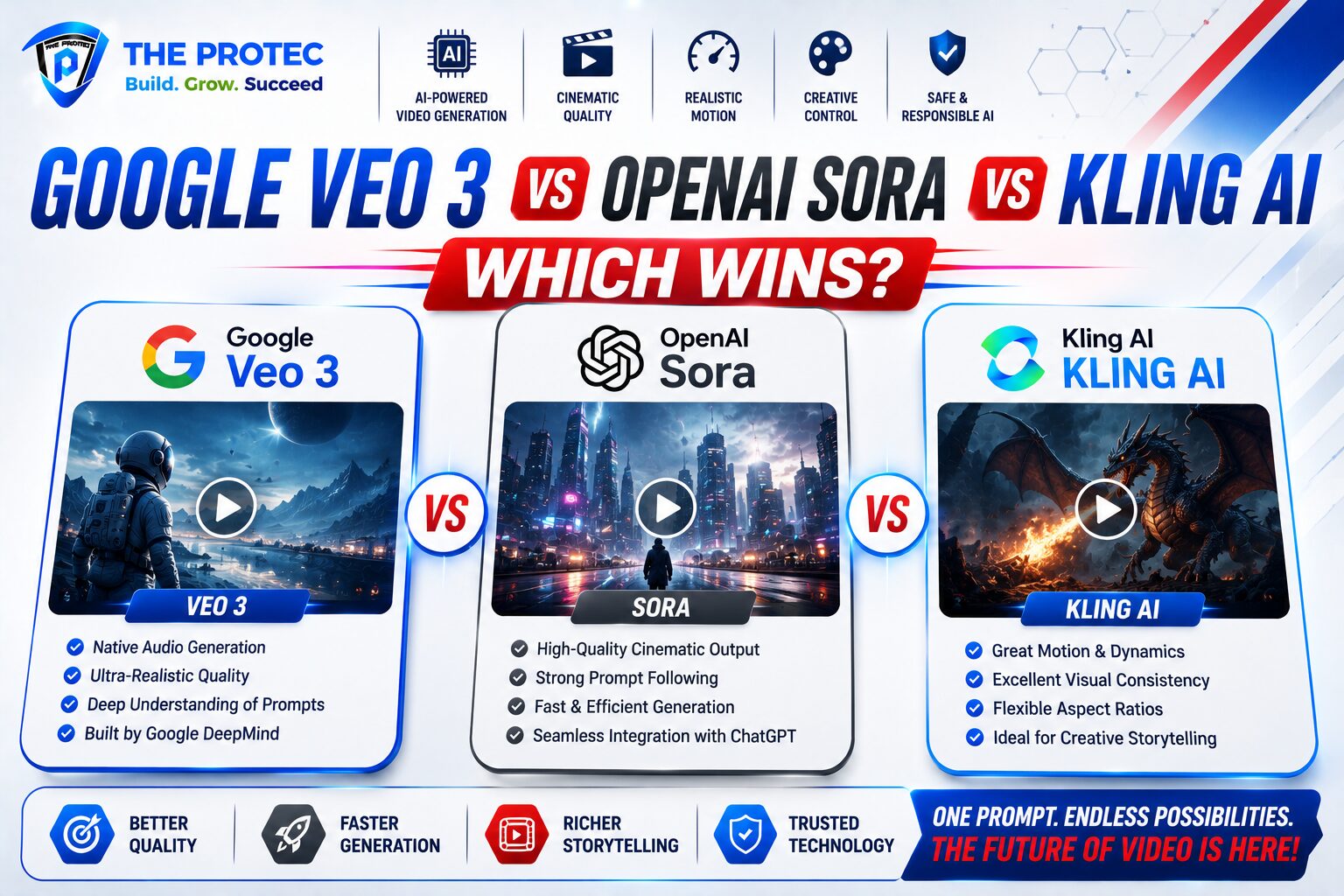
Google Veo 3 vs OpenAI Sora vs Kling AI: Which AI Video Generator Is Best?
The race to build the best AI video model has moved far beyond novelty clips and stylized prompts. In 2026, the conversation is about cinematic realism, longer narrative consistency, audio generation, multi-shot control, and production-ready workflows. That is why the comparison of Veo 3 vs Sora, along with Kling AI vs Veo 3, has become one of the most important discussions in generative media.
Each of these flagship models has a different philosophy. Google Veo 3 pushes toward high-fidelity, coherent, and highly controllable video generation with native audio capabilities. OpenAI Sora focuses on flexible scene understanding, strong prompt adherence, and visually ambitious storytelling. Kling AI has built a serious reputation for motion quality, temporal stability, and a creator-friendly approach that often feels practical rather than experimental.
If you are choosing a model for marketing, social content, concept development, product visualization, or cinematic experiments, the right answer depends on more than hype. It comes down to output quality, speed, editing control, licensing, cost, and how easily the model fits into a real workflow. This guide breaks down the strengths and weaknesses of each model so you can decide which one deserves the title of best AI video model for your use case.
What Matters Most in a Modern AI Video Model
Before comparing the models directly, it helps to define what actually separates a useful AI video generator from an impressive demo. In 2026, a serious video model must do more than create a visually pleasing 5-second clip. It should preserve subject identity, keep motion believable, handle camera movement without distortion, and respond to detailed prompts with consistency.
- Visual realism: Does the output look like real footage or only polished synthetic imagery?
- Motion quality: Are people, objects, water, fabric, and camera moves rendered naturally?
- Temporal consistency: Do faces, hands, clothes, and backgrounds remain stable across frames?
- Prompt adherence: Does the model follow detailed instructions accurately?
- Audio support: Can it generate dialogue, ambience, and sound effects natively?
- Creative control: Can users guide style, shot structure, and scene direction effectively?
- Workflow readiness: Is it practical for teams, brands, and individual creators?
Those criteria make the comparison between Veo 3, Sora, and Kling AI more useful than a simple “which looks best” question. The strongest model is the one that balances quality and control in a way that matches your production needs.
Veo 3 vs Sora: The Core Rivalry
The most closely watched matchup is Veo 3 vs Sora. Both models represent the top tier of text-to-video systems, but they excel in different areas. Sora made an immediate impact by demonstrating impressive scene composition, physical plausibility, and the ability to interpret complex prompts with remarkable breadth. It is especially strong when a prompt asks for layered motion, environmental detail, or cinematic atmosphere.
Veo 3, on the other hand, feels more engineered for production value. Google has leaned heavily into realism, shot coherence, and integrated audio generation. That combination matters a lot because the future of AI video is not just visual motion; it is synchronized media. A clip with convincing visuals but no sound still feels incomplete in many modern use cases.
In practical terms, Sora often impresses with conceptual ambition, while Veo 3 is frequently favored for polish and holistic output. If your project values storytelling range and experimental scene generation, Sora may be the more exciting tool. If you want a model that feels closer to a usable creative engine with richer multimodal output, Veo 3 has a strong claim to leadership.
Google Veo 3: Strengths, Limits, and Best Uses
Google Veo 3 is designed to generate high-quality video with strong realism and impressive motion fidelity. One of its biggest advantages is how cohesive it often feels across frames. Rather than drifting into surreal artifacts or collapsing subject structure, Veo 3 tends to preserve objects and motion with a level of stability that makes it valuable for serious content creation.
A major differentiator is native audio. That matters because audio can dramatically improve the perceived quality of a generated video. Ambient sound, subtle effects, and dialogue alignment make a clip feel more complete and usable. In a crowded market, that feature helps Veo 3 stand out from video-only systems.
Veo 3 is particularly appealing for:
- Brand videos and concept trailers
- Product showcases and visual prototypes
- Cinematic marketing assets
- Social videos that need a polished, premium look
- Storyboard development for creative teams
The main limitation is that, like most leading models, Veo 3 still has boundaries around long-form narrative continuity and precise scene editing. It can produce striking clips, but getting a long sequence to behave exactly like a planned production still requires iteration. For creators who want the highest level of realism with audio included, though, Veo 3 is one of the strongest candidates for best AI video model status.
OpenAI Sora: Where It Excels
Sora’s biggest strength is the breadth of scenes it can understand and render. It is especially compelling when a prompt includes multiple subjects, dynamic action, or a complex environment. The model often feels like it has a strong internal sense of the world, which helps it create rich visual compositions that look planned rather than random.
Another advantage is Sora’s ability to capture cinematic language. It can handle sweeping motion, dramatic camera framing, and stylized scene construction in ways that appeal to storytellers and concept artists. If you are trying to visualize an ad concept, a fantasy sequence, or an abstract narrative idea, Sora can often produce something visually ambitious with relatively little guidance.
Where Sora can be less straightforward is in practical production output. Depending on the task, it may prioritize visual creativity over strict controllability. That makes it ideal for ideation and high-level cinematic exploration, but not always the first choice for every brand workflow. Teams that need exact product placement, highly repeatable identity, or tightly structured sequences may still find themselves doing more prompt refinement than they expected.
Even so, Sora remains one of the strongest names in the field because it helped redefine what users expect from a text-to-video system. In the Veo 3 vs Sora debate, Sora still has a clear identity: broad, visually rich, and highly expressive.
Kling AI vs Veo 3: The Motion Test
The Kling AI vs Veo 3 comparison is especially interesting because both models have earned praise for motion quality. Kling AI is widely recognized for smooth movement, strong temporal stability, and a surprisingly practical feel in many everyday use cases. While it may not always match the absolute cinematic sheen of Veo 3, Kling often performs very well when the goal is believable movement rather than pure spectacle.
One area where Kling AI frequently shines is human motion. Walking, turning, gesturing, and object interaction can look natural enough for social content and short-form storytelling. That makes it attractive for creators who need movement to feel grounded and readable. It also tends to be appreciated by users who want an output pipeline that feels efficient rather than experimental.
Compared with Veo 3, Kling AI can feel more direct and creator-friendly in certain workflows. Veo 3 may win on premium output and multimodal polish, but Kling often remains highly competitive on motion realism and usability. For teams producing a high volume of short clips, that efficiency matters a lot.
If your priority is motion-first generation with solid realism, Kling AI deserves serious attention. If your priority is a more complete audiovisual package and higher-end cinematic finish, Veo 3 may still come out ahead.
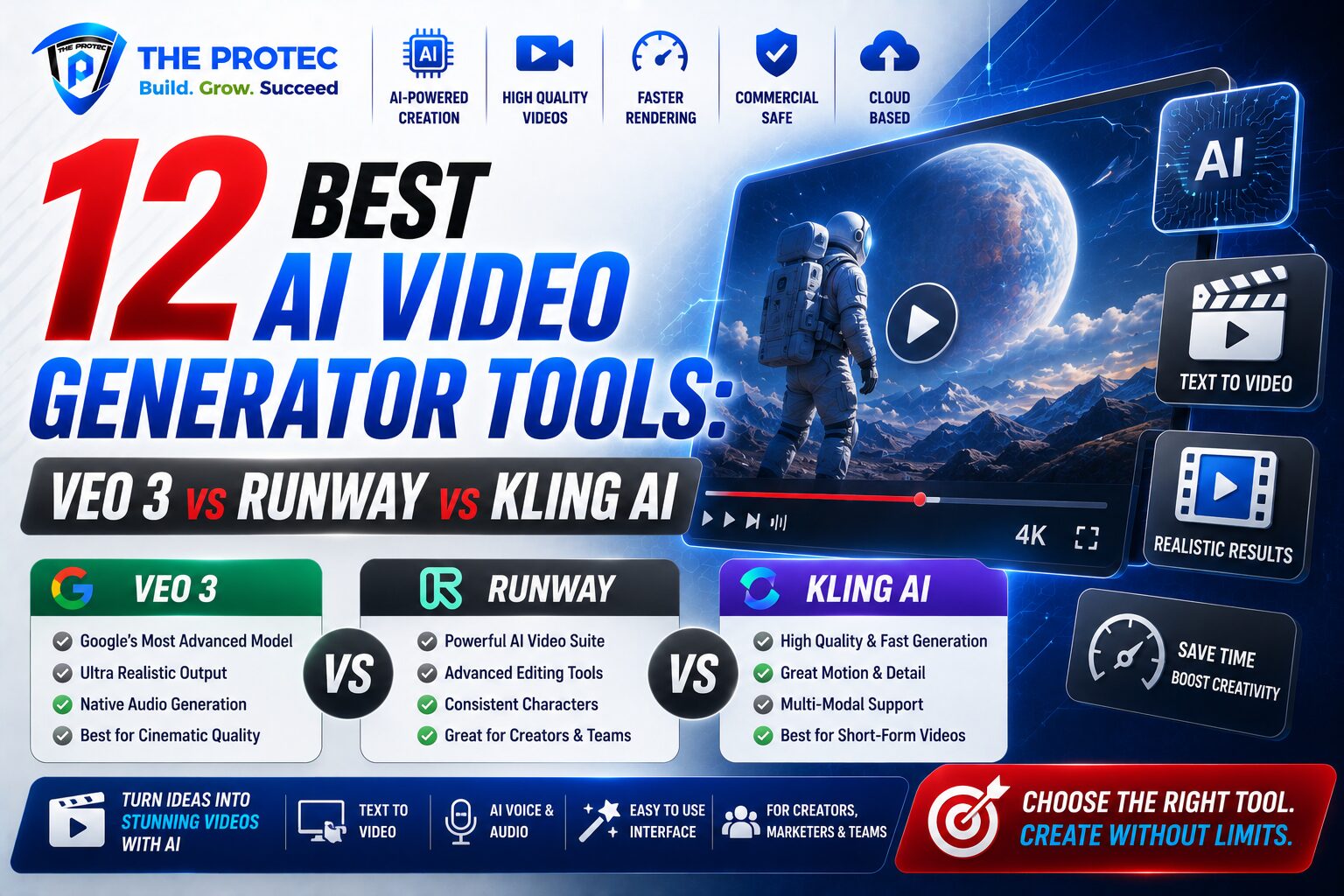
Side-by-Side Comparison: Veo 3, Sora, and Kling AI
Here is how the three flagship models generally compare across the most important decision points.
- Realism: Veo 3 is usually among the strongest for polished realism, while Sora excels at believable scene construction and Kling performs well in grounded motion-heavy clips.
- Motion: Kling AI is often excellent for smooth movement; Veo 3 is highly competitive; Sora is strongest when motion supports a larger cinematic scene.
- Prompt understanding: Sora is notably strong at interpreting complex scenes; Veo 3 is highly capable and often more production-oriented; Kling is practical and responsive in many common prompts.
- Audio: Veo 3 has a major edge when native sound is required.
- Creative control: Sora is powerful for imaginative scenes; Veo 3 is strong for polished output; Kling is efficient for repeatable creator workflows.
- Best for marketing: Veo 3 often leads for premium brand content.
- Best for ideation: Sora is especially strong for early-stage creative exploration.
- Best for motion-centric clips: Kling AI is a compelling choice.
There is no universal winner in every category, which is exactly why the best AI video model depends on the final use case. The smartest teams are already treating these tools as complementary rather than interchangeable.
Workflow, Speed, and Editing Reality
Raw output quality is only part of the story. In real production environments, creators care just as much about turnaround time, iteration speed, and how much manual correction is required after generation. A model can look impressive in a demo and still be frustrating in a campaign workflow if it takes too many attempts to get a usable clip.
Veo 3 appeals to users who want a premium result with strong audiovisual cohesion. Sora is often more exploratory, making it ideal for concept development and testing multiple creative directions. Kling AI can feel more practical for fast iteration, especially when teams need to generate many variants for social or product-driven content.
Editing also matters. If a model produces visually strong clips but makes it difficult to maintain identity, continuity, or scene direction, the post-production burden increases. That is why video generation in 2026 is no longer just about output quality. It is about how much of the creative process the model can absorb before a human editor has to step in.
For agencies, in-house content teams, and solo creators alike, the best AI video model is the one that shortens the path from idea to publishable asset.
Pricing, Access, and Practical Adoption
Access and pricing can influence the real winner more than benchmark performance. Even a technically superior model may not be the best option if it is difficult to access, expensive to run at scale, or constrained by limited availability. That has been true across the AI video market, where platform design often matters as much as model capability.
In practice, users should think about whether they need:
- occasional high-end clips for campaigns,
- daily generation for social content,
- concepting tools for pitch decks, or
- repeatable output for a production pipeline.
If your team only needs a few flagship clips each month, premium quality and audio coherence may justify choosing Veo 3. If you are exploring many ideas rapidly, Sora may be more valuable. If your goal is efficient motion-driven content creation, Kling AI may offer the best balance of speed and utility.
For broader context on the AI video landscape and model capabilities, see the official product pages from Google DeepMind Veo and OpenAI Sora.
Which AI Video Generator Is Best?
If you want a single answer, here it is: Veo 3 is the strongest all-around candidate for the title of best AI video model when you value realism, coherence, and native audio in one package. It feels the most production-ready for polished creative work.
Sora is the best choice if your priority is expressive scene generation, cinematic imagination, and complex prompt interpretation. It remains a standout for ideation and ambitious visual storytelling.
Kling AI is the smartest pick if motion quality, practical output, and creator efficiency matter most. It may not always win the glamour contest, but it can be extremely effective where movement and usability are the priority.
So, in the Veo 3 vs Sora vs Kling AI debate, the winner changes by use case:
- Best overall polish: Veo 3
- Best for creative imagination: Sora
- Best for motion-focused workflows: Kling AI
If your work depends on premium audiovisual output, Veo 3 has the edge. If your work depends on bold conceptual generation, Sora remains exceptional. If your work depends on believable movement and practical scaling, Kling AI is a serious contender.
FAQ
Is Veo 3 better than Sora for realistic video?
Often, yes. Veo 3 tends to feel more polished and production-ready, especially when audio and visual coherence matter. Sora can be extremely impressive, but Veo 3 is frequently stronger for premium realism.
Which is better for creators: Kling AI or Veo 3?
Kling AI is often better for fast motion-centric content and efficient iteration, while Veo 3 is better when you want a more cinematic, polished result with stronger audiovisual integration.
What is the best AI video model for marketing teams?
For many marketing teams, Veo 3 is the best AI video model because it combines realism, coherence, and native audio in a way that fits branded content and campaign assets.
Can Sora replace traditional video production?
Not fully. Sora is excellent for concepting, visual exploration, and some production use cases, but most professional teams still rely on human editing, planning, and post-production for final delivery.
Should I use more than one AI video generator?
Yes, if your workflow allows it. Many creators use Sora for ideation, Veo 3 for polished clips, and Kling AI for fast motion-heavy outputs. That hybrid approach can be more effective than relying on a single platform.
Final Verdict
The battle between Google Veo 3, OpenAI Sora, and Kling AI is not about one model humiliating the others. It is about choosing the right tool for the right creative job. Veo 3 currently looks like the strongest all-around answer for teams that want premium quality and integrated audio. Sora remains the most exciting model for imaginative scene generation and narrative exploration. Kling AI is a highly credible competitor for users who care deeply about motion and workflow efficiency.
If you are trying to identify the best AI video model right now, start with your actual production needs. For polished commercial content, Veo 3 is hard to beat. For conceptual visuals, Sora is still one of the most compelling options. For fast, believable motion, Kling AI deserves a place in the conversation. The real winner is the model that helps you create better videos faster, with less friction and more creative confidence.