








Contents
- 1 AI Voice Cloning Scams Are Getting Smarter and More Dangerous
- 2 What AI Voice Cloning Scams Look Like in Practice
- 3 Why Deepfake Voice Fraud Is Exploding Now
- 4 Real-World Scam Examples That Show How This Works
- 5 Warning Signs of AI Voice Cloning Scams
- 6 How Scammers Get the Voice Data They Need
- 7 Best Practices for AI Scam Protection at Home
- 8 Best Practices for Businesses and Security Teams
- 9 What to Do If You Suspect a Voice Cloning Scam
- 10 How to Tell the Difference Between a Real Emergency and a Fake One
- 11 FAQ: AI Voice Cloning Scams
- 12 The Bottom Line: Trust, But Verify Every Voice Request
AI Voice Cloning Scams Are Getting Smarter and More Dangerous
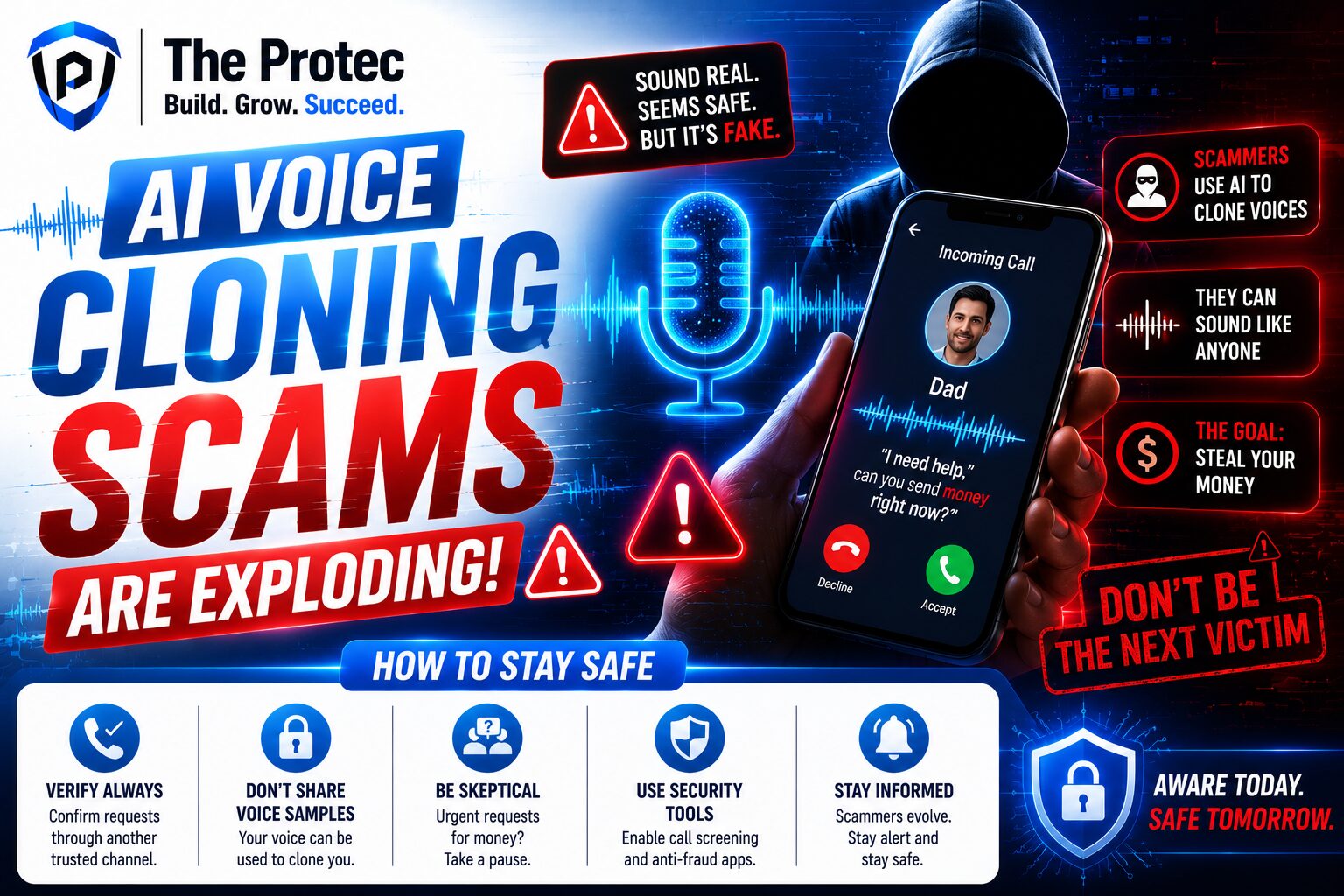
AI voice cloning scams are no longer a futuristic problem. They are happening now, and they are getting harder to spot with each passing month. Criminals can use short audio clips from social media, voicemail greetings, podcast interviews, or even a few seconds from a video call to create a convincing voice clone. Once they have a believable replica, they use it to pressure victims into sending money, sharing credentials, approving transfers, or revealing sensitive information.
The danger is not just the technology itself. It is the combination of speed, emotional pressure, and trust. A cloned voice can sound exactly like a spouse, child, coworker, executive, vendor, or support agent. That familiar voice can cause people to act before they verify what is happening. In many cases, victims do not realize they were targeted until the money is gone or the account has been compromised.
This article breaks down how deepfake voice fraud works, the real-world tactics scammers use, and the most effective AI scam protection steps individuals and businesses can take right now.
What AI Voice Cloning Scams Look Like in Practice
Voice cloning scams are built around impersonation. A scammer collects a few seconds of someone’s voice, feeds it into a generative AI model, and then uses the synthetic audio to deliver a convincing message. The request may seem urgent, emotional, or highly specific. Often, the scam is designed to bypass normal skepticism by mimicking how a real person would speak under stress.
Common scenarios include:
- A “family emergency” call from a cloned child or grandparent asking for immediate money
- A fake executive voicemail instructing finance staff to wire funds or buy gift cards
- A cloned vendor or contractor requesting a change to payment details
- A “bank security” call asking a customer to read out a one-time passcode
- A fake tech support or account recovery call using a familiar voice to lower suspicion
The scam often unfolds in seconds. The caller may say there is no time to verify, that phones are being monitored, or that the situation will get worse if the victim hangs up. That urgency is deliberate. It is meant to keep people from thinking clearly and from using their usual verification habits.
Why Deepfake Voice Fraud Is Exploding Now
Several trends are fueling the rise of deepfake voice fraud. First, voice cloning tools have become more accessible and easier to use. Criminals no longer need advanced technical skills to generate convincing audio. Second, people share more personal media than ever before, making it easier to harvest voice samples from public posts, livestreams, and meeting recordings. Third, scammers are pairing voice cloning with other social engineering tactics, including spoofed caller IDs, fake emails, and stolen data from breaches.
Another major factor is trust exhaustion. People are constantly asked to verify identities, reset passwords, approve alerts, and respond to security prompts. Scammers exploit this fatigue by creating a message that feels familiar enough to skip scrutiny. In some cases, they may even use AI-generated text messages or emails alongside the cloned voice to make the attack appear consistent across channels.
Industry reporting and government guidance have warned that synthetic media is becoming a major fraud risk. For readers who want a broader overview of current scam patterns, the FBI’s scams and safety guidance is a useful reference point. For media literacy and deepfake awareness, the FTC’s deepfake guidance is also worth reviewing.
Real-World Scam Examples That Show How This Works
The most effective way to understand AI voice cloning scams is to look at how they are used in the real world. While details vary, the structure of the fraud is often similar: collect a voice sample, create urgency, and push the target into a fast decision.
1. The fake family emergency
One of the most common deepfake voice fraud tactics is the “relative in trouble” call. A victim receives a frantic voicemail or live call from a voice that sounds like a son, daughter, or spouse. The cloned voice claims to be in an accident, arrested, stranded, or threatened, and begs for immediate help. The caller may ask for a wire transfer, crypto payment, ride service, or a code sent by text.
This scam works because it targets emotion before logic. Even if the voice is slightly off, the panic in the message can make the victim focus on the situation rather than the technical details. Scammers often reinforce the deception by calling from a spoofed number that resembles the relative’s phone.
2. The executive payment scam
Businesses are frequent targets because a single successful transfer can be worth far more than a consumer scam. In this version, a finance employee receives a voicemail or message from what sounds like the CEO, CFO, or another senior leader. The voice demands a confidential transfer, vendor payment, or urgent purchase. The instruction may be framed as time-sensitive, acquisition-related, or tied to a sensitive legal matter.
When paired with a spoofed email address or a fake meeting invite, the voice clone can create enough pressure to bypass standard approval controls. This is especially dangerous in organizations where employees are encouraged to respond quickly to leadership requests.
3. The bank or account recovery call
In another version, a scammer poses as a bank representative, account security specialist, or platform support agent. The cloned voice is used to sound official and trustworthy, while the criminal asks the victim to confirm a one-time passcode, reset login credentials, or authorize a device pairing.
Because many people are trained to cooperate with “security” calls, this tactic can succeed even with cautious users. The scammer relies on confusion, technical jargon, and the fear of account suspension.
4. The vendor change scam
Attackers also target procurement and accounts payable teams by impersonating a supplier. A cloned voice calls to announce that banking information has changed and that future invoices should be sent to a new account. If the request is accepted without verification, the next payment goes straight to the criminal.
This kind of fraud is particularly effective when the attacker has already gathered public information about recent projects, client names, or payment cycles.
Warning Signs of AI Voice Cloning Scams
There is no single “tell” that always reveals a cloned voice. However, there are warning signs that should trigger a pause and verification.
Listen for the following red flags:
- Urgency that discourages verification
- Requests for secrecy or bypassing normal procedures
- Pressure to pay with gift cards, crypto, wire transfer, or instant payment apps
- Unexpected changes to bank details or payroll instructions
- Asking for one-time passcodes, recovery codes, or password resets
- Odd pauses, unnatural intonation, or audio that sounds slightly compressed or too smooth
- Contact attempts outside normal hours with emotional pressure
That said, do not rely on audio quality alone. Modern voice clones can sound remarkably natural, especially in short clips. The safer approach is to treat unexpected requests as untrusted until verified through a second channel.
How Scammers Get the Voice Data They Need
Many people assume that a scammer needs a large private recording to clone a voice. In reality, publicly available audio is often enough. Social media clips, YouTube interviews, conference talks, customer service recordings, and voicemail greetings can all provide useful samples. In some cases, scammers stitch together several short clips from different sources to improve the model.
Organizations also create their own risk by posting executive videos, employee onboarding content, or customer testimonials with clear speech samples. The more an individual or company publishes online, the more training material a criminal may have to work with.
This is why modern AI scam protection is not just about spotting a fake call. It also means reducing the amount of voice data available publicly and controlling where recordings are shared.
Best Practices for AI Scam Protection at Home
Consumers can reduce risk dramatically by building a few simple habits. The key is to slow down the interaction and verify independently, especially when money, credentials, or emotional urgency are involved.
Use a family verification code
Create a private code word or phrase that family members can use during emergencies. If a caller claims to be a loved one, ask for the code before taking any action. The code should be memorable but not guessable from social media or public conversations.
Hang up and call back on a trusted number
Never trust the number that called you. If the request seems legitimate, hang up and call the person back using a known number from your contacts or official records. For a supposed family emergency, contact other relatives first. For a bank or service provider, use the number on the official website or the back of the card.
Set limits on public voice exposure
Be mindful of what you post. Avoid uploading long, high-quality voice clips unless necessary. Review privacy settings on social platforms, keep voicemail greetings brief, and think twice before sharing videos that feature clear, isolated speech.
Use account protections that slow attackers down
Enable multifactor authentication, but do not share one-time codes with anyone who calls you. Use passkeys where available, since they are harder to phish than SMS-based codes. Add transaction alerts to bank and payment accounts so that suspicious activity is detected early.
Best Practices for Businesses and Security Teams
For organizations, AI voice cloning scams are not just a fraud issue; they are an operational risk. Finance, HR, IT, and executive assistants are all likely targets. The best defense is a layered process that reduces the value of a single voice request.
Require out-of-band verification
Any request involving money, credentials, payroll changes, invoice updates, or account recovery should require confirmation through a separate trusted channel. That might mean an internal ticket, a known mobile number, an approved chat platform, or a dual-approval workflow. The important part is that the verification path must not depend on the same channel the attacker is using.
Create rules for payment and banking changes
Employees should never accept last-minute bank detail changes without validation. Use a documented callback process with known contacts, not the number in the email or voicemail. Consider requiring two-person approval for all changes above a threshold.
Train staff to slow the conversation
People are often embarrassed to question a voice that sounds like their manager or a client. Training should make it normal to pause, verify, and escalate. Teach staff that real executives and vendors will understand security checks. If a caller insists on secrecy or speed, that is a reason to investigate, not comply.
Limit exposure of leadership audio
Executives should be especially cautious about publishing long-form audio without a business reason. Teams can also rotate voicemail greetings and avoid using overly personalized recordings that could be scraped and cloned.
Use anti-fraud monitoring and anomaly detection
Modern fraud controls can help identify unusual transfer patterns, first-time payees, access attempts from new devices, or changes in workflow timing. These tools do not replace human judgment, but they add an important layer of defense when a voice clone gets past the first line of review.
What to Do If You Suspect a Voice Cloning Scam
If you think you may be hearing a cloned voice, stop the interaction immediately. Do not continue the conversation in hopes of “figuring it out” in real time. The scammer is trying to keep you engaged and reactive.
- Hang up and verify through a known, trusted channel
- Do not share codes, passwords, or banking details
- Contact your bank or payment provider if money may already be in motion
- Report the incident to your organization’s security or fraud team
- Save voicemails, screenshots, phone numbers, emails, and timestamps as evidence
- Change passwords if you disclosed any login information
If you are in the United States and believe you have been targeted, the FBI Internet Crime Complaint Center is a strong place to report the fraud. Fast reporting can improve the odds of freezing a transfer or stopping the scam from spreading to others.
How to Tell the Difference Between a Real Emergency and a Fake One
One of the hardest parts of AI voice cloning scams is that they are designed to mimic urgency. The safest mindset is to assume that a true emergency can still survive a brief pause for verification. A legitimate caller will usually understand when you say, “I need to confirm this through another channel before I act.”
If the person on the line refuses verification, pushes you to stay secretive, or becomes angry when you ask questions, treat that as a warning sign. Real institutions and real family members may be stressed, but they should not object to a reasonable safety check.
FAQ: AI Voice Cloning Scams
Can scammers clone a voice from just a short clip?
Yes. In many cases, only a short sample is needed to create a convincing clone, especially if the audio is clear and the scammer can combine it with other public recordings.
What should I do if my child or parent gets a cloned voice call?
Tell them not to act immediately, not to send money, and not to share codes or personal information. Have them call the person back using a known number and alert other family members right away.
Are voice biometrics safe?
Voice biometrics can be useful as part of a layered system, but they should not be the only authentication method. Synthetic audio and replay attacks can weaken voice-only verification.
How can businesses reduce deepfake voice fraud risk?
Use out-of-band verification, dual approval for payments, clear callback procedures, staff training, and fraud monitoring. The goal is to make one convincing voice request insufficient to authorize action.
The Bottom Line: Trust, But Verify Every Voice Request
AI voice cloning scams succeed because they exploit something deeply human: our instinct to trust familiar voices. As synthetic audio becomes more accessible and realistic, the safest response is not paranoia but discipline. Slow down, verify through another channel, and create rules that keep urgency from overriding judgment.
Deepfake voice fraud will continue to evolve, but so can your defenses. Individuals can protect themselves with family codes, call-back habits, and tighter privacy settings. Businesses can reduce exposure with approval controls, training, and fraud monitoring. The organizations and households that adapt now will be far harder to trick later.
In an era where hearing a familiar voice is no longer proof of identity, verification is the new trust.