










Skip to content
Wednesday, November 25, 2026
  • Microsoft Code Red: What Failed in the 24-Hour Microsoft 365 Outage
  • Kagi Mail vs Gmail: Is Privacy Worth the $99 Subscription?
  • Build a React Multilingual Editor with the Chrome built-in AI API
  • Two Database Leaks Left 3.5 billion records exposed to abuse

The Protec Blog

Guarding Your Future, One Byte at a Time.

Contact Us
Latest
  • Home
  • Cybersecurity
  • Artificial Intelligence
    • AI Tools
    • AI Agents
    • AI Automation
    • AI Development
  • Technology
    • Blockchain
    • Green Tech
    • Business Technology
    • Neurotech
    • Internet of Things
    • Technology Trends
    • Quantum Computing
    • Wireless Technology
    • Gaming
  • Development
    • Software
      • Backend Development
      • Frontend Development
      • Mobile Development
    • Website
      • Web Hosting
      • Web Security
      • WordPress
  • Reviews
    • Software Reviews
    • Tech Reviews
    • Buying Guides
Latest
  • Microsoft Code Red: What Failed in the 24-Hour Microsoft 365 Outage

    Microsoft Code Red: What Failed in the 24-Hour Microsoft 365 Outage

    4 hours ago4 hours ago
  • Kagi Mail vs Gmail: Is Privacy Worth the $99 Subscription?

    Kagi Mail vs Gmail: Is Privacy Worth the $99 Subscription?

    6 hours ago9 hours ago
  • Build a React Multilingual Editor with the Chrome built-in AI API

    Build a React Multilingual Editor with the Chrome built-in AI API

    7 hours ago9 hours ago
  • Two Database Leaks Left 3.5 billion records exposed to abuse

    Two Database Leaks Left 3.5 billion records exposed to abuse

    9 hours ago9 hours ago
  • Why the GTA 6 hacker sentenced to seven years is now walking free

    Why the GTA 6 hacker sentenced to seven years is now walking free

    11 hours ago14 hours ago
  • Understanding integer vs pointer in C: Memory Rules That Matter

    Understanding integer vs pointer in C: Memory Rules That Matter

    12 hours ago1 day ago
  • BepiColombo Mercury Orbit: How the Spacecraft Reached Its Goal

    BepiColombo Mercury Orbit: How the Spacecraft Reached Its Goal

    14 hours ago1 day ago
  • Nvidia reinstates Jensen Huang: What His Return Means for AI

    Nvidia reinstates Jensen Huang: What His Return Means for AI

    1 day ago1 day ago
  • C# 15 union types: Why Lambdas and Delegates Need a Target

    C# 15 union types: Why Lambdas and Delegates Need a Target

    1 day ago1 day ago
  • How to Fix the ERR_TOO_MANY_REDIRECTS WordPress Error Safely

    How to Fix the ERR_TOO_MANY_REDIRECTS WordPress Error Safely

    1 day ago1 day ago
  • Home
  • Cybersecurity
  • AI-Powered Fraud Detection Systems Businesses Are Using Now

  • Cybersecurity

AI-Powered Fraud Detection Systems Businesses Are Using Now

Aaron Thomas6 months ago6 months ago011 mins
AI-Powered Fraud Detection Systems Businesses Are Using Now AI-Powered Fraud Detection Systems Businesses Are Using Now

Contents

  • 1. AI-Powered Fraud Detection Systems: How Businesses Are Fighting Back
  • 2. Why Traditional Fraud Controls Are No Longer Enough
  • 3. How AI Fraud Detection Works in Real Business Environments
  • 4. Real-World Fraud Detection Systems Powered by AI
    • 4.1. 1. Payment fraud detection in e-commerce and fintech
    • 4.2. 2. Account takeover prevention
    • 4.3. 3. Synthetic identity detection
    • 4.4. 4. Insurance and claims fraud
    • 4.5. 5. Internal fraud and privilege abuse
  • 5. The AI Techniques Driving Better Fraud Prevention Tools
    • 5.1. Supervised machine learning
    • 5.2. Unsupervised anomaly detection
    • 5.3. Graph analytics and relationship mapping
    • 5.4. Behavioral biometrics
    • 5.5. Natural language and content analysis
  • 6. Why Businesses Are Investing More in AI Security Systems
  • 7. Challenges Businesses Must Address Before Deployment
  • 8. What Strong AI Fraud Detection Looks Like in Practice
  • 9. How to Choose the Right Fraud Prevention Tools
  • 10. The Future of AI Fraud Detection
  • 11. FAQ
    • 11.1. What is AI fraud detection?
    • 11.2. How do AI security systems reduce false positives?
    • 11.3. Which industries benefit most from fraud prevention tools?
    • 11.4. Can AI detect new types of fraud?
    • 11.5. Do AI fraud detection systems replace human analysts?

AI-Powered Fraud Detection Systems: How Businesses Are Fighting Back

Fraud has changed dramatically over the past few years. It is faster, more automated, and more convincing than ever before. Criminals now use synthetic identities, deepfake voice calls, account takeover automation, and AI-generated phishing to bypass traditional defenses. In response, businesses are turning to AI fraud detection systems that can analyze behavior, identify patterns, and flag suspicious activity in real time.

What makes this shift so important is not just the rise in fraud volume, but the growing sophistication of attacks. Rule-based systems that once caught obvious anomalies now struggle against attackers who deliberately mimic normal user behavior. Modern fraud prevention tools need to do more than react to known threats. They must learn continuously, correlate signals across channels, and adapt as fraud tactics evolve. That is exactly where AI security systems are making a measurable difference.

According to the World Economic Forum, digital trust and cyber resilience are becoming essential business priorities as fraud and identity abuse scale across industries. For organizations in banking, retail, insurance, healthcare, fintech, and e-commerce, AI has become a frontline defense rather than a nice-to-have upgrade.

Why Traditional Fraud Controls Are No Longer Enough

Older fraud controls were built around fixed rules: block transactions over a threshold, flag mismatched billing addresses, or challenge logins from a new device. Those controls are still useful, but they are too rigid to keep up with modern fraud operations.

Read more
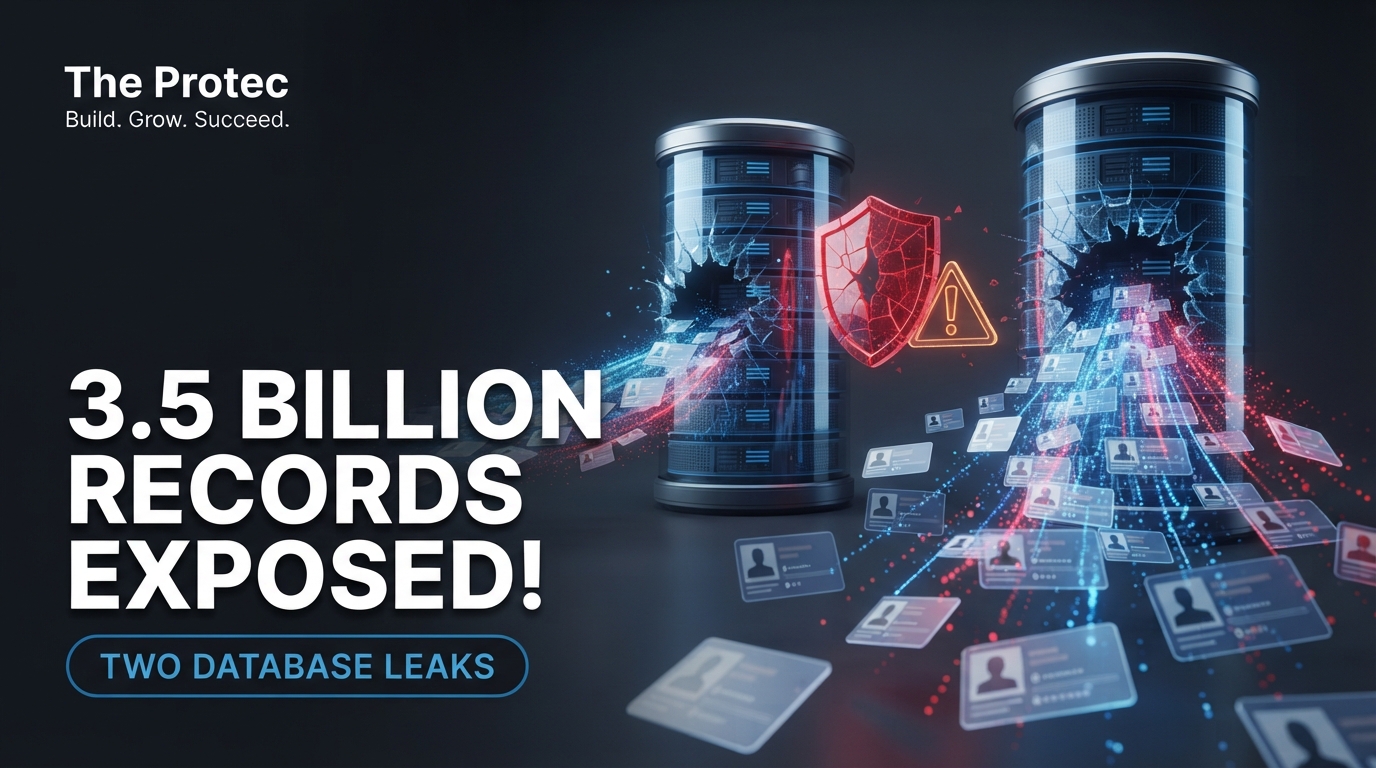
Two Database Leaks Left 3.5 billion records exposed to abuse

Here is the core problem: fraudsters adapt quickly. If a system blocks high-value transfers, attackers test smaller amounts. If geolocation checks are strict, they use proxies, VPNs, or compromised local devices. If a platform relies heavily on static rules, criminals learn the boundaries and operate just under them. This creates two costly outcomes: fraud slips through, or legitimate customers get blocked.

That second issue matters more than many leaders realize. False positives reduce conversion, frustrate customers, overload review teams, and create friction in high-volume environments. Businesses need fraud prevention tools that are accurate enough to stop bad actors without punishing real users. AI fraud detection is designed to solve that balance.

How AI Fraud Detection Works in Real Business Environments

AI fraud detection systems use machine learning, behavioral analytics, anomaly detection, and graph-based intelligence to identify suspicious activity across users, devices, transactions, and sessions. Rather than checking a single event in isolation, these systems evaluate context.

For example, an AI model can assess whether a login is unusual based on dozens or hundreds of variables: device fingerprint, typing cadence, session velocity, location consistency, time of day, historical behavior, payment patterns, and network reputation. A transaction may look normal on its own, but when combined with other weak signals, it becomes highly suspicious.

In practice, these systems often work in layers:

  • Data collection: Signals are collected from transactions, devices, user behavior, account history, and external threat intelligence.
  • Model scoring: Machine learning models assign risk scores based on the likelihood of fraud or account abuse.
  • Decisioning: The platform determines whether to approve, decline, step-up authenticate, or route for manual review.
  • Feedback loops: Investigator decisions and confirmed fraud cases are fed back into the model to improve future predictions.

This continuous learning is what gives AI security systems an edge. They do not just apply rules. They refine their understanding of risk as business conditions and attacker behavior change.

Real-World Fraud Detection Systems Powered by AI

Businesses are already using AI-powered fraud detection across many scenarios. The most effective systems do not depend on one model alone. They combine behavioral analytics, supervised learning, unsupervised anomaly detection, and graph intelligence to create a more complete view of risk.

1. Payment fraud detection in e-commerce and fintech

In e-commerce and digital payments, AI fraud detection systems monitor card testing, bot-driven checkout abuse, chargeback fraud, and suspicious purchase patterns. These systems can detect when a fraudster is using stolen payment credentials, even if the transaction details look legitimate at first glance.

Modern platforms can also identify coordinated fraud rings by connecting related accounts, shared devices, reused shipping addresses, and repeated behavioral patterns. That kind of network visibility is difficult to achieve with manual review alone.

2. Account takeover prevention

Account takeover remains one of the most damaging forms of fraud because it often begins with subtle signals. A criminal may use leaked credentials, session hijacking, social engineering, or SIM swap attacks to gain access. AI security systems can spot abnormalities such as unusual login velocity, unfamiliar device behavior, impossible travel, and changes in interaction patterns.

Some systems now go beyond login checks and watch the entire session. If an attacker logs in successfully but begins changing payout details, adding new beneficiaries, or altering contact information, the system can escalate risk instantly.

3. Synthetic identity detection

Synthetic identity fraud is especially difficult because it blends real and fake data. Fraudsters create new identities using a mix of stolen credentials and fabricated details, then slowly build trust before cashing out. Traditional controls often miss these cases because no single record appears obviously fraudulent.

AI fraud detection helps by identifying weak links across identity attributes, application behavior, document signals, and network relationships. Graph-based models are particularly valuable here because they can reveal hidden connections between identities that appear unrelated on the surface.

4. Insurance and claims fraud

In insurance, AI-powered systems are used to detect suspicious claims, staged incidents, duplicate submissions, and abnormal provider patterns. By analyzing historical claim data and comparing it with new submissions, AI can surface cases that deserve closer review.

These systems are especially useful when fraudsters exploit timing, documentation gaps, or repeated claim behaviors that might otherwise escape notice. The result is a more targeted review process and less wasted effort on low-risk claims.

5. Internal fraud and privilege abuse

Fraud does not always come from outside the organization. In some cases, employees or contractors misuse access, manipulate records, or bypass controls. AI security systems can monitor privileged actions, unusual data exports, abnormal login windows, and deviations from routine administrative behavior.

This is becoming more important as companies adopt distributed work models and cloud-based access architectures. The more fragmented the environment, the more valuable adaptive monitoring becomes.

The AI Techniques Driving Better Fraud Prevention Tools

Not all AI fraud detection systems are built the same. The best platforms combine several analytical approaches to improve accuracy and reduce blind spots.

Supervised machine learning

Supervised models learn from labeled examples of fraud and legitimate behavior. They are effective when a business has enough historical data and a reliable feedback loop. These models are widely used in transaction scoring, login monitoring, and payment risk analysis.

Unsupervised anomaly detection

Because many fraud patterns are new or rare, unsupervised models are useful for spotting behavior that deviates from normal baselines. This approach is especially valuable when attackers change tactics faster than labeled data can be updated.

Graph analytics and relationship mapping

Fraud rarely happens in isolation. Attackers reuse devices, IP ranges, emails, phone numbers, addresses, and payment methods. Graph-based AI security systems map these relationships and reveal hidden clusters of suspicious activity. This is one of the most powerful ways to identify organized fraud rings.

Behavioral biometrics

Behavioral biometrics look at how a person interacts with a device rather than just what credentials they use. Typing rhythm, mouse movement, screen gestures, and navigation patterns can help distinguish real users from bots or intruders. This is increasingly valuable in mobile and web-based fraud prevention tools.

Natural language and content analysis

AI can also analyze free-text fields, support chats, application notes, and submitted documents. This helps detect inconsistencies, generated content, or suspicious language patterns that may indicate fraud or social engineering.

Why Businesses Are Investing More in AI Security Systems

There are several reasons AI-powered fraud detection systems are gaining momentum across industries.

  • Speed: AI can evaluate risk in milliseconds, which matters in real-time payment and login flows.
  • Accuracy: Better models reduce false positives and help preserve the customer experience.
  • Scalability: AI can handle large transaction volumes without requiring proportional increases in manual review teams.
  • Adaptability: Models can evolve as fraud tactics shift, unlike fixed rules that age quickly.
  • Cross-channel visibility: AI can connect activity across web, mobile, API, and back-office systems.

Many organizations are also under pressure from regulators, auditors, and customers to demonstrate stronger controls. AI fraud detection supports that effort by creating more consistent risk decisions, more traceable review workflows, and better reporting around suspicious activity.

Challenges Businesses Must Address Before Deployment

Even the most advanced fraud prevention tools are not plug-and-play. Businesses need to plan carefully to avoid common mistakes.

First, data quality matters. AI systems are only as good as the data they receive. Missing fields, inconsistent labeling, weak identity resolution, and siloed systems can weaken performance. Second, model drift is a real issue. Fraud patterns change, customer behavior changes, and seasonal spikes can distort baseline assumptions. Teams need ongoing monitoring and retraining.

Third, explainability matters. In highly regulated sectors, it is not enough to say a model flagged a transaction. Teams need to understand why. Modern AI security systems increasingly provide reason codes, feature importance, and analyst-facing explanations to support reviews and compliance.

Finally, there is the challenge of balancing automation with human judgment. AI should not replace investigators entirely. The best systems use automation to prioritize work, surface risk, and reduce noise so analysts can focus on the hardest cases.

What Strong AI Fraud Detection Looks Like in Practice

A mature AI fraud detection program usually includes the following capabilities:

  • Real-time risk scoring across transactions, logins, and account actions
  • Behavioral and device intelligence
  • Graph-based identity and network analysis
  • Manual review workflows with feedback loops
  • Explainable alerts and audit trails
  • Adaptive thresholds that change with risk conditions
  • Integrated case management and investigator tooling

The goal is not simply to detect fraud after it happens. The goal is to reduce exposure before losses scale, while keeping legitimate customers moving smoothly through digital channels.

How to Choose the Right Fraud Prevention Tools

When evaluating fraud prevention tools, businesses should look beyond marketing claims and assess practical fit.

  • Can the system analyze behavior in real time?
  • Does it support multiple risk signals, not just transaction data?
  • How transparent are the scoring decisions?
  • Can it reduce false positives without weakening defenses?
  • Does it integrate with existing identity, payment, and security systems?
  • Can it adapt to new fraud patterns without constant manual tuning?

Businesses should also test the solution against real operational workflows. A powerful model is not useful if analysts cannot act on alerts efficiently or if the system creates too much friction for customers.

The Future of AI Fraud Detection

The next wave of AI fraud detection will likely be even more adaptive and interconnected. Expect broader use of multimodal analysis, where systems combine text, image, behavioral, and network data to assess risk. Expect stronger integration between fraud, identity verification, and cybersecurity operations. And expect more use of agentic workflows, where AI helps investigators triage cases, summarize evidence, and recommend next steps.

At the same time, fraudsters are also adopting AI. That means businesses must treat AI security systems as dynamic defenses rather than static products. The winners will be organizations that use AI not only to detect fraud faster, but to understand how fraud evolves across the entire customer lifecycle.

In other words, the fight is no longer manual versus automated. It is adaptive intelligence versus adaptive crime. Businesses that invest in modern AI fraud detection will be far better positioned to protect revenue, preserve trust, and stay ahead of the next wave of attack techniques.

FAQ

What is AI fraud detection?

AI fraud detection uses machine learning, behavioral analytics, and anomaly detection to identify suspicious activity in real time. It helps businesses spot fraud patterns that traditional rules may miss.

How do AI security systems reduce false positives?

AI security systems evaluate many signals together, such as device behavior, transaction history, and user patterns. This context improves accuracy and helps avoid blocking legitimate customers unnecessarily.

Which industries benefit most from fraud prevention tools?

Banking, fintech, e-commerce, insurance, healthcare, and subscription businesses all benefit significantly. Any organization that handles digital identity, payments, or sensitive account activity can use AI-powered fraud detection.

Can AI detect new types of fraud?

Yes. Unsupervised and graph-based models are especially useful for identifying novel fraud patterns, unusual clusters, and emerging attack behavior even when there is little historical label data.

Do AI fraud detection systems replace human analysts?

No. They are best used to support analysts by prioritizing alerts, reducing noise, and surfacing the most suspicious cases. Human judgment is still important for complex investigations and edge cases.

Tagged: account takeover AI fraud detection AI security systems behavioral biometrics fraud analytics fraud prevention tools synthetic identity

Post navigation

Previous: Why Businesses Are Replacing Traditional Servers with Edge Computing
Next: Best Grok Prompts for Resume Writing and LinkedIn Optimization

Leave a Reply Cancel reply

Your email address will not be published. Required fields are marked *

Related News

Two Database Leaks Left 3.5 billion records exposed to abuse Two Database Leaks Left 3.5 billion records exposed to abuse

Two Database Leaks Left 3.5 billion records exposed to abuse

Aaron Thomas9 hours ago9 hours ago 0
Why the GTA 6 hacker sentenced to seven years is now walking free Why the GTA 6 hacker sentenced to seven years is now walking free

Why the GTA 6 hacker sentenced to seven years is now walking free

Ellie Adam11 hours ago14 hours ago 0
What is Magecart? How E-Commerce Web Skimming Attacks Unfold What is Magecart? How E-Commerce Web Skimming Attacks Unfold

What is Magecart? How E-Commerce Web Skimming Attacks Unfold

Aaron Thomas2 days ago2 days ago 0
Inside the Optimizely supply chain attack and its malicious scripts Inside the Optimizely supply chain attack and its malicious scripts

Inside the Optimizely supply chain attack and its malicious scripts

Aaron Thomas2 days ago2 days ago 0

Watch Our Videos
GTA 6 is one of the biggest games in the worldβ€”but what if PC gamers didn't have to wait for Rockstar to bring it to Windows?

An independent open-source project called **Leonida** is exploring a very different route: taking the Xbox Series version of Grand Theft Auto VI and attempting to transform it into a Windows-compatible program.

And the technical idea is fascinating.

Xbox Series consoles and modern gaming PCs share the x86-64 CPU architecture. That gives Leonida a potential starting point for *static recompilation*β€”an approach that analyzes existing game instructions and adapts them for another software environment.

But that's only one piece of the puzzle.

In this video, we explore how Leonida's approach differs from traditional emulation, how Xbox graphics shaders could be translated into SPIR-V for Vulkan, and why recreating console services, memory management, graphics pipelines, assets, audio and input is an enormous engineering challenge.

Most importantly, we'll separate technical progress from the hype.

*Leonida has not demonstrated a complete GTA 6 launch or playable gameplay.* Shader translation and asset extraction are meaningful technical components, but they do not amount to a working PC port. This is an independent community projectβ€”not an official Rockstar Games release.

Could this approach eventually work? And what would Leonida need to prove before PC gamers could actually play?

Watch until the end for the reality check.

πŸ‘ Like the video if you enjoy deep dives into gaming technology, and subscribe to *The Protec* for more stories about the technology changing gaming, software and the digital world.

*Would you trust an open-source community project to bring GTA 6 to PC before Rockstar does?* Tell us in the comments.

Read the full article:
https://www.theprotec.com/blog/leonida-gta-6-pc-xbox-static-recompilation-vulkan/

#GTA6 #Leonida #PCGaming #Vulkan #GamingTechnology
Leonida GTA 6 PC: Can Gamers Run GTA 6 Without an Xbox?
Imagine giving an AI your entire software projectβ€”not just one file, not just a few functions, but thousands of connected files, dependencies, configuration settings and documentation.

Could it understand how everything works together?

Google's Gemini 4 Neon arrives with a headline feature that could change how developers work: a *one-million-token context window*. But having room to process an enormous amount of information doesn't automatically mean an AI can understand it.

In this documentary, we investigate what Google's new AI model could mean for software developmentβ€”and whether it can move beyond code autocomplete to genuinely useful project-level reasoning.

We'll explore:

🧠 *The Million-Token Context Window* – What one million tokens actually means, how much information it can hold and why capacity isn't the same as comprehension.

πŸ’» *Understanding Entire Codebases* – How developers could use Neon to map repositories, follow dependencies, trace bugs across services, refactor applications and generate tests.

πŸ€– *AI Coding Agents* – How agentic workflows can plan tasks, inspect files, use tools, edit code, run tests and revise their work.

βš™οΈ *Google Antigravity* – Where Google's development environment fits into the workflow and how it differs from the underlying AI model.

πŸ“Š *Gemini vs ChatGPT vs Claude* – How to compare coding models fairly without assuming that one benchmark or context-window size determines the winner.

πŸ’° *The Real Cost* – Why processing hundreds of thousands of tokens can become expensive, how repeated agent calls affect usage and why Google AI Pro access does not automatically mean unlimited API access.

⚠️ *The Limitations* – Hallucinations, missed details, long response times, unreliable code changes, security risks and why developers still need to review AI-generated work.

We'll also separate Google's own benchmark claims from independently verified results and examine what developers should actually test before trusting a model with a large project.

A million-token context window is impressive. But can an AI find the right details, understand their relationships and make changes without breaking something else?

*Would you trust an AI with your entire codebase?*

Read the full article:
https://www.theprotec.com/blog/gemini-4-neon-million-token-ai-developers/

πŸ‘ Like the video, subscribe to The Protec for more technology documentaries, and stay tuned as we explore the next generation of AI coding agents.

#Gemini4 #GoogleAI #AICoding #AI Agents #SoftwareDevelopment
Google's Gemini 4 Neon: Can This AI Understand an Entire Codebase?
What happens when the internet disappears? Phones lose their connection. Websites stop loading. Mobile networks may go offline. But thousands of miles away, someone could still receive a message through a radio signal traveling through the sky.

That's the remarkable technology behind *High Frequency (HF) radio communication*.

In this video, we explore how HF radio signals can travel beyond the horizon by interacting with the ionosphere, allowing distant stations to exchange messages without relying on cellular towers, fiber-optic cables or conventional internet infrastructure.

We'll also explore two open-source projects from Rhizomatica:

πŸ“‘ *HERMES* – A broader communications system designed to bring digital communication to remote and underserved communities.

πŸ’» *Mercury* – An open-source HF software modem that converts computer data into signals that can travel over radio. It supports adaptive data communication and can run on Linux, Windows and Raspberry Pi hardware.

You'll discover:
- How HF radio differs from ordinary FM broadcasting and internet communication.
- How the ionosphere helps radio signals travel beyond the horizon.
- How computers, modems, transceivers and antennas move digital messages through the air.
- Why store-and-forward messaging can work even when a live connection isn't available.
- How open-source radio technology can support remote communities and emergency communication.
- Why HERMES and Mercury matter for independent communication infrastructure.
- The real limitations: bandwidth, interference, atmospheric conditions, antennas, equipment and radio licensing.

HF radio isn't a replacement for broadband internet. It can't deliver the same speed or convenience. But when conventional infrastructure is unavailable, the ability to exchange essential information over long distances can be incredibly valuable.

*Read the full article:*
https://www.theprotec.com/blog/open-source-hf-radio-communications-hermes-mercury/

If the internet disappeared tomorrow, would you know how to communicate?

πŸ‘ Like the video if you found it useful, subscribe to The Protec for more technology explainers, and join us as we explore the future of open communication technology.

#HFRadio #OpenSource #EmergencyCommunications #RadioTechnology #OfflineCommunication
How Can Radio Communicate Across the World Without the Internet?
Subscribe

Trending Now

What's New?

Technology News
Microsoft Code Red: What Failed in the 24-Hour Microsoft 365 Outage 01
4 hours ago4 hours ago
02
Software Development
Kagi Mail vs Gmail: Is Privacy Worth the $99 Subscription?
03
AI Development
Build a React Multilingual Editor with the Chrome built-in AI API
04
Cybersecurity
Two Database Leaks Left 3.5 billion records exposed to abuse
05
Cybersecurity
Why the GTA 6 hacker sentenced to seven years is now walking free
06
Programming
Understanding integer vs pointer in C: Memory Rules That Matter

Category Collection

Artificial Intelligence161 News
AWS2 News
Bitcoin3 News
Blockchain5 News
Design Tools10 News
Digital Courses3 News
Digital Currency2 News
E-Commerce3 News
EdTech8 News
Freelancing3 News
Mobile Technology34 News
Project Management3 News
SEO7 News

Popular This Month

Subscription Form

  • Cryptocurrency
  • Software Development
  • Hardware
  • CRM
  • SaaS
  • Design & Media
  • Career & Earning
  • CRM
  • Buying Guides
  • Privacy Policy
  • Contact Us
The Protec Blogs 2026. Flag Counter Powered By Computer Zila.