








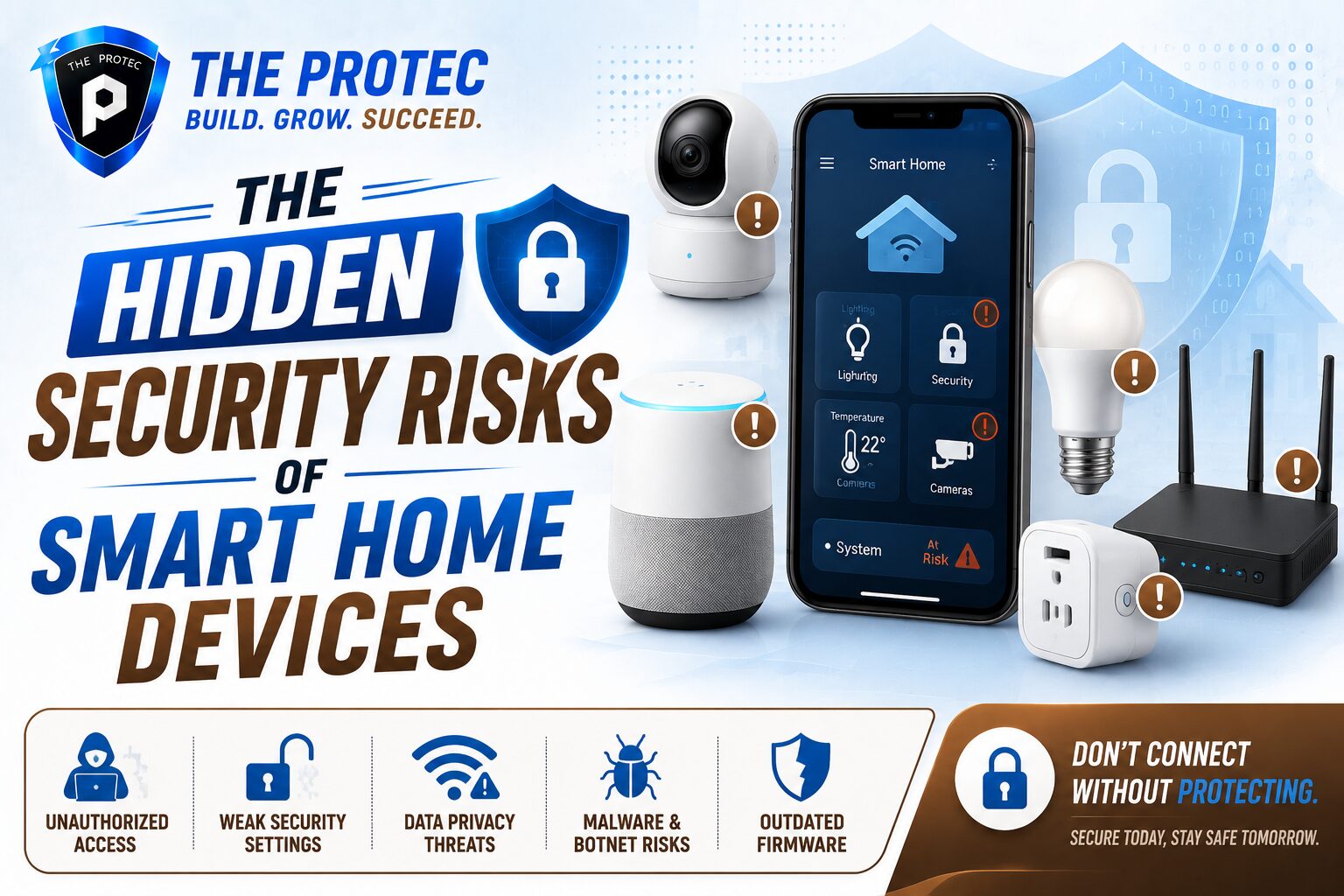
The Hidden Security Risks of Smart Home Devices
Smart homes promise convenience: lights that respond to your voice, cameras you can check from anywhere, thermostats that learn your routine, and locks that open with a tap. But every connected device added to the home also adds another possible path for attackers, data brokers, and careless third parties to learn about your life. That is the core tension behind modern smart home security. The same features that make these devices attractive can also make them risky, especially when manufacturers prioritize speed to market over security, or when users never change the default settings.
What makes this issue more urgent is the way the smart home has evolved. Devices are no longer isolated gadgets. They connect to cloud services, mobile apps, voice assistants, streaming platforms, home hubs, and sometimes even employer-managed accounts. That interconnection creates a much larger privacy surface than most people realize. In other words, the problem is not only whether a smart lock can be hacked. It is also whether your camera clips are stored securely, whether your voice commands are being retained, whether your occupancy patterns can be inferred, and whether a compromised light bulb can become a doorway into your entire network.
This article breaks down the most important IoT vulnerabilities and smart device privacy concerns, then explains what homeowners can do to reduce risk without giving up the benefits of a connected home.
Why Smart Home Security Is More Complicated Than It Looks
Traditional home security used to be relatively straightforward. A burglar might force a door, break a window, or disable an alarm. Smart home security introduces a different class of threats that are harder to see and often harder to understand. A device can appear to work perfectly while quietly leaking data, using weak authentication, or exposing your home network to attackers.
Today’s smart homes often include a mix of brands and ecosystems. A single household might use a video doorbell from one vendor, smart speakers from another, lighting from a third, and a third-party automation app to glue everything together. Each vendor has its own firmware, cloud architecture, privacy policy, and security posture. If any one of those pieces is weak, the whole environment becomes more vulnerable.
Recent security trends also show that attackers increasingly target the “edges” of home networks: poorly secured routers, outdated IoT devices, abandoned companion apps, and cloud accounts with weak passwords or reused credentials. Because smart home devices are typically designed for convenience, many default to always-on connectivity, remote access, and broad permissions. That convenience can become a liability when devices are exposed to the internet or when users do not regularly review settings.
The Biggest IoT Vulnerabilities in Connected Homes
IoT vulnerabilities are not theoretical. They are the practical weaknesses that make connected devices easy to misuse, hijack, or surveil. While the details vary by device type, several common patterns appear again and again.
Weak or Default Credentials
Many smart devices ship with default usernames, passwords, or setup codes that users never change. In some cases, the device uses a companion app account that is protected only by a simple password and no multi-factor authentication. If attackers obtain leaked credentials from another service, they may try the same login on smart home accounts through credential stuffing attacks.
Poor Firmware Hygiene
Firmware is the low-level software running inside devices. When vendors do not patch firmware regularly, known vulnerabilities can remain open for months or years. Some devices also make updates difficult, burying them in obscure menus or requiring users to manually check for updates. If a device is abandoned by the manufacturer, it can become a permanent weak point on the network.
Excessive Network Trust
A surprisingly large number of devices can communicate beyond what they strictly need. A smart bulb should not have broad access to other home devices, yet many home networks place all IoT products on the same Wi-Fi segment as laptops, phones, and work computers. If one device is compromised, attackers may pivot laterally and inspect or attack other systems.
Cloud Dependency and API Abuse
Many devices depend on cloud servers to function. That means user data, video feeds, event logs, and device controls may pass through external services. If an API is poorly secured, an account is hijacked, or a cloud provider is breached, a user can lose privacy even if the physical device itself is not directly compromised.
Insecure Integrations
Smart homes increasingly rely on automations and third-party integrations. Voice assistants, IFTTT-style workflows, and hub-based control systems can create hidden access paths. The more integrations a home uses, the greater the chance that permissions become overbroad or forgotten. Attackers often seek out these overlooked connections because they are easier to exploit than the main device.
Smart Device Privacy: What Your Devices May Be Learning
Smart device privacy is often underestimated because the risks are less visible than malware or break-ins. Yet privacy leakage is one of the most significant dangers in a connected home. Devices can collect more than users expect, and the data they generate can reveal highly personal details about daily life.
Behavioral Patterns and Occupancy
Smart thermostats, lights, locks, and sensors can reveal when people wake up, leave home, return, or go on vacation. Even without audio or video, a pattern of device events can map a household’s routine with striking accuracy. For a privacy-conscious user, that data can be more sensitive than many realize because it exposes lifestyle habits and vulnerabilities.
Audio and Video Exposure
Smart speakers and cameras are especially sensitive because they can capture intimate moments inside the home. Voice assistants may store snippets of recordings for quality assurance or feature improvements, and security cameras often upload clips to the cloud. If those accounts are breached, or if access permissions are too broad, private household information can be exposed.
Data Sharing With Third Parties
Device manufacturers may share telemetry with analytics providers, advertisers, or service partners. Some apps also request permissions unrelated to device function, such as contact access, location data, or Bluetooth scanning. Over time, this data can be combined into a highly detailed profile of a household’s routines, preferences, and relationships.
For broader privacy context, the Electronic Frontier Foundation offers useful consumer guidance on connected devices and data collection: https://www.eff.org/issues/privacy-smart-devices. For current device security advisories and vulnerability disclosures, the U.S. Cybersecurity and Infrastructure Security Agency is also a valuable reference: https://www.cisa.gov/known-exploited-vulnerabilities-catalog.
How Smart Home Devices Become Security Entry Points
Attackers do not always target the most expensive or obvious device. They often look for the easiest entry point. A cheap plug, a forgotten camera, or a vendor app with weak authentication may be enough to gain a foothold inside the home.
One common scenario starts with credential theft. If a user reuses a password across services and one unrelated site suffers a breach, attackers may test those credentials against smart home platforms. If there is no multi-factor authentication, the account can be taken over in seconds. From there, the attacker may disable alarms, view camera feeds, unlock doors, or observe occupancy patterns.
Another scenario involves network compromise. A vulnerable IoT device on the same network as a laptop or NAS device can be exploited to scan the local environment. Attackers then search for file shares, admin dashboards, or router interfaces. What begins as a compromised light switch can escalate into a broader household breach.
There is also a quieter threat: passive data collection. Some devices are not “hacked” in the traditional sense, but still leak enough metadata to reveal useful intelligence. For instance, an attacker who knows when a home is empty can time a physical intrusion. A malicious app that learns when cameras are turned off can infer when the household is vulnerable.
New Smart Home Trends That Change the Risk Landscape
As of May 2026, the smart home market is being shaped by more edge AI, more voice-driven automation, more interoperable ecosystems, and tighter integration with phones, wearables, and home energy systems. These trends bring convenience, but they also change the threat model.
Edge AI features can reduce cloud dependence in some products, which is good for privacy in theory. However, many devices still rely on companion cloud services for authentication, analytics, or remote access. That means a product may market itself as local-first while still sharing data externally under certain conditions.
Interoperability is another double-edged sword. Standards that allow devices to work across ecosystems make smart homes easier to manage, but they also widen the integration surface. A secure device can still be exposed through a less secure hub or automation layer. Meanwhile, voice assistants continue to expand beyond speakers into TVs, appliances, and cars, increasing the number of places where household data can be inferred or stored.
Home energy management is also becoming part of the smart home stack. Solar inverters, battery systems, EV chargers, and smart panels can reveal when a home is occupied, how much power is consumed, and when appliances are used. This information is valuable to attackers and data brokers alike, making smart home security more than just a matter of cameras and locks.
Practical Ways to Protect Smart Home Privacy and Security
Good smart home security does not require turning your home into a fortress. It does require setting boundaries, reducing unnecessary exposure, and choosing devices carefully. The following steps make the biggest difference.
1. Segment IoT Devices From Personal Devices
Use a separate Wi-Fi network or guest network for smart home devices whenever possible. The goal is to keep IoT devices away from laptops, work computers, and phones that store sensitive information. If your router supports VLANs or advanced segmentation, use them. Limiting lateral movement is one of the most effective ways to contain a breach.
2. Turn On Multi-Factor Authentication Everywhere
Protect the account that controls your smart home platform with multi-factor authentication. If a vendor offers passkeys, consider using them. Strong account protection matters because many smart home incidents start with account takeover rather than device hacking.
3. Change Default Settings Immediately
Review every device during setup. Replace default passwords, disable unnecessary remote access, and turn off any feature you do not use. If a camera does not need audio, disable the microphone. If a voice assistant does not need purchase permissions, remove them.
4. Keep Firmware and Apps Updated
Update devices, companion apps, routers, and hubs regularly. When possible, enable automatic updates from trusted vendors. If a product no longer receives security patches, replace it. An unsupported device is a long-term liability, not a bargain.
5. Review Privacy Controls and Data Retention
Check how long video clips, voice recordings, and event logs are stored. Reduce retention periods where possible. Opt out of analytics or personalized advertising when the option exists. Also review whether the app can access location, contacts, and other permissions that are not needed for the device to work.
6. Buy From Vendors With a Strong Security Record
Look for companies that publish vulnerability disclosure programs, commit to update timelines, and explain data handling clearly. Devices that support local control, encrypted communications, and transparent privacy settings are generally safer choices than products that rely entirely on opaque cloud services.
7. Monitor Device Behavior
Pay attention to unusual activity: unexpected logins, devices coming online at strange times, cameras activating without reason, or settings changing on their own. Many users only notice problems after a full compromise, but routine monitoring can catch suspicious behavior early.
8. Secure the Home Router
Your router is the gatekeeper for the entire smart home. Use strong administrator credentials, update router firmware, disable remote administration unless necessary, and use WPA3 if available. A secure network foundation reduces the risk that one weak device can compromise everything else.
Choosing Safer Smart Home Devices
Not all devices are equal. When evaluating a new product, look beyond the feature list and ask a few security-focused questions. Does the manufacturer explain how data is stored? Are updates supported for multiple years? Can the device function locally if the cloud service is unavailable? Does the app require excessive permissions? Is there a clear way to delete recordings and accounts?
Products with privacy-friendly design often provide local processing, encrypted communication, two-factor authentication, and granular access control. They may also let users create separate household roles, so guests or family members do not need full administrative access. These details matter because they reduce both IoT vulnerabilities and privacy exposure over the life of the device.
It is also wise to avoid building a smart home around impulse purchases. A discounted camera or door sensor may look attractive, but if the vendor has a poor update history or vague privacy policy, the long-term cost can be much higher than the sticker price.
FAQ: Smart Home Security and Privacy
Are smart home devices inherently unsafe?
No. Smart home devices are not automatically insecure, but they do expand the attack surface. The risk depends on the device quality, vendor practices, account security, network setup, and how carefully the household manages permissions and updates.
What is the biggest smart device privacy risk?
For many households, the biggest privacy risk is not a dramatic hack but the steady collection of behavioral data. Device logs, voice recordings, camera clips, and usage patterns can reveal when people are home, how they live, and what they do inside the house.
How can I tell whether a device has IoT vulnerabilities?
Look for signs such as poor update support, weak authentication, broad permissions, excessive cloud dependence, and a lack of transparency about data handling. Security advisories, product reviews, and the vendor’s patch history are useful indicators.
Should I avoid cloud-connected smart home products?
Not necessarily, but cloud dependence should be a deliberate choice rather than a default. If you can choose a device with local control, limited retention, and strong encryption, that often improves privacy and resilience.
What is the simplest step to improve smart home security today?
Start by enabling multi-factor authentication on your smart home account and moving IoT devices onto a separate network. Those two changes alone can block many common attacks and reduce the blast radius if a device is compromised.
Final Thoughts
Smart homes can be useful, comfortable, and increasingly efficient, but they should not be treated as harmless conveniences. Every camera, speaker, lock, sensor, and appliance introduces a new combination of software risk, account risk, network risk, and privacy risk. The good news is that most households can dramatically improve security with a few disciplined habits: isolate devices, keep software updated, reduce permissions, and choose vendors that respect privacy.
The real goal is not to eliminate all risk. It is to understand where smart home security breaks down, recognize the hidden ways IoT vulnerabilities can spread, and make choices that protect both convenience and privacy. When connected devices are configured thoughtfully, they can support a safer home rather than quietly undermining it.