







The Most Underrated SaaS Tools Businesses Are Discovering
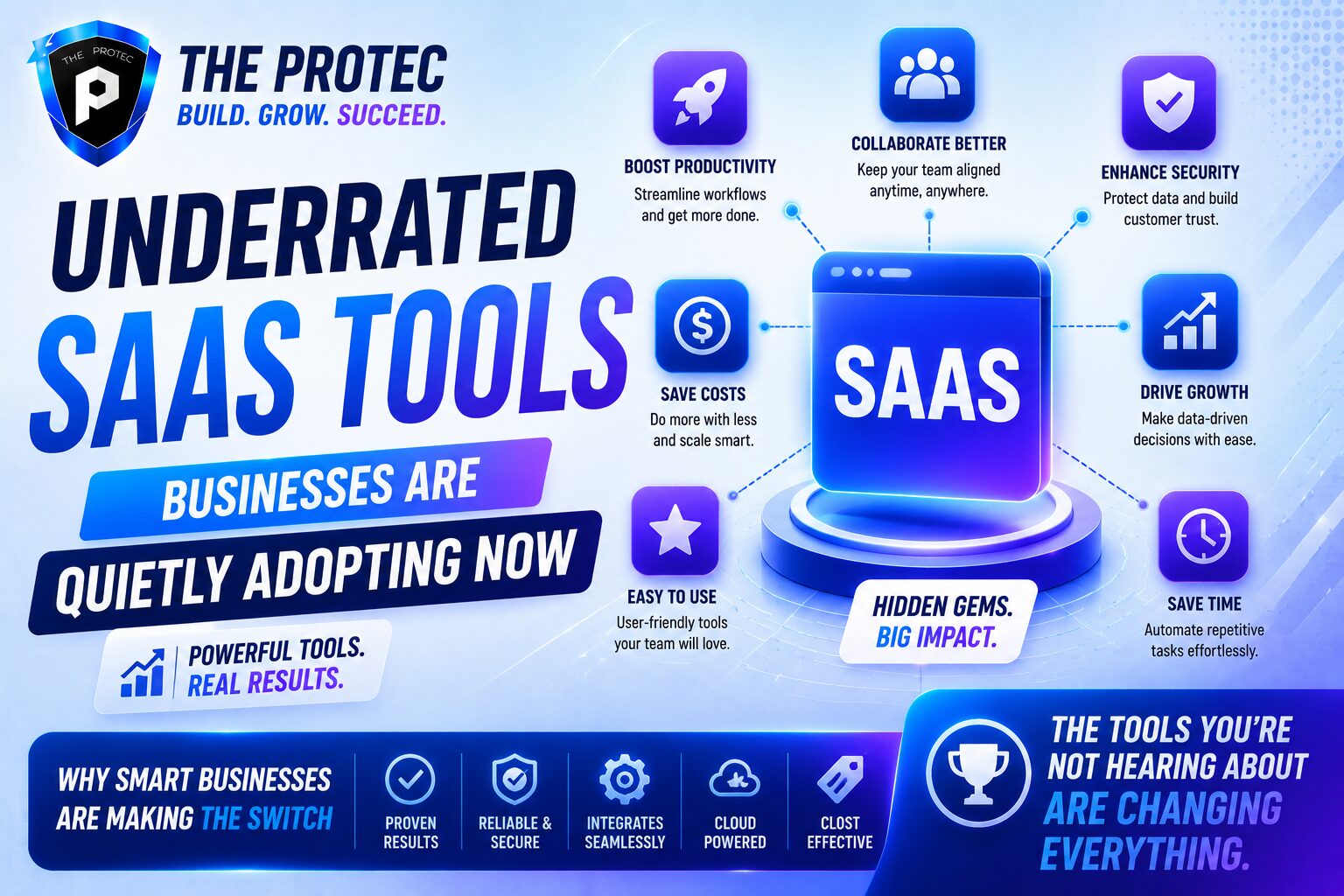
In a market crowded with all-in-one platforms, the most valuable software is not always the most famous. In fact, many teams are finding that the real gains in efficiency come from underrated SaaS tools that solve one specific problem exceptionally well. These products are often lighter, faster to deploy, and easier to adopt than sprawling enterprise suites. They also tend to be built around modern workflows, which makes them especially relevant as business software continues to evolve.
What makes these tools stand out is not hype but usefulness. They help teams automate repetitive tasks, improve communication, tighten security, manage knowledge, and reduce the friction that slows down execution. For companies looking to build a smarter stack in a world shaped by AI-assisted work, deeper integrations, and distributed teams, the best productivity SaaS options are often the ones flying just under the radar.
This curated list focuses on lesser-known but powerful SaaS products that businesses are discovering for real operational value. These are not necessarily the biggest names in the category, but they are often the most practical choices for teams that want more output with less complexity.
Why underrated SaaS tools are gaining attention
The shift toward specialized software is being driven by a few major trends. First, teams are increasingly allergic to bloated platforms that promise everything and deliver mediocrity in key areas. Second, companies want faster implementation and lower training overhead. Third, there is growing demand for tools that integrate cleanly with existing systems rather than forcing a full platform migration.
Another reason underrated SaaS tools are becoming more popular is the rise of AI-enhanced workflows. Businesses now expect software to do more than store data or move tasks from one stage to another. They want intelligent suggestions, automated summaries, better search, and context-aware actions. Many lesser-known tools are moving faster than legacy vendors in this area, which gives them a real advantage.
Finally, the modern stack is more modular than ever. Instead of buying one oversized suite and using only 20 percent of it, businesses are assembling collections of focused tools that work together. That makes discovery and evaluation more important than brand recognition alone.
1. Notion AI for structured knowledge and team workflows
Notion is no longer a secret, but many teams still underestimate how powerful it can be when used as a central operating layer. What makes it one of the best productivity SaaS options is not just document storage; it is the ability to combine notes, project tracking, databases, and AI-assisted drafting in one environment.
Businesses are using Notion to create lightweight operating systems for marketing teams, product roadmaps, onboarding hubs, and internal wikis. The AI features help summarize meeting notes, generate first drafts, and extract action items quickly. That means less time switching between apps and more time executing.
Why it is underrated: many organizations still treat it as a note-taking app, when it can actually replace several disconnected tools for internal knowledge management.
2. Coda for dynamic docs that behave like apps
Coda has quietly become a favorite for teams that want documents with real operational power. It blends tables, buttons, formulas, and automation into a flexible workspace that feels closer to a custom app than a static document.
For business software 2026 strategies, Coda is especially useful for cross-functional processes. Teams use it for editorial calendars, hiring pipelines, client trackers, approval workflows, and internal dashboards. Because everything can live inside one doc, it reduces the need for separate spreadsheet, form, and task-management tools.
The platform is particularly useful for lean teams that need to move quickly without investing in custom development. It offers a strong balance of structure and flexibility, which is why more businesses are discovering it as a practical alternative to heavier workflow systems.
3. Tana for connected knowledge and fast internal search

Tana has gained attention among power users, but it is still one of the underrated SaaS tools most businesses have not fully explored. Its biggest strength is the way it organizes information through connected nodes, making it easier to link notes, tasks, projects, and people in a highly searchable knowledge base.
For teams drowning in scattered documents and half-remembered Slack threads, Tana offers a more intelligent way to capture and retrieve information. It is especially valuable for founders, consultants, operators, and research-heavy teams that need to convert conversations into structured action quickly.
The platform’s appeal lies in speed and context. Instead of forcing information into rigid folders, it helps users create living knowledge systems that evolve with the business. In a world where memory and retrieval are becoming strategic advantages, that matters more than ever.
4. Raycast for command-style productivity on desktop
Raycast is one of those tools that quietly changes how people work once they start using it. It functions as a command center for launching apps, searching files, running snippets, managing clipboard history, and triggering workflows without constantly opening menus or switching contexts.
Although it began as a favorite among developers and tech-savvy operators, it is increasingly useful across business functions. Sales teams can use it for quick actions, marketers can connect it to content workflows, and executives can use it to reduce time lost to repetitive desktop tasks.
Raycast belongs on any list of best productivity SaaS tools because it improves the speed of everyday operations in a way that feels invisible but meaningful. Small time savings compound fast, especially in high-volume work environments.
5. Loom for asynchronous communication that reduces meetings

Loom is more well-known than some entries on this list, but it remains underrated in how businesses actually use it. Many teams still underestimate the value of short, recorded explanations for onboarding, feedback, product walkthroughs, and status updates.
As remote and hybrid work continue to shape business culture, asynchronous communication has become a serious productivity advantage. Loom helps teams cut down on unnecessary meetings while improving clarity. A quick recording often communicates more effectively than a long email thread or live call.
What makes it especially relevant now is the rise of AI-powered summaries and transcription. These features make recorded communication easier to scan, share, and archive. Businesses looking to improve collaboration without adding more meetings are increasingly treating Loom as essential infrastructure.
6. Slab for team knowledge that stays usable
Many companies build knowledge bases that look good during launch and quickly become useless. Slab takes a different approach by focusing on clarity, organization, and searchability. It is designed to make internal documentation easy to create and even easier to find.
For growing businesses, this matters because knowledge decay is expensive. When teams cannot quickly locate procedures, policies, or product information, they waste time and make avoidable mistakes. Slab helps solve that problem with clean structure, strong search, and a user experience that encourages actual adoption.
Compared with bulky intranet systems, Slab is lighter and more focused. That makes it a strong choice for companies building a modern business software 2026 stack centered on usability rather than complexity.
7. Process Street for repeatable operations
Process Street is a powerful choice for businesses that need standardized recurring workflows. It allows teams to create checklists, SOPs, approvals, and recurring processes that are consistent across departments. That consistency is critical for scaling operations without losing control.
It is especially helpful for onboarding, compliance, client delivery, finance operations, and internal reviews. Instead of relying on tribal knowledge, teams can follow structured processes that reduce mistakes and improve accountability.
What makes Process Street underrated is that it solves a dull but important problem: making repeatable work repeatable. In many organizations, that creates more value than another flashy collaboration tool ever could.
8. ClickUp AI for task management with more intelligence

ClickUp is a familiar name in project management, but its AI layer is what makes it worth revisiting. For teams that need one workspace to manage tasks, docs, goals, and collaboration, the newer intelligent features can significantly cut admin time.
Businesses are using ClickUp AI to summarize updates, draft content, organize task descriptions, and accelerate planning. When used well, it helps teams move from planning to execution with less friction. It is not the lightest tool on this list, but it is one of the most capable if you want breadth without immediately moving to an enterprise system.
Its underrated value lies in the balance between structure and flexibility. Teams can standardize work while still adjusting workflows to fit the way they actually operate.
9. Vanta for security automation and trust management
Security and compliance are no longer concerns only for large enterprises. Buyers increasingly expect proof that businesses handle data responsibly, and that pressure has made trust management a practical necessity. Vanta helps automate security monitoring, compliance workflows, and evidence collection.
For startups and mid-sized businesses, this is one of the smartest investments in the modern software stack. It reduces the manual burden of staying audit-ready and helps teams respond faster to customer security reviews. In an environment where vendor trust is scrutinized more closely, that can directly influence revenue.
Vanta is a strong example of an underrated SaaS tool that does not just save time; it helps unlock deals and reduce risk. That makes it strategically important, not just operationally convenient.
10. Fathom for meeting insights without the overhead
Fathom has become a favorite for teams that want meeting summaries, highlights, and searchable transcripts without introducing extra complexity. It records meetings, captures key points, and makes it easier to share the useful parts of a conversation with people who were not present.
As businesses try to reduce meeting overload, tools like Fathom become especially valuable. They let participants stay focused during the call while preserving the decisions and action items afterward. That helps improve follow-through and reduces the need to rehash the same discussions repeatedly.
It belongs in a list of the best productivity SaaS tools because it turns meetings into usable knowledge. That alone can have a noticeable impact on team execution.
How to choose the right underrated SaaS tools
Not every promising tool belongs in every stack. The best approach is to start with your biggest bottlenecks. If your team struggles with knowledge retrieval, prioritize a better documentation system. If meetings are eating your day, explore async communication and transcription tools. If recurring tasks are breaking down, invest in workflow automation and process management.
Here are a few practical criteria to use when evaluating new software:
- Adoption speed: Can your team learn it quickly without heavy training?
- Integration quality: Does it work smoothly with the tools you already use?
- Workflow fit: Does it solve a real problem, or just add another layer of complexity?
- Automation depth: Can it reduce manual work in meaningful ways?
- Scalability: Will it still be useful as your team grows?
The most underrated SaaS tools are often the ones that feel small at first but create outsized value once embedded into daily work. That is especially true when they eliminate repeated effort, improve visibility, or make knowledge easier to reuse.
The future of business software is modular, intelligent, and focused
The broader direction of business software is clear. Teams want systems that are easier to use, easier to connect, and more responsive to how people actually work. That is why underrated SaaS tools are gaining momentum. They fill the gaps left by larger platforms and often do so with a better user experience.
As AI becomes more deeply embedded in software, the advantage will increasingly go to tools that can combine intelligence with simplicity. Businesses do not need more dashboards for the sake of dashboards. They need software that helps them move faster, make fewer mistakes, and collaborate with less friction.
That is exactly where this category excels. Whether it is a command launcher, a smarter documentation tool, a workflow engine, or a meeting assistant, these products are proving that smaller can be better when the execution is strong.
FAQ
What are underrated SaaS tools?
Underrated SaaS tools are software products that deliver strong business value without the visibility or brand recognition of major market leaders. They often focus on one problem and solve it very well.
Why are businesses adopting lesser-known SaaS products?
Businesses are adopting them because they are often faster to implement, easier to use, and more adaptable than larger platforms. Many also offer better automation and more focused workflows.
What makes a SaaS tool one of the best productivity SaaS options?
The best productivity SaaS tools reduce friction, save time, and improve execution. They should fit naturally into daily workflows and help teams accomplish more with less manual effort.
How do I know if a SaaS tool is worth adding to my stack?
Look for a clear pain point it solves, strong integrations, quick adoption, and measurable time savings. If it adds complexity without removing friction, it is probably not worth it.
Final take
The most underrated SaaS tools are not hidden because they lack value. They are often overlooked because they are focused, practical, and built for teams that care more about outcomes than buzz. As businesses refine their stacks, these tools are becoming the quiet winners of modern operations.
For companies navigating the current wave of business software, the lesson is simple: do not chase the loudest name. Look for the tool that removes the most friction. That is where the real productivity gains are hiding.