








The New Generation of SaaS Startups Is Being Built by Tiny Teams
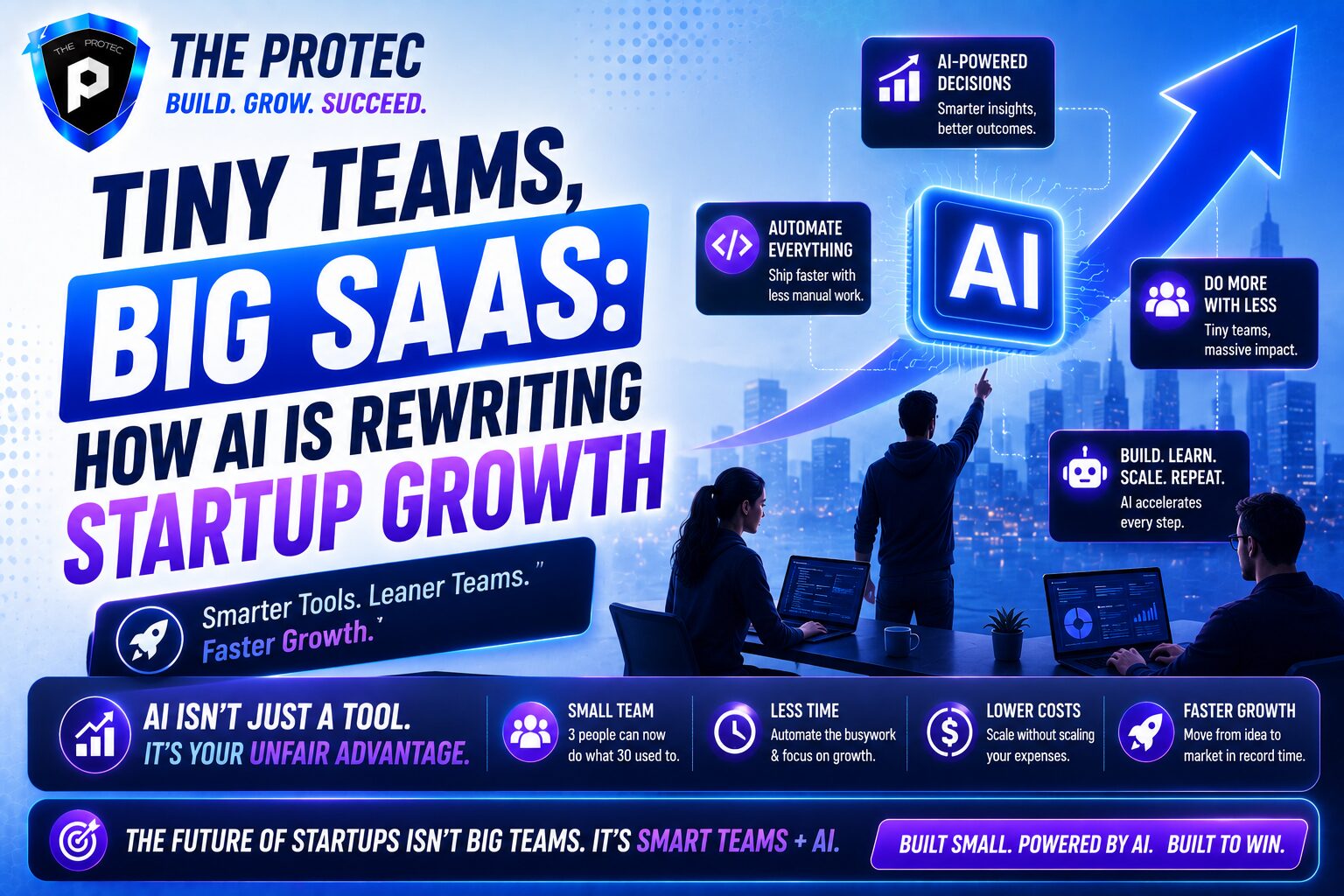
For years, the default startup playbook was simple: raise money, hire fast, build a large engineering team, and scale with headcount. That model still exists, but it is no longer the only path to building a serious software business. A new generation of SaaS startups is proving that small teams can move faster, ship smarter, and compete with companies that once relied on much larger organizations.
The biggest reason is AI. From code generation and testing to support, sales operations, and analytics, AI tools are reducing the amount of manual work required to launch and run a SaaS company. The result is a major shift in SaaS trends: founders are building valuable products with fewer people, lower burn, and much tighter focus. In many cases, micro SaaS businesses and AI startups are now outpacing traditional startups in speed, clarity, and efficiency.
This is not just a trend in startup culture. It is a structural change in how software gets built. The cost of creating, distributing, and improving software has dropped dramatically, and tiny teams are taking full advantage of it.
Why tiny teams are winning in SaaS
The classic SaaS growth story relied on scale early: more developers, more designers, more marketers, more operations. But that approach often created complexity before product-market fit was even clear. Small teams are now flipping that equation. Instead of building a broad organization around an uncertain product, they are using leverage to stay lean until the market proves itself.
There are several reasons this works so well today. First, cloud infrastructure and no-code tools already removed much of the operational burden from software creation. Now AI has gone further by accelerating nearly every function involved in shipping and supporting a product. Second, customers have become more willing to buy focused tools that solve one painful problem extremely well. Third, distribution channels like search, communities, product-led growth, and niche content allow small teams to reach the right audience without massive marketing spend.
In other words, software no longer needs a huge company to look credible. It needs a clear use case, fast execution, and a product that actually saves time or money. That is exactly where tiny teams excel.
How AI is reducing the need for large development teams
The most important shift in modern SaaS is not that AI writes code. It is that AI removes entire categories of repetitive work that used to require multiple specialists. A product team that once needed several engineers, QA resources, and support staff can now automate large portions of the workflow.
1. Faster product development
AI coding assistants help founders and developers prototype features quickly, refactor existing code, generate tests, and document systems. This does not eliminate engineering skill, but it does compress time. A small team can now experiment with ideas at a pace that used to require a much larger group.
That speed matters because SaaS is often won by iteration. The team that learns from users fastest usually has the advantage. AI helps tiny teams ship, measure, and improve without waiting for a long internal cycle.
2. Smarter QA and debugging
Testing is one of the most time-consuming parts of software delivery. AI tools can help identify edge cases, generate test coverage, analyze logs, and suggest likely causes of bugs. While human review is still essential, these tools reduce the amount of manual checking needed before release.
For micro SaaS founders, this is especially important. Small teams cannot afford to spend weeks on release validation. AI shortens that cycle and gives founders more confidence to launch quickly and update often.
3. Automated customer support
Customer support is another area where AI has changed the economics of SaaS. AI-powered chat, help centers, and response triage can handle a large share of common questions. That means a tiny team can support a growing base of users without building a large support department immediately.
This is not about replacing human support entirely. It is about reserving human attention for the issues that truly need it. The combination of AI first responses and human escalation creates a much more efficient system.
4. Leaner sales and marketing operations
AI also reduces the need for large go-to-market teams. Founders use AI to draft outbound messages, summarize calls, analyze customer feedback, create content outlines, and segment audiences. The work still needs strategy and editing, but the heavy lifting is much lighter than before.
For SaaS startups, this is a huge advantage. It means a founder-led or two-person growth team can operate like a much larger organization if the product and positioning are strong.
Micro SaaS is becoming the default for focused founders
Micro SaaS is not a new concept, but AI has made it much more powerful. These are small, often highly specialized software products built to solve a narrow problem for a specific audience. Because the scope is small, the product can be maintained by a tiny team and still generate meaningful recurring revenue.
What has changed is the level of leverage available to founders. A micro SaaS startup no longer needs a large staff to maintain a niche product, respond to customers, or ship improvements. With AI handling much of the repetitive work, a small team can focus on understanding the customer and refining the product experience.
This is why so many new SaaS trends point toward specialization rather than broad platforms. Users are increasingly drawn to tools that do one thing well, integrate easily, and save time without requiring an enterprise rollout. Tiny teams are especially good at building these products because they can stay close to the problem and avoid unnecessary complexity.
The micro SaaS model is also attractive because it lowers risk. Instead of trying to build the next giant horizontal platform, founders can validate demand in a narrower market, improve retention, and expand only when the economics make sense.
AI startups are changing what a startup team looks like
AI startups are not just creating products powered by machine intelligence. They are also redefining the internal structure of a startup. In many cases, a company that would have needed a larger engineering and operations team can now function with a handful of highly capable generalists.
These teams often include a founder who understands the market deeply, one or two builders who can work across product and infrastructure, and maybe a specialist for growth or customer relationships. The rest is increasingly supported by AI tools and automated workflows.
This shift is possible because many startup tasks are more about coordination than raw labor. Writing product copy, summarizing customer interviews, generating onboarding emails, handling routine support, and drafting technical documentation are all areas where AI can amplify a small team’s output.
That does not mean every startup should be tiny forever. Some companies will absolutely need larger teams as they scale. But the early phase is changing. The best founders are using AI to delay hiring until the business actually needs it, not because they are under-building, but because they are building with better leverage.
Why the old hiring model is being challenged
Traditional startup hiring was often driven by fear: fear of missing deadlines, fear of technical debt, fear of customer churn, fear of being outpaced by competitors. AI reduces some of that fear by giving small teams more operational breathing room.
Instead of hiring broadly to cover every possible function, founders can now hire selectively and later. The modern question is no longer, “How many people do we need to build this?” It is, “How much can one strong person do with the right AI stack?”
This matters because bloated teams can slow down product decisions. More people often means more meetings, more coordination, and more process. Tiny teams avoid much of that drag. They can test ideas faster, communicate directly, and keep the product close to the market.
Of course, there are limits. AI is not a substitute for judgment, taste, or accountability. But it has lowered the threshold at which small teams can compete, and that is enough to change startup strategy across the board.
The SaaS trends that support tiny-team startups
The rise of tiny teams is not happening in isolation. Several broader SaaS trends are reinforcing it.
- Vertical SaaS growth: More startups are targeting specific industries and workflows, which makes products easier to scope and support.
- Product-led growth: Buyers increasingly want to try software before talking to sales, which favors simpler, faster-moving teams.
- Composable software: APIs, integrations, and modular systems allow small teams to build on existing infrastructure instead of reinventing everything.
- AI-native workflows: New products are being designed around AI from day one, making automation part of the core experience rather than an add-on.
- Lean distribution: Founders can reach users through content, search, niche communities, and social proof without relying on large ad budgets.
These trends work together. A small team building a focused product can now launch quickly, automate routine operations, and find customers in a much more efficient way than was possible just a few years ago.
What tiny teams do better than large teams
Small teams are not automatically better at everything, but they do have a few powerful advantages. They are usually more aligned, more responsive, and more willing to make hard product decisions. They can talk to users directly, pivot faster, and keep the product simpler.
They also tend to be more disciplined. When resources are limited, every feature, hire, and campaign has to earn its place. That kind of constraint often leads to better products because teams focus on what matters most.
In SaaS, this focus is especially valuable. Customers rarely want more complexity. They want less friction. A tiny team that understands this can build a product that feels clean, direct, and useful from the first interaction.
Large teams may still have an advantage in broad enterprise sales, compliance-heavy environments, or highly complex infrastructure. But for many new SaaS startups, especially those in niche or emerging categories, speed and focus are more important than size.
Challenges tiny teams still face
The tiny-team model is powerful, but it is not effortless. Small teams have to manage tradeoffs carefully. AI may reduce the need for headcount, but it does not eliminate product risk, market risk, or operational risk.
One common challenge is quality control. When a very small team ships quickly, it can be easy to over-rely on automation and miss subtle issues in product experience or messaging. Another challenge is resilience. If one founder or core builder is overloaded, the entire company can slow down.
There is also a danger of building too much too soon because AI makes development feel cheap. Founders still need to be selective. A strong micro SaaS startup usually wins by solving one painful problem elegantly, not by stacking on features just because they are easy to generate.
Finally, small teams must think carefully about trust. In a market full of AI startups, buyers care about reliability, security, and real expertise. A tiny team can absolutely earn that trust, but only if the product is solid and the company communicates clearly.
How founders can build a SaaS startup with a tiny team
For founders who want to take advantage of this shift, the playbook is becoming clearer. Start narrow, validate quickly, and use AI to eliminate busywork rather than to mask a weak idea.
- Pick a painful problem: Build around an issue users already care about and will pay to solve.
- Keep the scope small: The best micro SaaS products often begin with one core workflow done exceptionally well.
- Use AI for leverage: Automate support, content drafting, test generation, and internal reporting where possible.
- Talk to users constantly: Tiny teams win by staying close to customer needs and adjusting quickly.
- Delay unnecessary hiring: Add people when the work truly demands it, not because the old startup model expects it.
Founders who follow this approach can build surprisingly durable businesses. They are not just moving fast; they are making speed part of the company design.
The future of SaaS is smaller, sharper, and more automated
The next wave of SaaS startups will not all be tiny, but many of the most interesting ones will be. AI is changing the economics of software so dramatically that a small team can now do the work that once required a large organization. That shift is making micro SaaS more attractive, AI startups more efficient, and lean product teams more competitive than ever.
What matters most now is not the size of the team, but the quality of the insight. The founders who understand a specific user problem, move quickly, and use AI to extend their capacity will have a real advantage. They can build faster, support smarter, and stay focused on the parts of the business that create actual value.
That is why the new generation of SaaS startups is being built by tiny teams. Not because small teams are fashionable, but because they are finally equipped with the leverage to compete.
FAQ
What is micro SaaS?
Micro SaaS refers to a small, specialized software business that solves a narrow problem for a defined audience. It is often built and maintained by a tiny team, sometimes even a solo founder, and usually focuses on recurring revenue.
Why are tiny teams becoming more common in SaaS?
Tiny teams are becoming more common because AI and automation have reduced the need for large development, support, and operations teams. This lets founders build and run products with lower costs and faster execution.
How does AI help SaaS startups?
AI helps SaaS startups speed up coding, testing, customer support, content creation, analytics, and internal workflows. It increases output without requiring proportional headcount growth.
Can a small team really compete with larger SaaS companies?
Yes, especially in niche markets or specialized workflows. Small teams can compete by staying focused, shipping quickly, and using AI to operate more efficiently than larger, slower organizations.
Are tiny teams only good for micro SaaS?
No. Tiny teams can also build larger SaaS products, especially in the early stages. The key is using leverage wisely and hiring only when the business truly needs additional capacity.
External resources worth exploring: Andreessen Horowitz and Y Combinator.