









Wi-Fi 8 Explained: The Next Generation of Wireless Connectivity
Wi-Fi 7 is still rolling out, but the networking industry is already looking ahead. The next big conversation is Wi-Fi 8, a standard expected to push wireless networking beyond raw speed and into a new era of reliability, responsiveness, and intelligence. For most people, the obvious question is simple: if Wi-Fi 7 is already extremely fast, what comes next? The answer is more interesting than “faster internet.” Wi-Fi 8 is shaping up to be the foundation for future WiFi technology that can support dense smart homes, immersive workspaces, AI-driven devices, industrial automation, and ultra-demanding real-time applications.
Early discussions around Wi-Fi 8 suggest that the focus will not be only on peak throughput. Instead, the standard is expected to address the pain points users actually feel every day: dropped connections, congestion, inconsistent latency, and poor performance when too many devices compete for the same spectrum. That shift matters. In the current wireless networking trends, the winners are not necessarily the systems that deliver the biggest speed tests, but the ones that stay stable in messy, crowded, real-world environments.
In this article, we’ll break down what Wi-Fi 8 is expected to bring, how it differs from Wi-Fi 7, why it matters for homes and businesses, and what it could mean for the future of connected devices.
What Is Wi-Fi 8?
Wi-Fi 8 is the unofficial name for the next major IEEE wireless LAN standard expected after Wi-Fi 7. As of now, it is broadly associated with the 802.11bn workstream, which is being designed to improve the overall wireless experience rather than simply chase higher headline speeds. While final specifications are still evolving, the direction is clear: Wi-Fi 8 is being built for dependable performance under real-world load.
This is an important shift in thinking. Previous generations often emphasized maximum bandwidth, wider channels, and faster PHY rates. Wi-Fi 8 is expected to continue improving those areas, but its bigger mission may be to make wireless networks feel more predictable. That includes lower latency, better coordination across access points, improved behavior in crowded areas, and more efficient handling of many connected devices.
To understand why that matters, consider how wireless use has changed. A typical household may now have laptops, phones, tablets, smart TVs, security cameras, smart speakers, wearables, gaming consoles, and home automation devices all online at once. Businesses face even more complex demands with hybrid work, video collaboration, cloud apps, and sensor-heavy operations. Wi-Fi 8 is designed for this reality.
Why Wi-Fi 8 Matters More Than a Speed Upgrade
Speed matters, but speed alone does not solve the biggest wireless problems. A network can be extremely fast on paper and still feel frustrating if it lags during video calls, stutters in gaming, or struggles when multiple devices are active. Wi-Fi 8 is expected to address the quality of the connection itself.
One of the most important themes in future WiFi technology is consistency. Users want a network that performs well all the time, not just near the router or only when few devices are connected. Wi-Fi 8 is likely to prioritize reliable latency, smoother roaming, and better spectrum efficiency, which can have a bigger day-to-day impact than a few extra gigabits of maximum throughput.
This is especially relevant as wireless networking trends continue to move toward:
- Always-on video collaboration
- Cloud gaming and interactive streaming
- AR and VR experiences
- AI-powered home and workplace devices
- Large numbers of IoT endpoints
- Mission-critical wireless use in commercial settings
In these environments, reliability is the real performance metric. Wi-Fi 8 is being developed with that priority in mind.
Key Wi-Fi 8 Features Expected to Define the Standard
While the final specification is still under development, several capabilities are strongly associated with Wi-Fi 8 and its design goals. These features point to a smarter and more resilient wireless future.
1. Better performance in dense environments
One of the biggest challenges in modern networking is congestion. Apartments, offices, campuses, stadiums, and public venues often contain dozens or even hundreds of competing wireless signals. Wi-Fi 8 is expected to improve performance in these conditions by making networks more efficient in how they share airtime and coordinate access.
That means fewer slowdowns during peak usage and a better chance of maintaining performance when the network is crowded. For users, this could translate into smoother streaming, faster app responsiveness, and more stable connections in difficult environments.
2. Lower and more consistent latency
Latency is becoming just as important as speed. Real-time applications like gaming, telepresence, industrial monitoring, remote control systems, and immersive media depend on responsiveness. Wi-Fi 8 is expected to reduce latency variability, which is often the real issue behind a network that feels “bad” even if speed tests look impressive.
This focus on predictability is one of the clearest signs that future WiFi technology is moving beyond throughput-first design. The next generation is about making wireless connections feel instantaneous and dependable under pressure.
3. Smarter multi-device coordination
Homes and workplaces are packed with connected devices that do not all behave the same way. Some need high bandwidth, some need ultra-low latency, and others only send small packets occasionally. Wi-Fi 8 is expected to improve how access points coordinate traffic across these different device types so that the network can serve everyone more intelligently.
This type of coordination is critical in environments where a single user might be on a video call, a smart display is streaming content, a camera is uploading footage, and multiple IoT devices are reporting in the background. Better scheduling and coordination can make all of that feel seamless.
4. Stronger roaming across coverage areas
As mesh systems, enterprise networks, and multi-access-point deployments continue to grow, seamless roaming becomes more important. Wi-Fi 8 is expected to improve the experience of moving between access points so devices can stay connected with less interruption.
This will matter for laptop users walking through large offices, phones moving around homes and campuses, and connected devices operating across expanded coverage zones. Better roaming is one of those upgrades users often notice only when it is missing.
5. More efficient use of spectrum
Spectrum is finite, and wireless demand keeps rising. Wi-Fi 8 will likely include mechanisms that use available spectrum more efficiently, especially when networks are operating in challenging conditions. In practical terms, that could mean more capacity, more predictable behavior, and less interference-related degradation.
For network designers, this efficiency is crucial. It helps future-proof deployments as more devices and more demanding applications come online.
How Wi-Fi 8 Differs from Wi-Fi 7
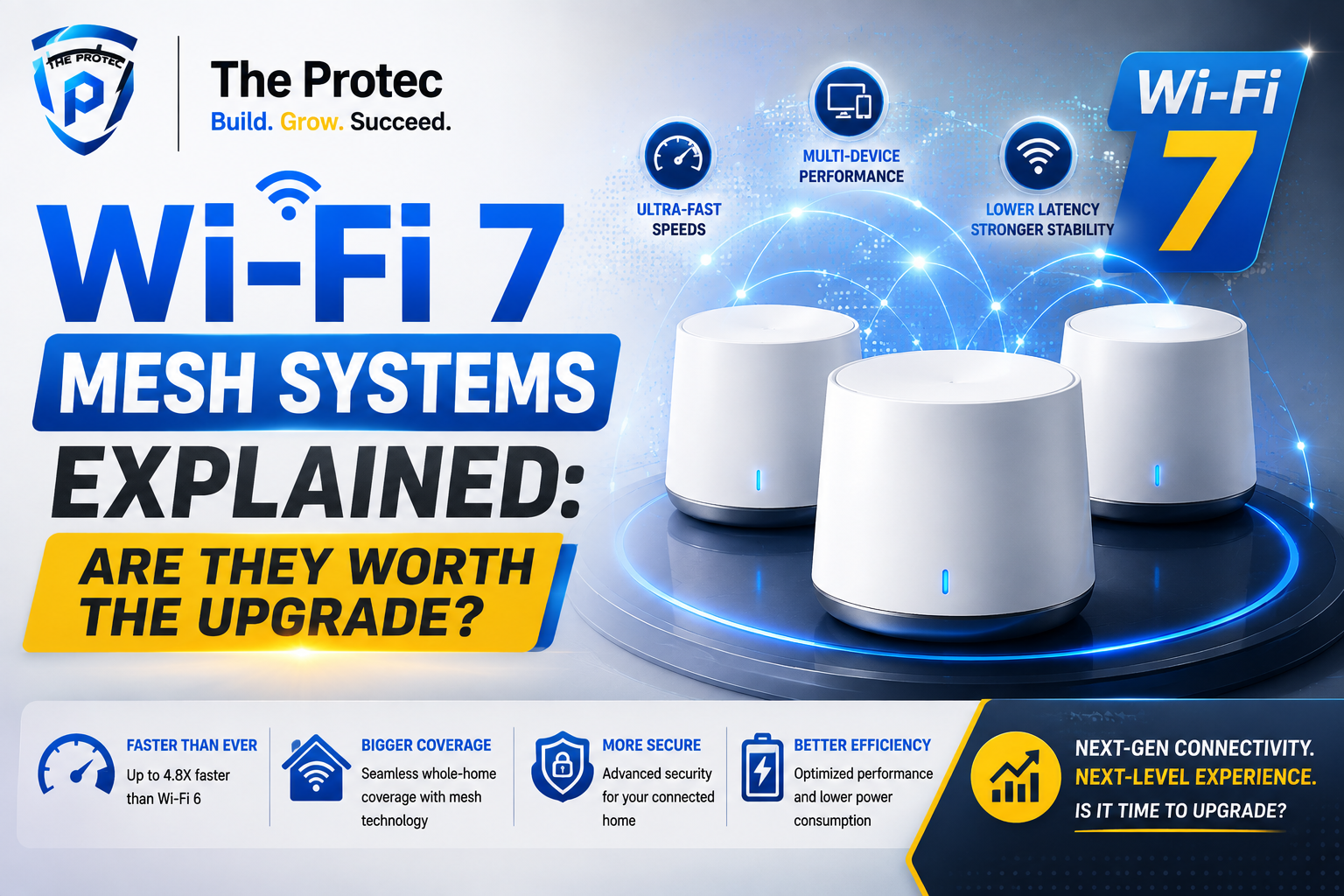
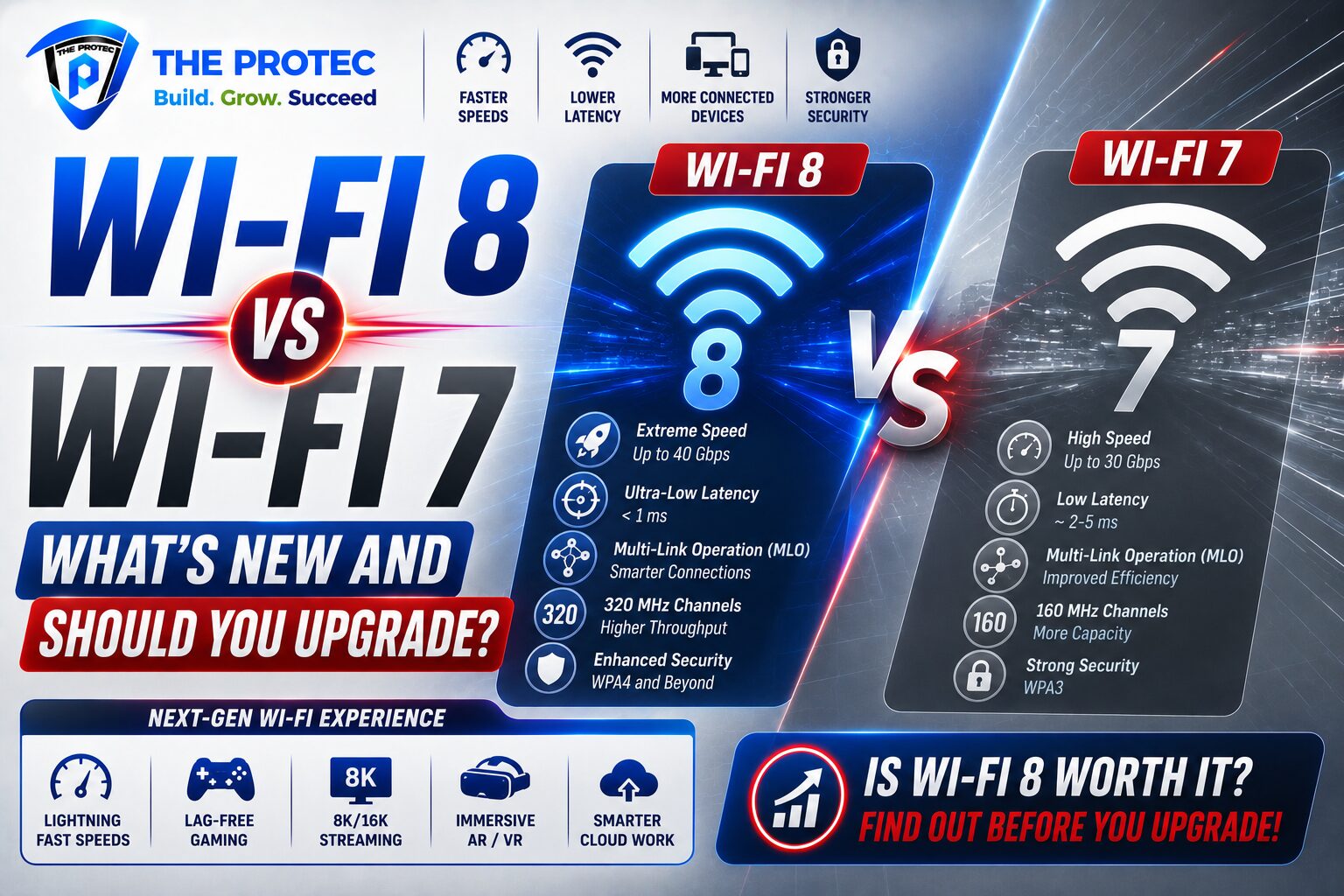
Wi-Fi 7 introduced major advancements, including extremely wide channels, multi-link operation, and major throughput gains. It is a powerful standard, and for many users it will remain more than sufficient for years. Wi-Fi 8 is not about replacing that progress; it is about refining it for the real world.
The clearest distinction is philosophy. Wi-Fi 7 emphasized speed and capacity. Wi-Fi 8 is expected to emphasize experience quality. That includes:
- Lower latency rather than just higher throughput
- Better resilience in dense environments
- Improved reliability for mixed device loads
- More intelligent handling of traffic priorities
- Enhanced roaming and continuity across access points
You can think of Wi-Fi 7 as a high-performance sports car and Wi-Fi 8 as a highly tuned transportation system built to move many different passengers smoothly, even in traffic. The end goal is not only raw performance, but also better total network behavior.
Wi-Fi 8 and the Future of Connected Homes
The smart home is one of the clearest use cases for Wi-Fi 8. Today’s homes are increasingly layered with streaming devices, sensors, security systems, voice assistants, home hubs, appliances, and personal devices. That mix creates unpredictable traffic patterns, and older approaches to wireless management can struggle to keep up.
Wi-Fi 8 could help solve several common home-network problems:
- Buffering during multiple simultaneous streams
- Lag during gaming while others are using bandwidth
- Unstable connections in larger homes
- Poor performance with many low-power IoT devices
- Weak roaming as users move between rooms
Future WiFi technology will likely play a major role in enabling home environments where dozens of devices operate invisibly in the background without requiring constant troubleshooting. That is the real promise of Wi-Fi 8: less friction, not just more speed.
Wi-Fi 8 in Enterprise and Industrial Networks
Outside the home, the business case for Wi-Fi 8 is even stronger. Enterprises need wireless systems that can support video meetings, cloud productivity, collaboration tools, location-aware services, security systems, and a growing number of connected endpoints. In industrial settings, the requirements can be even more demanding, with automation, robotics, sensors, and real-time monitoring all relying on dependable wireless links.
For these environments, the most valuable benefits of Wi-Fi 8 are likely to be reliability, latency control, and predictable behavior under load. That makes the standard relevant to office spaces, warehouses, hospitals, factories, retail locations, and large public venues.
Wireless networking trends in these sectors are clearly moving toward more intelligent infrastructure. Networks are no longer passive utilities. They are becoming active platforms that must adapt to usage patterns, support mobility, and keep critical systems running even during peak demand.
How Wi-Fi 8 Fits Into Broader Wireless Networking Trends
Wi-Fi 8 does not exist in isolation. It is part of a larger shift in how wireless infrastructure is evolving. Several broader trends are shaping the future of connectivity:
- Latency-sensitive computing: Applications increasingly need instant response, not just high bandwidth.
- Device density: Every environment now has more endpoints competing for network resources.
- AI at the edge: More devices are making local decisions and exchanging data continuously.
- Multi-link and multi-band coordination: Networks are becoming more dynamic in how they use available spectrum.
- Seamless mobility: Users expect uninterrupted service as they move through homes, offices, and campuses.
Wi-Fi 8 aligns with all of these trends. It is not simply a faster version of what came before. It represents a more mature wireless philosophy where the network is expected to understand context, manage congestion, and deliver consistent service across a wide range of conditions.
Will Wi-Fi 8 Replace Ethernet?
This question comes up often whenever a new wireless standard is discussed. The short answer is no, not entirely. Ethernet will remain important for fixed high-performance devices, enterprise backbones, and applications that demand the lowest possible latency and maximum stability. But Wi-Fi 8 will continue to close the gap for many everyday use cases.
In homes, that means less dependence on cables for gaming, streaming, and productivity. In businesses, it means more flexible deployments and fewer bottlenecks for mobile workers. In industrial and commercial spaces, it means wireless can take on more critical roles, especially where mobility and scale matter.
Still, the best networks will likely use both: wired infrastructure where it makes sense, and Wi-Fi 8 for the flexibility and reach that only wireless can provide.
What to Expect Before Wi-Fi 8 Arrives
Wi-Fi 8 is still emerging, so adoption will take time. The first devices and enterprise-grade hardware will likely appear before the standard becomes mainstream, followed by broader consumer rollout. As with previous generations, early adoption will probably start in higher-end routers, access points, laptops, and premium mobile devices.
If you are following wireless networking trends closely, the most important thing to watch is not just product announcements. Look for signs that vendors are emphasizing network stability, coordinated traffic handling, and latency-sensitive features. Those will be the clearest indicators of where the industry is headed.
For a useful technical reference on the standardization process, the IEEE 802.11 working group remains the authoritative source: https://www.ieee802.org/11/. You can also monitor Wi-Fi Alliance updates for certification and ecosystem progress: https://www.wi-fi.org/.
Why Wi-Fi 8 Is a Big Deal for the Next Wave of Connectivity
Wi-Fi 8 represents a meaningful shift in what people should expect from wireless networks. Rather than focusing only on peak speed, it is being shaped around the demands of modern digital life: more devices, more real-time applications, more mobility, and less tolerance for inconsistency. That makes it one of the most important future WiFi technology developments to watch.
If Wi-Fi 7 was about unlocking more wireless performance, Wi-Fi 8 is about making that performance usable in the places where wireless often breaks down. That distinction matters. The next generation of networks will be judged not by lab benchmarks alone, but by how well they handle the everyday chaos of connected life.
For consumers, that means smoother streaming, better gaming, more dependable smart homes, and fewer connection headaches. For businesses, it means stronger infrastructure for collaboration, automation, and mobility. For the industry as a whole, it marks the next step in wireless networking trends that are moving toward intelligent, resilient, and experience-first connectivity.
FAQ: Wi-Fi 8 Explained
What is Wi-Fi 8 expected to improve the most?
Wi-Fi 8 is expected to improve reliability, latency, congestion handling, and roaming performance more than raw speed. The goal is a smoother experience in real-world conditions.
Is Wi-Fi 8 just faster than Wi-Fi 7?
No. While performance improvements are likely, Wi-Fi 8 is more about consistency and efficiency. It is designed to work better in crowded, high-demand environments where speed alone is not enough.
When will Wi-Fi 8 be available?
The standard is still progressing through development and will likely appear first in premium networking hardware before broader consumer adoption. Timelines depend on finalization, certification, and product rollout.
Will Wi-Fi 8 work with older devices?
Yes, in the same way previous Wi-Fi generations have supported backward compatibility. However, older devices will not benefit from Wi-Fi 8-specific improvements unless they support the new standard.
Who benefits most from Wi-Fi 8?
Households with many connected devices, enterprises with dense wireless traffic, and environments that rely on low-latency applications are likely to benefit the most from Wi-Fi 8.
Final Thoughts
Wi-Fi 8 is still on the horizon, but its direction is already clear. The next generation of wireless connectivity will not be defined only by bigger numbers on a spec sheet. It will be defined by better responsiveness, stronger reliability, and smarter handling of the complex digital environments we now live and work in. That makes Wi-Fi 8 one of the most important developments in future WiFi technology and a key part of the wireless networking trends shaping the next decade.
As devices multiply and expectations rise, the wireless networks that win will be the ones that feel invisible: fast when needed, stable under pressure, and intelligent enough to support everything from home entertainment to mission-critical enterprise systems. Wi-Fi 8 is being built for that future.