








Contents
- 1 Introduction: Why CI/CD Pipeline Security is Non-Negotiable
- 2 Understanding Pipeline Vulnerabilities: The Hidden Risks
- 3 Best Practices to Secure Your CI/CD Pipeline
- 4 Embracing DevSecOps: Security as Code in Pipelines
- 5 Real-World Example: How Pipeline Breaches Occur
- 6 Conclusion: Prioritize Pipeline Security to Maintain Trust and Reliability
- 7 Frequently Asked Questions (FAQ)
Introduction: Why CI/CD Pipeline Security is Non-Negotiable
Continuous Integration and Continuous Deployment (CI/CD) pipelines have revolutionized the way software is delivered enabling faster releases, improved collaboration, and automated workflows. However, as organizations accelerate deployment velocity, the attack surface within these automated pipelines expands relentlessly. Pipeline vulnerabilities pose serious risks, ranging from code tampering and credential exposure to compromised environments and malware injection. Strengthening CI CD security is now paramount to protect the integrity of software delivery and safeguard sensitive infrastructure.
This article delves into the inherent security challenges in CI/CD pipelines, identifies the key vulnerabilities, and presents cutting-edge DevSecOps approaches to bolster the pipeline against sophisticated threats in modern cloud-native and hybrid environments.
Understanding Pipeline Vulnerabilities: The Hidden Risks
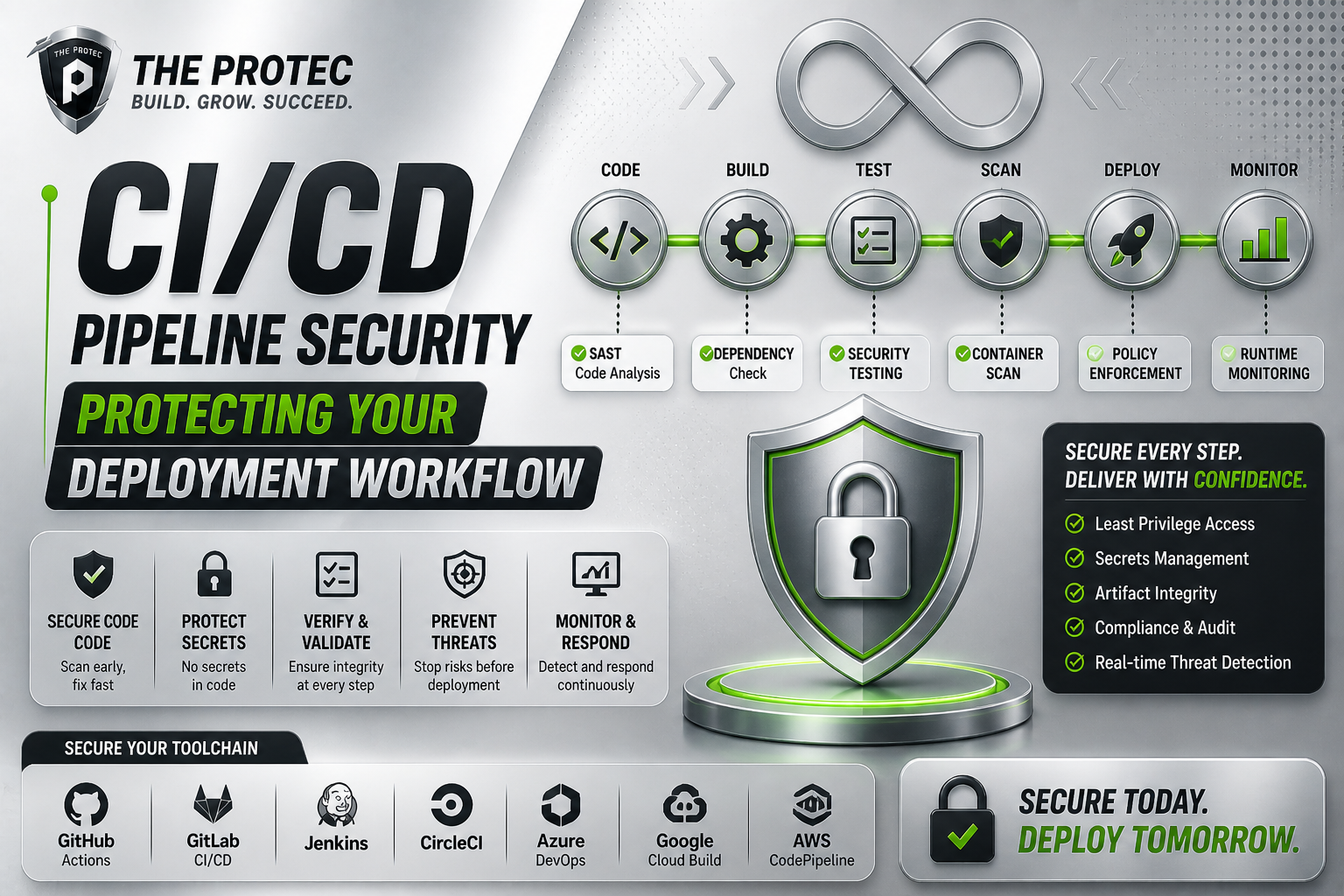
CI/CD pipelines orchestrate multiple stages code commit, build, test, integration, and deployment often across diverse tools, cloud platforms, and third-party services. With this complexity, security gaps are frequently introduced.
1. Credential Leakage and Secrets Management
One of the most common vulnerabilities is the improper handling of secrets such as API keys, tokens, and passwords. These credentials are often embedded in scripts, configuration files, or environment variables without adequate encryption or access controls, exposing them to unauthorized users or attackers who gain access to the pipeline.
2. Insufficient Access Controls and Permissions
Poorly configured access rights can grant excessive privileges to users or service accounts running pipeline jobs. Without the principle of least privilege strictly enforced, compromised credentials can lead to widespread unauthorized actions across environments and repositories.
3. Code Injection and Supply Chain Attacks
Automated pipelines incorporate numerous third-party dependencies and container images, creating a fertile ground for supply chain attacks. Malicious code or backdoors introduced into dependencies can be propagated through the pipeline, leading to compromised releases.
4. Insecure or Outdated Tooling
Many CI/CD workflows rely on plugins, scripts, and third-party tools that may not be regularly updated or vetted for security. Attackers often exploit vulnerabilities in outdated components within the pipeline environment.
5. Lack of Proper Audit Logs and Monitoring
Without comprehensive logging and real-time monitoring, suspicious activities within pipelines go unnoticed, making incident detection and response difficult and slow.
Best Practices to Secure Your CI/CD Pipeline
Addressing these vulnerabilities requires a holistic approach that integrates security at every stage of the pipeline a core tenet of DevSecOps.
Implement Robust Secrets Management
- Use dedicated secrets management tools such as HashiCorp Vault, AWS Secrets Manager, or Azure Key Vault to control access.
- Avoid hardcoding secrets in code or configuration files; leverage environment variables securely injected at runtime.
- Rotate secrets regularly and restrict access to the minimum necessary users and processes.
Apply Principle of Least Privilege
- Define granular roles and permissions for human operators and automated service accounts.
- Use temporary credentials or short-lived tokens wherever possible to minimize the risk window.
- Regularly audit permissions and revoke unnecessary or stale access.
Secure Third-Party Dependencies and Containers
- Automate dependency vulnerability scanning using tools like Snyk, Dependabot, or OWASP Dependency-Check.
- Adopt trusted container image registries and enforce image signing and vulnerability scanning policies.
- Implement software bill of materials (SBOM) to track components and identify risky supply chain elements.
Keep Pipeline Tooling Updated and Hardened
- Maintain the latest versions of CI/CD tooling and plugins with security patches applied promptly.
- Disable or remove unused plugins and scripts to reduce attack surface.
- Configure secure communications using TLS and enforce strong authentication methods for pipeline access.
Enable Continuous Monitoring and Auditing
- Integrate logging solutions like ELK Stack or Splunk to capture detailed activity logs across every pipeline stage.
- Leverage anomaly detection and alerting mechanisms to identify unusual behaviors indicative of attacks.
- Conduct regular penetration testing and security reviews focused on pipeline workflows.
Embracing DevSecOps: Security as Code in Pipelines
Modern DevSecOps practices embed security controls directly into automated pipeline workflows, ensuring consistent enforcement of policies and reducing manual errors. Key strategies include:
Automated Security Testing
Integrate static application security testing (SAST), dynamic application security testing (DAST), and container security scans as automated steps within the CI/CD process. Early detection of vulnerabilities improves remediation speed and reduces exposure.
Policy-as-Code
Define security policies in machine-readable formats using tools like Open Policy Agent (OPA). This enables automated policy enforcement during pipeline execution, blocking unsafe changes before deployment.
Immutable Infrastructure and Environment Consistency
Leverage infrastructure-as-code (IaC) tools with embedded security best practices to provision consistent and hardened environments. This minimizes drift and potential configuration vulnerabilities.
Shift-Left Security Collaboration
Encourage developers, security teams, and operations to collaborate early in the development lifecycle, building security awareness and integrating testing actively in the CI phase.
Real-World Example: How Pipeline Breaches Occur
In 2025, a major software provider faced a disastrous supply chain attack where attackers infiltrated their CI pipeline by compromising a third-party plugin used for deployment automation. The breach led to backdoored releases being pushed to millions of users before detection. This incident underscored the criticality of securing every pipeline component, especially third-party integrations, and the necessity of thorough monitoring.
Conclusion: Prioritize Pipeline Security to Maintain Trust and Reliability
CI/CD pipelines are the backbone of modern software delivery. As such, protecting them from evolving threats is imperative to prevent operational disruptions, intellectual property theft, and reputational damage. By understanding pipeline vulnerabilities, implementing stringent access controls, automating security checks, and adopting a comprehensive DevSecOps approach, organizations can fortify their deployment workflows for resilience and compliance.
The shift toward integrated security within CI/CD processes not only mitigates risks but also empowers teams to release faster with confidence. Start securing your pipelines today to build truly secure software from code commit to production delivery.
Frequently Asked Questions (FAQ)
Q1: What is the most common security risk in CI/CD pipelines?
The most prevalent risk is credential leakage due to improper secrets management, which can allow attackers unauthorized access to pipelines, repositories, and production environments.
Q2: How does DevSecOps improve pipeline security?
DevSecOps integrates security practices directly into the development and deployment processes, automating vulnerability scanning, enforcing security policies as code, and fostering collaboration between development, security, and operations teams for proactive risk mitigation.
Q3: Can open-source CI/CD tools be secured effectively?
Yes, open-source tools can be securely used if regularly updated, configured with strong authentication, integrated with secrets management, and paired with continuous monitoring to promptly address vulnerabilities.
Additional Resources
For a deeper dive into securing CI/CD pipelines, check out the OWASP CI/CD Security Guide, a comprehensive resource detailing best practices and recommended controls.