








Contents
- 1 Introduction
- 2 Why Environment Variables Are No Longer Enough
- 3 Vault Systems: The Heart of Modern Secrets Management
- 4 Encryption Strategies for Secrets Management
- 5 Runtime Secrets Injection: Minimizing Secret Exposure in the Application Lifecycle
- 6 Comparing Vault Systems, Encryption, and Runtime Injection for Cloud-Native Security
- 7 Implementing a Secure Secrets Management Strategy
- 8 Conclusion
- 9 FAQ
Introduction
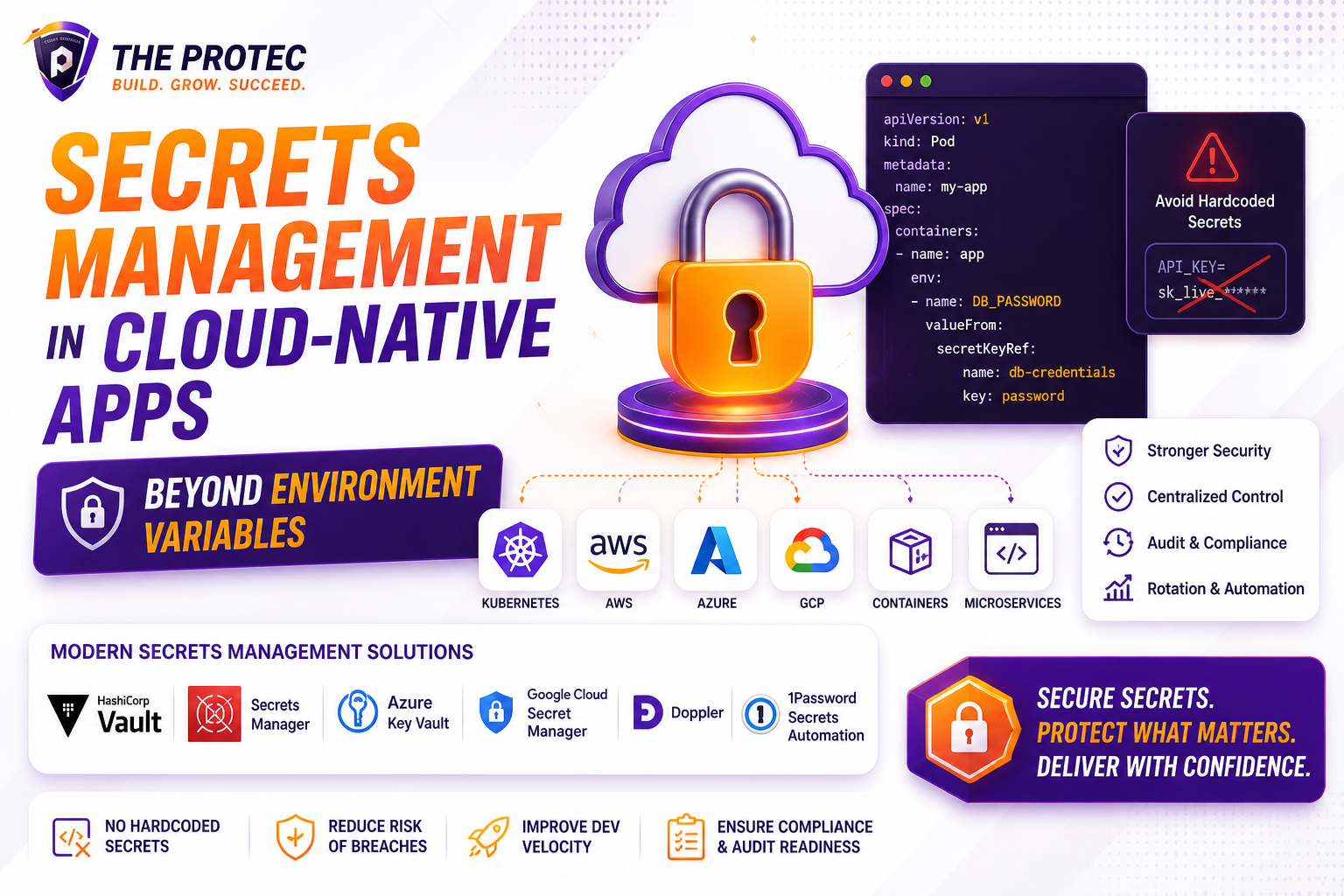
Secrets management stands at the forefront of cloud security challenges, especially with the rise of cloud-native applications. Traditional methods like environment variables have become insufficient to tackle the dynamic complexity and security demands of modern architectures. As organizations increasingly rely on microservices, dynamic scaling, and ephemeral workloads, the need to protect API credentials and sensitive data has never been more critical.
This article delves into the key advancements in secrets management for cloud-native applications. We will explore beyond environment variables, examining vault systems, encryption mechanisms, and runtime secrets injection. Through a detailed comparison, you will gain insight into how each strategy aligns with security best practices and the evolving landscape of cloud-native development.
Why Environment Variables Are No Longer Enough
Environment variables have historically served as a straightforward method to inject secrets, such as API keys or database credentials, directly into a container or process. However, this method introduces significant risks, including:
- Lack of Access Control: Once injected, environment variables are accessible to anyone with access to the host or container runtime.
- Difficult Rotation: Changing secrets across distributed microservices requires container redeployment, increasing operational complexity.
- Visibility Risks: Secrets can be accidentally exposed through logs, debugging tools, or container inspection.
- Static Nature: Environment variables cannot adapt dynamically to changing security contexts or credential scopes.
For cloud-native ecosystems that demand agility alongside robust security, it becomes essential to move past these limitations.
Vault Systems: The Heart of Modern Secrets Management
Vault systems are specialized secret management tools designed to centralize, secure, and control access to sensitive information at scale. Popular solutions include HashiCorp Vault, AWS Secrets Manager, and Azure Key Vault.
Core Features of Vault Systems
- Centralized Secrets Storage: Vault systems provide a secure repository that encrypts secrets at rest and in transit.
- Dynamic Secrets Generation: Rather than static secrets, vaults can generate ephemeral credentials that expire after use, enhancing security.
- Granular Access Controls: Policies govern which identities or services can access specific secrets, enforcing the principle of least privilege.
- Audit Logging: Every access request and secret retrieval is logged for compliance and forensic analysis.
- Secret Leasing and Revocation: Vault credentials can have lease durations, automatically revoked to reduce attack surfaces.
Benefits of Using Vaults Over Environment Variables
Vault systems elevate secrets management by minimizing exposure and operational overhead. Rather than embedding static secrets into environment variables, applications request secrets at runtime from the vault, ensuring up-to-date and narrowly scoped credentials. This approach supports secret rotation without redeployment and reduces the risk of secret leakage.
Encryption Strategies for Secrets Management
Encryption forms the backbone of secret confidentiality, both at rest and in transit. Modern cloud-native applications use layered encryption approaches to protect secrets both inside vaults and during transmission.
At Rest Encryption
Encryption at rest in vaults and cloud storage ensures that stolen storage devices or misconfigured access cannot expose secrets in plain text. Technologies typically used include:
- Hardware Security Modules (HSMs): Secure hardware that manages cryptographic keys outside of application reach.
- Envelope Encryption: Secrets are encrypted with a data key, which is itself encrypted with a master key managed securely.
- Cloud-Native Encryption: Platforms like AWS KMS or Azure Key Vault provide built-in encryption services integrated into storage and vault systems.
In-Transit Encryption
Secrets retrieval and injection demand secure communication channels. TLS/SSL encryption with mutual authentication is standard, ensuring secrets are not exposed to man-in-the-middle attacks.
Encryption Key Management
Key management plays a crucial role beyond encryption. Automated key rotation, strict access filtering, and multi-factor authenticated retrieval combine to secure the entire lifecycle of encryption keys.
Runtime Secrets Injection: Minimizing Secret Exposure in the Application Lifecycle
Runtime secrets injection refers to the dynamic provision of secrets directly into the application environment or memory at runtime, instead of static embedding at build or deployment time.
Methods of Runtime Secrets Injection
- Sidecar Containers: In Kubernetes environments, sidecar containers fetch secrets from vaults and inject them into shared volumes or memory accessible only to the application.
- Secret Injection via API Calls: Applications obtain secrets through authenticated API calls to the vault during initialization or on demand.
- In-Memory Injection: Secrets are retrieved and stored transiently in volatile memory, avoiding persistence in environment variables or disk.
Benefits of Runtime Injection
- Reduced Risk of Leakage: Secrets avoid being written into logs, environment snapshots, or container metadata.
- Dynamic Secret Refreshing: Applications can request updated secrets without restarts, accommodating rotating credentials.
- Fine-Grained Access Duration: Runtime injection supports short-lived secret usage aligned with job execution times.
Challenges and Best Practices
While runtime injection adds security, it does require robust authentication of the application to the vault and careful handling of secrets in memory. Implementing ephemeral workloads, automated secret rotation, and zero-trust networking enhance the security posture.
Comparing Vault Systems, Encryption, and Runtime Injection for Cloud-Native Security
| Aspect | Vault Systems | Encryption | Runtime Secrets Injection |
|---|---|---|---|
| Primary Goal | Secure storage, leasing, and access control | Protect data confidentiality at rest and in transit | Dynamic delivery of secrets to applications |
| Secret Lifespan | Often short-lived, supports dynamic renewal | Not directly responsible for lifespan, supports key rotation | Typically ephemeral, tied to runtime execution context |
| Integration Complexity | Moderate; requires vault setup and applications integration | Underlying technology; complex key management systems | Requires changes to app startup or sidecar deployment models |
| Scalability | Designed for scale with distributed architecture | Scales with hardware and cloud provider capabilities | Depends on orchestration platform and runtime environment |
| Security Benefits | Enforces least privilege, auditing, and revocation | Ensures confidentiality and integrity of secrets | Minimizes secret exposure window and accidental leaks |
Implementing a Secure Secrets Management Strategy
To build a resilient secrets management system in cloud-native environments, it is advisable to combine these technologies and best practices rather than depending on any single solution:
- Utilize Vault Systems: Centralize secret storage and enforce policies for access control and auditing.
- Leverage Strong Encryption: Apply layered encryption to secrets in storage, transit, and even in runtime memory.
- Adopt Runtime Injection: Avoid environments and static secrets by injecting secrets dynamically at runtime.
- Automate Secret Rotation: Regularly cycle credentials to reduce the impact of potential leaks.
- Implement Least Privilege Access: Allow applications and users only minimal access required for their operation.
- Employ Zero Trust Principles: Continuously authenticate and authorize all secret requests within the architecture.
Conclusion
As cloud-native applications continue to evolve, secrets management must transcend traditional environment variable use to address scalability, security, and agility demands. Vault systems, encryption strategies, and runtime secrets injection each play integral roles in a comprehensive security posture that protects API credentials and sensitive data effectively.
Adopting a layered and dynamic approach to secrets management empowers organizations to reduce risk, enhance compliance, and maintain confidence in their cloud-native deployments.
FAQ
1. Why are environment variables considered insecure for secrets management?
Environment variables can be exposed through container metadata, logs, or debugging sessions. They are static, difficult to rotate, and lack granular access controls, making them vulnerable in dynamic cloud-native environments.
2. How do vault systems improve API credentials protection?
Vault systems centralize secrets, provide strong encryption, enforce fine-grained access policies, enable dynamic secrets generation with limited lifespans, and maintain detailed audit trails, greatly reducing exposure risks.
3. What are the challenges of runtime secrets injection?
Runtime injection requires secure authentication between apps and secret stores, careful management of transient secrets in memory, updated development practices, and often infrastructure changes like adding sidecars or API integration.
Additional Resources
For more advanced best practices in secrets management, the OWASP Cheat Sheet Series offers in-depth guidance.