








Contents
- 1 Introduction: The End of the Traditional SIM Era
- 2 Understanding the Traditional SIM Card and Its Limitations
- 3 What is eSIM? A New Dawn for Embedded Connectivity
- 4 Introducing iSIM: The Integrated SIM Revolution
- 5 eSIM vs iSIM: Comparing the Technologies
- 6 Impact on Devices: From Smartphones to IoT
- 7 The Road Ahead: Future Connectivity Powered by eSIM and iSIM
- 8 Challenges to Overcome
- 9 Frequently Asked Questions (FAQ)
- 10 Conclusion
Introduction: The End of the Traditional SIM Era
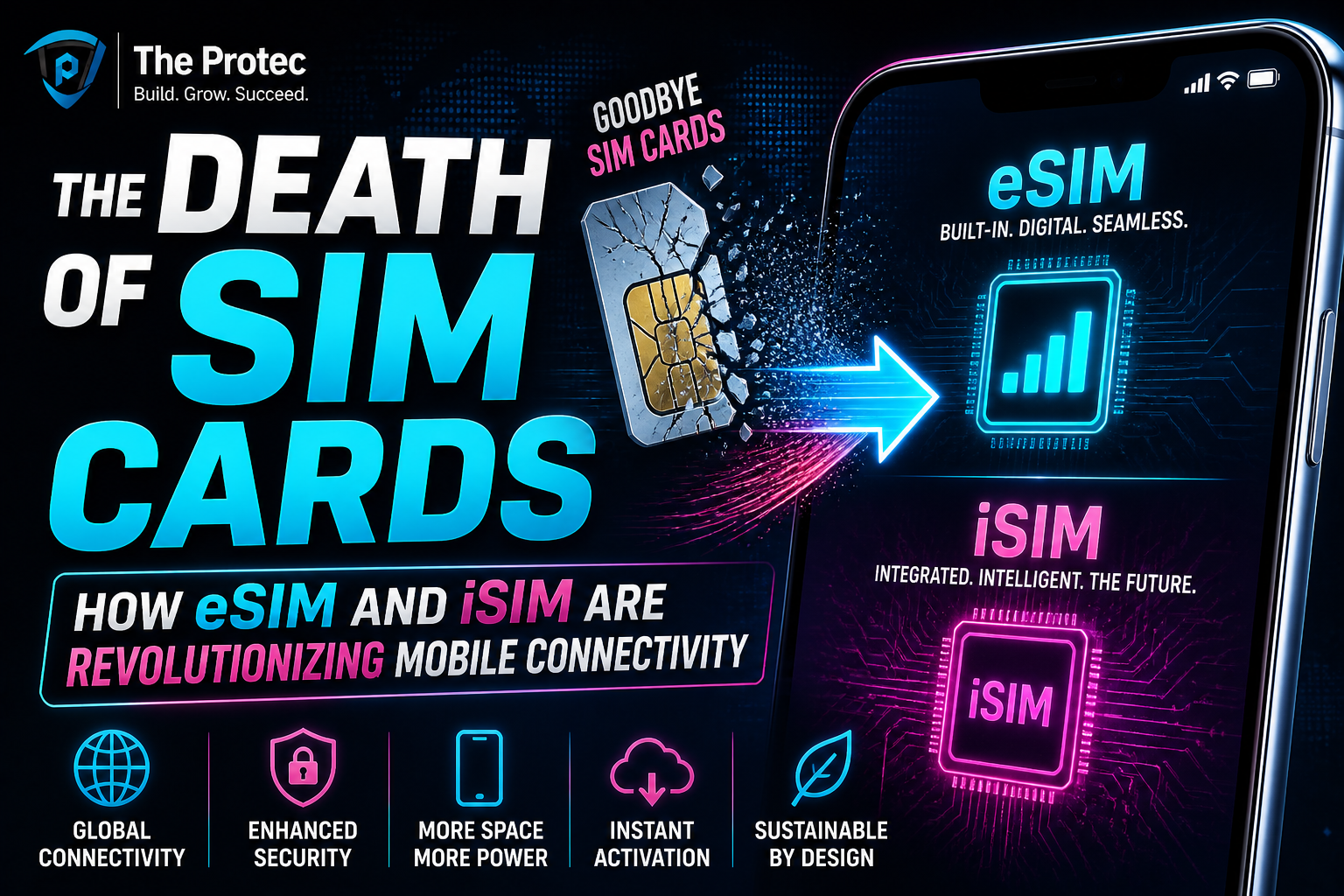
The humble SIM card has been a cornerstone of mobile communication since its inception. This small, removable chip provided the secure identity required for devices to connect to cellular networks worldwide. However, as mobile technology rapidly evolves, traditional SIM cards are facing obsolescence. Embedded SIM (eSIM) and integrated SIM (iSIM) technologies are emerging as revolutionary alternatives, fundamentally changing how devices connect to mobile networks.
In this article, we explore how eSIM and iSIM are driving the transition to embedded connectivity, how they compare, and what this means for the future of mobile network technology across devices. This shift is not just a technological upgrade but a paradigm shift impacting device design, user experience, and connectivity management.
Understanding the Traditional SIM Card and Its Limitations
Historically, SIM cards (Subscriber Identity Modules) have been physical chips that users insert into their phones or devices to authenticate their identity on mobile networks. This design brought great flexibility in swapping carriers or devices but also presented challenges:
- Physical Fragility: SIM cards are small and prone to damage or loss.
- Device Design Constraints: The SIM slot occupies valuable space, limiting device miniaturization and water resistance.
- Logistical Complexity: Manufacturing, distributing, and managing physical SIM cards is costly and resource-heavy.
- User Convenience: Users must physically insert or swap SIM cards to change network providers, which can be cumbersome.
These challenges have accelerated the move toward embedded solutions where connectivity is integrated into the device hardware without the need for removable cards.
What is eSIM? A New Dawn for Embedded Connectivity
Embedded SIM, or eSIM, is a programmable SIM embedded directly into a device’s motherboard. Unlike physical SIM cards, eSIMs cannot be removed but can be remotely provisioned with different carrier profiles. This innovation opened new frontiers for device manufacturers and network operators.
Key Features of eSIM
- Remote Provisioning: Switch carriers or plans without swapping physical SIM cards; activation can be done over the air.
- Multiple Profiles: Devices can store and switch between multiple network profiles, useful for frequent travelers or multi-network usage.
- Improved Device Design: Eliminates the need for a SIM card tray, allowing thinner, more durable, and more compact devices with better water and dust resistance.
Major smartphone brands and IoT devices have increasingly adopted eSIM technology, validating its potential to replace traditional SIM cards.
Introducing iSIM: The Integrated SIM Revolution
While eSIM represents an embedded chip separate from the device’s main processor, integrated SIM (iSIM) takes integration a step further by embedding the SIM functionality directly into the device’s processor or system on chip (SoC). This innovation redefines mobile connectivity at the silicon level.
How iSIM Works and Its Advantages
- Silicon-Level Integration: The iSIM is built within the SoC architecture, eliminating the need for separate SIM chip modules.
- Space and Cost Efficiency: Further reduces bill of materials (BOM), space, and power consumption compared to eSIM solutions.
- Enhanced Security: Leveraging secure enclaves within the processor, iSIM provides heightened protection for subscriber credentials.
- Simplified Manufacturing: Fewer components lead to streamlined assembly and logistics, especially beneficial for high-volume IoT deployment.
With iSIM, device makers can unlock unprecedented miniaturization and efficiency, especially for wearables, smart meters, and connected vehicles.
eSIM vs iSIM: Comparing the Technologies
| Feature | eSIM | iSIM |
|---|---|---|
| Physical Form | Separate chip embedded on motherboard | Integrated within the device’s main SoC |
| Space Requirements | Eliminates SIM tray but still requires dedicated chip space | Maximizes space saving; no dedicated SIM chip area |
| Power Consumption | Low, but extra dedicated chip involved | Lower power by eliminating standalone SIM chip |
| Security Level | Highly secure with dedicated secure elements | Enhanced security via processor secure enclaves |
| Flexibility | Supports remote provisioning and multiple profiles | Also supports remote provisioning; still evolving in multi-profile support |
| Manufacturing | Separate component assembly required | Simplifies manufacturing with fewer parts |
Impact on Devices: From Smartphones to IoT
The transition to eSIM and especially iSIM is transforming the way devices connect and interact with networks. This shift carries profound implications for various device categories:
Smartphones and Consumer Electronics
Leading smartphone manufacturers have embraced eSIM, enabling dual-SIM capabilities without physical trays. Users enjoy greater freedom in switching carriers and international roaming without changing physical cards. The elimination of the SIM slot opens design possibilities for slimmer, more durable devices.
Internet of Things (IoT) Devices
IoT devices benefit immensely from embedded SIM technologies. Many IoT sensors, trackers, and industrial modules require robust yet compact connectivity solutions that eSIM and iSIM provide. iSIM, in particular, accelerates IoT adoption by minimizing hardware complexity and power use, enabling smaller form factors and longer battery lives.
Wearable Technology
Wearables such as smartwatches demand minimal size and maximum connectivity. iSIM integration within the processor allows manufacturers to shrink their designs further while maintaining 4G/5G connectivity and security compliance without increasing device thickness or weight.
Automotive and Connected Vehicles
Connected cars are becoming increasingly reliant on embedded mobile connectivity for telematics, infotainment, and vehicle-to-everything (V2X) communication. Embedded SIMs help automotive manufacturers streamline supply chains and update connectivity profiles remotely during the vehicle lifecycle.
The Road Ahead: Future Connectivity Powered by eSIM and iSIM
The broader adoption of embedded SIM technologies signals a future where connectivity is seamlessly integrated into devices and ecosystems. Some transformative effects include:
- Carrier Ecosystem Evolution: Remote provisioning paves the way for more dynamic carrier partnerships and usage models, including on-demand connectivity.
- Global Device Availability: Devices with embedded connectivity will reach global markets without the hassle of carrier-specific physical SIM variants.
- Security and Privacy Enhancements: Hardware-level integration fosters stronger protection of personal data and identity credentials.
- New Device Innovations: Embedded SIM technologies will unlock innovations in foldables, implantables, and ultra-lightweight electronics.
Industry bodies like GSMA continue to extend standards supporting eSIM and emerging iSIM capabilities to ensure interoperability and device-user security.
Challenges to Overcome
Despite the clear advantages, widespread iSIM adoption still faces hurdles:
- Standardization and Certification: iSIM standards and certifications are still evolving, requiring collaboration among chipset makers, carriers, and regulators.
- Carrier Support: Not all network operators fully support remote provisioning or flexible profile management for iSIMs yet.
- Legacy Devices: Transitioning the vast installed base of devices with traditional SIM cards will take time.
- Security Concerns: Although secure, integrating SIM functions into SoC raises new security design considerations that both manufacturers and network providers must address.
Frequently Asked Questions (FAQ)
What are the main differences between eSIM and iSIM?
While both eSIM and iSIM replace traditional SIM cards with embedded solutions, eSIM is a separate chip on the device’s motherboard allowing remote provisioning, whereas iSIM integrates SIM functionality directly into the device’s main processor (SoC), offering even greater space, power, and cost efficiency.
How will eSIM and iSIM impact consumers’ mobile experience?
Consumers will benefit from simplified carrier switching, increased device durability, and lighter designs. They will also experience better global connectivity options without physical SIM compatibility constraints.
Are all devices compatible with eSIM and iSIM?
Currently, many newer smartphones, tablets, wearables, and IoT devices support eSIM. iSIM is an emerging technology, initially found in select IoT and wearables. Broader adoption will depend on device manufacturers, chipset providers, and carrier readiness.
Conclusion
The death of traditional SIM cards is underway, brought about by transformative embedded connectivity solutions like eSIM and iSIM. These technologies redefine how devices securely connect to mobile networks by eliminating removable components and enabling remote, flexible management of network profiles.
As eSIM continues to gain traction and iSIM pushes the boundaries of embedded integration, mobile connectivity is evolving toward a future characterized by seamless, secure, and highly efficient connections. This revolution impacts smartphones, wearables, IoT devices, and smart vehicles alike, setting the stage for a new era in mobile network technology.
Staying informed and prepared for these changes is essential for consumers, manufacturers, and network operators aiming to fully harness the benefits of future connectivity.
For more detailed industry insights on eSIM and iSIM technology, visit GSMA’s eSIM resources.