








Contents
- 1 Introduction
- 2 Understanding the Core Difference: AI Smartphones vs Traditional Smartphones
- 3 User Experience: AI Smartphones Enhancing Everyday Interactions
- 4 Productivity Gains from AI Features Phones
- 5 Battery and Performance: AI Optimization Versus Raw Power
- 6 Security and Privacy: AI-driven Safeguards
- 7 The Drawbacks and Challenges of AI Smartphones
- 8 Practical Recommendations: Choosing Between AI and Traditional Smartphones
- 9 FAQ
- 10 Conclusion
Introduction
Smartphones have become an essential part of daily life, evolving far beyond simple communication devices. The latest evolution revolves around artificial intelligence (AI) integration, with AI smartphones presenting a new frontier compared to traditional smartphones. But what does this difference truly mean for users in practical terms? This article dives deep into the comparison of AI smartphones versus traditional smartphones, focusing on tangible impacts on user experience and productivity.
Understanding the Core Difference: AI Smartphones vs Traditional Smartphones
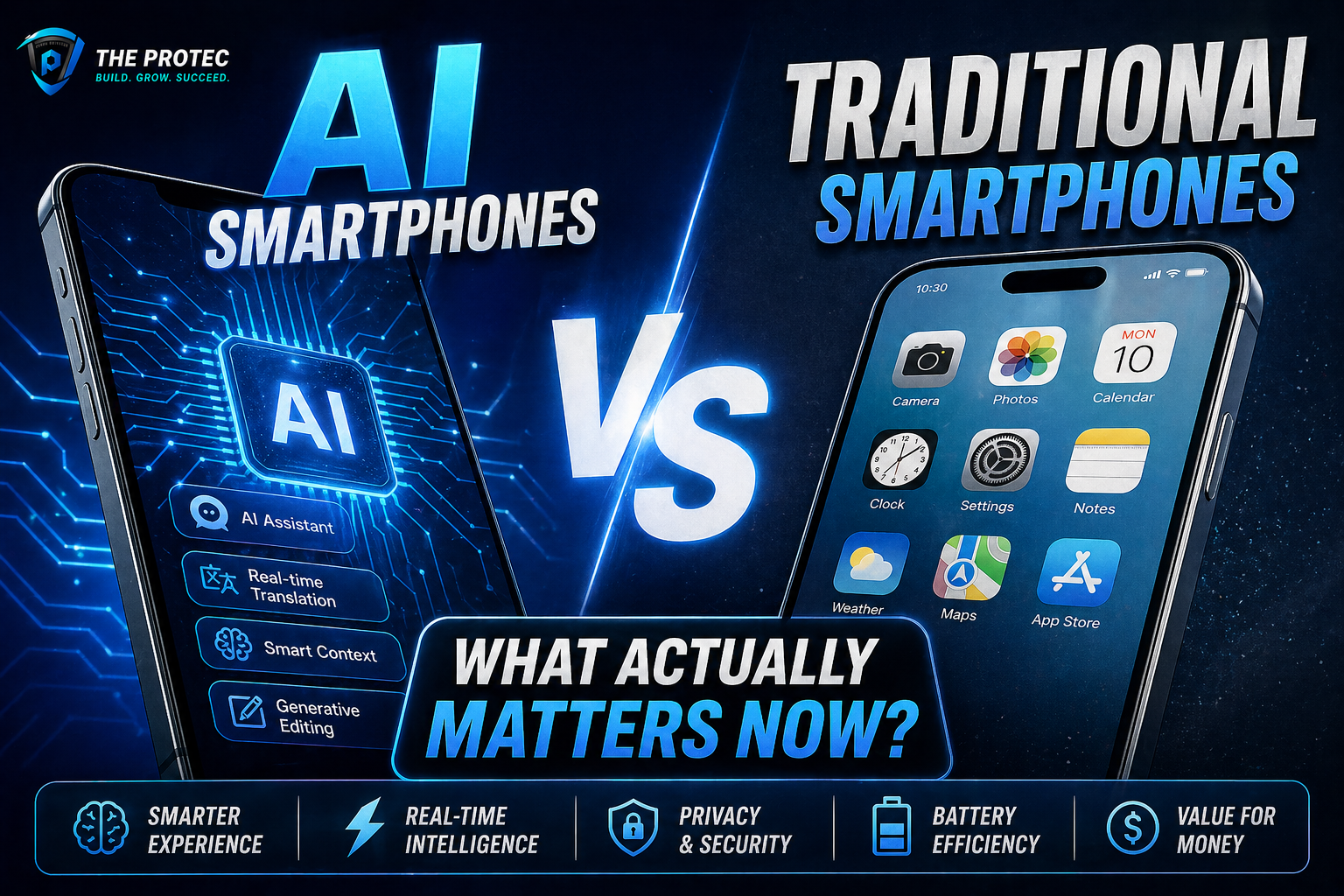
Traditional smartphones generally emphasize hardware specifications like processors, cameras, and displays AI Smartphones vs Traditional Smartphones: What Actually Matters Now? and software features largely driven by user input. In contrast, AI smartphones embed artificial intelligence at the core of their operations, enhancing functionalities dynamically to anticipate user needs, optimize performance, and deliver smarter interactions.
AI features phones embed technologies such as machine learning algorithms, neural processing units (NPUs), and advanced sensor fusion to provide more personalized and context-aware experiences.
Key AI Components Driving Change
- Neural Processing Units (NPUs): Specialized chips that accelerate AI computations efficiently on the device.
- Contextual Awareness: The ability to understand environment and user behavior to adapt functions dynamically.
- Natural Language Processing (NLP): Enhancements in voice recognition, real-time translation, and conversational AI.
- Predictive Analytics: Anticipating user actions to automate routine tasks.
User Experience: AI Smartphones Enhancing Everyday Interactions
The most noticeable difference in everyday use between AI and traditional smartphones lies in how intuitive and responsive the device feels.
Personalized Assistance and Automation
AI smartphones are designed to serve as proactive assistants. For instance, AI-powered assistants can learn your schedule and suggest optimal routes in real-time considering traffic or even adjust phone settings based on the time and environment. While traditional smartphones rely on manual input or simple calendar reminders, AI devices leverage pattern recognition to reduce the user’s effort.
Smarter Camera and Imaging
Camera technology is a standout benefit of AI integration. AI smartphones use sophisticated scene recognition, real-time image enhancement, and adaptive settings to optimize shots automatically. They can detect subjects, lighting, and motion to adjust shutter speed and color balance, delivering professional-quality images without needing user intervention. Traditional smartphones require manual adjustments or rely solely on hardware capabilities.
User Interface Adaptability
AI enables UI customization that evolves with usage patterns. For example, apps you use most frequently might appear more prominently, or notification management becomes smarter by filtering based on urgency. This dynamic interface reduces clutter and streamlines navigation, contrasting with the static layouts of traditional smartphones.
Productivity Gains from AI Features Phones
Efficiency in completing tasks is another area where AI smartphones distinctly outperform traditional phones.
Context-Sensitive Notifications and Task Management
AI-driven notification management prioritizes alerts based on context suppressing less important notifications during meetings or suggesting responses when you’re in a hurry. This intelligent filtering helps maintain focus and reduces distractions, which traditional smartphones fail to address adequately.
Enhanced Multitasking and Voice Controls
Voice commands powered by AI understand natural language better and execute complex sequences. For example, you can instruct the phone to draft emails, schedule appointments, and set reminders in one go. Traditional voice assistants are more limited or require specific commands, slowing down workflows.
Real-Time Language Translation and Communication
Recent AI smartphones can translate conversations and text instantaneously, breaking down language barriers during calls or messaging apps. This feature is beneficial for professionals working in global contexts, far surpassing the capabilities of traditional smartphones that require third-party apps with less accuracy and delay.
Battery and Performance: AI Optimization Versus Raw Power
AI smartphones use machine learning to optimize power consumption by learning user habits, such as adjusting background app activity or screen brightness intelligently. Often, this leads to extended battery life without sacrificing performance. Traditional phones rely more on hardware improvements like larger batteries or more powerful processors, which can increase cost and bulk.
Security and Privacy: AI-driven Safeguards
Security is enhanced in AI smartphones through biometric advancements like face recognition powered by deep learning and behavioral pattern analysis to detect fraud or unauthorized access. They can sense anomalies in usage and trigger alerts or lockdown automatically. Traditional smartphones tend to offer more basic security features without continuous, contextual threat detection.
The Drawbacks and Challenges of AI Smartphones
While AI smartphones offer compelling benefits, they also bring challenges users should be aware of:
- Privacy Concerns: Continuous data collection for AI personalization can be intrusive without proper safeguards.
- Learning Curve: Advanced AI features might overwhelm users accustomed to simpler interfaces.
- Cost and Availability: AI technology integration can increase device prices and limit availability to premium markets initially.
Practical Recommendations: Choosing Between AI and Traditional Smartphones
If you value a seamless, adaptive user experience that enhances productivity through smart automation, AI smartphones provide unmatched advantages. Professionals, tech enthusiasts, and frequent multitaskers will see tangible workflow improvements.
Conversely, if your smartphone use is straightforward focused on calls, messaging, and basic apps a traditional smartphone still serves the purpose reliably without the learning curve or added cost.
FAQ
What are AI smartphones?
AI smartphones are devices integrating artificial intelligence technologies such as neural processors and machine learning algorithms to deliver smarter and more personalized smartphone experiences.
How do AI features improve productivity on smartphones?
AI features optimize workflows by automating routine tasks, prioritizing notifications, offering enhanced voice controls, and enabling real-time translations, thereby reducing manual effort and saving time.
Are AI smartphones more secure than traditional smartphones?
Yes, AI smartphones incorporate advanced biometric security methods and behavioral analysis, enabling proactive threat detection and more robust privacy protections than traditional phones.
Conclusion
The competition between AI smartphones and traditional models boils down to the value placed on intelligent automation and dynamic personalization over conventional hardware capabilities. As AI technology continues to mature, these smart devices will increasingly redefine productivity and user interaction paradigms. Understanding what truly matters enhanced user experience, real productivity gains, and contextual adaptability can guide you toward making an informed smartphone choice that fits your lifestyle.
For more insights on AI and smartphone technology, consider visiting GSMArena, a trusted resource for up-to-date tech reviews and comparisons.