







Contents
- 1 Introduction
- 2 Key Factors Influencing SaaS Development Cost
- 3 Common Development Approaches and Their Cost Implications
- 4 Detailed Cost Components When Building SaaS
- 5 Case Examples of SaaS Development Cost by Product Type
- 6 Trending Technologies Impacting SaaS Costs
- 7 FAQs About SaaS Development Cost
- 8 Conclusion
Introduction
Building a Software-as-a-Service (SaaS) product is a strategic investment that can transform industries and generate recurring revenue. However, understanding the costs involved remains a challenge for many entrepreneurs and businesses aiming to develop scalable cloud-based software solutions. With technology evolving rapidly, cost structures for SaaS development have expanded beyond traditional norms, reflecting new approaches, tooling, and infrastructure.
This guide offers a detailed breakdown of software development cost tailored specifically to SaaS products. It explores various development methods, pricing factors, and key components influencing the total investment needed to build SaaS effectively and efficiently.
Key Factors Influencing SaaS Development Cost
Before diving into specific pricing, it’s essential to understand what influences the SaaS development cost. These core factors shape the complexity, timeline, and budget requirements of your project:
- Product complexity and features: More sophisticated features like AI integrations, real-time collaboration, or robust analytics increase development efforts.
- UI/UX design: The quality and sophistication of your user interface directly impact the effort and expertise required.
- Technology stack: Choices between open source, proprietary, or cloud-native frameworks affect licensing and development speed.
- Development team composition: In-house vs. outsourced teams, freelancers, or agency collaborations lead to different cost dynamics.
- Infrastructure and hosting: Cloud hosting, availability, scaling requirements, and geographic user distribution influence ongoing expenses.
- Maintenance and updates: Continuous updates, bug fixes, and feature expansions demand recurring budget allocation.
- Security and compliance: Encryption, data protection, and compliance with regulations like GDPR or HIPAA add complexity and cost.
Common Development Approaches and Their Cost Implications
Choosing the right development approach is crucial for controlling costs and timeline. Let’s explore the most popular options available today:
1. Building an In-House Development Team
Pros: Total control over development process, closer alignment with business goals, intellectual property security.
Cons: Higher fixed costs due to salaries, benefits, recruitment, and infrastructure; longer ramp-up times.
Cost breakdown:
- Developers (frontend, backend, full stack): $80K–$150K per developer annually depending on experience and location.
- Designers and Product Managers: $70K–$130K annually.
- DevOps engineers (for deployment and infrastructure): $90K–$140K annually.
- Additional overheads include office space, software licenses, and benefits.
Building in-house may initially push software development costs higher, generally starting around $150,000 for an MVP (Minimum Viable Product) within 6–9 months.
2. Hiring a Dedicated SaaS Development Agency
Pros: Access to expert teams, flexibility, defined budgets, faster delivery.
Cons: Less day-to-day control, potential communication challenges.
Cost breakdown:
- Typical hourly rates range from $40 to $150+ depending on agency location and expertise.
- End-to-end development for a medium-complexity SaaS product can range from $100,000 to $350,000.
- Includes feature design, development, testing, and deployment support.
Agency-led projects often suit startups looking for speed and specialized skills without the overhead of recruiting.
3. Utilizing No-Code/Low-Code Platforms
Pros: Rapid prototyping, reduced development time, lower initial cost.
Cons: Limited customization, dependencies on platform limitations, potential scaling challenges.
Cost breakdown:
- Platform subscription fees: $50–$500 monthly based on usage.
- Minimal developer involvement usually $5,000 to $30,000 for setup and customization.
- Best for MVPs, internal apps, or simple SaaS products.
This low-cost approach can be ideal for validating ideas quickly but may require migration to custom solutions later for scale.
4. Hybrid Approach: Combining Custom Development with SaaS Tools
Many companies blend custom-coded backend services with third-party SaaS integrations (e.g., payment processors, CRM, analytics).
Pros: Flexibility in custom logic, reduced build time on non-core components.
Cons: Integration complexity and ongoing licensing fees.
Cost breakdown:
- Custom development (engineer hourly rates): $60 to $120/hr.
- SaaS subscriptions: $20 to $1,000+ monthly per service, depending on scale.
- Total costs vary widely but typically fall between $75,000 and $250,000 for a robust MVP.
Detailed Cost Components When Building SaaS
1. Product Management and Planning
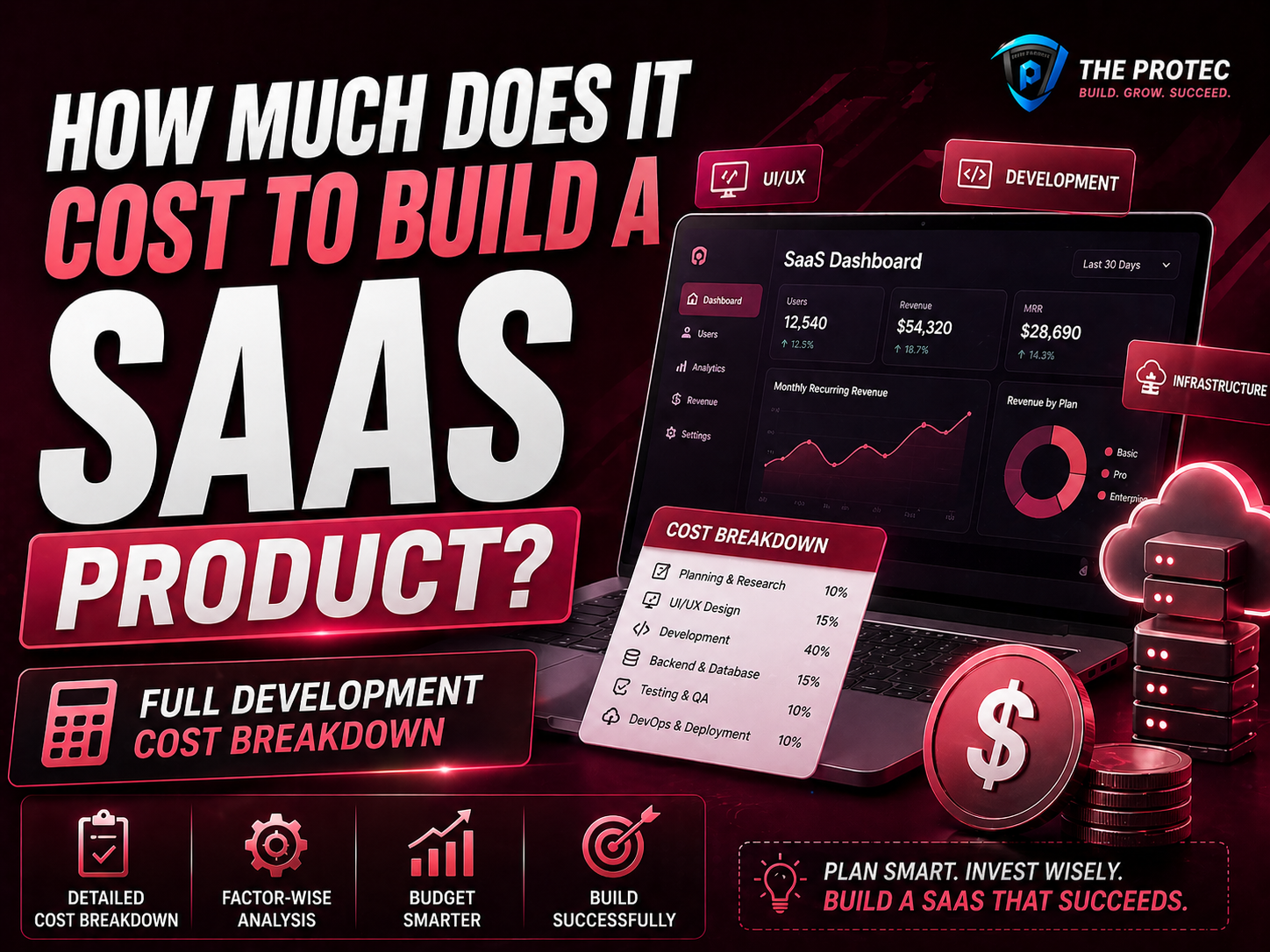
Effective product planning and roadmap creation set the foundation for success. This phase includes market research, defining user personas, feature prioritization, and MVP scoping. Expect to allocate around 10-15% of your total budget here.
2. User Interface and User Experience (UI/UX) Design
A modern, intuitive design can make or break user adoption. Design costs depend on complexity but often range from $10,000 to $50,000 for startups seeking polished, responsive interfaces.
3. Backend Development
This is where the core logic, databases, APIs, and integrations come to life. Backend development can consume 40-50% of your budget. Skilled engineers build scalable, secure architectures with modern frameworks and cloud-native principles (e.g., microservices, serverless).
4. Frontend Development
Frontend teams build the interfaces users interact with, which often involves complex JavaScript frameworks like React, Vue.js, or Angular. Frontend development typically accounts for 20-30% of costs.
5. Quality Assurance (QA) and Testing
QA is indispensable for releasing a reliable product. Automated and manual testing to identify bugs, usability issues, and performance bottlenecks can cost between $15,000 to $40,000 depending on release scope.
6. Infrastructure and Hosting
Cloud providers such as AWS, Google Cloud, and Azure offer flexible, scalable hosting. Expect ongoing monthly costs anywhere from $500 to $5,000+ depending on user base, data storage, and bandwidth.
7. Security and Compliance
Data protection, secure authentication, encryption, and regulatory compliance add technical layers and audit costs. Allocate around 5-10% of your budget here to avoid costly risks later.
8. Maintenance and Continuous Improvement
Post-launch support includes bug fixes, performance upgrades, and new feature releases. Maintenance budgets generally require 15-20% of initial development costs annually.
Case Examples of SaaS Development Cost by Product Type
- Simple SaaS MVP: A basic tool with essential features $30,000 to $75,000.
- Mid-Complexity SaaS: Includes integrations, multi-tenant architecture, customized UI $100,000 to $250,000.
- Enterprise-level SaaS: Advanced analytics, AI-powered features, high scalability $300,000 and up.
Trending Technologies Impacting SaaS Costs
Emerging tech and methodologies increasingly influence how SaaS products are developed and priced:
- AI and Machine Learning: Integrating AI-driven features enhances value but also increases development costs.
- Serverless Architectures: Reduce infrastructure management costs, allowing pay-as-you-go scalability.
- API-First and Headless Solutions: Accelerate integration with third-party services, lowering custom build efforts.
- DevOps Automation: Continuous deployment and automated testing reduce time-to-market and manual errors.
FAQs About SaaS Development Cost
Q1: How long does it typically take to build a SaaS product?
Depending on complexity, an MVP can be built in 3 to 9 months. More complex solutions with advanced features take longer, sometimes exceeding 12 months.
Q2: Are subscription fees for SaaS tools included in development costs?
Subscription fees for third-party tools and cloud services are typically separate ongoing costs but should be factored into the total cost of ownership and budgeting.
Q3: What’s the best way to control SaaS development costs?
Prioritize features, choose the right development approach, plan for scalability, and maintain clear communication with your development team to avoid scope creep and overruns.
Conclusion
Understanding SaaS development cost is fundamental to planning a successful product launch. By carefully selecting your development approach whether in-house, outsourcing to agencies, leveraging no-code platforms, or hybrid models and accounting for all cost components including infrastructure, security, and maintenance, you can build a SaaS product that aligns with your budget and business goals.
Technology advancements continue to reshape cost structures, giving entrepreneurs more flexibility and innovative ways to reduce expenses while delivering value. For more on scalable cloud infrastructure and modern SaaS development, explore resources from AWS and Google Cloud.