








Contents
- 1 Introduction
- 2 Understanding the Pricing Models: AWS and Azure at a Glance
- 3 Hidden Costs in AWS: What No One Talks About
- 4 Azure Hidden Costs: What to Watch For
- 5 Side-by-Side Cloud Pricing Comparison: Core Services
- 6 Strategies to Avoid Billing Surprises and Optimize Costs
- 7 Frequently Asked Questions (FAQ)
- 8 Conclusion
Introduction
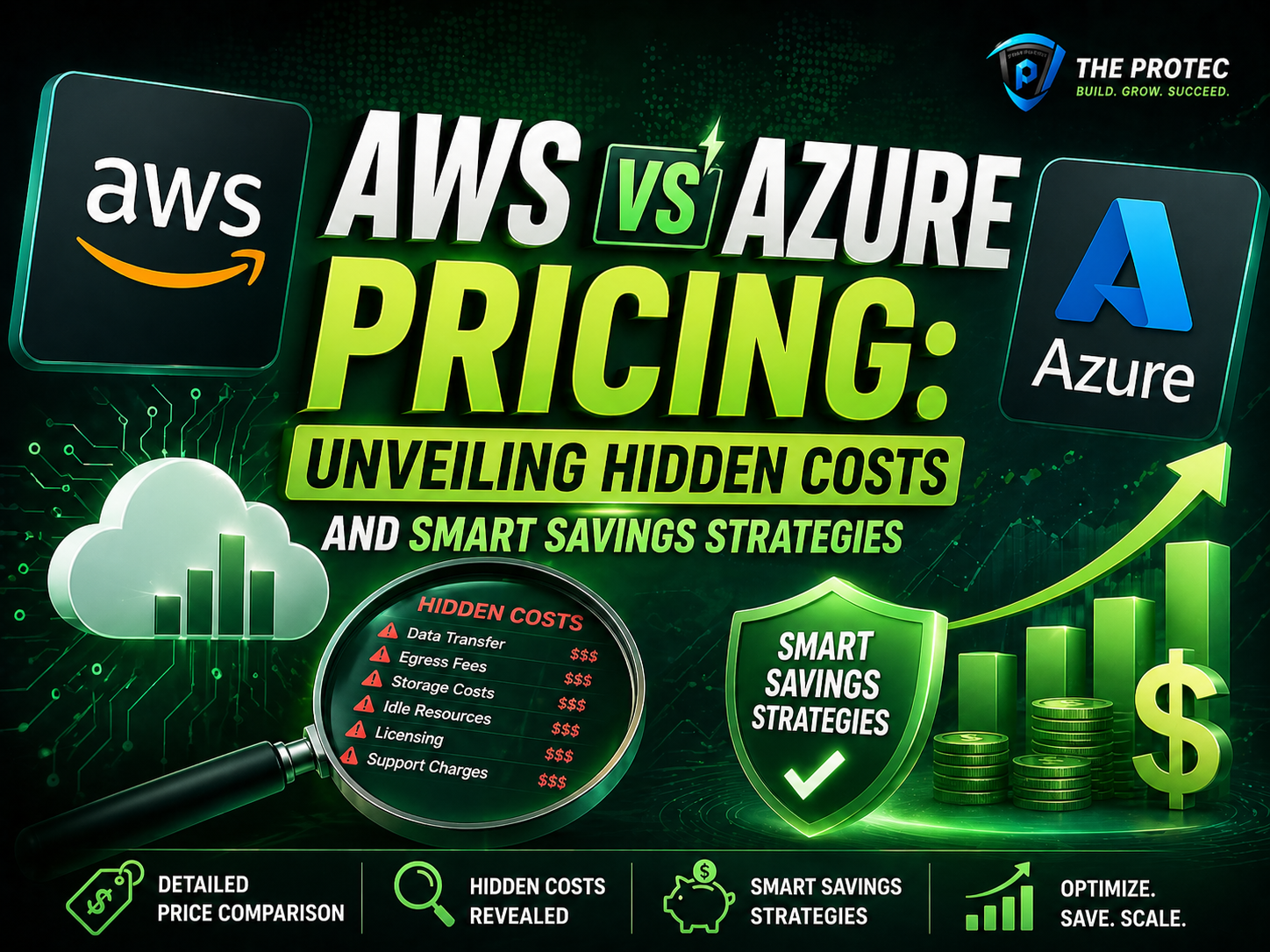
Choosing between AWS and Azure remains one of the most significant decisions companies face in today’s cloud-driven landscape. Both platforms offer extensive services, competitive pricing models, and global infrastructure. Yet, beneath seemingly straightforward pricing are hidden costs and complexities that can unexpectedly inflate your cloud bill, leaving organizations puzzled and frustrated. This article unpacks the nuances of AWS vs Azure pricing, with special emphasis on the “hidden costs” that are rarely discussed openly but heavily impact real-world budgets.
We’ll walk through the actual billing surprises users encounter, unpack cloud pricing comparison factors beyond just sticker prices, and share practical savings strategies. Whether you’re an IT decision-maker, a cloud architect, or a developer, understanding these subtleties is key to optimizing your cloud spending and avoiding budget overruns.
Understanding the Pricing Models: AWS and Azure at a Glance
The first step in any cloud pricing comparison is to understand how AWS and Azure bill their services. Both providers use complex, tiered pricing structures with various billing dimensions. However, differences in pricing philosophy and structure can escalate costs unexpectedly.
AWS Pricing Overview
AWS primarily uses a pay-as-you-go pricing model with volume discounts, savings plans, and reserved instances. Pricing is often broken down by individual services such as EC2 (compute), S3 (storage), and data transfer rates. Key highlights include:
- On-demand pricing: Charges based on usage without upfront commitment.
- Reserved Instances (RIs) and Savings Plans: Cost reductions for committing to usage over 1 or 3 years.
- Data transfer: Inbound data is usually free, but outbound transfers are billable, often leading to costly network fees.
- Service-specific pricing: Complex tiers for storage classes, compute instance types, and I/O operations.
Azure Pricing Overview
Azure also uses pay-as-you-go pricing with reserved capacity discounts and hybrid benefits for Windows Server and SQL Server users. Important aspects include:
- Pay-as-you-go and reserved instances: Discounts for consumption commitments.
- Hybrid Benefit: Allows leveraging existing Microsoft licenses to cut costs.
- Data egress and ingress: Similar to AWS, outbound data transfer incurs charges, while inbound is mostly free.
- Pricing dimensions: VM sizes, storage type, redundancy options, and licensing all affect the bill.
Hidden Costs in AWS: What No One Talks About
AWS pricing looks transparent at first, but subtle charges can swiftly accumulate and surprise users.
Data Transfer and Networking Fees
While inbound data is free, outbound data transfer between Availability Zones (AZs), Regions, or to the internet often adds substantial costs. For example, cross-AZ traffic within a single region isn’t always free as commonly assumed and can increase intra-region latency or redundancy expenses.
Moreover, using load balancers or NAT gateways adds further network-related charges unrelated to compute time but critical to application architecture.
API Calls and Request Costs
S3 storage fees go beyond capacity, encompassing costs per 1,000 requests. If your application makes frequent GET, PUT, or LIST operations, charges can become non-trivial, especially with lower storage tier classes that trade cost savings on storage capacity for higher operational expenses.
Elastic IP Addresses
Elastic IPs (static public IP addresses) are free only when associated with running instances. Any unattached or idle Elastic IPs incur hourly fees, a hidden cost often overlooked during decommissioning or failover scenarios.
Monitoring and Logging
While AWS CloudWatch offers basic monitoring, detailed logs, custom metrics, or high-resolution alarms can lead to additional fees. Many teams underestimate the volume of call logs or metrics collected, facing unexpectedly high charges on monitoring services.
Data Retrieval Costs from Archival Storage
AWS Glacier (now rebranded as Amazon S3 Glacier) is an affordable archive option but retrieving data from glacier tiers can be expensive and time-consuming. Data retrieval fees for expedited or bulk retrievals catch many unprepared, especially for backup or compliance scenarios.
Azure Hidden Costs: What to Watch For
Azure pricing transparency has improved, but there are still nuanced cost drivers that organizations frequently miss.
Data Egress and Inter-Region Transfer
Similar to AWS, outbound data transfer costs can balloon in Azure. Cross-region data transfer pricing can be particularly complex, varying depending on the involved Azure regions and zone redundancy levels selected.
Licensing and Hybrid Benefit Misuse
While Azure’s Hybrid Benefit offers savings by using existing licenses, incorrect licensing or failure to apply it leads to full pay-as-you-go pricing on licenses for resources like SQL Server or Windows VMs.
Storage Transaction Costs
Storage costs are not only about size but also about read/write transactions. Azure Storage transactions, including Blob and Disk Reads/Writes, can mount quickly under high I/O workloads or complex application architectures.
Backup and Disaster Recovery Fees
Azure Backup and Site Recovery services are charged based on instance counts, protected data sizes, and additional storage for recovery points. These fees add incremental costs that can be overlooked during disaster recovery planning.
Network Security and Firewall Services
Azure Firewall and network security groups can introduce per-hour and per-data throughput costs, which might not be apparent initially in cost estimates.
Side-by-Side Cloud Pricing Comparison: Core Services
For a fair comparison, here’s a detailed look at pricing dynamics across critical areas.
Compute
- AWS: EC2 instances vary based on instance type, region, and payment plan. Savings plans and reserved instances lower costs significantly for steady workloads.
- Azure: Virtual Machines (VMs) offer extensive size options with savings from reserved capacity and Hybrid Benefit for Microsoft workloads.
- Hidden cost alert: Both providers charge differently for burstable or spot instances, and unexpected compute scaling can cause budget spikes.
Storage
- AWS: S3 with multiple tiers – Standard, Intelligent-Tiering, Glacier. Handling request pricing and retrieval fees complicates cost predictions.
- Azure: Blob storage with Hot, Cool, and Archive tiers. Transaction volume and access patterns heavily influence total cost.
Networking
- AWS: Charges for NAT gateways, data transfer between Availability Zones, and outbound data transfer.
- Azure: Similar network traffic fees plus specific expenses for Azure Firewall and ExpressRoute.
Strategies to Avoid Billing Surprises and Optimize Costs
Understanding pricing models and hidden charges is half the battle. These practical tips help you maximize cloud investment:
Monitor and Analyze Cloud Usage Closely
Deploy native tools like AWS Cost Explorer or Azure Cost Management to gain visibility into spending patterns and identify cost anomalies early.
Choose Correct Pricing Models
Use reserved instances, savings plans, or reserved capacity for predictable workloads. Evaluate spot/burstable instances for flexible, interruptible workloads to capitalize on steep discounts.
Optimize Data Transfer Patterns
Design cloud architecture to minimize cross-region or cross-AZ data movement. Consolidate services within single regions and leverage content delivery networks (CDNs) judiciously.
Leverage Licensing Benefits
Microsoft customers should maximize Azure Hybrid Benefits to reduce licensing fees. For AWS, understand when license-included vs bring-your-own-license options best fit.
Architect for Cost-Effective Storage
Classify data according to access patterns to select optimal storage tiers and balance between storage capacity, transaction costs, and retrieval fees.
Automate Shutdown and Cleanup
Implement automated scripts or services to terminate unused resources such as idle Elastic IPs, unattached volumes, or orphaned compute instances.
Use Third-Party Tools for Cross-Cloud Comparison
Consider vendor-neutral cost management platforms that provide granular cross-cloud pricing insights and forecasts.
Frequently Asked Questions (FAQ)
Q1: Why do AWS bills often end up higher than initial estimates?
AWS bills can be higher due to hidden costs like data transfer fees, API request charges, Elastic IP costs, and detailed monitoring fees. Initial estimates may not capture all usage patterns or service intricacies leading to surprises.
Q2: How can I effectively compare AWS vs Azure pricing for my workloads?
Use detailed cost calculators from both providers, simulate workloads based on accurate usage data, and factor in hidden costs like data transfer and licensing. Incorporate real-world usage patterns for meaningful comparison.
Q3: What’s the biggest mistake organizations make regarding cloud pricing?
Many overlook ongoing operational costs such as network egress, storage transaction fees, and monitoring/logging costs. Assuming that ‘pay-as-you-go’ means simple billing without overhead often leads to budget overruns.
Conclusion
The AWS vs Azure pricing landscape is complex and layered with less obvious expenses that can derail cloud budgets. By highlighting these hidden costs and sharing focused savings strategies, this guide empowers you to approach cloud spend with a tactical mindset, preventing surprises and harnessing true value from your investment.
Ultimately, precise cost management demands continuous monitoring, workload-specific pricing strategies, and architecture optimized to minimize cross-service or cross-region fees. As cloud platforms evolve, staying current with developments and pricing changes is essential for maintaining control over your cloud expenditure.
For more insights into optimizing cloud costs, consider resources like the AWS Pricing Page and Azure Pricing Calculator.