








Contents
- 1 Introduction
- 2 Understanding AIOps and Its Role in Cloud Infrastructure
- 3 Predictive Scaling: Anticipating Demand with AI
- 4 Automated Monitoring: Continuous Intelligence for Cloud Health
- 5 Self-Healing Systems: Autonomous Remediation in Cloud Automation
- 6 Real-World Impact and Benefits of AIOps in Cloud Infrastructure
- 7 Challenges and Considerations in Implementing AIOps for Cloud Infrastructure
- 8 Future Outlook: The Evolving Landscape of AI Cloud and AIOps
- 9 FAQ
Introduction
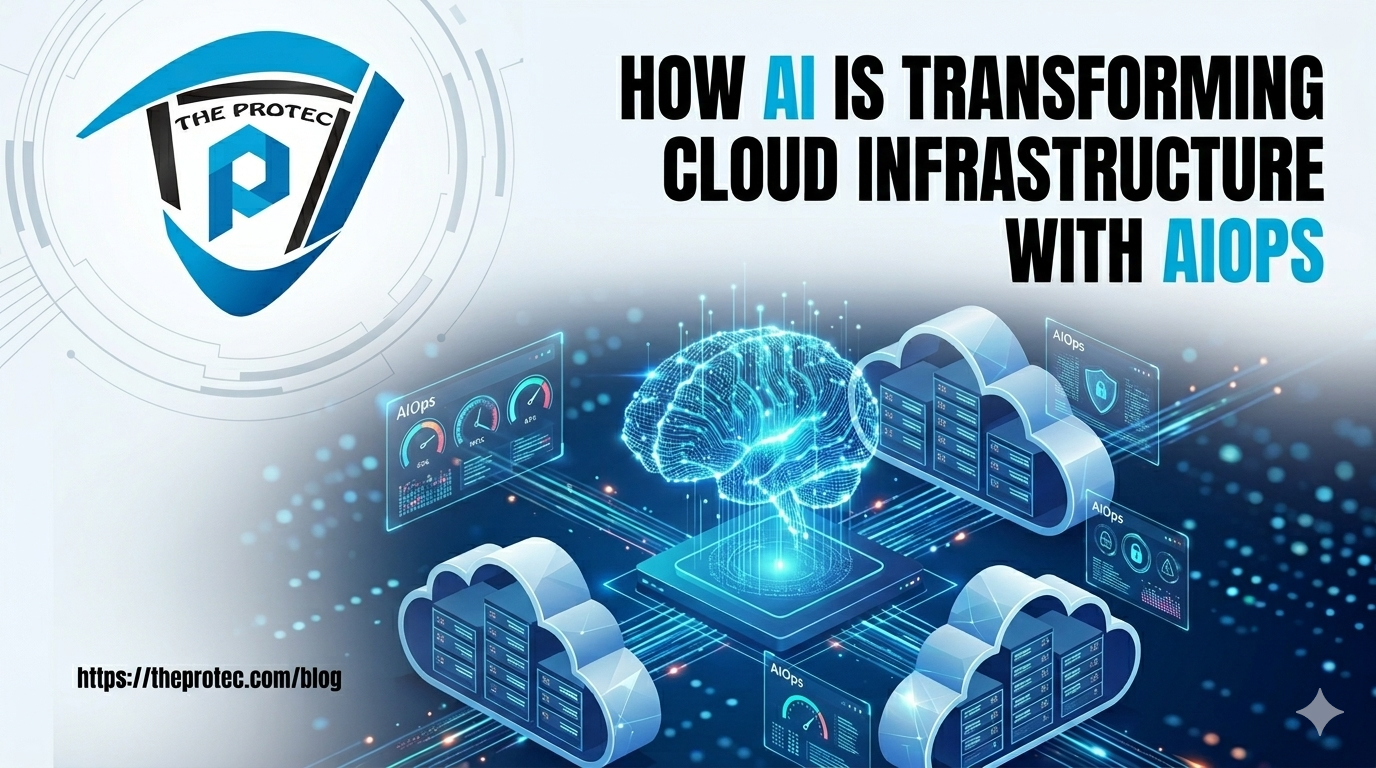
The rapid evolution of cloud infrastructure has reshaped how organizations deploy, manage, and scale their digital assets. Amidst the rising complexity of cloud environments, traditional manual approaches to infrastructure management no longer suffice. This is where AIOps (Artificial Intelligence for IT Operations) comes into play, harnessing the power of AI cloud technologies to transform cloud infrastructure management. By integrating AI-driven capabilities such as predictive scaling, automated monitoring, and self-healing systems, AIOps is redefining cloud automation and operational resilience.
Understanding AIOps and Its Role in Cloud Infrastructure
AIOps represents the convergence of artificial intelligence and machine learning techniques with operational processes to enhance IT operations. In cloud infrastructure, AIOps enables the handling of vast volumes of data generated by multiple interconnected systems, applications, and services. It analyzes this data to detect patterns, predict incidents, and automate corrective actions, facilitating proactive infrastructure management.
The intrinsic complexity of cloud environments, characterized by multi-cloud setups, container orchestration, and dynamic workloads: poses significant challenges. AIOps acts as an intelligent layer over this environment, streamlining decision-making, reducing downtime, and optimizing resource utilization through advanced cloud automation.
Predictive Scaling: Anticipating Demand with AI
One of the most critical aspects of cloud infrastructure management is scaling resources to meet fluctuating demands. Traditional reactive scaling methods, which respond to current utilization, often lead to latency issues or resource wastage. Predictive scaling, powered by AIOps, tackles this issue by analyzing historical and real-time data to forecast future workload patterns.
By leveraging machine learning algorithms, predictive scaling models consider multiple parameters such as user traffic trends, transaction volumes, and performance metrics to anticipate spikes or drops in demand. This forward-looking approach allows cloud systems to allocate resources dynamically before bottlenecks arise.
For example, an e-commerce platform can automatically provision additional compute capacity ahead of a promotional event, ensuring seamless user experience even during peak loads. Conversely, it can scale down resources during low-traffic periods, optimizing cost efficiency.
Implementing predictive scaling within AIOps frameworks reduces manual intervention and enables continuous optimization of cloud resources, catering to both performance and budgetary requirements.
Automated Monitoring: Continuous Intelligence for Cloud Health
Maintaining the health of distributed cloud environments demands constant vigilance across numerous components. Manual monitoring methods fall short amid the scale and complexity of modern infrastructure. Automated monitoring, powered by AIOps, delivers continuous intelligence by collecting and analyzing metrics, logs, and events in real time.
AIOps platforms ingest telemetry data from diverse sources: servers, containers, network devices, and applications. Using AI techniques such as anomaly detection and correlation analysis, they identify irregularities that may signal underlying issues before impacting users.
Unlike rule-based alerting which often produces noise through false positives, AIOps-driven automated monitoring distinguishes meaningful incidents, prioritizing them based on potential impact. This precision enables IT teams to focus on critical problems, significantly improving Mean Time to Detect (MTTD) and Mean Time to Resolve (MTTR).
Furthermore, the system’s ability to adapt dynamically to evolving baselines ensures accurate monitoring even as the infrastructure scales or workloads shift.
Self-Healing Systems: Autonomous Remediation in Cloud Automation
Perhaps the most transformative feature that AIOps introduces to cloud infrastructure is the capability for self-healing. Self-healing systems automate the identification and resolution of common operational issues without human intervention, driving unparalleled reliability and uptime.
Rooted in AI-driven insights, self-healing mechanisms analyze incident patterns and past remediation actions to develop automated response workflows. For example, if a service experiences a memory leak leading to degraded performance, the system can automatically restart affected instances or redirect traffic to healthy nodes.
Self-healing also encompasses advanced fault mitigation strategies, such as rolling back faulty deployments or dynamically reallocating resources to circumvent hardware failures. Such automation reduces human error, lowers operational costs, and accelerates recovery times.
By integrating seamlessly with orchestration tools and cloud service providers, self-healing systems form the backbone of proactive cloud automation, enabling infrastructure that intelligently maintains itself in the face of evolving challenges.
Real-World Impact and Benefits of AIOps in Cloud Infrastructure
The adoption of AIOps-powered cloud automation delivers several tangible benefits:
- Enhanced Reliability: Continuous monitoring coupled with self-healing reduces outages and ensures service continuity.
- Optimized Costs: Predictive scaling ensures resources are provisioned efficiently, avoiding over-provisioning and minimizing cloud spend.
- Operational Efficiency: Automation of routine tasks frees IT teams to focus on strategic initiatives, improving overall productivity.
- Faster Incident Response: Early anomaly detection and automated remediation improve response times, minimizing user impact.
- Scalability and Agility: Intelligent management of dynamic workloads supports continuous innovation and rapid deployment.
Organizations embracing AIOps gain a competitive edge by delivering more reliable, cost-effective cloud services while maintaining aligned business agility.
Challenges and Considerations in Implementing AIOps for Cloud Infrastructure
Despite its advantages, deploying AIOps involves navigating certain challenges. Successful implementation requires high-quality data, as AI models depend heavily on comprehensive and clean telemetry. Integrating AIOps platforms with diverse cloud environments demands careful planning to ensure compatibility and security.
Moreover, there is a cultural shift in IT operations teams, which need to adapt to increased automation and trust AI-driven decisions. Clear governance, transparency in AI models, and continuous model retraining help build confidence and ensure compliance.
Organizations must balance automation with human oversight, especially for critical systems, to mitigate risks associated with incorrect AI predictions or actions.
Future Outlook: The Evolving Landscape of AI Cloud and AIOps
Looking ahead, AIOps is poised to deepen its integration into cloud infrastructure, driven by advancements in AI explainability, federated learning, and edge computing. As AI algorithms become more sophisticated, predictive capabilities will extend beyond infrastructure to application-level performance and security.
The synergy between AIOps and emerging paradigms such as serverless computing and multi-cloud orchestration will create hyper-automated environments with near-zero manual intervention.
Staying informed about developments from leading AI and cloud providers, including platforms like IBM AIOps, will help organizations navigate the evolving landscape effectively.
FAQ
What distinguishes AIOps from traditional cloud automation?
Traditional cloud automation relies heavily on rule-based scripts and manual configurations, reacting to known conditions. AIOps incorporates machine learning and AI to analyze vast data in real time, predict future events, and automate complex decision-making dynamically, enabling proactive management rather than reactive responses.
How does predictive scaling improve cloud resource management?
Predictive scaling uses AI to forecast demand patterns, allowing infrastructure to scale resources ahead of actual usage spikes. This prevents performance degradation during traffic surges and avoids the cost of over-provisioning during low demand, balancing efficiency and user experience.
Can self-healing systems completely replace human IT operators?
While self-healing systems automate many routine fixes and reduce manual intervention, complete replacement is unlikely in the near term. Human oversight remains essential to handle complex, unforeseen issues, strategic planning, and ensuring ethical AI operations. AIOps complements IT teams by enhancing their capabilities rather than replacing them.