







Contents
- 1 Introduction
- 2 Understanding Serverless and Containers
- 3 Key Cost Factors Between Serverless and Containers
- 4 Real-World Startup Scenarios and Cost Analysis
- 5 Comparing Serverless vs Docker Costs Specifically
- 6 Cloud Architecture Cost Trends Impacting Startups
- 7 Tips for Startups to Optimize Cloud Architecture Cost
- 8 Frequently Asked Questions
- 9 Conclusion
Introduction
Startups continually seek scalable, cost-effective infrastructure solutions to launch and grow their applications without excessive overhead. Two dominant paradigms have emerged as front-runners: serverless computing and container-based architectures. Both promise agility and scalability, but when it comes to cost, which option aligns better with a fast-moving startup’s goals? This article dives into the serverless vs containers cost debate, analyzing real-world startup scenarios and the evolving landscape of cloud architecture cost in 2026.
Understanding Serverless and Containers
What Is Serverless?
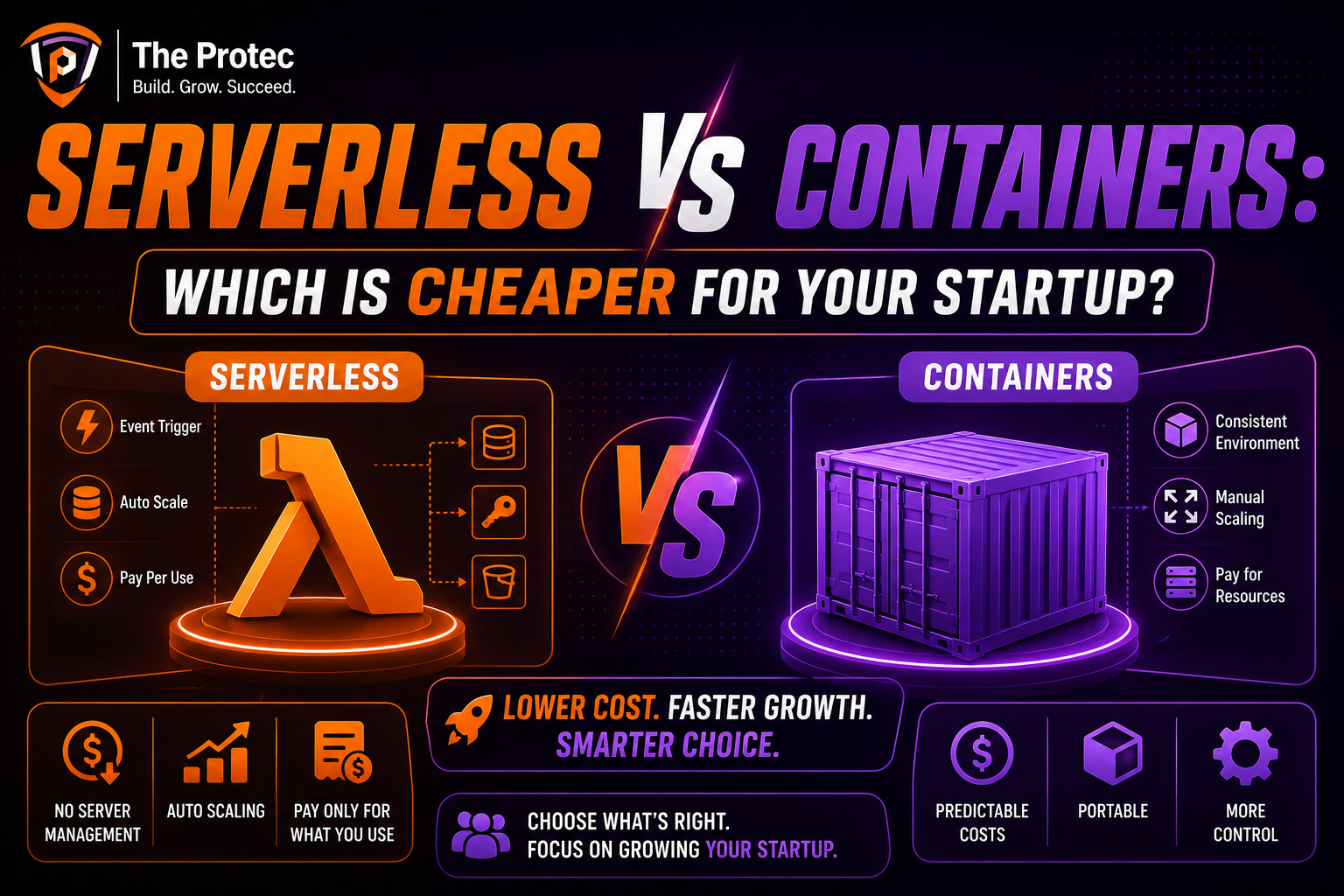
Serverless computing abstracts the underlying server management completely. Developers write functions that run on-demand in response to events, while cloud providers handle provisioning, scaling, and maintenance automatically. Billing is typically based on the actual compute time used, rather than a fixed infrastructure cost.
What Are Containers?
Containers bundle an application and its dependencies into a single lightweight executable package. Technologies like Docker enable consistent environments across development, testing, and production. Containers run on managed services such as Kubernetes or self-managed clusters, often requiring dedicated compute resources that run continuously.
Key Cost Factors Between Serverless and Containers
Both options offer flexibility, but they come with different pricing models that impact startups differently depending on their use case.
Billing Models
- Serverless: Charged per invocation, CPU time, memory allocated, and execution duration. No cost when idle.
- Containers: Often charged based on reserved compute resources (CPU, RAM) and uptime regardless of usage. Additional charges apply for orchestration, storage, and network.
Operational Overheads
Containers usually require some level of cluster management, monitoring, and scaling setup, which can translate to developer and DevOps time an indirect cost. Serverless delegates this responsibility entirely to the cloud provider, allowing startups to minimize operational costs.
Scalability and Performance
Serverless automatically scales to zero and up without pre-provisioning, excellently supporting unpredictable workloads. Containers require provisioning of minimum resources but can benefit startups with steady, consistent loads where reserved resources pay off.
Real-World Startup Scenarios and Cost Analysis
Scenario 1: Early-Stage SaaS Startup with Sporadic Usage
Imagine a startup building a SaaS product still in beta with low, variable traffic and frequent feature rollouts.
- Serverless: Since invocations are low, the startup only pays for actual compute time. There are no costs during downtime or inactivity, making it highly cost-efficient during early stages.
- Containers: Running containers 24/7 leads to fixed monthly charges regardless of usage, inflating costs unnecessarily.
Verdict: Serverless is significantly cheaper here due to zero idle cost and minimal management overhead.
Scenario 2: Mid-Stage Startup with Predictable Traffic and Microservices
A growing startup has stabilized its user base with predictable daily traffic and multiple microservices communicating continuously.
- Serverless: Costs can escalate with increasing invocations and long-running processes. High per-invocation pricing may become expensive when traffic scales.
- Containers: The startup can reserve resources to optimize throughput. Consistent workloads allow cost control with fixed infrastructure, potentially lowering per request costs.
Verdict: Containers may provide better cost predictability and efficiency for stable, traffic-heavy applications.
Scenario 3: Data-Intensive Startup Requiring High Performance
A startup focused on real-time video processing or machine learning requires low latency and high compute power.
- Serverless: Although serverless platforms have improved cold start times, high compute workloads often incur greater costs per unit of time due to short max execution limits.
- Containers: Containers running on dedicated GPU-enabled or high-memory instances offer much better performance and cost-efficiency for long-running intense computations.
Verdict: Containers generally offer a cost advantage for high-performance, complex workloads.
Comparing Serverless vs Docker Costs Specifically
Docker containers remain the de facto standard in containerization, so a comparison between serverless vs docker highlights container costs more concretely.
Serverless Pricing Nuances
Leading platforms like AWS Lambda, Azure Functions, and Google Cloud Functions charge based on memory allocation and execution time, often in 100ms increments. Free tiers and per-use pricing make serverless appealing for development and light workloads.
Docker Container Costs
Running Docker containers on cloud platforms generally requires a virtual machine or container orchestrator like Amazon ECS, Google Kubernetes Engine, or Azure Kubernetes Service. The cost involves VM pricing, cluster management fees, and persistent storage, which accumulate monthly. However, reserved instances and spot pricing can reduce expenses.
Maintenance and Hidden Costs
Containers can incur additional costs in terms of tooling, monitoring, and updates. Serverless abstracts these tasks, but vendor lock-in and limitations like cold starts or execution timeouts may introduce indirect expenses.
Cloud Architecture Cost Trends Impacting Startups
The cloud ecosystem continues to evolve, influencing cost patterns and startup decisions.
Hybrid and Multi-Cloud Solutions
Startups increasingly aim for hybrid models blending serverless and containers to optimize costs. For example, leveraging serverless for asynchronous, event-driven tasks and containers for persistent, stateful services.
Advancements in Serverless Efficiency
Recent serverless innovations have driven down cold start times and extended execution limits, making serverless competitive for broader workloads, impacting cost calculations positively.
Container Orchestration Automation
Tools like AWS Fargate and Google Cloud Run abstract container management, providing a more serverless-like experience with granular billing, narrowing the cost gap.
Tips for Startups to Optimize Cloud Architecture Cost
- Analyze workload patterns: Choose serverless for spiky, unpredictable loads; containers for steady or intensive workloads.
- Monitor usage regularly: Track invocation counts, container uptime, and resource consumption.
- Leverage free tiers and discounts: Use startup credits, reserved instances, and spot pricing where possible.
- Adopt hybrid approaches: Mix serverless and containers to optimize cost and performance balance.
- Automate scaling: Use auto-scaling tools to avoid overprovisioning resources.
Frequently Asked Questions
1. Which offers better cost savings for unpredictable workloads—serverless or containers?
Serverless architectures typically provide better cost savings for unpredictable or infrequent workloads, as you pay only for usage without reserved capacity, eliminating idle costs common with containers.
2. Can containers be as cost-effective as serverless?
Yes, especially for applications with steady, predictable traffic. Containers with reserved resources can reduce costs compared to serverless, which may become expensive at scale due to per-invocation billing.
3. How do cloud providers’ managed container services affect cost comparison?
Managed services like AWS Fargate or Google Cloud Run offer container scalability with serverless-style billing, reducing management overhead and bridging the cost difference between traditional containers and serverless.
Conclusion
Choosing between serverless and containers boils down to workload characteristics, scalability needs, and your startup’s growth trajectory. For early-stage startups with unpredictable traffic, serverless is often cheaper and simpler, eliminating idle resource costs and management overhead. As startups mature and workloads stabilize, containers especially when managed through modern orchestration platforms offer cost predictability and performance benefits that can reduce per-unit costs.
Given the rapid advances in cloud infrastructure, hybrid approaches combining both paradigms are becoming the norm, enabling startups to tailor cloud architecture cost effectively. By carefully assessing workload patterns and leveraging the latest cloud offerings, startups can optimize expenses while maintaining agility and scalability.
For more insights on cloud cost optimization, check cloud cost management tools like Cloudability.