








Contents
- 1 Introduction
- 2 Understanding SaaS Architecture and Microservices
- 3 Step 1: Define the Core Business Capabilities
- 4 Step 2: Establish a Service Communication Strategy
- 5 Step 3: Design Data Management with a Decentralized Approach
- 6 Step 4: Implement API Gateway and Authentication
- 7 Step 5: Adopt Containerization and Orchestration
- 8 Step 6: Monitor, Log, and Ensure Observability
- 9 Step 7: Apply Scalability Best Practices
- 10 Step 8: Plan for Continuous Integration and Delivery (CI/CD)
- 11 Step 9: Enhance Security at Every Layer
- 12 Step 10: Continuously Refine and Scale Your Microservices Architecture
- 13 Frequently Asked Questions (FAQ)
- 14 Conclusion
Introduction
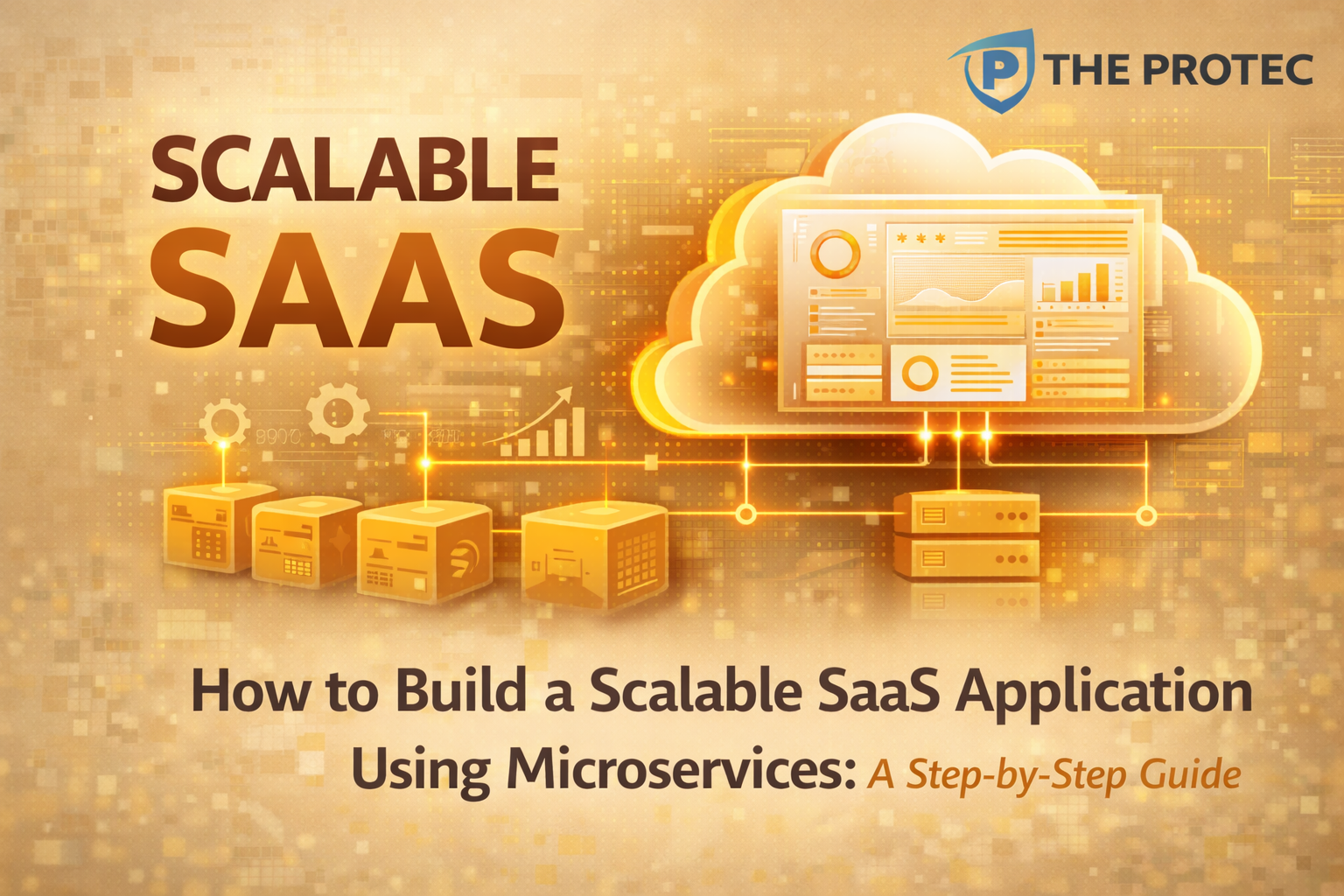
In today’s fast-evolving technological landscape, building scalable SaaS applications is no longer a luxury but a necessity. As user demands increase and business ecosystems grow more complex, traditional monolithic architectures struggle to keep pace with rapid feature releases, scaling requirements, and fault tolerance. This is where microservices architecture shines, offering modularity and flexibility to develop scalable apps with ease.
This guide provides a detailed, step-by-step approach to designing and implementing a scalable SaaS application using microservices. Whether you’re an architect, developer, or CTO, these best practices will help you craft SaaS solutions that can dynamically scale alongside your business.
Understanding SaaS Architecture and Microservices
SaaS architecture refers to the design and organization of software-as-a-service platforms, ensuring multi-tenancy, reliability, and rapid feature delivery. Microservices decompose an application into small, independently deployable services, each responsible for a single business capability. Together, they form a robust foundation to build scalable and resilient SaaS platforms.
Why Choose Microservices for SaaS?
- Scalability: Scale individual components independently based on demand.
- Flexibility: Use diverse technologies tailored for each service.
- Fault Isolation: Issue in one service won’t take down the whole app.
- Faster Deployment: Continuous integration and delivery pipelines for frequent updates.
Step 1: Define the Core Business Capabilities
Start by identifying the primary business domains your SaaS application needs to address. For example, user management, billing, notifications, data analytics, etc. Each domain should be a candidate for a microservice. Breaking your application by business capabilities promotes loose coupling and clear ownership.
- Engage with stakeholders to map out domain boundaries.
- Use Domain-Driven Design (DDD) principles to define bounded contexts.
- Document APIs and data contracts early to minimize integration friction.
Step 2: Establish a Service Communication Strategy
Decide how microservices will communicate. There are two predominant patterns:
- Synchronous Communication (e.g., REST, gRPC): Suitable for real-time operations but requires robust error handling and timeouts.
- Asynchronous Communication (e.g., message queues, event streaming): Decouples services, improves resilience, and enhances scalability.
Modern SaaS applications often use a hybrid approach, balancing responsiveness and reliability.
Step 3: Design Data Management with a Decentralized Approach
A critical challenge in microservices-based SaaS architecture is data management. Avoid sharing databases between services to prevent tight coupling and data integrity issues.
- Each microservice should own its database/schema.
- Implement eventual consistency using event-driven architectures.
- Use API gateways or service mesh for data aggregation needs.
Tools like Apache Kafka or RabbitMQ can help orchestrate asynchronous updates effectively.
Step 4: Implement API Gateway and Authentication
An API gateway acts as a single entry point for all client requests, providing:
- Request routing and load balancing
- Authentication and authorization
- Rate limiting and caching
- Protocol translation and request aggregation
For authentication, adopt modern solutions like OAuth 2.0 and OpenID Connect, integrating with identity providers to secure your SaaS platform efficiently.
Step 5: Adopt Containerization and Orchestration
Containers (e.g., Docker) and orchestration platforms (e.g., Kubernetes) are essential for deploying microservices at scale.
- Containers: Package each microservice with its dependencies for consistent environments.
- Orchestration: Automate deployment, scaling, and management of containerized services.
This setup supports continuous delivery and horizontal scaling, essential for SaaS applications with fluctuating workloads.
Step 6: Monitor, Log, and Ensure Observability
Maintaining visibility over many microservices requires a centralized observability approach:
- Implement distributed tracing (e.g., OpenTelemetry) to track requests across services.
- Centralize logs with tools like ELK Stack or Splunk for troubleshooting.
- Set up proactive alerting for performance anomalies and failures.
Observability helps maintain service health and optimize performance, directly impacting user experience.
Step 7: Apply Scalability Best Practices
To truly benefit from a microservices approach, apply these scalability best practices:
- Stateless Microservices: Build services that do not store session information locally to enable easy scaling.
- Load Balancing: Use intelligent load balancers to distribute traffic efficiently.
- Auto-scaling: Configure automatic scaling policies based on CPU, memory, or custom metrics.
- Database Scaling: Utilize replication, sharding, or serverless databases for handling large volumes of data.
Step 8: Plan for Continuous Integration and Delivery (CI/CD)
Fast, reliable deployments are essential for SaaS. Establish automated CI/CD pipelines to build, test, and deploy microservices independently.
- Implement automated unit and integration testing.
- Use blue-green or canary deployments to minimize downtime during updates.
- Monitor deployments and rollback mechanisms to ensure stability.
Step 9: Enhance Security at Every Layer
Security is paramount in SaaS applications. Incorporate security best practices such as:
- Encrypting data in transit and at rest.
- Implementing mutual TLS between microservices.
- Regularly scanning container images for vulnerabilities.
- Following the principle of least privilege for access controls.
Adopting a “security by design” mindset reduces operational risks significantly.
Step 10: Continuously Refine and Scale Your Microservices Architecture
Building a scalable SaaS application using microservices is an ongoing process. As your user base grows, continuously revisit the architecture to improve efficiency, refactor services, introduce new technologies, and optimize costs.
Consider leveraging cloud-native solutions such as serverless functions, managed Kubernetes services, and AI-driven monitoring tools to stay ahead.
Frequently Asked Questions (FAQ)
Q1: How do microservices improve scalability in SaaS applications?
Microservices enable independent scaling of individual components based on demand. This granular control ensures resources are efficiently allocated without scaling the entire application, which is a limitation of monolithic architectures.
Q2: What challenges should I expect when transitioning to microservices?
Key challenges include managing distributed data consistency, increased operational complexity, ensuring reliable inter-service communication, and implementing robust monitoring and security mechanisms.
Q3: Are there any tools recommended for managing microservices architecture?
Yes, popular tools include Kubernetes for orchestration, Docker for containerization, Istio or Linkerd for service mesh, Kafka or RabbitMQ for messaging, and ELK Stack or Prometheus for observability.
Conclusion
Designing a scalable SaaS application using microservices architecture requires careful planning, robust technology choices, and continuous evolution. By breaking down your app into modular services, ensuring clear communication, and leveraging container orchestration frameworks, you can empower your SaaS platform to scale efficiently while delivering superior user experiences.
To deepen your understanding of microservices best practices, check out Martin Fowler’s Microservices Guide, a widely-respected external resource for architectural patterns.