








Contents
- 1 Introduction
- 2 Why Startups Need Specialized CRM Software
- 3 Key Criteria for Evaluating CRM Tools for Startups
- 4 Top 10 CRM Software for Startups in the USA: Free & Paid Options
- 5 CRM Tools Comparison Summary
- 6 Scalability Insights: Choosing a CRM That Grows With Your Startup
- 7 FAQs About the Best CRM for Startups in the USA
- 8 Conclusion
Introduction
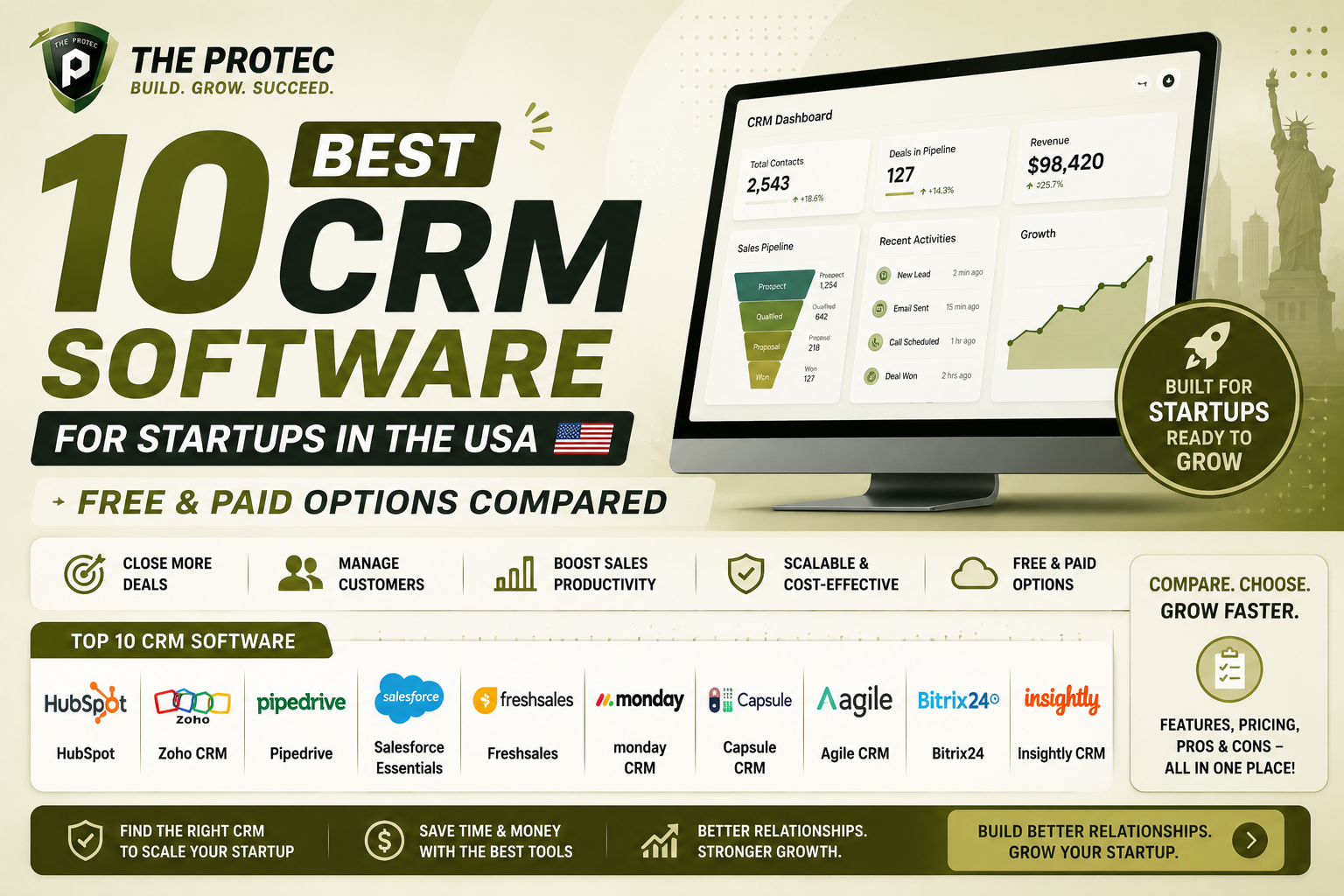
Choosing the right Customer Relationship Management (CRM) software is a critical decision for startups in the USA looking to streamline sales processes, improve customer engagement, and scale efficiently. With an ever-growing array of CRM tools on the market, both free and paid options offer different features catering to startups at various stages of growth. This article dives deep into the 10 best CRM software options for startups in the USA, emphasizing a clear CRM tools comparison and scalability insights to help you decide which solution fits your business needs best.
Why Startups Need Specialized CRM Software
Startups operate in dynamic environments with limited resources yet ambitious growth goals. A CRM tailored for startups keeps lead management organized, automates repetitive tasks, and provides real-time customer insights. Additionally, these tools must be scalable to grow alongside your business without requiring costly migrations later. Selecting the best CRM for startups USA requires balancing budget constraints with the necessity for robust features and adaptability.
Key Criteria for Evaluating CRM Tools for Startups
- Ease of use: Intuitive interfaces reduce onboarding time and boost adoption.
- Affordability: Availability of robust free tiers or reasonable paid plans.
- Feature set: Core features like contact management, pipeline tracking, email integration, and reporting analytics.
- Scalability: Capability to grow without complex data transfers or feature limitations.
- Integration: Compatibility with essential tools like marketing automation, chat, and customer support apps.
- Mobile accessibility: Support for remote and on-the-go access.
Top 10 CRM Software for Startups in the USA: Free & Paid Options
1. HubSpot CRM
Type: Free with optional paid upgrades
HubSpot CRM is a popular choice for startups seeking a comprehensive free solution. It offers an intuitive dashboard, unlimited users, and essential tools such as contact management, deal pipelines, email tracking, and live chat. The built-in marketing automation scales well with paid tiers, making it suitable for startups ready to expand. HubSpot also boasts integrations with popular apps and a robust mobile app.
2. Zoho CRM
Type: Free tier + tiered paid plans
Zoho CRM provides a solid free plan for up to three users, enabling startups to manage contacts, leads, and deals efficiently. Its paid plans unlock AI-powered sales assistance, workflow automation, and advanced analytics. Zoho’s ecosystem offers smooth integrations with accounting, marketing, and customer service apps. It’s a flexible option for startups aiming for advanced features as they grow.
3. Freshsales by Freshworks
Type: Free plan + various subscriptions
Freshsales shines with simple onboarding and built-in phone and email features. Even the free tier provides contact and deal management, while paid plans add AI-based lead scoring and customizable reports. Startups benefit from native integrations and seamless scalability. Freshsales is ideal for teams needing communication tools tightly embedded in their CRM.
4. Pipedrive
Type: Paid plans only (free trial available)
Pipedrive specializes in pipeline management with a visual interface making deal tracking intuitive. Its paid plans start affordably and include features such as workflow automation, custom reporting, and extensive integrations. Pipedrive scales well with added features for larger teams and complex sales processes, appealing to startups focused on sales efficiency.
5. Agile CRM
Type: Free plan for up to 10 users + paid upgrades
Agile CRM delivers a CRM platform combining sales, marketing, and service automation. Its free plan allows startups to access core features, including contact management and email tracking, with notable scalability on paid tiers offering telephone integration, advanced analytics, and campaign management. Agile CRM suits startups wanting an all-in-one CRM solution.
6. Salesforce Essentials
Type: Paid (small business focused plan)
Salesforce Essentials is optimized for startups and small businesses, delivering powerful CRM capabilities from the industry giant. Its features emphasize contact and lead management, customizable workflows, and AI-powered insights. While pricier than typical startup CRMs, its scalability and extensive integrations make it a worthy investment for startups nearing growth phases requiring enterprise-grade tools.
7. Monday.com CRM
Type: Paid plans with trial
Monday.com has become a favorite for startups seeking a highly customizable CRM platform. It offers visual project and sales pipeline management, automation, and real-time collaboration workflows. Though it lacks a free tier, its modular pricing allows startups to select necessary features, ensuring scalability and integration flexibility suitable for evolving startup needs.
8. Bitrix24
Type: Free plan + paid subscriptions
Bitrix24 combines CRM with collaboration and communication tools. Its free plan supports up to 12 users, offering contact management, pipeline tracking, and task automation. Paid plans enable more users and advanced features like telephony and CRM analytics. Its comprehensive approach is ideal for startups looking for integrated sales and team collaboration tools.
9. Copper CRM
Type: Paid plans with free trial
Copper CRM integrates tightly with Google Workspace, making it an excellent choice for startups relying on Google apps. It simplifies deal and contact management directly through Google’s interface. Paid plans offer workflow automation, reporting, and integrations with popular tools. Copper’s ease of use and seamless Google integration facilitate productivity and scalability.
10. Nutshell CRM
Type: Paid plans with free trial
Nutshell is designed with startups in mind, focusing on usability and simplicity. It offers pipeline management, email automation, and built-in reporting. Its pricing is competitive, and the platform scales by adding advanced features and integrations. Nutshell’s straightforward approach enables startups to gain CRM benefits without complexity.
CRM Tools Comparison Summary
| CRM Software | Free Plan Available | Starting Price | Key Features | Scalability |
|---|---|---|---|---|
| HubSpot CRM | Yes, unlimited users | Free; paid plans from $50/user/month | Contact management, marketing automation, analytics | High (modular add-ons) |
| Zoho CRM | Yes (up to 3 users) | Free; paid from $14/user/month | AI sales assistance, automation, integrations | High |
| Freshsales | Yes | Free; paid plans from $15/user/month | Built-in phone/email, AI lead scoring | Good |
| Pipedrive | No (14-day trial) | $14.90/user/month | Visual sales pipeline, workflow automation | Good |
| Agile CRM | Yes (up to 10 users) | Free; paid from $8.99/user/month | Sales, marketing & service automation | Good |
| Salesforce Essentials | No | $25/user/month | Custom workflows, AI insights, integrations | Very High |
| Monday.com CRM | No | $10/user/month | Custom pipelines, automation, collaboration | High |
| Bitrix24 | Yes (up to 12 users) | Free; paid from $39/month | Collaboration tools, telephony, analytics | Good |
| Copper CRM | No | $25/user/month | Google Workspace integration, automation | Good |
| Nutshell CRM | No | $19/user/month | Email automation, pipeline management | Good |
Scalability Insights: Choosing a CRM That Grows With Your Startup
While free CRM options provide an excellent starting point, startups need to anticipate growth demands. Look for CRMs that offer modular upgrades or tiered plans that expand feature access without data loss or migration hassle. For example, HubSpot CRM and Zoho CRM have extensive ecosystems to add marketing automation, support, and analytics capabilities as your startup scales.
Paid platforms like Salesforce Essentials stand out in scalability because they offer enterprise-grade security, customization, and integration options suitable for startups transitioning into mid-sized companies. Integration capabilities with popular tools in finance, marketing, and customer support are critical for seamless growth.
Avoid CRMs with rigid data storage limits or lack of API access if you foresee complex workflows and larger teams. Flexibility in user additions, reporting customization, and automation will save costs and time in the long run.
FAQs About the Best CRM for Startups in the USA
What CRM is best for startups with limited budgets?
HubSpot CRM and Zoho CRM both offer robust free plans that cover core functionalities essential for startups. Agile CRM is also a flexible free option, especially if you want some marketing and service automation.
How important is integration capability in startup CRM software?
Extremely important. Integration with email, marketing tools, communication platforms, and financial software enables automation and data consistency across your business, saving time and reducing errors.
Can I switch between free and paid CRM plans without losing data?
Most reputable CRMs like HubSpot and Zoho allow seamless upgrades from free to paid plans without data loss, ensuring continuity. However, moving between different CRM providers might require data export/import and careful planning.
Conclusion
Choosing the best CRM for startups in the USA requires a clear understanding of your immediate needs and future growth plans. Free CRM tools such as HubSpot CRM and Zoho CRM offer startups a strong foundation with essential features and the option to scale. Paid solutions like Salesforce Essentials or Pipedrive provide more advanced features suited for teams poised for rapid growth and complex sales processes.
By focusing on factors like ease of use, integration options, feature availability, and scalability, startups can select a CRM that not only supports day-to-day sales and customer management but also grows alongside their business. For comprehensive guides and further insights, Software Advice is a valuable external resource for detailed CRM tool reviews and pricing.