








Contents
- 1 Introduction
- 2 Understanding the AI API Landscape
- 3 Popular AI APIs Driving Monetization
- 4 Monetization Models in the AI API Economy
- 5 Real-World Examples of Developer Income Models Using AI APIs
- 6 Best Practices for Successfully Monetizing AI APIs
- 7 Challenges and Considerations
- 8 Frequently Asked Questions (FAQ)
- 9 Conclusion
Introduction
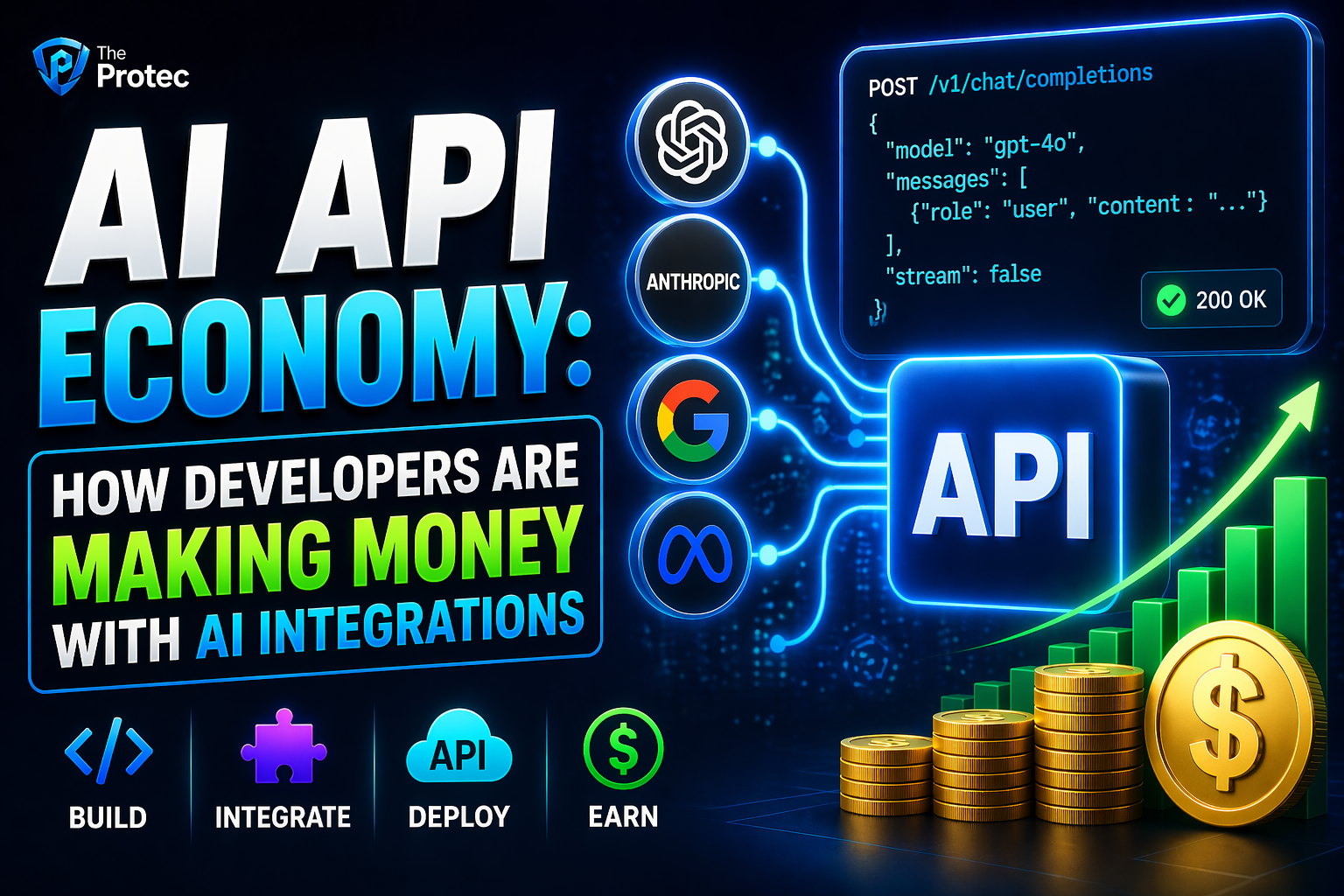
The AI API economy has rapidly transformed the digital landscape, enabling developers to integrate powerful AI functionalities into their applications. Behind this revolution lies an exciting opportunity: monetizing AI through APIs. From OpenAI’s GPT models to Anthropic’s Claude and a growing ecosystem of AI providers, developers now have accessible tools to build smart solutions that generate income. This article explores how developers are capitalizing on AI integrations, revealing tried-and-true monetization models and best practices shaping the AI API economy.
Understanding the AI API Landscape
AI APIs provide developers with programmatic access to advanced AI models allowing seamless integration of natural language processing, image recognition, recommendation engines, and more into software products. Leading players such as OpenAI and Anthropic offer cloud-hosted models that scale effortlessly without the overhead of training or hosting large computational models.
With AI APIs, developers can quickly build chatbots, content generators, summarizers, virtual assistants, and customized AI workflows. The combination of ready-to-use models and flexible pricing schemes has lowered technical and economic barriers, spawning a vibrant AI API economy.
Popular AI APIs Driving Monetization
- OpenAI: Known for the GPT series and DALL·E, OpenAI’s API powers text, code, and image generation. Developers use it for content creation, business automation, customer support tools, and more.
- Claude by Anthropic: Claude offers advanced conversational AI emphasizing safety and interpretability. Its API is increasingly adopted for enterprise-grade applications requiring nuanced dialogue and ethical considerations.
- Google Vertex AI: Although broader architecture, Google’s managed AI APIs enable image analysis, video intelligence, and customized ML deployments.
- Other specialized APIs: AI providers focused on niches like voice recognition, sentiment analysis, and translation enrich the spectrum for developers.
Monetization Models in the AI API Economy
Monetizing AI integrations isn’t just about using the API; it requires building value-driven applications or services where AI capabilities serve a paying customer. Below are the most effective monetization paths developers employ today.
1. SaaS Products with AI-Powered Features
Software as a Service (SaaS) models enhanced with AI APIs have become one of the most lucrative avenues. Developers embed AI-powered functionalities like intelligent drafting, automated summarization, or personalized recommendations into niche SaaS products.
Examples include:
- AI-driven content creation tools catering to marketers and publishers.
- Customer service platforms that automate first-level support through AI chatbots.
- Developer tools that generate code snippets or auto-document APIs.
Revenue is typically subscription-based, offering tiered plans keyed on usage volume or feature access.
2. API Reselling and Marketplaces
Some companies specialize in aggregating multiple AI APIs and offer them as a bundled or simplified service to businesses without AI expertise. Developers and entrepreneurs resell AI API access or create API marketplaces where end-users pay per request or subscription for curated AI functions.
This model benefits from the convenience factor and can position the marketplace as a vertical-specific AI provider, commanding premium pricing.
3. Customized AI Solutions and Consulting
Enterprises often require tailored AI implementations beyond out-of-the-box solutions. Developers skilled in AI APIs offer consulting and custom integration services where they:
- Design custom workflows using OpenAI or Claude APIs.
- Fine-tune models to meet specific data needs.
- Provide ongoing maintenance and scaling.
This service-based monetization commands hourly or project-based fees and remains a lucrative revenue stream especially for highly technical professionals.
4. Content and Digital Products Powered by AI
Developers are using AI APIs to generate digital products like ebooks, marketing copy, design assets, and even education modules. These items are sold as standalone products or as part of subscription memberships.
AI acts as a productivity multiplier, creating scalable content outputs that would be resource-intensive manually. The key is adding curation, quality control, or unique packaging to differentiate and command value.
5. Advertising-Supported Platforms
Some AI applications employ free tiers with ads, generating revenue through ad impressions or engagement. While less direct, combining AI APIs to offer engaging tools (e.g., AI chat experiences) can attract sizable user bases that advertisers want to reach.
Real-World Examples of Developer Income Models Using AI APIs
Case Study 1: AI Copywriting SaaS Leveraging OpenAI
A startup integrated OpenAI’s GPT-4 API into a copywriting platform offering automated blog generation, social media posts, and ad copy. The product uses a freemium pricing model, with paid tiers unlocking higher monthly word counts and advanced templates.
Revenue is driven by recurring subscriptions, with customers valuing the rapid content turnaround and quality. The company reinvests API cost savings by optimizing prompt engineering and user workflows to improve retention and lifetime value.
Case Study 2: Enterprise Chatbot Built on Claude API
An enterprise software provider integrated Anthropic’s Claude API for building an internal knowledge assistant used by employees to quickly access corporate information.
The application was monetized via a licensing model embedded into their enterprise suite, reflecting the value created in improving employee productivity and reducing support calls. Customized fine-tuning of Claude’s model ensured compliance and appropriate tone, critical in this context.
Case Study 3: AI API Aggregator Marketplace
A developer launched a marketplace that bundled AI services, combining text generation from OpenAI with sentiment analysis APIs and image recognition from other providers. By offering a single billing interface and developer-friendly SDKs, they attracted small businesses developing AI-enhanced tools without direct integration complexity.
The marketplace charges a markup on API usage and sells premium support plans. This ecosystem approach allows niche players to profit by simplifying access to AI capabilities.
Best Practices for Successfully Monetizing AI APIs
- Focus on Use Cases Delivering Real Value: The application’s AI features must solve a specific problem better or more cheaply than alternatives.
- Optimize API Usage and Costs: AI API calls can be expensive. Optimize prompts, cache responses where possible, and monitor usage to ensure profitability.
- Prioritize User Experience: Seamless AI integration requires attention to latency, interface design, and error handling.
- Ensure Compliance and Ethical Use: Transparency around AI-generated content, privacy, and data handling enhances trust and long-term viability.
- Leverage Open Source and Community Resources: Using community prompt libraries and sharing improvements can accelerate development.
- Keep Abreast of API Provider Updates: AI API capabilities and pricing evolve rapidly staying informed helps maintain competitive edges.
Challenges and Considerations
Despite promising opportunities, monetizing AI APIs faces hurdles. Predictable costs can be difficult due to variable usage, and API rate limits or sudden pricing changes pose financial risks. Additionally, managing ethical risks around bias, misinformation, or user data requires robust policies.
Developers should approach monetization strategically testing MVPs, engaging with early customers, and iterating based on feedback to build sustainable AI-powered products.
Frequently Asked Questions (FAQ)
Q1: How can developers monetize AI APIs with limited technical expertise?
Developers can use no-code/low-code platforms integrating AI APIs or partner with technical co-founders. Additionally, focusing on simple use cases with pre-built components reduces complexity, enabling monetization through SaaS or digital content.
Q2: What pricing models work best when building AI-powered products?
Subscription plans with usage tiers are most popular, offering predictable revenue and scaling with customer needs. Pay-per-use models suit marketplaces or microservices, while licensing fits enterprise custom integrations.
Q3: Which AI API is best suited for generating natural language content?
OpenAI’s GPT series remains the benchmark for natural language generation due to its versatility and linguistic sophistication. Claude is gaining ground for more context-sensitive, safety-oriented conversation use cases.
Conclusion
The AI API economy is opening unprecedented avenues for developers to monetize AI innovations. Leveraging powerful APIs from OpenAI, Claude, and other providers enables building versatile AI-powered products and services that address real-world needs. By adopting proven monetization models such as AI-enhanced SaaS, marketplaces, and custom solutions developers can unlock sustainable income while driving forward the AI revolution.
For anyone looking to capitalize on AI’s potential, understanding how to integrate, optimize, and position AI APIs in the market is the key to long-term success.
For more insights into AI integration, best practices, and technology updates, visit OpenAI’s API page and Anthropic.