









Contents
- 1 Introduction
- 2 What is WebAssembly and Why Does It Matter for Security?
- 3 How WebAssembly Impacts Browser Sandboxing
- 4 Common WebAssembly Security Risks and Vulnerabilities
- 5 Why WebAssembly is a Different Attack Surface From JavaScript
- 6 Best Practices for Mitigating WebAssembly Security Risks
- 7 Recent Developments and the Road Ahead for WASM Security
- 8 Frequently Asked Questions (FAQ)
- 9 Conclusion
Introduction
WebAssembly (WASM) has rapidly transformed the landscape of web development by enabling near-native performance for complex applications in browsers. Its ability to run compiled code at high speed has opened new possibilities for gaming, multimedia, cryptography, and beyond. However, as with any revolutionary technology, WASM introduces novel security implications that extend beyond the traditional challenges developers and security professionals face with JavaScript.
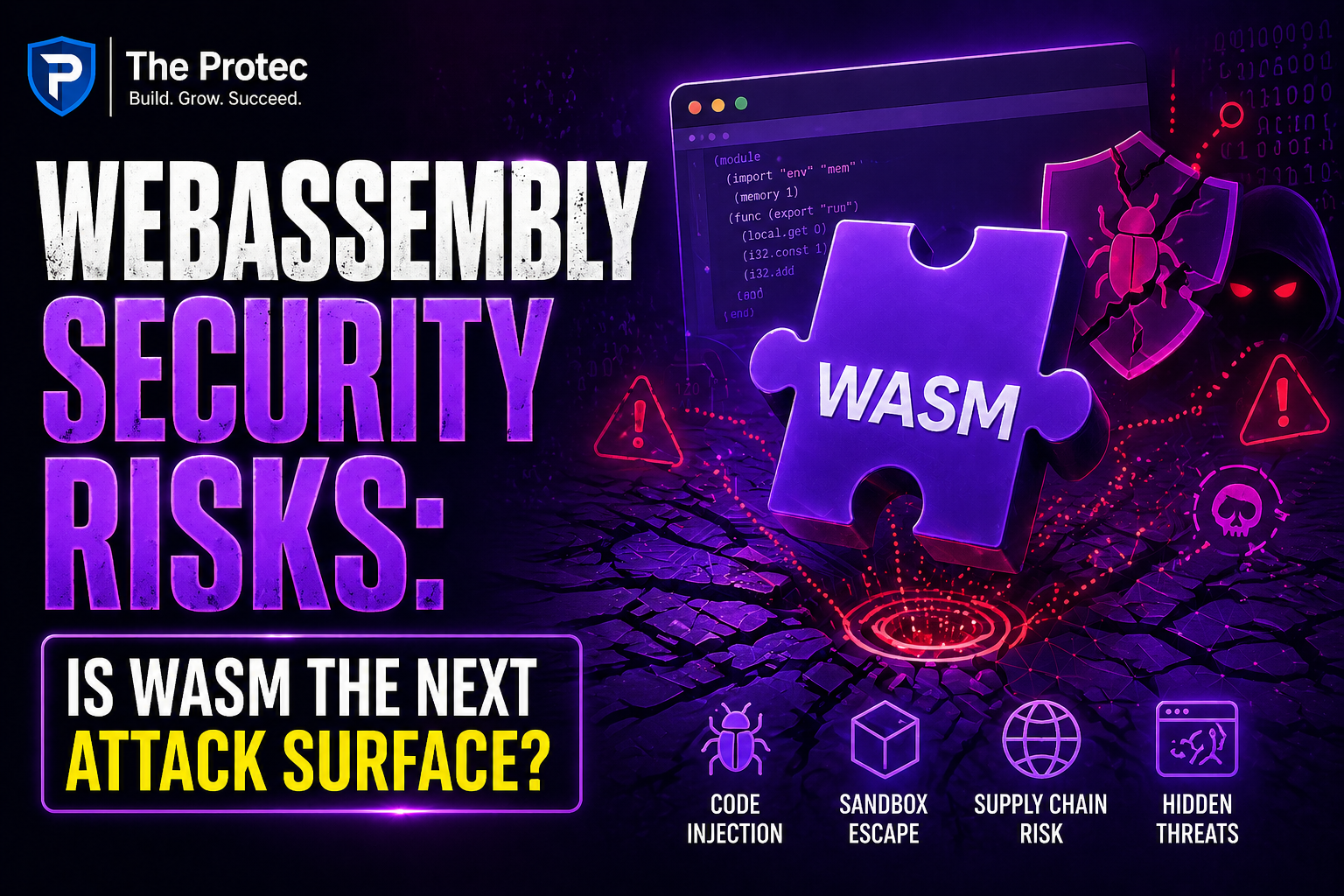
This article dives deep into the evolving world of WebAssembly security, examining how WASM affects browser sandboxing, what specific vulnerabilities it introduces, and why it could represent the next significant attack surface on the web.
What is WebAssembly and Why Does It Matter for Security?
WebAssembly is a low-level binary instruction format designed to run on a virtual machine inside modern browsers. Unlike JavaScript, which is interpreted or JIT-compiled, WASM executes code compiled from languages like C, C++, or Rust, allowing compute-intensive tasks to run efficiently client-side.
While this performance boost is welcome, WASM shifts many security assumptions. Traditional browser security models rely heavily on the JavaScript engine’s sandboxing and runtime checks. WASM runs in a constrained sandbox too, but because it executes binary code rather than source code, the attack surface can change drastically.
How WebAssembly Impacts Browser Sandboxing
Browser sandboxing is a critical defense layer that isolates websites and prevents malicious code from accessing sensitive resources or the operating system. Both JavaScript and WebAssembly execute within this sandbox, but their interaction with it differs in key ways.
- Opaque Binary Execution: WASM code arrives as a binary, making static analysis and filtering more challenging than with JavaScript’s source code. This reduces the ability of security tools to inspect and block malicious payloads inside WASM modules before they run.
- Memory Model Differences: WASM uses a linear memory buffer for data storage, controlled by its own memory management rather than the browser’s garbage collector. This can lead to new classes of memory corruption or buffer overflow vulnerabilities not commonly present in standard JavaScript.
- Reduced Runtime Checks: Unlike JavaScript’s dynamic type checks and object model, WASM optimizes for speed and does fewer runtime validations, increasing risk if the module is compromised or malicious.
The nuances in these sandboxing differences mean attackers may exploit WASM-specific behaviors that bypass or weaken existing web defenses.
Common WebAssembly Security Risks and Vulnerabilities
As WebAssembly adoption grows, several security concerns have emerged, including but not limited to:
1. Code Injection and Supply Chain Attacks
Since WASM modules are typically compiled from native code, if attackers can tamper with the build or distribution pipelines, malicious payloads may be injected undetected. Supply chain compromise could result in malicious WASM code being served to users under the guise of legitimate applications, with little immediate visibility.
2. Side-Channel Attacks and Timing Leaks
WASM’s low-level execution model sometimes makes it vulnerable to side-channel attacks, where subtle timing differences or cache behaviors leak sensitive data. For example, attackers might exploit how WASM instructions execute to infer private keys or user data, bypassing standard browser mitigations.
3. Memory Safety Issues
While WASM enforces a sandboxed environment, its linear memory and manual memory management can lead to buffer overflows or out-of-bounds read/write vulnerabilities if poorly coded or malicious modules are involved. Unlike JavaScript, which provides more automatic protections, WASM developers must be vigilant to avoid unsafe memory patterns.
4. Persistent Malware and Cryptojacking
Malicious actors increasingly use WASM for cryptojacking — running cryptocurrency mining operations directly in users’ browsers without consent. Its high performance makes WASM ideal for this resource-intensive activity, which can degrade device performance and battery life stealthily.
5. Bypassing Content Security Policies (CSP)
Traditional CSPs designed for JavaScript may not effectively restrict WebAssembly modules if policies are not carefully configured. Attackers can exploit misconfigured CSPs to load and execute WASM payloads, facilitating drive-by downloads or code reuse attacks.
Why WebAssembly is a Different Attack Surface From JavaScript
JavaScript security risks have been studied for decades, with mature tooling, best practices, and runtime mitigations in place. WASM’s novelty and technical architecture introduce a shift:
- Complex Binary Format: The binary nature makes it harder for automated scanners and security analysts to inspect code before runtime.
- Native-Like Execution: The potential for memory corruption and unsafe operations is higher compared to JavaScript’s managed runtime environment.
- Limited Debugging and Monitoring: Existing browser developer tools only recently began supporting WASM debugging, constraining detection of malicious behavior.
- Cross-Language Vulnerabilities: WASM modules can be compiled from multiple languages, bringing diverse vulnerabilities not traditionally encountered in web scripting.
These distinctions posit WASM as a qualitatively different attack vector, requiring renewed focus and adaptation in security measures.
Best Practices for Mitigating WebAssembly Security Risks
Addressing WASM security requires a multi-layered approach involving developers, security teams, and browser vendors. Key recommendations include:
1. Rigorous Module Vetting and Signing
Implement strong supply chain security by verifying the provenance and integrity of WASM modules through cryptographic signing and trusted build pipelines to prevent unauthorized code injection.
2. Apply Principle of Least Privilege in WASM APIs
Limit the API surface WASM modules can access, reducing permissions and resource exposure to minimize potential attack vectors available to compromised modules.
3. Harden Content Security Policies
Extend CSPs to explicitly control WASM loading and execution, ensuring modules only come from trusted sources. Consider using Subresource Integrity (SRI) hashes for WASM files.
4. Employ Runtime Monitoring and Anomaly Detection
Deploy monitoring to track WASM usage patterns, resource consumption, and anomalies suggestive of cryptojacking or exploitation attempts.
5. Use Memory-Safe Languages and Static Analysis
Prefer compiling WASM from memory-safe languages like Rust where possible, and apply static analysis tools to detect unsafe code patterns before deployment.
6. Browser Vendor Enhancements
Support for more granular WASM sandboxing, enhanced debugging, and built-in mitigations like control flow integrity can help reduce systemic risks.
Recent Developments and the Road Ahead for WASM Security
Industry and researchers are increasingly focusing on WASM security research. New attack techniques are regularly uncovered, prompting browser vendors to harden sandboxes and provide better tools for safe WASM execution.
Emerging standards such as WebAssembly System Interface (WASI) introduce system-level APIs that will require robust permission and security models to prevent WASM from becoming an entry point for deeper system compromise.
The rise of decentralized web applications (dApps) and more sophisticated client-side processing will further entrench WASM in web ecosystems, making proactive security strategies indispensable.
Frequently Asked Questions (FAQ)
1. Can WebAssembly bypass traditional browser security mechanisms?
While WASM runs inside the browser’s sandbox, its binary format and memory model can make certain traditional security mechanisms less effective, such as JavaScript-specific runtime checks and source code inspection. However, browsers continue to improve sandboxing to mitigate WASM-specific risks.
2. How can developers ensure WASM modules are safe before deploying them?
Developers should use secure build processes, sign their WASM modules, employ static analysis tools, compile from memory-safe languages, and enforce strict content security policies to minimize risks.
3. Is WebAssembly more dangerous than JavaScript for attackers?
WebAssembly introduces different risks rather than simply being more dangerous. Its low-level execution and binary nature open avenues not present in JavaScript, such as memory vulnerabilities and complex reverse engineering challenges. Both require careful security consideration.
Conclusion
WebAssembly fundamentally changes how code runs in browsers, offering impressive performance but also unveiling new security challenges. The shift from scripted to binary execution demands a rethinking of browser sandboxing, supply chain security, and runtime defense strategies. As WASM adoption grows, so does the necessity for comprehensive security measures tailored to its unique risks. Vigilance and innovation in WebAssembly security will be crucial to ensuring the web remains safe and robust in this next evolutionary stage.
For further reading on modern browser security models and WebAssembly’s implications, the official WebAssembly Security documentation is an excellent resource.