








Introduction
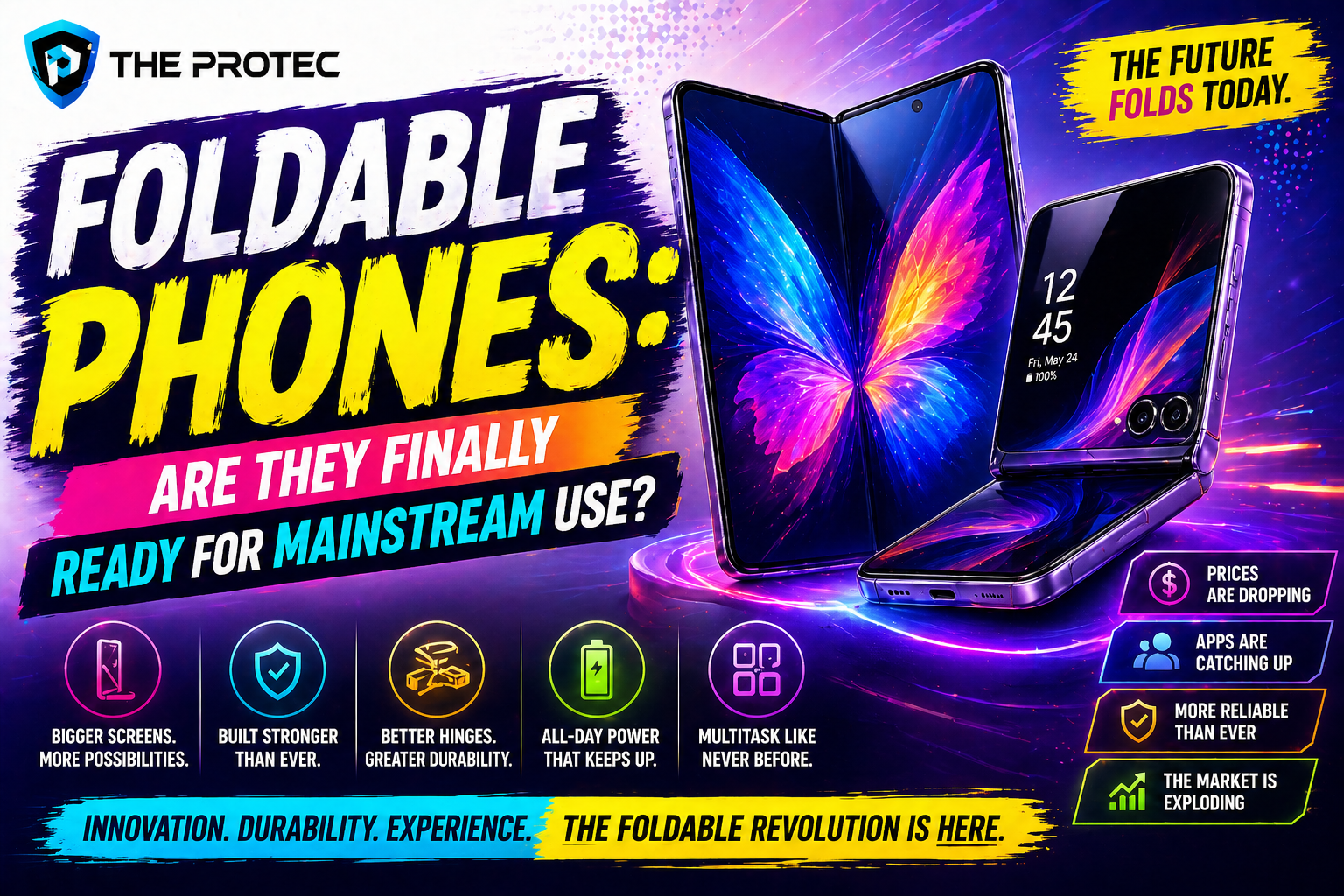
Foldable phones have long been hailed as the future of mobile technology, promising a seamless blend of portability and expansive screen real estate. For years, these devices fascinated tech enthusiasts but struggled to convince the average consumer due to concerns around durability, high prices, and usability gaps. Today, with significant technological progress in flexible displays and smart engineering, foldable phones are witnessing a transformative phase. This article dives deep into the latest improvements shaping foldable phones, evaluating if they are finally poised to go mainstream and redefine what future smartphones should be.
Durability Reimagined: Just How Tough Are Foldable Phones Now?
One of the biggest hurdles for early foldable devices was fragility. Reported issues with screen creasing, hinge failures, and vulnerability to dust and moisture gave many consumers pause. However, manufacturers have methodically tackled these challenges head-on, resulting in markedly improved durability that rivals traditional smartphones.
Robust Flexible Display Technology
Flexible display innovation is at the heart of durability progress. Instead of relying on plastic films that were prone to scratches and dents, companies now integrate ultra-thin glass layers atop flexible OLED panels. This hybrid design preserves the elasticity necessary for folding while delivering enhanced scratch resistance and tactile quality akin to conventional smartphone glass.
Moreover, advances in materials science have led to substrates that endure hundreds of thousands of folding cycles without structural fatigue. Engineers have optimized stress distribution along folding lines, greatly reducing long-term wear and visible creasing.
Reinforced Mechanical Hinges
Innovative hinge designs now employ multi-gear systems, dust seals, and corrosion-resistant metals to guarantee smooth, reliable folding mechanics. These hinges often undergo rigorous factory testing exceeding 300,000 folds, matching or surpassing realistic daily usage scenarios.
Importantly, meticulous engineering ensures the hinge does not trap debris and allows for flexible folding angles without compromising internal components, thus extending device longevity.
Water and Dust Resistance Certifications
Earlier foldable models lacked protection against environmental factors, making them susceptible to damage from particles or moisture infiltration. Recent generation devices are achieving IP68 ratings, demonstrating resistance to dust and immersion in water up to specific depths and durations.
This milestone addresses a critical usability concern, offering users confidence to use their foldable phones in varied, everyday settings without worrying about fragile internals.
Pricing Paradigm Shift: More Affordable Innovation
Foldable phones once commanded sky-high price tags, often exceeding $1,500, which restrained widespread adoption. These premium costs were attributable to expensive displays, complex hinge systems, and lower economies of scale. However, market dynamics and production efficiency have brought noticeable price adjustments.
Economies of Scale and Manufacturing Maturation
The growing consumer interest and expanding supplier base have driven down component costs. Innovations like roll-to-roll flexible display manufacturing streamline OLED panel production, reducing waste and cost per unit. Similarly, hinge systems have benefited from modular, repeatable designs allowing mass production at lower expenses.
Competitive Market Landscape
Multiple companies competing in the foldable arena have spurred pricing competitiveness. Mid-tier foldable phones are now becoming available, targeting price-conscious buyers who historically couldn’t justify the premium. These devices balance core flexible display features with optimized specifications to reduce costs without sacrificing user experience.
Value-Driven Features
Additionally, carriers and retailers offer attractive financing plans and bundles with foldable devices, making the upfront cost less daunting. As foldable phones become normalized within the smartphone ecosystem, their perceived value grows driven by genuine productivity and entertainment advantages rather than novelty alone.
Enhanced Real-World Usability: Are Foldables Ready for Everyday Life?
The ultimate proof point for foldable phones lies in how effectively they serve users’ needs throughout diverse daily tasks. Early concerns encompassed bulkiness when folded, software adaptation to dual or extended displays, and battery life limitations. All these areas have seen meaningful strides forward.
Ergonomic Form Factors
Modern foldable phones embrace slimmer profiles and lighter materials to reduce pocket bulk. Innovative designs allow folding into more compact shapes than ever before, sometimes rivaling traditional smartphone thickness when closed.
Some devices introduce creative form factors like tri-fold or rollable panels, further tailoring user interaction modes depending on task requirements, from casual browsing to immersive gaming or multitasking.
Seamless Software Integration
Operating systems and applications now better support foldable screen mechanics. Native support for multi-window views, app continuity when switching between folded and unfolded states, and intuitive gesture controls have matured considerably.
Leading apps from productivity suites to streaming services optimize interfaces to leverage foldable screen real estate without awkward scaling or broken layouts. Developers increasingly prioritize adaptiveness given rising foldable phone market shares.
Battery and Performance Optimization
Foldable phones incorporate larger or dual batteries creatively distributed across the device to maintain slimness while extending usage time. Chipset efficiency improvements reduce power consumption despite driving multiple screen modes.
Thermal management advancements ensure sustained performance during heavy multitasking or high-refresh-rate gaming on expanded displays without excessive heat build-up, a challenge once feared with foldables.
Connectivity and Accessories Ecosystem
Accessory makers now design cases, screen protectors, and docks specifically for foldable devices, boosting protection and usability. Wireless earbuds, pens, and external displays complement foldables smoothly across scenarios from commuting to office environments.
Enhanced 5G and Wi-Fi 6E support, alongside improvements in fast-charging technologies, bolster these devices’ capacity to serve as comprehensive productivity tools.
Conclusion: Foldable Phones Poised for Mainstream Impact
The latest generation of foldable phones demonstrates impressive evolution across crucial fronts durability, pricing, and everyday usability. Reinforced flexible displays and robust mechanical systems nullify previous fragility concerns, while more accessible price points and refined form factors widen appeal beyond niche tech enthusiasts.
Widespread software ecosystem support and improved power efficiency further cement foldable phones’ role as practical alternatives to traditional smartphones. As manufacturers continue innovative efforts, foldable technology is no longer a futuristic aspiration but a viable, mainstream category shaping the future of mobile communication.
Frequently Asked Questions (FAQ)
Are foldable phones as durable as regular smartphones now?
Significant progress in flexible glass technology, hinge engineering, and environmental sealing means many foldable phones now offer durability on par with high-end traditional smartphones. However, they may still require careful handling due to their complex mechanics.
Why were foldable phones so expensive initially?
Early foldable models were expensive due to costly flexible OLED displays, intricate hinge mechanisms, and low manufacturing volume. As production scales and component costs decrease, prices are becoming more competitive and accessible.
Do apps work well on foldable phones with flexible displays?
Most major apps have optimized their interfaces to support foldable screens, enabling smooth transitions between folded and unfolded states and efficient use of larger screen space. This trend improves usability and enhances user experience on foldables.
Where can I learn more about flexible display technology advancements?
Resources like OLEDNet provide extensive insights into the latest developments in flexible OLED and display materials driving foldable phones.