








Introduction
For years, smartphone performance was often measured by raw clock speeds, with GHz figures flaunted as the ultimate indicator of power. Yet, as hardware architectures have evolved, a radical paradigm shift has emerged: artificial intelligence (AI) is now a key driver of smartphone performance. This shift means performance is increasingly defined not by sheer CPU speed but by intelligent processing layers that optimize tasks, improve efficiency, and elevate user experience in ways pure GHz can’t match.
In this article, we’ll explore the transformation from traditional CPU benchmarks toward AI smartphone performance, dissect the nuanced interplay between CPUs and neural processing units (NPUs), and analyze why modern mobile benchmarks must evolve to reflect these groundbreaking advances.
The Historic Focus on Raw Power: CPU Speeds and GHz
Smartphone marketing and technical reviews historically emphasized clock speeds and CPU core counts. A higher GHz number was virtually synonymous with better performance, influencing both user perception and purchasing decisions.
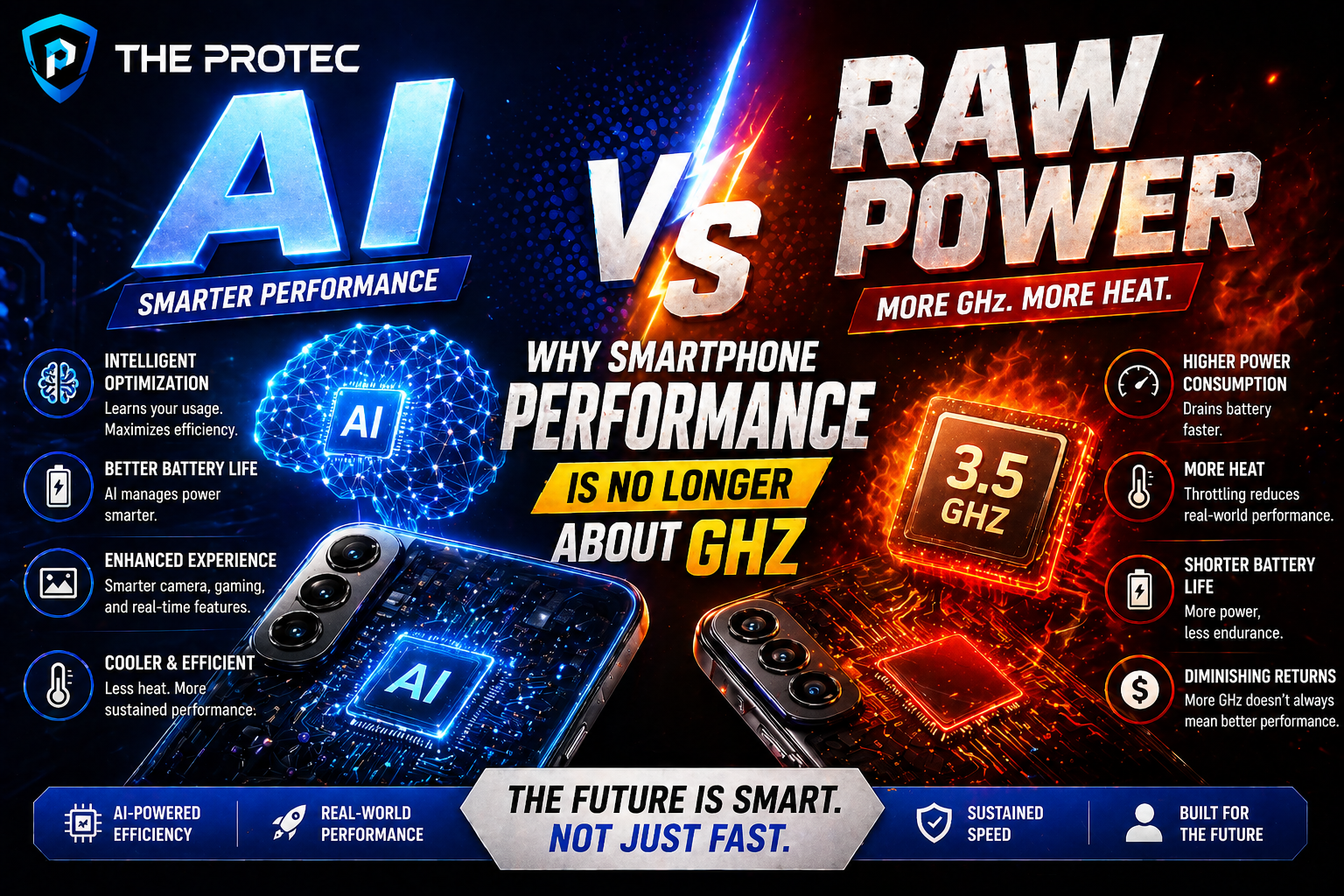
However, raw GHz only tells part of the story. Increasing clock speeds leads to increased power consumption and heat dissipation, challenging manufacturers to find a balance between speed, battery life, and device longevity. Moreover, many real-world tasks depend less on raw clock cycles and more on parallel processing, memory efficiency, and instruction set optimization.
In these scenarios, the limitations of focusing exclusively on GHz become apparent, opening the door for specialized hardware accelerators designed for specific intelligent workloads.
The Rise of AI Smartphone Performance
Smartphones today are equipped with complex AI engines that enable faster, smarter, and more context-aware operations. From camera enhancements such as real-time scene recognition and improved low-light photography to intelligent voice assistants and adaptive battery management, AI powers personalized and responsive experiences.
This movement is driven largely by dedicated neural processing units (NPUs), co-processors designed to handle AI and machine learning (ML) tasks in parallel with conventional CPUs. The impact on overall smartphone performance is profound since NPUs can process tasks more efficiently and with lower latency than general-purpose processors.
AI smartphone performance integrates seamlessly into the SoC (system on chip), utilizing optimized algorithms to accelerate tasks like image recognition, natural language processing, and sensor fusion. This makes smartphones faster at intelligent tasks even if their raw processor clock isn’t the highest on paper.
CPU vs NPU: The Emerging Performance Balance
Understanding the CPU’s Role
The CPU remains the central processing hub, managing general-purpose computing tasks that require sequential logic and flexibility. For app execution, UI rendering, and system operations, the performance of the CPU still matters significantly.
However, CPUs operate under constraints of thermal design power (TDP) and energy efficiency. Cranking GHz higher to push raw power often results in diminishing returns due to throttling and heat dissipation issues.
The Unique Advantages of NPUs
NPUs are specialized processors engineered to handle massive numbers of matrix multiplications and other ML-centric operations concurrently, tasks that traditional CPUs struggle with efficiently. They excel in accelerating neural network inference, a core component of AI workloads.
By offloading intensive AI computations to NPUs, smartphones free up CPU resources, reduce energy consumption, and enhance the speed and responsiveness of intelligent features, from predictive text inputs to real-time translation.
How the CPU and NPU Collaboration Defines Modern Performance
Modern smartphones rely on the CPU-NPU tandem, where intelligent software dynamically decides whether to route tasks toward the CPU or NPU based on workload types. This heterogeneous approach optimizes both performance and power efficiency, facilitating functionality impossible through raw CPU speed alone.
Reassessing Mobile Benchmarks in an AI-Driven Era
Traditional benchmark suites have prioritized CPU frequency, multi-core scores, and GPU performance. Although these metrics remain valuable, they no longer capture the full performance story.
Leading benchmarking platforms such as AnTuTu and Geekbench are evolving to include AI performance tests reflecting real-world workloads involving NPUs and AI accelerators. Scores for AI-driven image processing, voice recognition, and machine learning inference are now central to understanding device capabilities.
This holistic benchmarking better mirrors how today’s smartphones are used, emphasizing efficiency, latency, and AI integration over sheer CPU clock speeds.
Why Raw GHz Is No Longer the Ultimate Performance Indicator
- Power Efficiency Constraints: High GHz results in higher power draw and heat, conflicting with slim, battery-dependent smartphone designs.
- Task-Specific Acceleration: NPUs and AI cores allow targeted acceleration of workloads, offering performance gains CPU GHz alone cannot deliver.
- Software Optimization: AI frameworks and software optimizations can extract maximum hardware utilization beyond what raw clock speeds suggest.
- Multimodal Sensor Fusion: AI enables smarter sensor integration (GPS, accelerometer, camera), shaping user experience beyond raw specs.
The Future of Smartphone Performance: Intelligence Over Raw Speed
Looking ahead, we expect smartphones to continue integrating increasingly sophisticated AI processing layers. These could include improved NPUs, dedicated AI accelerators, and software ecosystems tightly optimized for intelligent workloads.
Moreover, emerging technologies such as on-device federated learning and context-aware AI will raise performance expectations from user-centric, privacy-conscious perspectives. Performance will thus be judged more on how intuitively and efficiently a device enhances user experiences than just its basic processing clock.
FAQs About AI Smartphone Performance and CPU vs NPU
Q: What is the key difference between a CPU and an NPU in smartphones?
A: CPUs handle general-purpose computing tasks sequentially, while NPUs specialize in accelerating AI and machine learning tasks in parallel. NPUs are optimized for matrix operations and neural network inference, making AI tasks more efficient and faster.
Q: Why do traditional GHz benchmarks not fully represent smartphone performance today?
A: Because modern smartphones rely heavily on AI processing and specialized co-processors (NPUs) for many tasks, raw CPU clock speed alone cannot account for performance gains in AI workloads, power efficiency, or real-world responsiveness.
Q: How do current mobile benchmarks evaluate AI performance?
A: Modern benchmarks incorporate AI-specific tests such as image recognition accuracy, neural network inference speed, and ML task throughput to assess the efficiency and capability of NPUs and AI accelerators alongside CPU and GPU metrics.
Conclusion
The era of evaluating smartphone performance purely by GHz is fading. Today, the harmony between CPUs and AI-driven NPUs reshapes what ‘performance’ means moving toward smart efficiency, context-aware processing, and augmented user experiences. As AI smartphone performance becomes the new benchmark, understanding the interplay between hardware intelligence and raw power is essential for consumers and developers alike.