







Introduction
Artificial Intelligence (AI) and Large Language Models (LLMs) have revolutionized how we interact with technology, transforming countless industries through natural language understanding and generation. However, the true power of these systems lies not just in their standalone capabilities, but in how they can be enhanced via AI plugins and LLM extensions. These add-ons effectively expand the functionalities of language models, enabling fresh use cases and new avenues for AI integrations. As of today’s rapidly evolving AI landscape, the ecosystem of plugins is emerging as a fundamental driver of innovation, interoperability, and customized AI experiences.
The Rise of AI Plugins: Unlocking New Functionalities
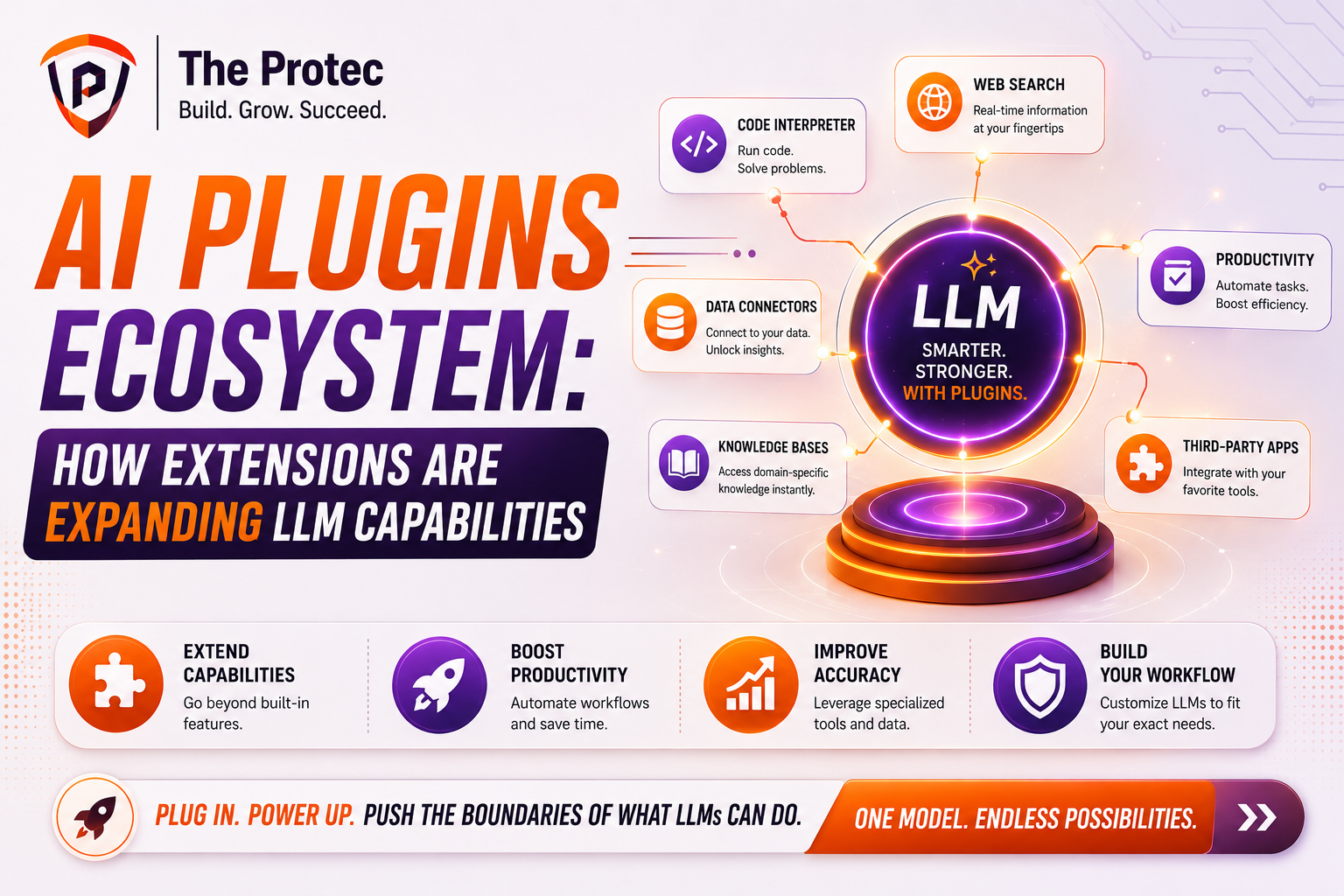
AI plugins act as modular extensions that integrate seamlessly with underlying language models, unlocking functionalities that would otherwise be impossible with the base architecture. By bridging LLMs with external data sources, APIs, and specialized services, plugins deliver targeted solutions ranging from real-time data retrieval to domain-specific reasoning.
For example, an AI chatbot enhanced with a weather plugin can access up-to-date meteorological data and provide users with accurate forecasts, a feat unachievable by LLMs relying solely on pre-trained knowledge. Similarly, commerce-related plugins enable LLMs to query live inventories, process transactions, or personalize shopping assistance. These integrations broaden the scope of LLM applications beyond text generation into practical, impactful user-centric tools.
Modularity and Ease of Customization
One of the greatest advantages of AI plugins is their modular design. Developers can selectively enable or disable specific extensions based on application needs, tailoring the AI’s abilities to particular domains or user preferences without retraining the core model. This approach accelerates innovation by lowering the barrier to deployment and iteration.
Moreover, many plugin ecosystems offer marketplaces or repositories where creators can publish and distribute their extensions, driving community engagement and shared growth. This dynamic fosters a vibrant ecosystem where specialized plugins emerge rapidly, addressing niche use cases and continuously expanding the boundaries of LLM utility.
How LLM Extensions Are Changing AI Use Cases
While traditional LLMs excel at general language tasks, plugins and extensions enable models to transcend text understanding by integrating external context and actionable capabilities. This shift is driving significant breakthroughs across multiple sectors.
Enhanced Research and Information Retrieval
With AI plugins connected to academic databases, scientific research platforms, or proprietary knowledge bases, LLMs evolve from passive content generators into active research assistants. These plugins enable users to fetch the latest studies, cross-reference information, and obtain validated data instantly, improving accuracy and depth in areas like healthcare, engineering, or law.
Personalized Digital Assistants and Workflow Automation
Incorporating plugins that link with calendar apps, email clients, project management tools, or CRM systems transforms LLM-powered agents into highly personalized virtual assistants. This integration streamlines workflows, automates routine tasks, and adapts responses based on user context. For example, a plugin-enabled assistant can schedule meetings, send follow-up emails, or generate progress reports all triggered through natural language commands.
Creative Content Generation With Real-Time Inputs
LLM extensions that tap into social media trends, live news feeds, or multimedia databases allow content creators to produce timely, context-aware outputs like marketing copy, video scripts, or interactive storytelling experiences. Such real-time intelligence enriches creativity and keeps generated content relevant and engaging.
AI Integrations: Bringing LLMs into the Broader Tech Ecosystem
Plugins facilitate deeper AI integrations by enabling LLMs to communicate fluently with diverse software environments and data infrastructures. This interoperability extends AI’s influence far beyond chatbots or standalone apps, embedding intelligence across enterprise systems, consumer platforms, and IoT devices.
Enterprise Systems and Workflow Enhancement
Organizations are leveraging AI integrations powered by plugins to embed natural language interfaces into ERP, supply chain, and customer support platforms. This advancement simplifies complex workflows, improves data accessibility, and drives informed decision-making. For instance, sales teams can query customer histories or forecast deals directly through conversational AI, streamlining business processes.
Multi-Modal Extensions: Beyond Text
The latest trend in LLM extensions involves multi-modal capabilities incorporating images, audio, and video alongside text. Plugins supporting these inputs and outputs enable applications like visual question answering, voice-controlled assistants, and video summarization. By bridging different data types, AI integrations become more intuitive and cognitively rich.
Security and Compliance Through Controlled Plugins
Integrating AI responsibly requires managing data privacy and compliance risks. Controlled plugin environments help enforce governance by restricting external calls to vetted APIs and monitoring data flows. This security-first approach ensures enterprises can confidently deploy AI extensions within regulated industries.
The Future of AI Plugins and LLM Extensions
The expanding ecosystem of plugins and extensions fundamentally redefines what LLMs can achieve. Future innovations will likely focus on enhanced personalization, seamless multi-platform integration, and increased support for domain-specific languages and tasks.
Moreover, open standards and cross-platform compatibility will promote wider adoption and interoperability across AI tools. Community-driven development and shared plugin marketplaces will accelerate the creation of diverse, high-quality extensions tailored to evolving user demands.
Challenges Ahead
While promising, this ecosystem must address challenges related to quality control, version compatibility, and potential over-reliance on third-party extensions. Additionally, ensuring transparency in plugin behavior and safeguarding user data remain critical to maintaining trust.
Frequently Asked Questions (FAQ)
What are AI plugins and how do they differ from core LLM capabilities?
AI plugins are external modules that extend the functionality of Large Language Models beyond their base training. While core LLMs generate language based on learned patterns, plugins grant them access to live data, APIs, or specialized tools to perform tasks such as retrieving real-time information or interacting with external systems.
How do AI integrations using LLM extensions improve user experience?
LLM extensions allow AI to interact directly with other software and databases, enabling personalized assistance, automation of complex workflows, and context-aware responses. This leads to smarter, more useful applications that offer real value by adapting to user needs and environments.
Are AI plugins secure and how is data privacy managed?
Security depends on how plugins are managed within the ecosystem. Controlled environments that vet plugins and monitor their API calls help mitigate risks. Proper data privacy policies, encryption, and compliance with regulations are essential to ensure user data remains protected when extensions access external resources.
External Resources
For a deeper dive into the technical design and ecosystem trends of AI plugins and LLM extensions, visit the detailed analysis by OpenAI’s Plugin System paper.
Conclusion
The AI plugins ecosystem is at the forefront of expanding the practical capabilities of Large Language Models, unlocking unprecedented applications through modular extensions and intelligent integrations. This dynamic growth empowers developers to create sophisticated, responsive AI solutions tailored to diverse contexts transforming how we leverage AI in everyday workflows, industries, and digital experiences. Staying informed and strategic about AI plugins and LLM extensions will be vital for businesses and innovators aiming to harness the full potential of AI.