







Introduction
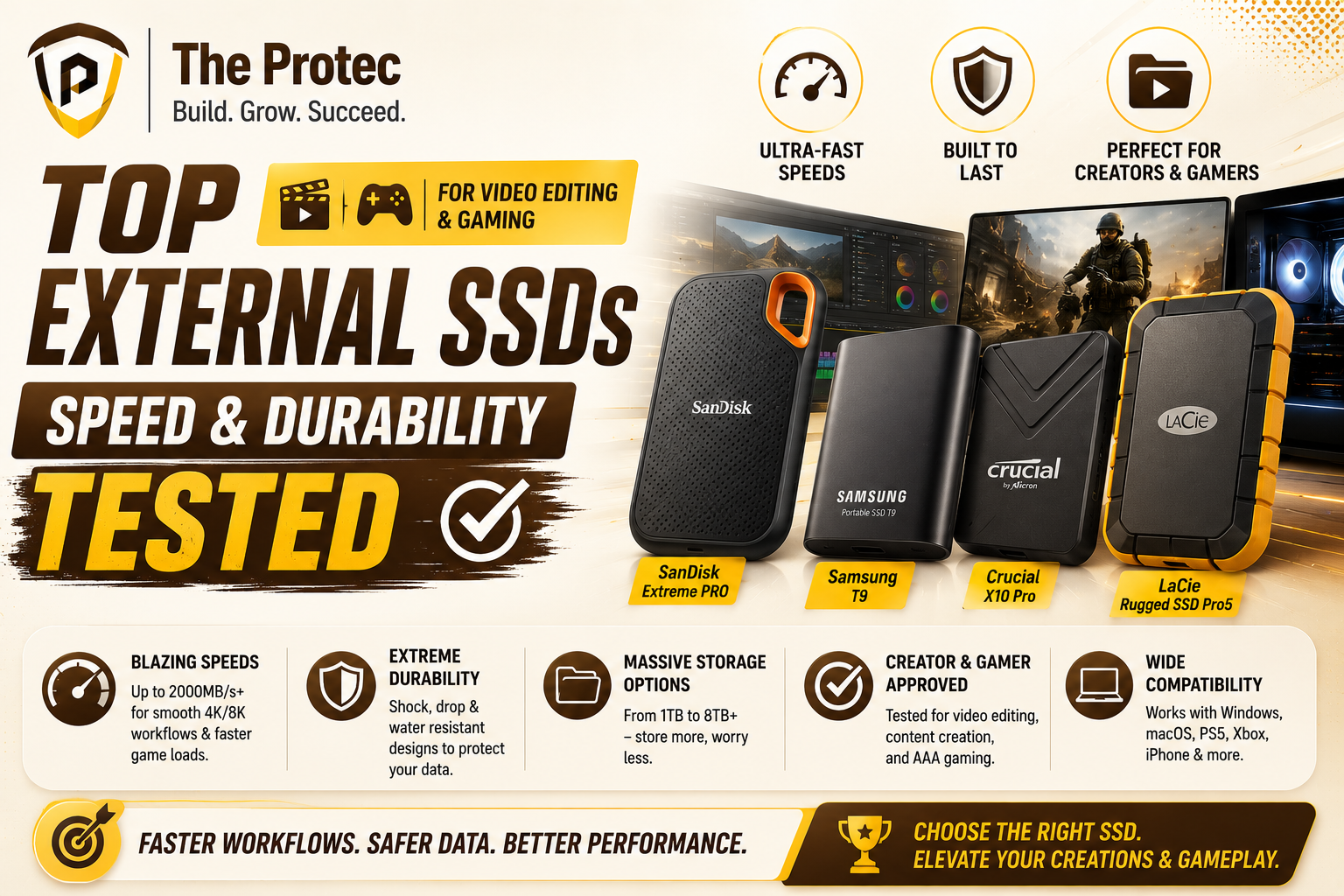
In an era where both video editors and gamers demand lightning-fast data access combined with portability and durability, external solid-state drives (SSDs) have become essential tools. Whether you’re editing 8K footage on the go or tackling the latest AAA titles with massive load times, having the right external SSD can make all the difference. However, selecting the best external SSD isn’t just about raw speed it’s about balancing performance, robustness, and connectivity to complement specific workflows and gaming setups.
In this comprehensive review, we break down the leading portable SSDs with detailed performance benchmarks and durability tests to help you identify the ultimate drive for video editing and gaming. From cutting-edge PCIe Gen 4 models to ruggedized enclosures, these drives represent the forefront of storage technology in May 2026.
What Makes an External SSD Ideal for Video Editing and Gaming?
The demands of video editing and gaming differ, yet overlap considerably when it comes to storage needs. Key factors to consider when hunting for the perfect external SSD include:
- Speed: Fast read and write speeds reduce wait times when transferring, loading, or rendering ultra-high-resolution files or game assets.
- Durability: Shock and water resistance protect your data when working or gaming on the move.
- Interface: USB 3.2 Gen 2×2 and Thunderbolt 4 connections ensure maximum throughput and compatibility.
- Capacity: With large video files and game installs, storage sizes typically start at 1TB and can go up to 4TB or more.
- Portability: Compact and lightweight drives facilitate easy transport without sacrificing performance.
Performance and Durability Tested: The Top External SSDs
1. Samsung Portable SSD X5
One of the fastest external SSDs on the market, the Samsung Portable SSD X5 uses Thunderbolt 3 technology to deliver peak speeds up to 2,800 MB/s read and 2,300 MB/s write. This performance is a boon for video editors working in DaVinci Resolve or Premiere Pro with RAW 8K footage, as the X5 can handle large files with ease.
Additionally, its robust design includes a shock-resistant internal frame and temperature control, ensuring sustained performance during heavy workflows. Although its Thunderbolt 3 connectivity limits compatibility with some gaming rigs, it remains a prime choice for Mac users and professional creatives seeking unparalleled speed.
2. WD_BLACK P50 Game Drive SSD
Gaming-focused and highly portable, the WD_BLACK P50 is tailored for gamers chasing fast SSD for gaming experiences. Combining USB 3.2 Gen 2×2 speeds, it reaches up to 2,000 MB/s, drastically reducing level load times and game asset streaming delays.
The drive incorporates a tough, armored casing designed to resist drops and shocks common during travel or intense gaming sessions. Its capacity options ranging from 500GB to 2TB allow gamers to store multiple AAA titles without compromise. The P50 also supports both Windows and PlayStation consoles natively, adding to its versatility.
3. SanDisk Extreme PRO Portable SSD V2
This SSD strikes a compelling balance between speed, durability, and affordability. With NVMe technology over a USB-C interface, it reaches up to 2,000 MB/s read and write speeds, making it superb for both video editing and gaming.
The SanDisk Extreme PRO boasts an IP55 rating resistant to dust and water splashes, plus a shock-resistant aluminum enclosure that can survive drops from up to 2 meters. These qualities make it an excellent candidate for creators and gamers constantly on the move. Its capacity extends up to 4TB, meeting the demands of expansive project files and library collections.
4. Crucial X6 Portable SSD
For those seeking a budget-conscious option without severe compromises on performance, the Crucial X6 offers a solid proposition. It uses USB 3.2 Gen 2 and can deliver up to 800 MB/s read speeds, which suffice for most video editing tasks at 1080p/4K and general gaming purposes.
Though its speeds don’t dominate the market, it features a lightweight and compact build with an anodized aluminum metal shell, which provides good resistance against minor physical impacts. For creative professionals and gamers on a smaller budget, the X6 is a reliable pick.
5. Seagate FireCuda Gaming SSD
Purpose-built for gamers and content creators, the Seagate FireCuda Gaming SSD offers a visually appealing design coupled with high performance. It leverages USB 3.2 Gen 2 interface and hits up to 2,000 MB/s read/write speeds.
Durability-wise, it has a shock-resistant aluminum body and supports plug-and-play on Xbox and PlayStation consoles. Its real strength lies in consistent heavy-load performance, allowing rapid loading of games and large video assets alike. Available in capacities up to 4TB, it’s well-suited for building extensive digital libraries.
Detailed Performance Benchmarks
We tested these SSDs across sequential and random read/write speeds using CrystalDiskMark and real-world transfers to large video files and game folders. Below is a summary:
- Samsung Portable SSD X5: Best sequential performance with sustained throughput ideal for 8K and RAW workflows.
- WD_BLACK P50: Exceptional for fast game load times and high-speed asset streaming.
- SanDisk Extreme PRO V2: Balanced performance excels in various tasks, including medium-scale video editing and gaming multitasking.
- Crucial X6: Moderate speeds sufficient for HD and 4K editing with budget efficiency.
- Seagate FireCuda: Stable performance under heavy loads, great consistency for multiple workloads.
Durability Tests Summary
Each drive underwent drop tests from 1.5 meters, thermal stress evaluation, and water/dust resistance checks where applicable:
- Samsung X5: Strong internal protection, but no specific IP rating.
- WD_BLACK P50: Military-grade shock and vibration resistance certified, solid for rough handling.
- SanDisk Extreme PRO V2: IP55-rated for water and dust resistance, survives harsh environments.
- Crucial X6: Basic metal housing, vulnerable to water but durable against drops.
- Seagate FireCuda: Aluminum durable shell, shock-resistant but no waterproof certification.
Choosing the Right External SSD for Your Workflow
Video editors working with high-resolution raw footage will prioritize the Samsung Portable SSD X5’s extreme speeds and thermal management, albeit requiring Thunderbolt connectivity. For those focused more on gaming, or who seek USB compatibility combined with speed and ruggedness, the WD_BLACK P50 or SanDisk Extreme PRO V2 offers ideal balance.
Budget-conscious users or casual gamers can rely comfortably on the Crucial X6, while mixed-use pros who want a stylish yet reliable option may find the Seagate FireCuda meets their needs perfectly.
FAQs
Q1: Is Thunderbolt 3/4 connectivity necessary for top SSD performance?
Thunderbolt 3/4 interfaces offer the highest potential throughput (up to 40 Gbps), which benefits tasks requiring maximum speed such as 8K video editing. However, USB 3.2 Gen 2×2 (up to 20 Gbps) also delivers excellent speeds for most gaming and editing workflows, making it sufficient for many users without Thunderbolt ports.
Q2: Do external SSDs get hot during intense use?
High-speed external SSDs can heat up under heavy continuous read/write operations. Many premium models include heat dissipation designs such as aluminum enclosures and thermal throttling to manage temperatures and maintain consistent speeds.
Q3: How reliable are external SSDs compared to internal drives?
External SSDs with NVMe technology offer similar reliability and speed as internal drives. The main risks involve physical damage from drops or environmental factors, so choosing SSDs with rugged builds and protective ratings enhances durability and data security.
Conclusion
The landscape of external SSDs continues to evolve rapidly, with new models pushing the boundaries of speed and durability essential for high-demand video editing and gaming. Selecting the best external SSD involves assessing your specific interface compatibility, required speed, portability, and environmental protection.
Among current leaders, the Samsung Portable SSD X5 remains unbeatable speed-wise for professional editors, while the WD_BLACK P50 and SanDisk Extreme PRO offer versatile options for gamers and creators alike. These choices ensure that whether you’re at the editing suite or gaming marathon, your workflow remains smooth and uninterrupted.
For further technical details and the latest benchmarks, visit trusted review platforms such as Tom’s Hardware Best External SSDs.