









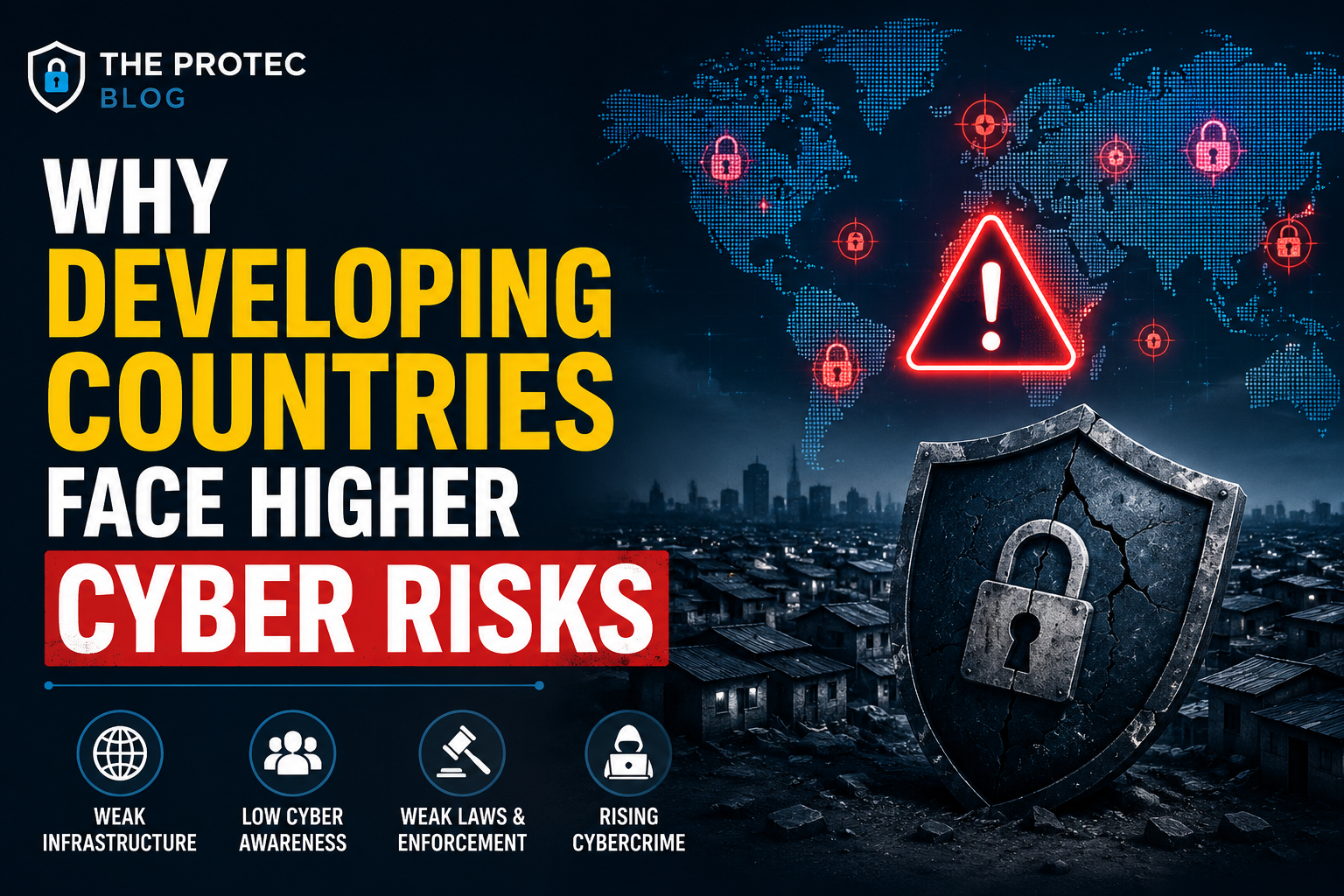
As the world rapidly moves toward digital transformation, cybersecurity has become a global concern. However, developing countries are facing significantly higher cyber risks compared to developed nations. From weak infrastructure to lack of awareness, these challenges make them easy targets for cybercriminals.
In this article, we will explore the key reasons why developing countries are more vulnerable to cyber threats and what can be done to improve cybersecurity resilience.
1. Weak Cybersecurity Infrastructure
One of the biggest reasons developing countries face higher cyber risks is the lack of strong cybersecurity infrastructure. Many organizations rely on outdated systems, unpatched software, and unsecured networks, making them vulnerable to attacks.
- Outdated operating systems
- Lack of firewalls and security tools
- Poor network monitoring
Without proper infrastructure, detecting and preventing cyber attacks becomes extremely difficult.
2. Limited Awareness and Training
Cybersecurity awareness remains low in many developing regions. Employees and individuals often lack basic knowledge about online threats such as phishing, malware, and social engineering.
This leads to:
- Clicking on malicious links
- Using weak passwords
- Falling victim to scams
Human error continues to be one of the leading causes of cyber incidents.
3. Rapid Digital Growth Without Security
Developing countries are experiencing rapid digital adoption, including mobile banking, e-commerce, and online services. However, this growth often happens without proper security measures in place.
As a result:
- New platforms are launched without security testing
- Data protection policies are weak or non-existent
- Cybercriminals exploit these gaps quickly
4. Lack of Cybersecurity Regulations
Many developing countries still lack strict cybersecurity laws and enforcement mechanisms. Even when policies exist, implementation is often weak.
This creates an environment where:
- Cybercriminals operate with low risk
- Companies neglect security compliance
- Data breaches go unreported
5. Financial Constraints
Budget limitations prevent businesses and governments from investing in advanced cybersecurity tools and skilled professionals.
Common challenges include:
- عدم investment in security solutions
- Shortage of cybersecurity experts
- عدم implementation of modern technologies
As a result, organizations remain exposed to cyber threats.
6. Increase in Cybercrime Targeting Emerging Markets
Cybercriminals are increasingly targeting developing countries because they offer easier opportunities for exploitation. Phishing attacks, ransomware, and financial fraud are on the rise.
Popular attack methods include:
- Phishing emails and fake websites
- Mobile banking fraud
- Ransomware attacks on small businesses
7. Weak Law Enforcement Capabilities
Cybercrime investigation requires advanced tools and skilled professionals. Unfortunately, many developing countries lack both.
This results in:
- Low cybercrime detection rates
- Delayed response to incidents
- Limited legal action against hackers
How Developing Countries Can Improve Cybersecurity
Despite these challenges, there are several steps that can help reduce cyber risks:
- Invest in cybersecurity infrastructure
- Promote awareness and training programs
- Implement strong cybersecurity laws
- Encourage public-private partnerships
- Adopt international security standards
Conclusion
Developing countries face higher cyber risks due to a combination of weak infrastructure, lack of awareness, and rapid digital growth without proper security. As cyber threats continue to evolve in 2026, it is crucial for governments, businesses, and individuals to take proactive steps toward strengthening cybersecurity.
By investing in education, technology, and policies, developing nations can build a safer digital future and reduce their vulnerability to cyber attacks.