






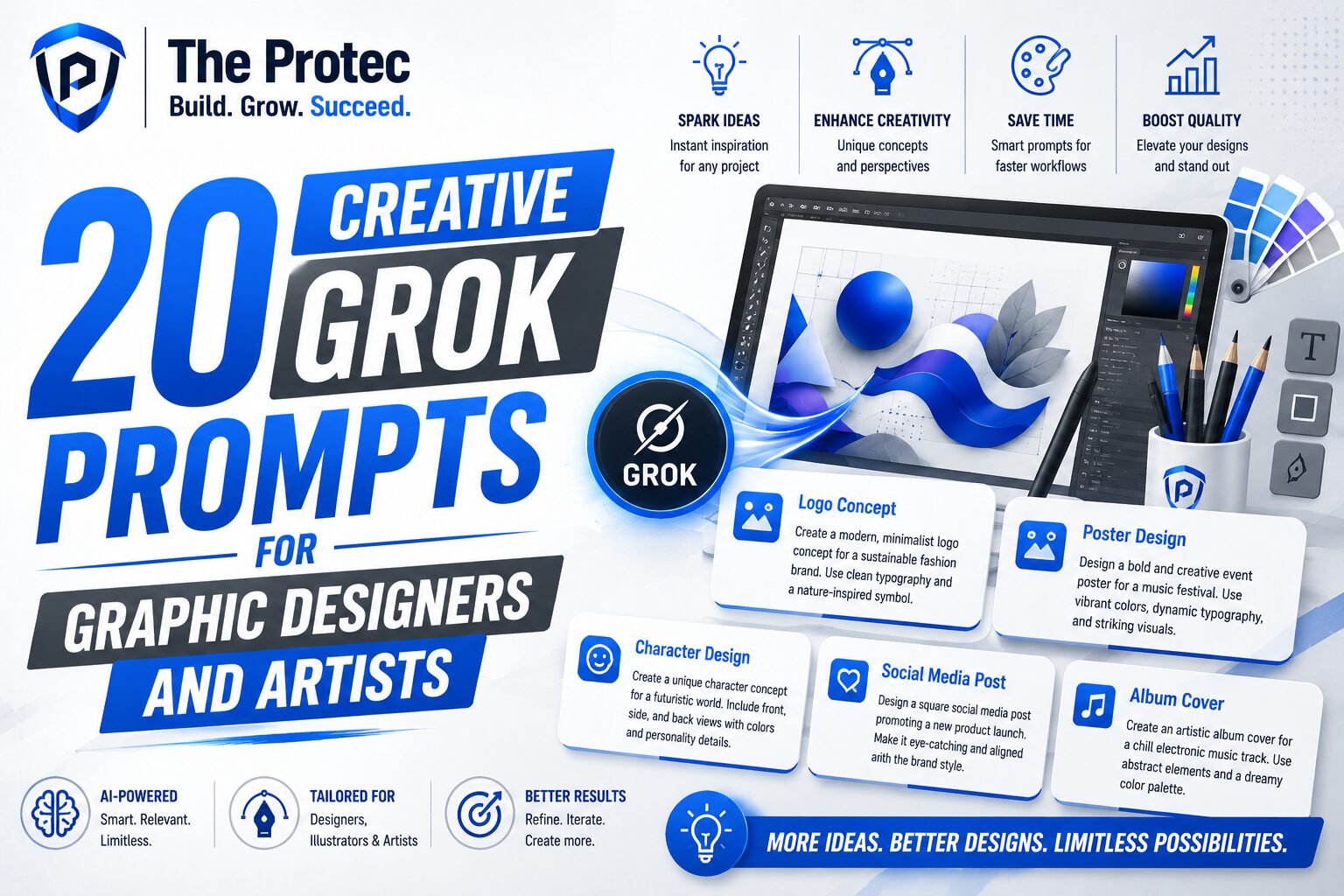
Why Grok Prompts Are Becoming a Go-To Tool for Designers
Graphic designers and digital artists are using AI less as a shortcut and more as a creative partner. Among the newer tools shaping that shift, Grok has become especially interesting because it can respond with a sharp, conversational style that helps break creative blocks fast. For designers, the real value is not in asking AI to “make art,” but in using well-structured prompts to generate direction, mood, layout ideas, and visual narratives that can be refined into original work.
That is where Grok prompts for designers stand out. They can help you explore creative AI prompts for brand systems, product interfaces, campaign visuals, character concepts, and even editorial direction. The best results come when you treat Grok like an ideation partner: one that can suggest options, challenge assumptions, and surface design angles you may not have considered. In an era where fast iteration matters and visual communication is expected to be more dynamic than ever, design inspiration AI is becoming a practical part of the workflow.
This article shares 20 creative prompts you can adapt for branding, UI concepts, and visual storytelling. Each prompt is written to help you get more specific, more strategic, and more visually useful results from Grok.
How to Get Better Results from Grok as a Designer
Before jumping into the prompts, it helps to understand what makes them effective. The strongest prompts usually include four elements: context, creative direction, constraints, and output format. Instead of asking for something vague like “design a logo,” you can ask for a brand concept for a minimalist wellness startup, with a coastal palette, geometric typography, and three distinct visual directions. That level of specificity helps the AI produce ideas that are easier to evaluate and expand.
Another useful approach is to ask for multiple variations. Grok can help you compare different tones, compositions, or narrative directions before you commit to one. If you work in branding, UI, motion, or illustration, this can save time during early exploration and help you find stronger concepts before moving into production tools.
For best results, think in terms of creative problems rather than deliverables alone. The prompts below are organized around the kinds of decisions designers make every day: identity, interface, campaign art, and story-driven visuals.
20 Creative Grok Prompts for Graphic Designers and Digital Artists
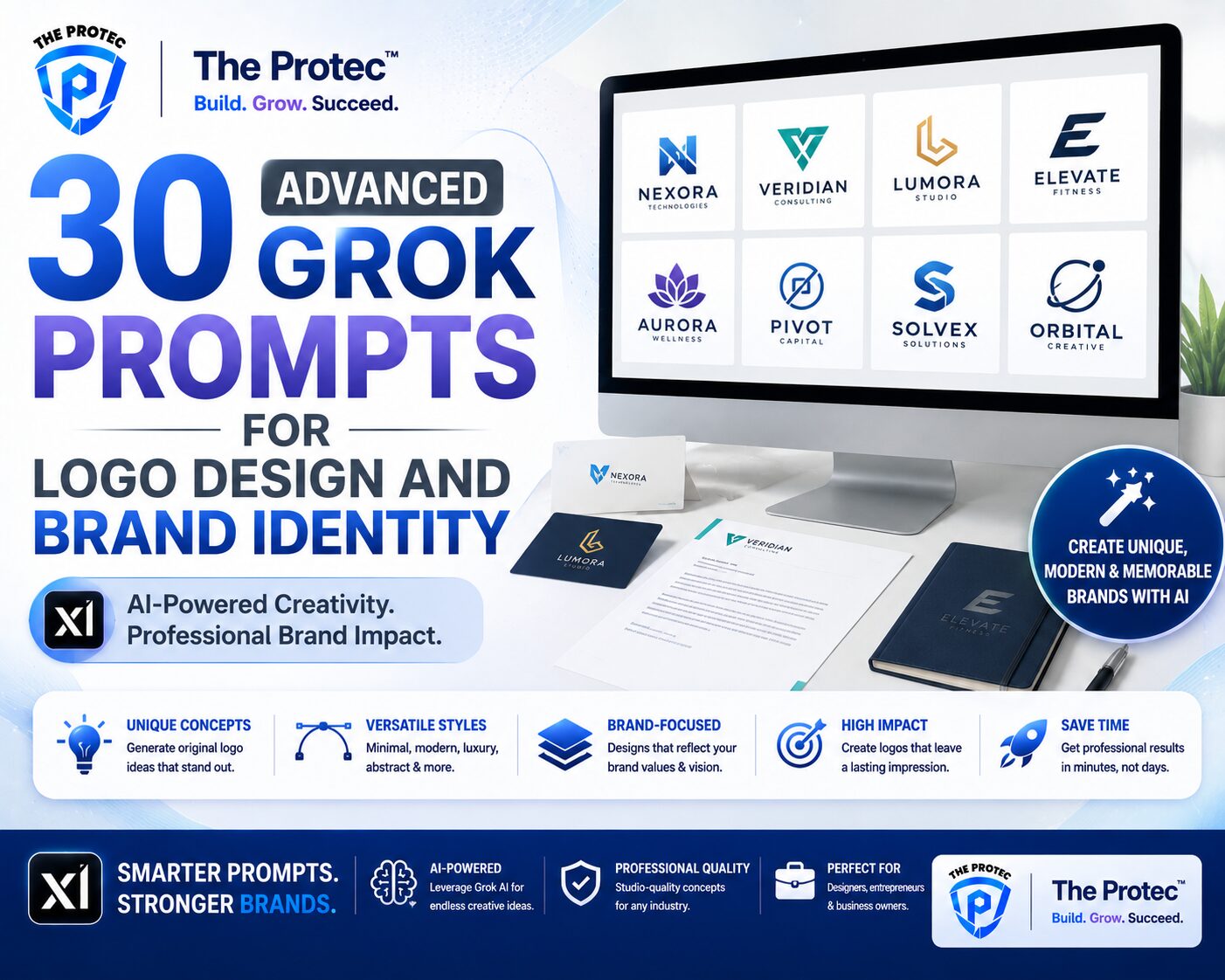
1. Brand identity for a modern wellness studio
Prompt: Create three distinct brand identity directions for a modern wellness studio that blends calm minimalism with a premium feel. Include logo style, typography direction, color palette, and visual motifs for each concept.
This prompt is useful for exploring brand systems rather than isolated assets. It encourages strategic thinking around tone and consistency, which is especially important for luxury wellness, beauty, and lifestyle brands.
2. Futuristic rebrand for a tech startup
Prompt: Generate a futuristic rebrand concept for a startup focused on AI productivity tools. Describe the logo concept, motion style, interface mood, and a visual language that feels innovative without looking generic.
This helps you avoid the usual neon-and-gradient clichés by asking for a more thoughtful brand system. It is ideal for design teams looking for design inspiration AI that can suggest a sharper visual identity.
3. Editorial poster for a cultural event
Prompt: Design a conceptual poster direction for a cultural event celebrating creativity and community. Include composition ideas, type hierarchy, imagery style, and how to make the layout feel both contemporary and expressive.
Use this when you need poster concepts that feel curated rather than decorative. Grok can suggest visual storytelling cues that support the event’s tone and audience.
4. App onboarding screens with personality
Prompt: Create onboarding screen concepts for a mobile app that helps users build better habits. Make the visuals friendly, motivating, and modern. Suggest illustration style, microcopy tone, and interface patterns.
This prompt is especially useful for UI designers who want to move beyond sterile app screens. It pushes Grok to think about emotional design and user experience together.
5. Social campaign visuals for a product launch
Prompt: Generate a social media visual campaign concept for a product launch. Provide three creative directions with different moods: bold, refined, and playful. Include headline style, image treatment, and platform-specific adaptations.
Brand campaigns live or die on clarity. Asking for multiple moods helps you compare strategic directions before building out a full campaign system.
6. Surreal album cover concept
Prompt: Create a surreal album cover concept for an electronic artist whose music feels atmospheric, emotional, and futuristic. Include symbolic imagery, palette suggestions, and composition notes.
Digital artists can use this to uncover visual metaphors that fit the sound and emotional tone of a music project. It is a strong prompt for concept art and cover art exploration.
7. Minimalist luxury packaging
Prompt: Develop a minimalist packaging concept for a luxury skincare product. Focus on tactile details, typography, materials, and subtle visual cues that communicate quality and restraint.
This prompt works well for premium DTC brands. It can help you define packaging as a brand experience rather than just a container.
8. UI concept for an AI design platform
Prompt: Design a user interface concept for an AI design platform aimed at creators. Suggest dashboard structure, navigation logic, visual hierarchy, and interface elements that make complex tools feel approachable.
As AI-powered creative tools become more common, the challenge is to make interfaces intuitive. This prompt is excellent for product designers and UX-focused visual designers.
9. Motion graphics direction for a brand intro
Prompt: Propose a motion graphics style for a brand intro video. Describe pacing, transitions, typography animation, and how the motion language can reinforce the brand personality.
Even if Grok does not generate motion directly, it can help define the motion system. That makes it a valuable early-stage tool for animators and brand designers.
10. Concept art for a speculative city
Prompt: Imagine a speculative city where architecture responds to climate resilience and digital living. Describe the skyline, materials, signage, public spaces, and the emotional atmosphere of the environment.
This is a strong prompt for visual storytellers and world-builders. It encourages rich environmental detail and gives artists a clear creative brief for concept development.
11. Branding for a creator economy platform
Prompt: Build a brand concept for a platform that helps independent creators manage audience growth, content planning, and monetization. Include visual identity, tone of voice, and a homepage aesthetic.
Creator platforms need trust, clarity, and energy. This prompt helps you position the brand as supportive and modern without feeling overly corporate.
12. Magazine cover with strong visual hierarchy
Prompt: Create a magazine cover concept for a design publication focused on the future of visual culture. Suggest image direction, headline placement, typographic contrast, and editorial mood.
This is useful when you need a cover that feels intelligent and visually bold. The prompt pushes AI to think in terms of hierarchy and editorial rhythm.
13. Character design for a brand mascot
Prompt: Design a brand mascot for a friendly digital service aimed at Gen Z users. Define personality traits, silhouette ideas, color palette, and how the mascot could appear across touchpoints.
Character design can be a powerful brand differentiator. Grok can help you explore what kind of personality a mascot should express before you move into illustration.
14. Website hero section for a creative studio
Prompt: Generate three website hero section concepts for a creative studio specializing in branding and digital experiences. Include headline direction, visual structure, and interactive elements that create a memorable first impression.
This prompt is ideal for web designers who need fast concepting support. It also helps align visual storytelling with conversion goals.
15. Poster series for a music festival
Prompt: Develop a cohesive poster series for a multi-day music festival. Each poster should share a common design system while reflecting a different genre, energy level, and audience mood.
This is a great example of using creative AI prompts to think in systems. It helps ensure consistency while still allowing variation across assets.
16. Brand world for a fictional beverage company
Prompt: Invent a brand world for a fictional beverage company launching a sparkling drink inspired by travel and exploration. Include packaging, campaign imagery, and a visual story that feels adventurous.
Fictional briefs can unlock stronger experimentation because there are fewer constraints. This is useful when you want to push style, metaphor, and narrative.
17. UX moodboard for a finance app
Prompt: Create a UX moodboard concept for a finance app that needs to feel trustworthy, intelligent, and easy to use. Include color strategy, spacing principles, icon style, and tone of interface copy.
Financial products often struggle to feel human. This prompt helps balance clarity with warmth, which is important for modern fintech design.
18. Visual storytelling for a nonprofit campaign
Prompt: Design a visual storytelling concept for a nonprofit campaign focused on community impact. Suggest imagery themes, color symbolism, typography choices, and how to make the message emotionally resonant.
This prompt is especially valuable when you need communication that is both persuasive and respectful. It helps designers think beyond aesthetics and toward narrative clarity.
19. Texture and material studies for a luxury brand
Prompt: Explore texture, material, and lighting ideas for a luxury brand identity system. Describe how tactile elements could be translated into print, packaging, and digital visuals.
Material language often separates good branding from memorable branding. Grok can help you define the sensory qualities that make a luxury system feel premium.
20. Cross-platform campaign for a creative launch
Prompt: Create a cross-platform campaign concept for a new creative launch that includes social media, landing page, email, and motion assets. Make sure the concept feels cohesive but adapts naturally across formats.
This prompt is one of the most practical because it reflects how designers actually work. It encourages thinking in connected systems rather than isolated deliverables.
How to Customize These Grok Prompts for Better Output
The prompts above are strong starting points, but the best results come when you tailor them to your project. Add brand values, audience details, product category, emotional tone, and visual references in your own words. If you want a prompt to produce more strategic output, ask for rationale as well as concepts. For example, request why a certain palette supports trust or how a layout improves readability.
It also helps to specify what kind of output you want. Grok can be more useful when you ask for a moodboard breakdown, concept variations, naming ideas, or design principles instead of just a finished idea. That gives you material you can actually use in presentations, wireframes, and art direction sessions.
When working on branding, ask for systems. When working on UI, ask for structure and user flow. When working on storytelling, ask for symbolism, scene setting, and emotional tone. These distinctions make Grok prompts for designers far more effective than generic creative requests.
Best Practices for Using Creative AI Prompts in Design Workflows
AI can accelerate ideation, but strong design still depends on judgment. Use Grok to explore possibilities quickly, then filter the results through your own taste, project goals, and audience needs. The most effective workflows treat AI-generated ideas as raw material, not final answers.
For practical inspiration on how AI is shaping visual creation, Adobe has been publishing useful guidance on generative workflows and creative tooling at <a href=