






Why Developers Are Switching From WordPress to Headless CMS Platforms
WordPress still powers a huge portion of the web, but the way developers build digital experiences has changed dramatically. Teams now need faster front ends, more flexible content delivery, and architectures that can support websites, apps, kiosks, and connected devices without constantly reworking the backend. That is why headless CMS platforms have become one of the most important WordPress alternatives in modern web development.
The shift is not about abandoning content management altogether. It is about separating content from presentation so developers can build with the tools they actually prefer while content teams still enjoy a structured publishing workflow. In practice, this means better performance, more scalable systems, and a much cleaner development experience. For many teams, that combination is hard to ignore.
As web experiences become more dynamic and omnichannel, traditional monolithic CMS setups can feel limiting. WordPress can still be the right fit for simple sites and editorial-heavy projects, but developers working on high-performance products, complex digital ecosystems, or multi-channel publishing pipelines are increasingly choosing headless CMS platforms instead.
What Is a Headless CMS?
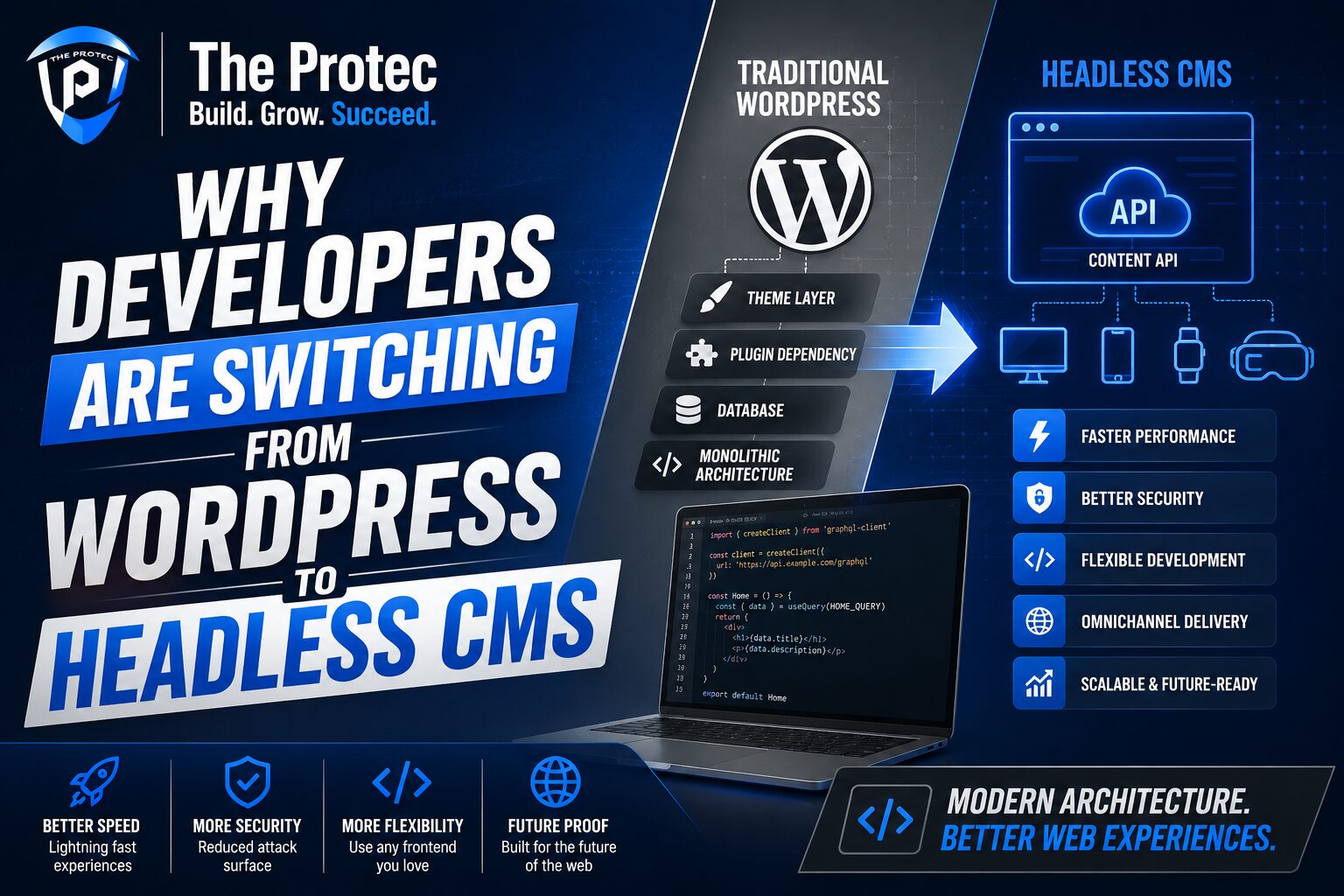
A headless CMS is a content management system that stores and organizes content separately from the presentation layer. Instead of forcing content to live inside a theme-driven website, it delivers content through APIs to any front end you choose. That could be a Next.js site, a mobile app, a smartwatch interface, a digital display, or a custom application built with modern frameworks.
This architecture gives developers much more control over how content is rendered and reused. Content teams can still manage pages, blog posts, product details, and other structured content in one place, but developers are no longer locked into the constraints of a traditional WordPress theme or plugin-heavy stack.
For a deeper technical overview of the architecture, see Contentful’s explanation of headless CMS architecture.
Why WordPress Is Losing Ground in Modern Web Development
WordPress remains popular because it is familiar, widely supported, and relatively easy to launch. But as digital products have become more complex, its limitations have become more visible. Many teams start with WordPress for speed, then eventually run into performance bottlenecks, plugin conflicts, maintenance overhead, and architectural constraints that slow down shipping.
One of the biggest issues is that traditional WordPress sites tend to bundle content management, backend logic, templating, and front-end rendering into a single system. That may be fine for smaller sites, but it can become difficult to optimize as traffic grows and user expectations rise. Developers often end up patching the stack with caching layers, page builders, custom plugins, and third-party tools, which can create more technical debt over time.
Modern web development has shifted toward composable architectures, API-first services, and specialized tooling. Headless CMS platforms fit naturally into that approach, while WordPress often requires workarounds to achieve the same flexibility.
Performance Is the Biggest Reason Developers Are Making the Switch
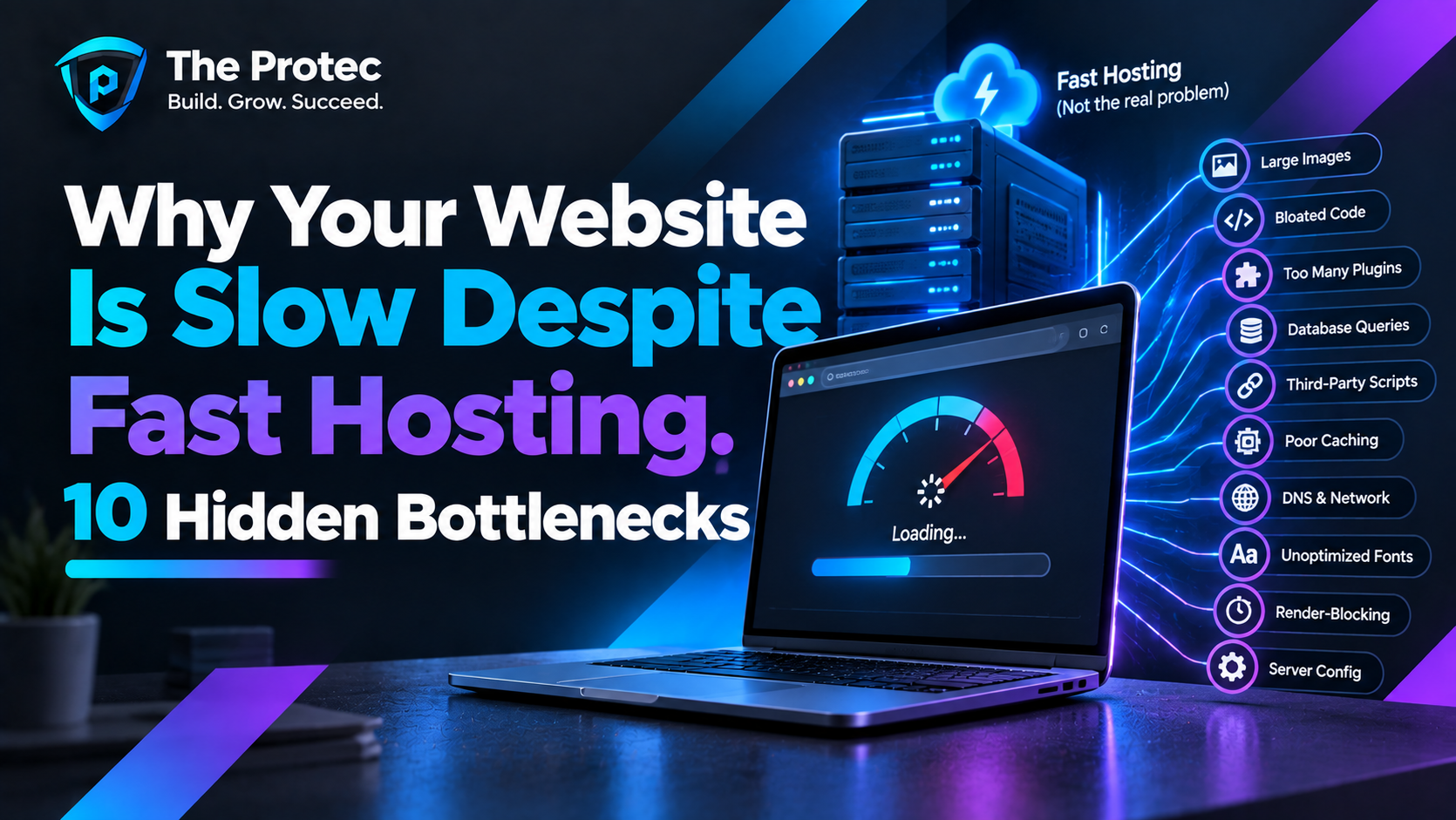
Performance is one of the strongest arguments for headless CMS adoption. In traditional WordPress setups, pages are often generated dynamically on the server, then delivered with a theme, scripts, styles, plugins, and database queries all bundled together. That can create slower load times, more render-blocking issues, and a less consistent user experience.
With a headless architecture, the front end can be built using modern frameworks that support static generation, server-side rendering, edge rendering, or hybrid rendering strategies. Developers can optimize each route or page independently, delivering faster content to users and reducing the pressure on the backend.
This matters because speed directly affects conversion, engagement, and search visibility. Core Web Vitals, interaction latency, and mobile performance have become more important than ever. Many headless CMS platforms pair well with modern rendering systems that help developers improve metrics without compromising editorial workflows.
In other words, headless is not just a technical preference. It is a practical way to build faster digital experiences that feel better for users and perform better in search.
How headless improves speed in practice
- Content is delivered through APIs, reducing front-end overhead
- Developers can use static site generation for pages that do not change often
- Modern frameworks can cache content closer to the user
- Front-end assets can be optimized independently from the CMS
- Teams can avoid loading unnecessary WordPress plugins on every page
Scalability Is Easier With a Decoupled Architecture
Scalability is another major reason developers are moving away from WordPress. Traditional CMS architectures can scale, but usually with more infrastructure management, more database tuning, and more performance engineering. Once a site becomes a high-traffic content hub or an enterprise digital platform, the amount of maintenance required can grow quickly.
Headless CMS platforms are better suited to scaling across channels and use cases. Since the content layer is separated from the presentation layer, teams can build multiple front ends from the same content source without duplicating work. This is especially valuable for organizations that need a website, app, landing pages, campaign microsites, and product interfaces all powered by the same content model.
Scalability also matters organizationally. As teams grow, different groups may want to work independently on frontend experiences, content modeling, localization, and integrations. A headless CMS supports this more cleanly than a monolithic WordPress setup, where one plugin update or theme change can ripple across the entire system.
For enterprises, this separation is especially important because it reduces coupling and makes it easier to scale teams as well as traffic. If your content operation has to support global publishing, multi-brand governance, or rapid experimentation, headless architecture is often the more sustainable choice.
Developer Experience Is Better in a Headless Workflow
One of the most underestimated reasons developers switch is developer experience. Working with WordPress often means dealing with theme files, PHP templates, plugin compatibility issues, and a backend that may not match the rest of the engineering stack. For developers who prefer React, Vue, Svelte, or other modern frameworks, WordPress can feel like a compromise.
Headless CMS platforms align better with contemporary development workflows. APIs make it easier to fetch content, build reusable components, and integrate the CMS into a broader application architecture. Teams can use their preferred tooling, version control practices, and deployment pipelines without being forced into legacy conventions.
This also improves collaboration. Frontend and backend responsibilities are more clearly separated, so engineers can focus on interface behavior, performance, and user experience while content editors keep control of publishing. The result is less friction between teams and faster iteration cycles.
Another advantage is testing and maintainability. A decoupled architecture can be easier to test because the content source is isolated from the presentation layer. Developers can build predictable component systems and reduce the risk of a plugin update unexpectedly breaking the site.
Developer workflow advantages of headless CMS platforms
- Freedom to choose modern frameworks and tools
- Cleaner API-based content delivery
- Better compatibility with CI/CD pipelines
- Improved maintainability through component-based development
- Less dependence on third-party WordPress plugins
Content Reuse Across Channels Is a Major Advantage
Modern digital experiences are no longer limited to a single website. Businesses publish content across web apps, mobile apps, email, social channels, digital signage, and even AI-powered interfaces. A traditional WordPress site can be adapted for some of this, but it is not built natively for omnichannel delivery.
Headless CMS platforms solve this problem by making content reusable across multiple endpoints. Instead of copying and reformatting the same content for each channel, teams model content once and distribute it wherever it is needed. That creates consistency, saves time, and makes content operations much more efficient.
This approach is especially valuable for companies with large content libraries or frequent updates. Product descriptions, knowledge base articles, location pages, and campaign assets can all be managed centrally and delivered dynamically to different platforms. It is one of the reasons headless CMS adoption has accelerated in ecommerce, SaaS, media, and enterprise content ecosystems.
WordPress Alternatives Are Becoming More Attractive
The rise of headless CMS platforms is also part of a broader trend: developers are evaluating WordPress alternatives more seriously than they did in the past. Not because WordPress is broken, but because the ecosystem around content management has matured. There are now better options for teams that want flexibility without sacrificing editorial control.
Some teams choose fully managed headless CMS platforms. Others use hybrid approaches that combine headless delivery with familiar publishing interfaces. In both cases, the goal is the same: reduce friction between content creation and front-end innovation.
As modern web development continues to prioritize performance budgets, maintainable codebases, and cross-channel delivery, the trade-offs of a traditional WordPress stack become more obvious. Developers want systems that fit into modern architectures instead of forcing the architecture to revolve around the CMS.
Headless CMS and Modern Front-End Frameworks Work Naturally Together
One reason headless CMS platforms have become so popular is that they pair naturally with frameworks like Next.js, Nuxt, Astro, Remix, and SvelteKit. These tools are designed around performance, modularity, and flexible rendering strategies. A headless CMS becomes the content engine behind those experiences, rather than the whole experience itself.
This pairing creates a much better development model for teams building fast, interactive, and scalable products. Developers can structure pages as components, use route-level optimization, and implement rendering strategies based on business needs. Content changes can flow through API calls or webhook-triggered rebuilds, making publishing more dynamic without tying the site to old-school templates.
The result is a stack that feels more future-ready. Instead of treating the CMS as the center of the universe, developers can use it as one part of a broader composable system. That shift is a major reason modern engineering teams prefer headless CMS platforms over traditional WordPress builds.
When WordPress Still Makes Sense
It is important to be fair: WordPress is not obsolete. For small businesses, blogs, brochure sites, and teams that need a fast, low-complexity launch, WordPress can still be a practical choice. Its plugin ecosystem, familiar interface, and broad community support remain valuable.
However, the question is not whether WordPress can work. It is whether it is the best long-term fit for the product you are building. Once performance, scalability, multi-channel delivery, or developer productivity become priorities, headless CMS platforms usually offer a more modern path forward.
That is why many teams begin with WordPress and later migrate to a headless architecture. The switch often happens when the cost of maintaining the traditional stack starts outweighing the convenience of staying with it.
What Developers Gain by Switching to Headless
When you step back, the appeal of headless CMS platforms becomes clear. Developers are not switching simply because it is trendy. They are switching because the architecture matches how modern products are built.
With a headless CMS, teams gain:
- Better performance through optimized front-end delivery
- Greater scalability for multi-channel and high-traffic systems
- More flexibility in choosing frameworks and tools
- Cleaner workflows for engineers and content teams
- Stronger alignment with modern web development practices
For many organizations, that combination translates into faster release cycles, improved maintainability, and a better digital experience for users. The CMS stops being a bottleneck and starts becoming an enabler.
Conclusion
Developers are switching from WordPress to headless CMS platforms because the web has changed. Users expect faster experiences, businesses need scalable infrastructure, and engineering teams want more control over how content is delivered. Traditional WordPress setups can still serve many sites well, but they are increasingly at odds with the demands of modern web development.
Headless CMS platforms offer a more flexible, performant, and developer-friendly alternative. They make it easier to build once and deliver everywhere, to optimize front ends independently, and to support growth without piling on complexity. For teams that want to stay competitive, that is a compelling reason to make the move.
If your organization is weighing WordPress alternatives, the question is no longer whether headless CMS platforms are viable. In many cases, they are the better foundation for what comes next.
FAQ
Is a headless CMS always better than WordPress?
Not always. A headless CMS is usually better for teams that need high performance, custom front ends, or omnichannel delivery. WordPress can still be a great fit for simpler websites, smaller teams, or projects that need a quick launch with minimal engineering overhead.
Why is headless CMS better for performance?
Because it separates content management from front-end rendering. Developers can use modern frameworks and rendering strategies that reduce page weight, improve caching, and speed up delivery. This often leads to better Core Web Vitals and a smoother user experience.
Is it hard to migrate from WordPress to a headless CMS?
The migration can be straightforward or complex depending on the site. Content structure, custom fields, SEO setup, and integrations all need planning. However, many teams find the long-term benefits worth the effort, especially if they are already struggling with plugin bloat or performance issues.
Can non-developers still use a headless CMS?
Yes. Most modern headless CMS platforms are built with editors and marketers in mind. They offer structured content models, preview workflows, and publishing tools that make it easy for non-technical teams to manage content without touching code.
For additional reading on API-driven architecture and modern digital experience delivery, you can also explore G2’s headless CMS category overview.