








A hardware wallet is supposed to keep cryptocurrency keys isolated from internet-connected devices. But what happens when the wallet itself reaches its owner with an extra component hidden inside?
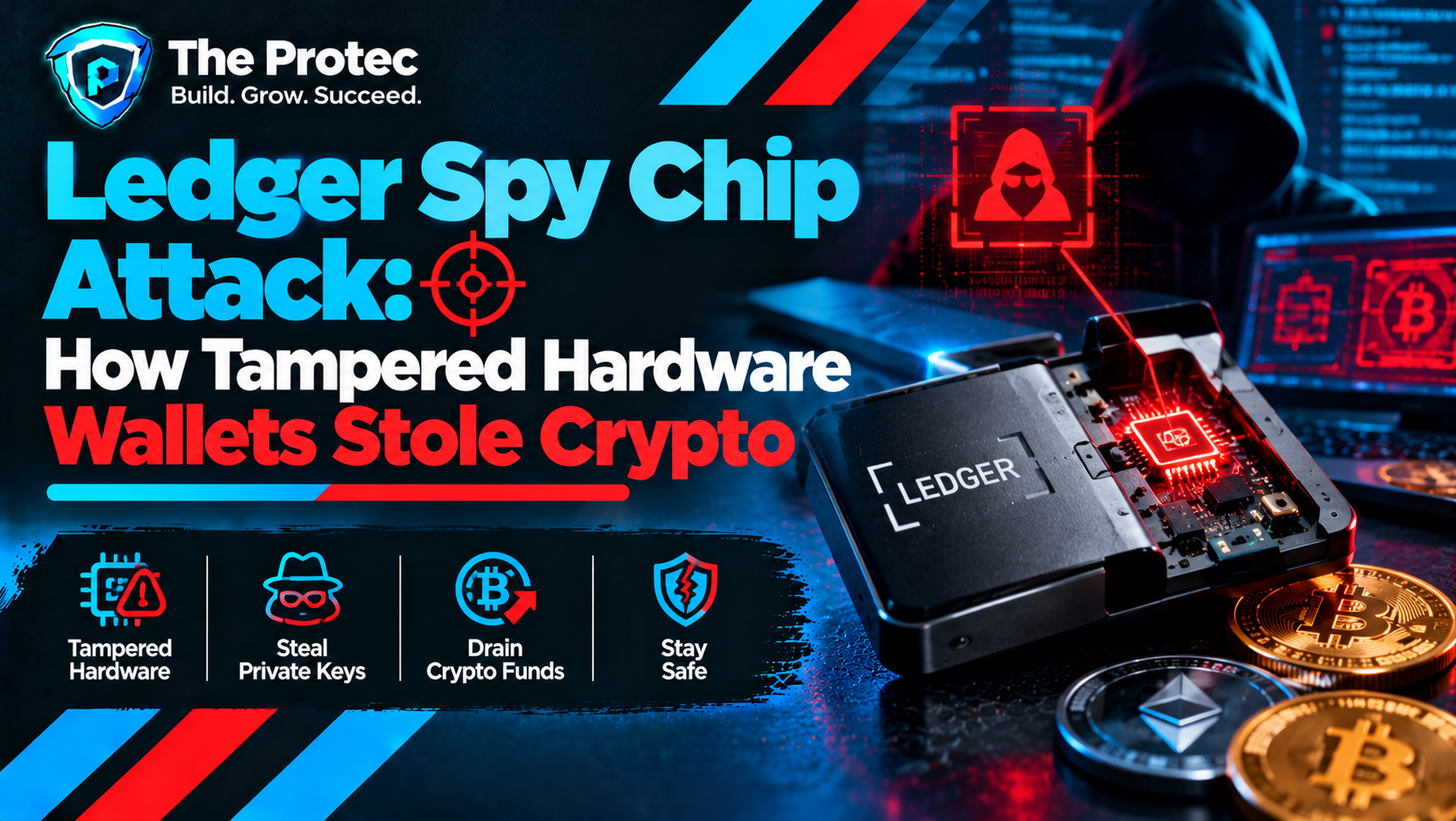
That question is at the center of the developing Ledger CryptoBilis attack. According to Ledger’s reported findings, unauthorized hardware implants were discovered in some devices distributed by CryptoBilis, a Southeast Asian reseller. The Ledger spy chip allegedly monitored the 24-word recovery phrase shown on the wallet’s display during initial setup and transmitted the captured information through an LTE connection using an embedded SIM.
The reported design is especially troubling because it did not need to defeat Ledger Secure Element security or compromise the wallet’s operating system. The modified devices could continue performing normal cryptographic operations while a separate physical implant intercepted the most sensitive information a wallet ever displays. Once attackers obtained a recovery phrase, they could recreate the wallet elsewhere and transfer its assets without possessing the original device or knowing its PIN.
As of October 14, 2026, the investigation remains active. Ledger has confirmed an unauthorized implant in examined devices linked to CryptoBilis, but it has not confirmed the final number of affected customers or the total value stolen. Independent blockchain researchers have connected suspected thefts to losses worth tens of millions of dollars, with some estimates exceeding $90 million. Those figures remain external estimates rather than a Ledger-confirmed total.
What Ledger Has Reported About the Spy Chip
Ledger’s account indicates that investigators found additional, unauthorized electronics inside certain wallets sold through CryptoBilis. The implant reportedly included cellular communications hardware and an embedded SIM capable of sending data over an LTE network.
During legitimate initialization, a Ledger wallet generates a recovery phrase and displays its 24 words on the device screen. Users are instructed to record those words offline because the phrase can restore every private key derived from that wallet. In the tampered devices, the implant allegedly observed electrical signals associated with the display and reconstructed the words as they appeared. It could then transmit the Ledger recovery phrase without relying on the owner’s computer, phone or local Wi-Fi connection.
This is a hardware wallet supply chain attack, not evidence that Ledger’s entire product range or core infrastructure was remotely breached. Ledger has said the implant operated separately from its Secure Element and operating system. Readers can follow continuing company statements through Ledger’s official incident and security updates.
How the Ledger Wallet Spy Implant Bypassed Normal Protections
Ledger hardware wallet security is built around a Secure Element, a specialized chip designed to generate and protect cryptographic secrets. Transactions must normally be reviewed on the trusted display and approved through the physical controls. Malware on a connected computer should not be able to extract private keys directly from the Secure Element.
The reported Ledger wallet spy implant took a different route. Rather than breaking the cryptography, it targeted the recovery phrase at the moment the human owner needed to see it. If the phrase was captured successfully, attackers could import it into another compatible wallet and gain the same authority as the legitimate owner.
This distinction explains why a device can pass ordinary operations while still being dangerous. Its genuine Secure Element may remain intact. Its firmware may be authentic. Ledger Live may communicate with it normally. Yet an added component connected to display circuitry can compromise information outside the Secure Element’s protected boundary.
An LTE spy chip in a crypto wallet also reduces the attacker’s dependence on the victim’s environment. The implant does not necessarily need compromised desktop software, Bluetooth access or permission to join a home network. Cellular transmission can create a separate path out of the device, although investigators still need to establish how consistently the implant communicated across networks and regions.
Timeline of the Ledger CryptoBilis Attack
The incident emerged after users reported cryptocurrency disappearing from wallets whose recovery phrases had supposedly never been entered online or shared. Initial reports resembled familiar seed phrase theft, phishing or malicious wallet software, so the common factor was not immediately clear.
- Blockchain investigators began examining destination addresses and transaction patterns associated with the drained wallets. Clusters of transfers suggested a coordinated operation rather than isolated user mistakes.
- Victim interviews reportedly identified CryptoBilis as a shared purchasing channel among a portion of the affected users, shifting attention toward reseller handling and Ledger hardware wallet tampering.
- Physical examination of returned devices revealed electronics that were not part of the authorized Ledger design. Ledger subsequently confirmed finding an unauthorized implant in devices tied to the reseller.
- CryptoBilis suspended Ledger sales as the investigation expanded. Ledger advised customers associated with the reseller to stop using potentially affected devices and contact official support.
- Some other retailers reportedly paused sales as a precaution. There have also been claims that potentially altered devices appeared outside CryptoBilis, but the origin and authenticity of every reported device have not been independently verified.
This sequence may change as forensic findings develop. In particular, investigators are still working to determine where the modifications occurred, how many units were altered, who controlled the embedded SIM infrastructure and whether all suspicious blockchain transfers belong to the same campaign.
How Much Cryptocurrency Was Stolen?
Independent researchers tracing public blockchains have estimated losses in the tens of millions of dollars. Some analyses place the possible Ledger crypto theft total above $90 million after combining suspected destination addresses, cross-chain movements and assets routed through exchanges or swapping services.
Those estimates require caution. A blockchain address can show where funds moved, but it does not automatically prove how the private keys were obtained. Address clustering can also combine unrelated transactions or miss funds that moved through privacy-enhancing tools and less transparent networks.
Ledger has not confirmed a final loss figure or victim count. It is therefore more accurate to describe the amount above $90 million as a high-end independent estimate, not a verified total. The confirmed technical finding is narrower: Ledger reported an unauthorized hardware implant in examined devices associated with CryptoBilis.
Likewise, reports of other retailers suspending sales do not mean every device in their inventory was compromised. Precautionary pauses are standard during a crypto theft investigation and may occur before physical tampering is established.
Why a New PIN or Firmware Update Is Not Enough
A PIN protects access to the physical wallet. It does not invalidate a recovery phrase that an attacker already knows. If the Ledger recovery phrase was stolen during setup, changing the PIN on the same device leaves the attacker able to restore the wallet elsewhere.
A firmware update is also unlikely to neutralize an independent physical implant. Genuine firmware can strengthen software protections, but it cannot necessarily detect or disable unauthorized circuitry with its own cellular connection. Reconnecting the same potentially compromised device may expose additional information or create false confidence.
The safe response is to assume that every account derived from the exposed phrase is compromised. Assets must be transferred to accounts generated from a completely new recovery phrase on a trusted and verified device. The old phrase should never be reused, even if no unauthorized transaction has appeared yet.
Security Checklist for Potentially Affected Ledger Users
If the device was purchased from CryptoBilis but remains unused
- Do not initialize, power on or connect the wallet.
- Keep the device, packaging, receipt and shipping materials available for examination.
- Contact official Ledger Support directly and follow the latest incident guidance.
- Do not return the device or send photographs of internal components unless Ledger provides verified instructions.
- Ignore unsolicited messages offering replacement wallets, refunds or recovery services.
If a potentially affected device was already initialized
- Treat the existing 24-word phrase as exposed, even if the wallet balance has not moved.
- Obtain a trusted replacement through Ledger or another verified official sales channel.
- Generate a new recovery phrase on the verified replacement device. Do not import the old phrase into it.
- Transfer assets to addresses controlled by the new phrase, following Ledger’s official guidance. Consider a small test transaction before moving the remaining balance.
- Check every account and supported blockchain derived from the old phrase, including accounts that may not currently appear in the wallet interface.
- Never type the new phrase into a website, form, chat, desktop application or phone. Ledger Support should never ask for it.
Moving funds can become complicated when tokens are staked, locked in smart contracts or spread across multiple networks. Users facing those conditions should rely on verified documentation and independently confirm addresses on the trusted device screen. Urgency matters, but rushing can create additional crypto wallet security risks.
Buying and Verifying a Hardware Wallet Safely
The incident reinforces the importance of purchasing directly from a manufacturer or a reseller listed through its official channels. Marketplace listings, informal importers and repackaged returns create more opportunities for substitution or modification. An official reseller designation reduces risk, although it cannot replace ongoing oversight.
Buyers should inspect packaging and the device for unusual seams, added labels, marks around screws, altered weight or unexpected behavior. They should also complete Ledger’s device authenticity check and use official software downloaded from a verified source. However, packaging seals and software checks are not perfect defenses against a sophisticated implant designed to leave genuine components operational.
Most importantly, users must generate the recovery phrase themselves on the hardware wallet. A card containing words supplied in the box is a scam. The phrase should be written down privately, stored away from cameras and never shared with a support representative. Unsolicited assistance after a widely reported hardware wallet security breach is particularly dangerous because criminals often impersonate the manufacturer and target anxious users.
Wider Lessons for Cryptocurrency Supply-Chain Security
The Ledger spy chip case expands the discussion of how hardware wallets get hacked. Security reviews often focus on firmware vulnerabilities, side-channel attacks and weaknesses in Secure Elements. Physical additions placed between trusted components deserve equal attention.
Manufacturers can respond with stronger chain-of-custody controls, randomized teardown inspections and component-level imaging. Designs may also incorporate tamper detection around display connections, authenticated communication between critical components and device integrity measurements that identify unexpected hardware behavior.
Reseller oversight is equally important. Distributors need auditable inventory handling, employee access controls, serial-number reconciliation and procedures for detecting returns that re-enter saleable stock. Manufacturers should be able to suspend a reseller quickly, preserve evidence and notify customers without overstating what an early investigation has established.
Device authenticity verification must also evolve. A cryptographic check can prove that genuine firmware is communicating with genuine secure hardware, but that result does not necessarily prove nothing else has been attached. The incident illustrates the difference between authentic components and an uncompromised complete device.
What Remains Unresolved
Several major questions remain open: the number of Ledger compromised devices, where the implants were installed, how widely they were distributed and whether reported finds outside CryptoBilis are connected. Investigators must also determine which traced thefts can be attributed to the implant rather than phishing, cloud backups or other forms of Ledger seed phrase theft.
Until evidence answers those questions, the incident should not be framed as a compromise of every Ledger wallet, the entire product line or Ledger’s backend systems. It is a serious supply-chain security event involving confirmed unauthorized hardware in examined devices, accompanied by an uncertain victim count and independently estimated losses.
Frequently Asked Questions
Was Ledger’s Secure Element hacked?
Ledger says the discovered implant operated separately from the Secure Element and wallet operating system. It reportedly captured recovery words from signals associated with the display instead of extracting keys from the Secure Element. That distinction is central to the CryptoBilis Ledger hack explained: the normal cryptographic protections could remain functional while additional hardware stole information shown to the user.
Are all Ledger hardware wallets affected?
No. Confirmed findings have been associated with examined devices linked to CryptoBilis. Reports concerning other sales channels remain under investigation, and precautionary sales suspensions do not prove tampering. Owners should check their purchase source and follow Ledger’s current official guidance rather than assume that every device is compromised.
What should I do if my Ledger wallet may be compromised?
Stop using the potentially altered device and contact official Ledger Support. If it was initialized, treat its recovery phrase as compromised and urgently transfer assets to addresses generated from a new phrase on a trusted, verified device. Do not restore the old phrase onto the replacement wallet, and never disclose either phrase to anyone offering support or recovery.
Can Ledger recover cryptocurrency stolen with a seed phrase?
Blockchain transactions generally cannot be reversed by the wallet manufacturer. Ledger may help document the incident, preserve evidence and coordinate with exchanges or law enforcement, but it cannot unilaterally return transferred assets. Be skeptical of anyone promising guaranteed recovery in exchange for a fee, wallet connection or recovery phrase.
Does an authenticity check guarantee that a device has no implant?
Not necessarily. An authenticity check can validate firmware and supported secure components, but a sophisticated physical addition may operate outside those systems. The reported attack shows why cryptocurrency hardware security must combine cryptographic verification with tamper-resistant design, supply-chain auditing and trusted distribution.