








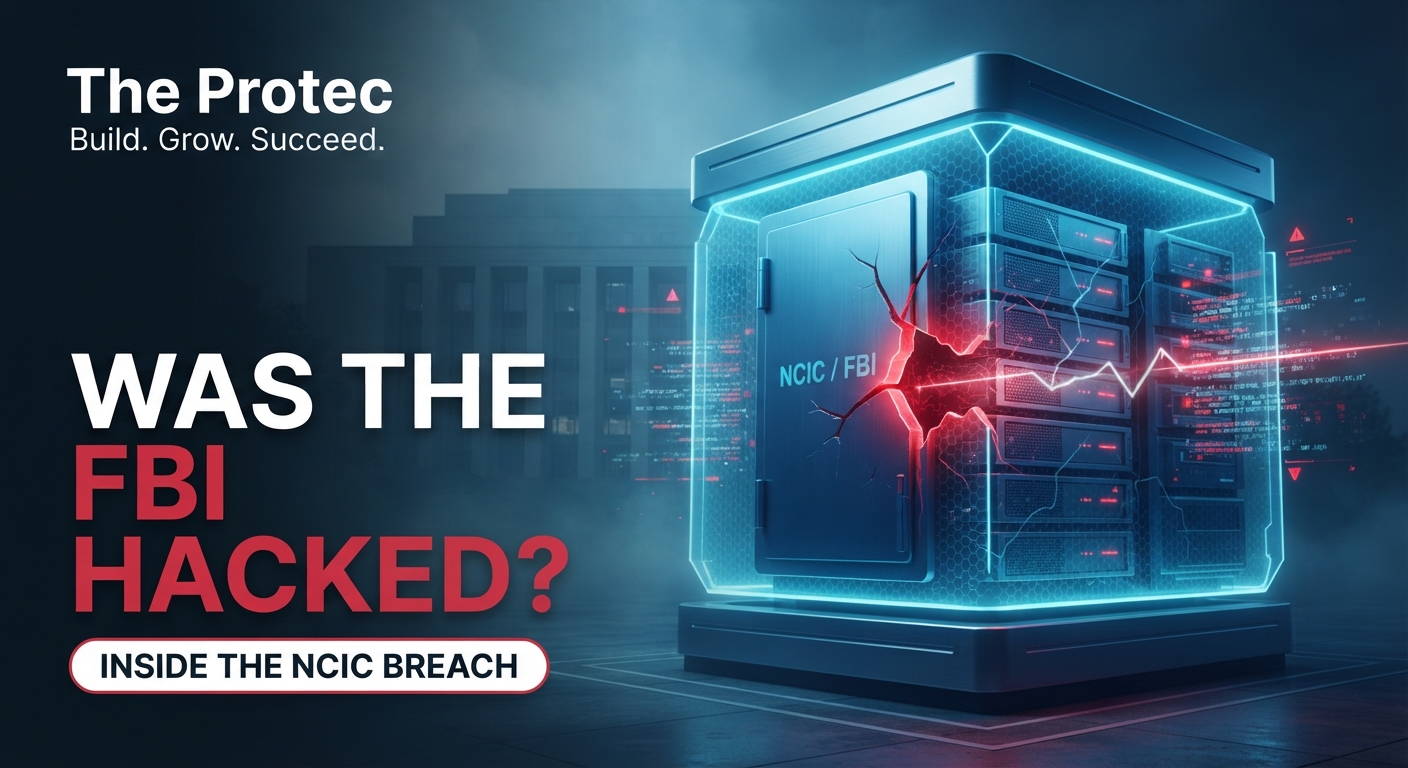
A nationwide police information network may be at the center of a potentially serious security investigation. For people asking whether the FBI database hacked reports are true, the careful answer is that a possible compromise of the National Crime Information Center, or NCIC, was reportedly under investigation as of November 21, 2026—but the FBI had not publicly confirmed that a breach occurred.
The distinction matters. CNN reported that investigators were examining suspected unauthorized access to NCIC, citing two people briefed on the matter. Reuters subsequently covered the CNN report and said the FBI had not responded to its request for comment. No public evidence available at that point established how access may have occurred, who was responsible, how long it lasted or whether records were extracted.
What is confirmed about the suspected FBI cyberattack?
The central confirmed fact is that credible news organizations reported an investigation—not that the government officially announced an FBI data breach. According to the November 20–21 reporting, CNN’s account relied on two people who had been briefed on the investigation into a possible NCIC compromise.
As of the latest Reuters report on November 21, the FBI had neither publicly confirmed the incident nor answered Reuters’ request for comment. There was also no public statement from the bureau identifying an attacker, describing affected systems or advising agencies that specific records had been exposed.
That leaves three different propositions that should not be treated as interchangeable:
- An investigation is reportedly underway: This is the substance of the CNN report relayed by Reuters.
- Unauthorized access occurred: This remained unconfirmed publicly.
- Data was stolen, altered or destroyed: No verified public evidence had established any of these outcomes.
Headlines stating that the FBI was hacked can therefore overstate what was known. A suspected security event can ultimately prove to be a compromised user account, an intrusion through a connected agency, a false alarm or a direct breach of central infrastructure. Public reporting had not resolved which scenario, if any, applied.
What the NCIC database does
NCIC is a computerized information-sharing system operated through the FBI’s Criminal Justice Information Services Division. It helps authorized criminal justice users locate and exchange records needed during investigations, traffic stops, arrests and other time-sensitive operations. The FBI describes NCIC as an electronic clearinghouse of crime data.
Federal, state, local and tribal law enforcement agencies depend on the system, along with other authorized criminal justice entities. Officers and dispatchers may query it from police stations, communications centers or properly secured mobile systems. Authorized agencies also use the broader FBI criminal justice information environment for identity and background-check functions permitted by law.
Depending on the record category and authorized use, the NCIC environment can help users find information involving:
- Wanted people and outstanding warrants;
- Missing or unidentified persons;
- Stolen vehicles, firearms, license plates and other property;
- Protection orders and certain restrictions relevant to officer safety;
- Individuals associated with specific law enforcement records;
- References used alongside criminal history and identity information in the wider CJIS ecosystem.
NCIC is not simply a public-facing website or one ordinary office database. It is part of an operational network that connects thousands of authorized users and agencies. That reach makes accurate, available and confidential information essential.
What remains unknown about the possible NCIC breach
The early reports did not answer the most important technical and investigative questions. No attack method had been disclosed, so it was not known whether investigators were examining stolen credentials, malware, an exploited vulnerability, insider activity, a compromised agency endpoint or another access path.
The responsible party also remained unidentified publicly. There was no verified attribution to a criminal group, foreign government, hacktivist organization or individual. Likewise, officials had not disclosed when suspicious activity began, how quickly it was detected or whether access persisted.
Most importantly, possible access does not automatically mean information was downloaded. Investigators would need to examine authentication records, query histories, data-transfer logs, endpoint evidence and changes to records. They would also need to determine whether an account merely reached a login service or successfully viewed sensitive information.
There was no verified public indication that records had been modified. Data integrity is especially significant because an altered warrant, status flag or identity record could create a different class of risk from confidential information being viewed or copied.
Timeline of the FBI hacking investigation reports
- September 2026: The FBI jobs website was separately compromised in an incident attributed in reporting to ShinyHunters. That event involved a different online property and should not be treated as evidence of NCIC access.
- November 20, 2026: Reports emerged that the FBI was examining a suspected compromise involving the National Crime Information Center. CNN cited two people briefed on the investigation.
- November 21, 2026: Reuters reported CNN’s account. Reuters said the FBI had not publicly confirmed the incident and had not responded to its request for comment.
- Current status: The attack method, suspected perpetrator, access duration, affected agencies and potential extraction of information remained publicly unknown.
If an NCIC breach is eventually confirmed, its impact would depend on the accounts, records and functions reached. Even read-only access could expose information useful for evading arrest, identifying investigative interests or targeting vulnerable people. A malicious actor might seek warrant information, details about stolen property, protection-order records or data connected to missing-person investigations.
There could also be direct risks to law enforcement operations. Knowledge of what police can see—or which people and property they are searching for—may help criminals change behavior, abandon assets or avoid particular jurisdictions. Information tied to officers, witnesses, victims or confidential investigations could create safety concerns if exposed.
Any ability to alter records would be more alarming, although no such capability or activity had been reported. Incorrect data could cause officers to miss a wanted person or treat an innocent person as a threat. Because police decisions can happen in seconds, confidence in record accuracy is fundamental.
A law enforcement data breach can have consequences even when the central database itself was not penetrated. Agencies may have to disable accounts, reset credentials, examine terminals and restrict connections while investigators determine the scope. Those precautions can slow routine checks and increase the workload for dispatchers and officers.
Public trust is another concern. People reasonably expect warrant, criminal justice and background-check information to be protected from unauthorized use. A verified exposure could prompt notification reviews, oversight inquiries and questions about whether access controls were adequate across participating agencies.
Why the ShinyHunters FBI breach is a separate incident
The September compromise of the FBI jobs website, attributed in reporting to ShinyHunters, should not be conflated with the suspected NCIC event. A recruitment website and a national criminal records system serve different purposes, contain different information and may rely on separate infrastructure, vendors and authentication controls.
As of November 21, there was no verified public attribution connecting ShinyHunters to the reported NCIC investigation. Referring to the earlier event may provide context for broader government cybersecurity concerns, but it does not demonstrate that the same actor, vulnerability or technique was involved.
This distinction is crucial when evaluating searches and social posts about a ShinyHunters FBI breach. Threat actors sometimes claim responsibility before investigators establish the facts, and unrelated incidents involving the same organization can be incorrectly merged into one narrative.
The challenge of securing a centralized law enforcement database
Systems such as NCIC must balance security with rapid availability. An officer on a roadside stop cannot wait through a cumbersome process for information that may affect immediate safety. At the same time, fast access cannot come at the expense of reliable authentication, authorization and monitoring.
The broad network of participating organizations expands the security challenge. A central platform may have strong controls, but every approved connection, workstation, mobile device and user account can create potential exposure. Smaller agencies may have different staffing, budgets and technical capabilities from federal departments, even when all must follow criminal justice information security requirements.
Effective protection generally requires several overlapping measures:
- Strong multifactor authentication and rapid revocation of compromised accounts;
- Least-privilege access based on an individual’s duties;
- Encryption for sensitive data in transit and at rest;
- Detailed logging of searches, record access and administrative changes;
- Behavioral monitoring for unusual query patterns or bulk access;
- Segmentation that limits movement between connected systems;
- Continuous endpoint maintenance, testing and incident-response exercises;
- Independent audits and consistent security standards across participating agencies.
Centralization offers clear operational value because agencies can obtain information without maintaining isolated, incomplete records. It also concentrates risk. Defenders must protect not only a core service but a nationwide identity, device and network ecosystem that operates around the clock.
What to watch for next
The most useful next development would be a verified FBI statement clarifying whether unauthorized access occurred. Other meaningful details would include the affected component, discovery date, duration, number and type of accounts involved, whether information was viewed or extracted, and whether agencies or individuals need to take protective action.
Any attribution should be treated cautiously until supported by the FBI or another accountable government source. The same applies to claims that records are being sold or leaked: samples can be fabricated, recycled from older incidents or taken from unrelated systems.
This article reflects information available through November 21, 2026, and should be updated when the FBI releases verified findings about the investigation.
Frequently asked questions
Was the FBI database hacked?
A possible compromise of NCIC was reportedly being investigated, but the FBI had not publicly confirmed a breach as of November 21. CNN cited two people briefed on the investigation, while Reuters said the bureau did not respond to its request for comment.
What is the National Crime Information Center?
NCIC is an FBI-operated information-sharing system used by authorized law enforcement and criminal justice agencies. It helps users access records involving wanted and missing people, warrants, stolen property, protection orders and other operational information.
Was information stolen from the NCIC database?
That was unknown. No verified public report had established whether an intruder successfully entered the system, viewed records, extracted information or changed data. Investigators would need technical logs and forensic evidence to determine the scope.
Is ShinyHunters responsible for the suspected NCIC breach?
No verified public attribution connected ShinyHunters to the NCIC investigation. The group was associated in reporting with the separate September compromise of the FBI jobs website, but the two events must not be treated as the same incident.
Why would an NCIC security breach affect public safety?
Unauthorized access could expose sensitive investigative information, help wanted people evade authorities or place victims and officers at risk. If records were altered, inaccurate information could also influence real-time law enforcement decisions, although no record manipulation had been reported.