








AI Voice Scams Are Getting Smarter: What You Need to Know
AI voice scams have moved far beyond clumsy robocalls and obvious fake accents. Today, scammers can clone a person’s voice from just a short audio sample, then use it to pressure family members, employees, or customers into sending money, revealing sensitive information, or approving fraudulent transactions. The result is a new generation of voice cloning scam attacks that sound emotionally convincing, technically sophisticated, and frighteningly real.
What makes this threat especially dangerous is how ordinary it looks from the victim’s side. A call appears to come from a loved one, a manager, a bank representative, or a vendor you already trust. The voice sounds right. The urgency feels right. The story is designed to bypass logic and trigger panic before verification can happen. That combination is exactly why AI fraud prevention has become a critical personal and business security skill.
In this article, we’ll break down how AI voice scams work, the latest attack patterns, the warning signs to watch for, and the practical defenses that can keep you safe. Whether you’re protecting yourself, your family, or your organization, the goal is the same: slow the scam down, verify the source, and make impersonation much harder to pull off.
What Is an AI Voice Scam?
An AI voice scam is a fraud attempt that uses synthetic speech or voice cloning to impersonate a real person. Instead of relying on a human scammer alone, criminals use artificial intelligence to generate a voice that sounds like someone the target knows or trusts. The scam may happen over a phone call, voicemail, voice note, or even a video meeting with manipulated audio.
In a typical voice cloning scam, the attacker collects a voice sample from social media, podcasts, customer service recordings, voicemail greetings, online videos, or even a casual voice message shared in a group chat. Modern AI systems can analyze tone, rhythm, pronunciation, and emotional cues, then reproduce a remarkably believable approximation. The better the sample, the more convincing the clone.
These scams are not limited to celebrities or executives. In fact, everyday people are often easier targets because their voices are publicly available through social platforms and messaging apps, while their families or coworkers may be less prepared to verify unexpected requests.
Why AI Voice Scams Are More Dangerous Now
AI voice fraud is becoming more dangerous for several reasons. First, voice generation tools are faster, cheaper, and easier to use than ever. Second, scammers have learned to combine cloned audio with social engineering tactics such as emotional urgency, secrecy, and authority. Third, many people still treat a familiar voice as proof of identity, even though voice alone is no longer reliable.
Another major change is the rise of multi-channel fraud. Attackers may start with a text message, follow with a phone call using a cloned voice, and then send a fake email or invoice to reinforce the story. This layered approach makes the scam feel legitimate because it arrives through several channels at once.
Businesses are also under pressure. Finance teams, help desks, and customer support departments are now being targeted by voice-based impersonation attempts that try to override standard approval processes. In some cases, scammers use a cloned executive voice to push an urgent wire transfer or request sensitive account access. That is why AI fraud prevention is now a core part of modern security planning.
How AI Voice Scams Work
Most AI voice scams follow a predictable pattern, even if the details vary. Understanding the process makes it easier to spot the setup before the damage is done.
- Voice collection: The attacker gathers a short voice sample from public or semi-public sources.
- Voice synthesis: AI tools generate a synthetic version of the target’s voice, often with matching tone and pacing.
- Target selection: The scammer identifies someone likely to respond emotionally or financially, such as a parent, assistant, or finance employee.
- Urgency trigger: The caller creates panic with a story about an emergency, legal trouble, missed payment, or account issue.
- Action request: The victim is pushed to transfer money, share codes, approve payments, or reveal private information.
Many attacks are short by design. Scammers know that the more time a target has to think, the more likely they are to verify the request. Some calls last less than a minute. The goal is not a perfect conversation; it is a fast emotional hit that causes the victim to act before questioning the details.
Common Real-World Attack Methods
AI voice scams can take several forms, and the best defense depends on recognizing the pattern early.
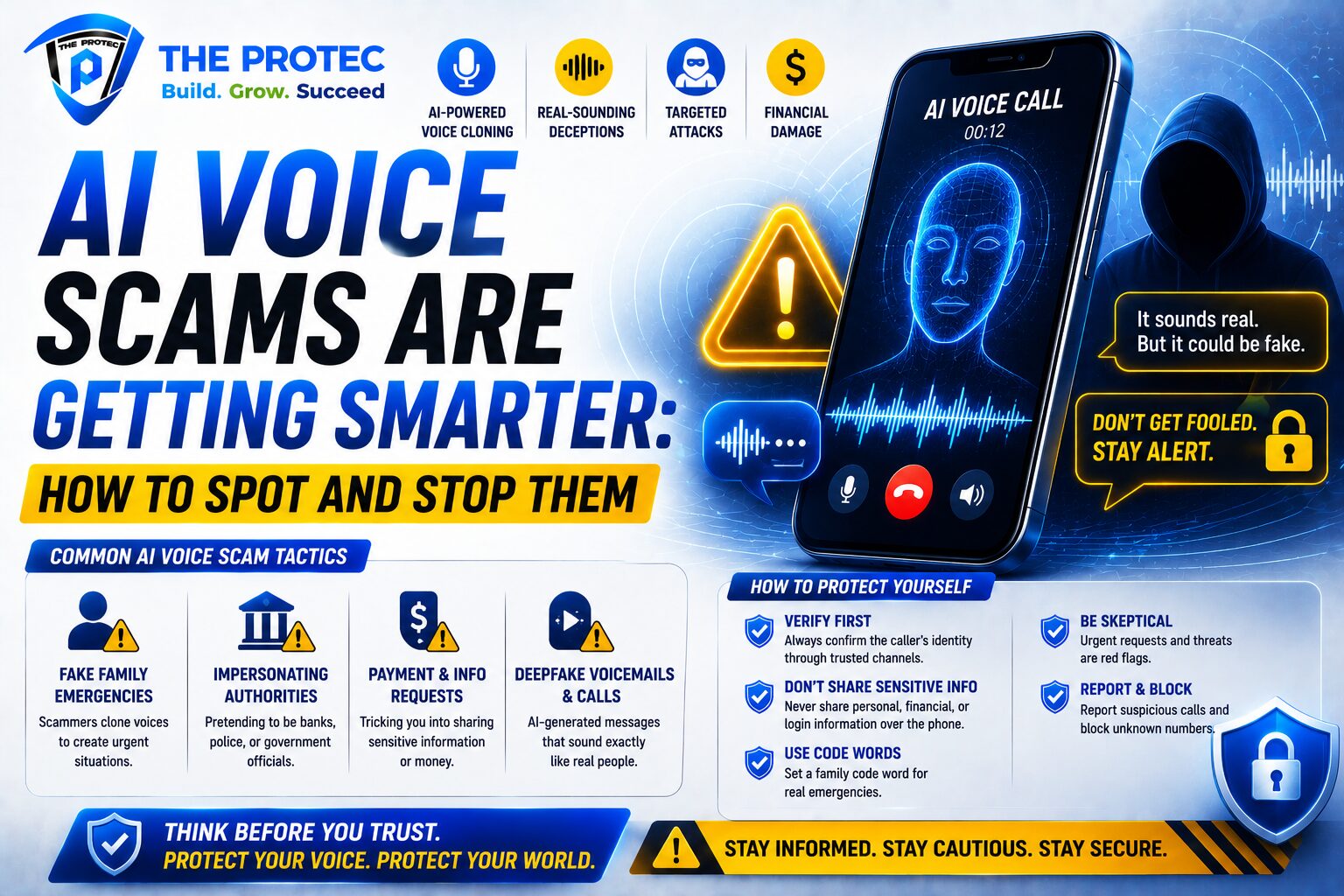
Family Emergency Impersonation
This is one of the most common and effective attack methods. A scammer uses a cloned voice to pose as a child, parent, spouse, or sibling and claims to be in trouble. The story may involve a car accident, arrest, hospital bill, stolen phone, or travel emergency. The caller begs for immediate money and often asks the victim not to contact anyone else.
CEO or Manager Fraud
In business environments, attackers may impersonate a senior leader to pressure employees into moving funds or sharing login credentials. The message may arrive after hours, during a busy period, or right before a deadline when people are more likely to comply without questioning the request.
Bank and Support Impersonation
Some scammers use voice cloning alongside caller ID spoofing to pose as a bank, payment platform, telecom provider, or tech support agent. They claim there is suspicious activity, a locked account, or a failed transaction, then ask the victim to “verify” details, reset credentials, or approve a one-time code.
Voicemail and Voice Note Abuse
Attackers may leave a voicemail that sounds like someone you know asking for help. Because voicemails feel less immediate than live calls, people sometimes lower their guard. But voice notes on messaging apps can be just as dangerous, especially when they are paired with a text that creates urgency.
Deepfake Callback Loops
A newer tactic is the callback loop. The scammer first sends a message or email warning of a problem, then uses a cloned voice to answer any questions. This creates a false sense of consistency. The victim thinks they are verifying the request, but in reality they are speaking to a synthetic version of the person they believe they know.
Warning Signs of an AI Voice Scam
Because voice cloning has improved so much, you cannot rely on sound alone. Instead, watch for behavioral clues and context clues that usually expose the fraud.
- Urgency: The caller wants immediate action and discourages verification.
- Secrecy: You are told not to tell anyone else or not to call back.
- Unusual payment methods: Gift cards, crypto, wire transfers, or instant transfers are red flags.
- Odd timing: The request arrives at night, during travel, or when the real person would be hard to reach.
- Pressure to bypass policy: The caller asks to ignore normal approval steps or identity checks.
- Small inconsistencies: Slightly wrong phrasing, odd background noise, or generic answers to personal questions can indicate a scam.
One important clue is emotional mismatch. A real family member in distress may sound scared, but a scammer often overplays urgency in a scripted way. Likewise, a manager who normally respects procedure may suddenly demand a rushed transfer with no documentation. When the behavior feels off, treat the call as suspicious no matter how convincing the voice sounds.
How to Verify a Suspicious Call
The single best defense against an AI voice scam is to verify independently. Do not use the number, email, or messaging thread provided by the caller. Instead, contact the person or organization through a trusted method you already have.
If a loved one calls with an emergency, hang up and call them back on their known number. If you cannot reach them, contact another family member, friend, or authority figure who can confirm the situation. For workplace requests, use your company’s standard approval workflow and verify through an internal directory or established channel.
Verification should be specific, not casual. Ask questions that a scammer is unlikely to answer correctly, but avoid relying on shared secrets that may be exposed on social media. A better approach is to confirm context: where the person was supposed to be, what the request is about, and whether there was any prior discussion.
For organizations, a call-back policy is essential. Any request involving money, credentials, or sensitive data should require a second-channel confirmation. This simple rule blocks many voice cloning scam attempts before they succeed.
Practical AI Fraud Prevention Tips for Individuals
AI fraud prevention starts with habits that make impersonation harder and less effective.
- Limit public voice samples: Review what you post on social platforms, video apps, podcasts, and public profiles.
- Set a family verification code: Use a private phrase or process that can confirm genuine emergencies.
- Slow down urgent requests: Scammers rely on panic, so create a pause before sending money or information.
- Use multi-factor authentication: Protect accounts so a voice call alone cannot unlock them.
- Keep contact lists updated: Make it easy to call trusted numbers directly when something feels wrong.
- Report suspicious activity: Save voicemails, call logs, and texts for your carrier, bank, or local authorities if needed.
It also helps to talk about the threat openly with family members, especially older adults and teens who may respond differently to emotional pressure. A short conversation now can prevent a costly mistake later.
Practical AI Fraud Prevention Tips for Businesses
For organizations, the threat is broader because one successful impersonation can lead to financial loss, data exposure, or operational disruption.
- Require dual approval: Large payments and sensitive account changes should need two or more verifications.
- Train employees regularly: Teach staff how voice cloning scam attacks work and what to do when they receive suspicious requests.
- Use out-of-band verification: Confirm requests through a separate channel, not the one used by the caller.
- Restrict public audio: Limit how much executive or staff voice content is publicly available.
- Establish a fraud response playbook: Employees should know who to contact immediately if they suspect impersonation.
- Audit approval workflows: Make sure no one can override controls simply by sounding authoritative.
Organizations should also treat voice as one signal among many, not as proof of identity. If a request arrives with unusual timing, unusual urgency, or unusual payment instructions, the safest response is to pause and verify through official procedures.
What to Do If You Already Gave Information or Money
If you realize you may have fallen for an AI voice scam, act immediately. Speed matters.
- Contact your bank or payment provider right away and ask about fraud reversal or transaction holds.
- Change passwords for any accounts that may be exposed.
- Enable or reset multi-factor authentication where possible.
- Report the incident to your carrier, workplace security team, or local law enforcement if appropriate.
- Monitor accounts for unusual activity, especially bank, email, cloud storage, and messaging apps.
If the scam involved a cloned voice of a family member or colleague, warn others quickly. Attackers often reuse the same method on additional targets once they know it works.
The Future of Voice Cloning and Online Trust
The next phase of voice cloning scam activity will likely be more personalized, more automated, and harder to spot at a glance. As AI-generated audio becomes more accessible, criminals will be able to test different scripts, generate multiple voice variants, and adapt their approach in real time. We can also expect more blended attacks that combine voice, text, and video in a single fraud campaign.
That does not mean people are powerless. It does mean that trust has to be redesigned. The old assumption that “I know the sound of that person’s voice” is no longer enough. Identity verification now needs process, not just instinct. Families need a plan. Businesses need controls. Individuals need healthy skepticism paired with fast verification habits.
The good news is that the same discipline that defeats phishing emails also defeats many AI voice scams: pause, verify, and never let urgency replace confirmation.
FAQ: AI Voice Scams and Protection
How can I tell if a voice call is AI-generated?
There is no perfect audio-only test. Focus on context and behavior instead. Look for urgency, secrecy, strange payment requests, and pressure to skip verification. If the request is unusual, verify through a trusted channel before responding.
Can scammers clone a voice from a short recording?
Yes. In many cases, a short clip from a social media video, voicemail, or voice note is enough to create a convincing clone. The more public audio someone has online, the easier it may be for a scammer to imitate them.
What is the best protection against a voice cloning scam?
The best protection is independent verification. Call the person back on a known number, use a family or company code, and require a second approval step for financial requests. Good AI fraud prevention depends on process, not just intuition.
Should I stop using voice notes and videos online?
Not necessarily, but it is smart to be selective. Avoid posting long, clear voice samples publicly if they are not needed. Review privacy settings, limit who can access your content, and be aware that any public audio can potentially be used for impersonation.
What should a business do if an employee receives a suspicious executive call?
The employee should stop the request, verify through a separate internal channel, and report it to the security or fraud team. No transfer, credential reset, or sensitive action should be completed based on voice alone.
Final Thoughts
AI voice scams are not a distant future threat. They are here now, and they are improving quickly. As synthetic speech becomes more realistic, the safest people will not be the ones who can identify every fake voice by ear. They will be the ones who know how to verify, slow down, and refuse to act under pressure.
If you remember one rule, make it this: a familiar voice is not proof of identity. Whether the request comes from a family member, a boss, a bank, or a vendor, verify it through a trusted channel before you send money or share information. That simple habit is one of the strongest defenses available against AI fraud prevention failures and voice cloning scam attacks.