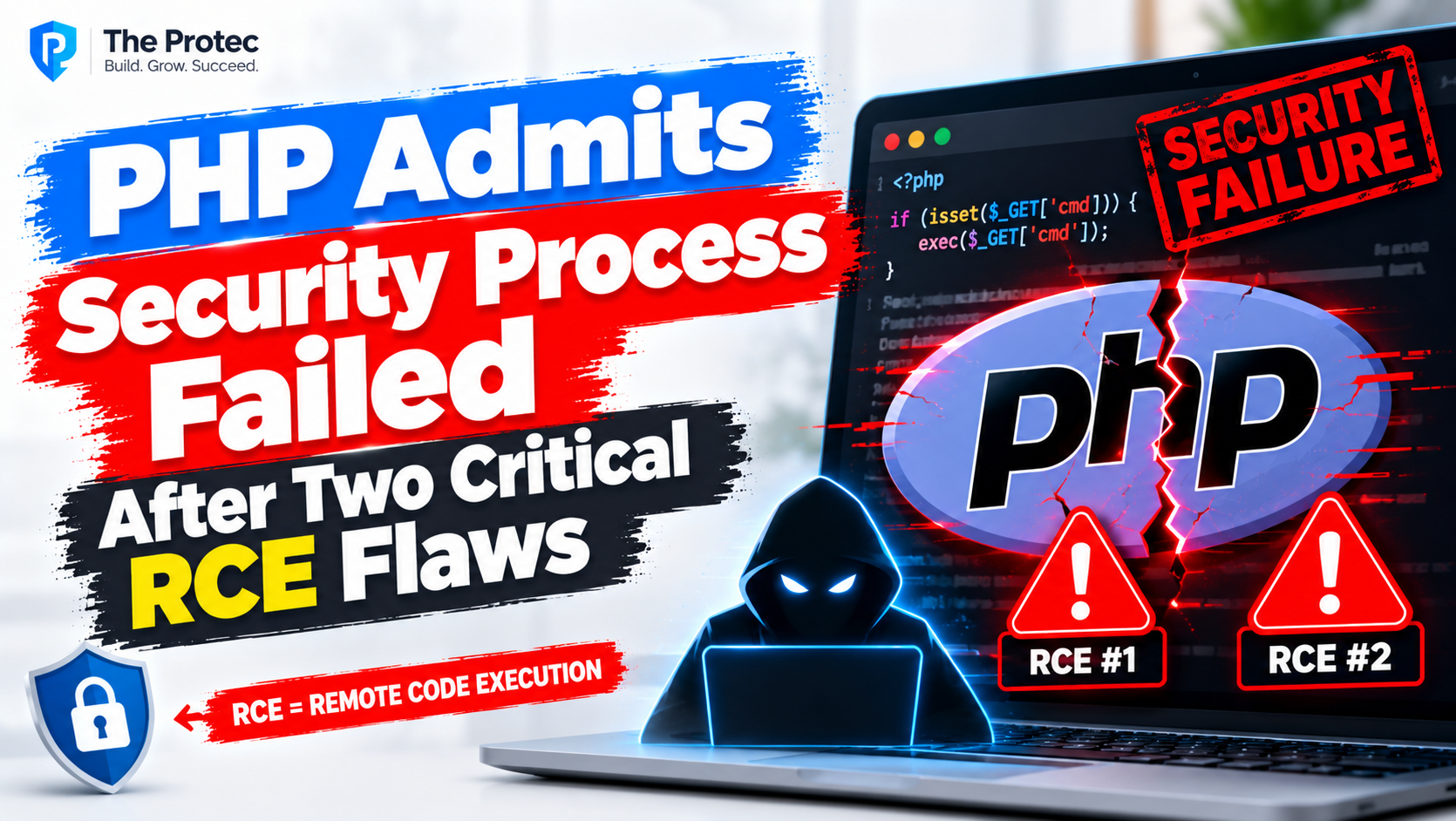









PHP’s October security crisis has understandably commanded attention. Two critical vulnerabilities associated with the PHP2Shell incident can expose affected, internet-facing systems to unauthenticated remote code execution. However, while security teams have been investigating PHP servers, Node.js quietly published its own important security release on October 21, addressing a native-code flaw capable of remote code execution as well as DNS and TLS certificate-validation weaknesses.
The incidents are not equivalent. PHP’s CVE-2026-109618 and CVE-2026-109619 carry critical CVSS scores of 9.2, while Node.js rates the most severe issues in its release as HIGH. They do not share a cause, exploit technique, or universal level of exposure. The connection is operational: organizations often run PHP and Node.js services side by side, and concentrating on the vulnerability dominating the headlines can leave another part of the technology stack unpatched.
Administrators should therefore treat the latest PHP and Node.js disclosures as a reminder that effective vulnerability management depends on complete runtime inventories, supported software branches, rapid testing, and disciplined deployment—not assumptions about which programming language is inherently safer.
What the PHP2Shell vulnerabilities mean for PHP security
The name “PHP2Shell” is commonly being used for the incident involving CVE-2026-109618 and CVE-2026-109619. It is a useful shorthand, but administrators should work from the individual CVE advisories rather than treating PHP2Shell as one vulnerability. The two entries represent separate security defects with their own affected conditions and remediation requirements.
CVE-2026-109618
CVE-2026-109618 is a critical PHP vulnerability that can allow unauthenticated remote code execution when a vulnerable request-processing path is reachable through an affected web deployment. In practical terms, an attacker may be able to send a crafted request to a web server and cause attacker-controlled code to execute within the PHP process.
That does not mean every PHP installation is immediately exploitable. Exposure depends on factors such as the PHP release, server interface, web-server configuration, request routing, and whether the vulnerable processing path is accessible. Nevertheless, unauthenticated code execution on an internet-facing service demands urgent action because successful exploitation can lead to application compromise, credential theft, persistence, data access, or movement into connected systems.
CVE-2026-109619
CVE-2026-109619 is a second critical issue associated with PHP2Shell. The official advisory likewise warns that affected web configurations may permit unauthenticated remote code execution through maliciously constructed input. Although the outcome can resemble CVE-2026-109618, administrators should not assume that the two vulnerabilities have identical prerequisites or that mitigating one request path automatically resolves the other.
Both vulnerabilities are addressed by installing a fixed PHP release. The official PHP security information should remain the source of truth for revised technical details, affected configurations, and any follow-up releases.
PHP critical security update: affected and fixed versions
The confirmed patched PHP releases are:
- PHP 8.5.12 for the PHP 8.5 branch
- PHP 8.4.27 for the PHP 8.4 branch
- PHP 8.3.36 for the PHP 8.3 branch
- PHP 8.2.35 for the PHP 8.2 branch
For supported branches, releases before those patch levels should be reviewed and updated. Administrators running older, unsupported PHP versions should not conclude that their systems are unaffected simply because no community patch is listed. They need to consult their operating-system vendor, commercial PHP provider, control-panel vendor, managed host, or appliance supplier for backport information. Where no maintained package exists, migration to a supported PHP branch is the safer long-term response.
Updating the PHP runtime may also be insufficient if a system was exposed before patching. High-risk servers should be examined for unexpected child processes, newly created files, modified application code, unfamiliar scheduled tasks, suspicious outbound connections, altered credentials, and anomalous web requests. Patching closes the known flaw; it does not automatically remove an attacker who already established persistence.
Node.js security update published on October 21
While defenders focused on PHP security vulnerabilities in October 2026, the Node.js project released fixes for four separate vulnerabilities. The most serious is CVE-2026-111497, a Brotli decoder memory-corruption issue. The release also corrects CVE-2026-105482 in DNS name handling and two TLS hostname-validation flaws, CVE-2026-105483 and CVE-2026-106069.
The official fixed releases are:
- Node.js 22.23.4 for the 22.x release line
- Node.js 24.22.1 for the 24.x release line
- Node.js 26.12.1 for the 26.x release line
The project’s October security release advisory provides the authoritative severity and affected-version matrix. Supported 22.x, 24.x, and 26.x deployments below the applicable fixed patch level should be compared against that matrix and upgraded where affected.
CVE-2026-111497: Brotli decoder out-of-bounds write
CVE-2026-111497 is the headline Node.js issue. It is an out-of-bounds write in Brotli decoding that may permit remote code execution. Because Brotli processing reaches native code, malicious compressed data can potentially corrupt process memory instead of producing an ordinary JavaScript exception.
Remote exploitation requires an application to process attacker-controlled Brotli data through the vulnerable decoder. Services that never accept or decode untrusted Brotli content may have less exposure, while proxies, gateways, ingestion services, package-processing systems, and applications handling compressed uploads or responses deserve priority. The possibility of remote code execution makes prompt installation of Node.js security patches appropriate even though not every Node.js process exposes the necessary input path.
CVE-2026-105482: DNS name-handling vulnerability
CVE-2026-105482 concerns the handling of specially formed DNS names. Applications that accept untrusted hostnames and pass them into affected Node.js DNS functionality may experience incorrect name processing or related security consequences under the conditions documented by Node.js.
This issue should not be described as universal remote code execution. Its practical impact depends on whether an attacker controls the hostname input, which DNS APIs the application uses, and how the application relies on the result. Systems performing server-side requests, tenant-controlled network checks, discovery, or URL-based data retrieval should receive particular scrutiny.
CVE-2026-105483 and CVE-2026-106069: TLS hostname validation
CVE-2026-105483 and CVE-2026-106069 affect hostname-validation behavior used when matching a remote server’s TLS certificate against the requested destination. Under the advisory’s specific name and certificate conditions, an affected Node.js client may accept an identity match that should have failed.
These flaws do not disable encryption or automatically make every HTTPS connection vulnerable. Exploitation generally requires an attacker to influence the network path or destination and present a certificate that satisfies the remaining trust requirements while triggering the incorrect hostname check. Applications using custom verification, certificate pinning, or unaffected name forms may have different exposure. Services relying on standard Node.js TLS verification for sensitive outbound traffic should still update rather than attempting to reproduce every possible edge case.
PHP vs Node.js security: October update comparison
| Ecosystem | Disclosed issues | Severity | Affected versions | Fixed releases | Recommended action |
|---|---|---|---|---|---|
| PHP | CVE-2026-109618 and CVE-2026-109619, associated with PHP2Shell | Critical, CVSS 9.2 | Supported 8.2, 8.3, 8.4, and 8.5 versions before their fixed patch levels; unsupported releases require vendor review | 8.2.35, 8.3.36, 8.4.27, 8.5.12 | Patch internet-facing servers urgently and investigate potentially exposed systems |
| Node.js | CVE-2026-111497, CVE-2026-105482, CVE-2026-105483, and CVE-2026-106069 | HIGH and MEDIUM; highest rating is HIGH | Affected builds in the supported 22.x, 24.x, and 26.x lines below the applicable security release | 22.23.4, 24.22.1, 26.12.1 | Upgrade each branch, then rebuild and redeploy applications and containers |
The table highlights why direct severity comparisons can be misleading. PHP’s critical unauthenticated RCE vulnerabilities warrant exceptional urgency, but that does not make Node.js’s HIGH-severity memory-corruption and certificate-validation issues optional. Prioritization should combine vendor severity with actual reachability, data sensitivity, internet exposure, and the consequences of a compromised process.
How to patch PHP and Node.js servers safely
- Inventory every runtime. Identify PHP and Node.js versions across physical servers, virtual machines, containers, CI runners, serverless deployments, development systems, and managed platforms.
- Prioritize internet-facing services. Start with public PHP endpoints, Node.js services decoding untrusted Brotli data, and applications making security-sensitive DNS or TLS connections.
- Apply supported security releases. Move PHP to 8.5.12, 8.4.27, 8.3.36, or 8.2.35 as appropriate. Upgrade Node.js 22.x to 22.23.4, 24.x to 24.22.1, and 26.x to 26.12.1.
- Rebuild containers. Changing a base image tag does not update running workloads. Pull the patched image, rebuild application images, scan them, redeploy them, and remove vulnerable replicas.
- Test critical applications. Exercise PHP extensions, framework integrations, native Node.js add-ons, compression workflows, DNS operations, TLS connections, background workers, and scheduled jobs.
- Review dependencies and provider notices. Runtime updates do not replace package-manager audits. Check Composer and npm dependencies as well as advisories from operating-system vendors, cloud platforms, hosting providers, and appliance suppliers.
- Look for compromise where relevant. Review web, process, authentication, endpoint, DNS, proxy, and network logs on systems that were reachable while vulnerable.
- Confirm production versions. Validate the runtime inside the actual workload after deployment. Shell profiles, multiple installed binaries, stale containers, and process managers can leave applications on an older version.
Security depends on maintenance, not language stereotypes
PHP and Node.js can both be operated securely when teams maintain supported versions, minimize exposed functionality, monitor advisories, and deploy patches promptly. Likewise, either ecosystem can become dangerous when obsolete runtimes remain online or teams assume framework-level protections compensate for runtime vulnerabilities.
One disclosure should not define an entire language. The PHP2Shell incident does not prove that every PHP application is insecure, and the Node.js remote code execution vulnerability does not make every Node.js service remotely exploitable. The practical lesson is simpler: attackers do not organize themselves around technology popularity contests. Defenders must monitor the whole stack, including the vulnerabilities receiving less publicity.
Frequently asked questions
No. They were disclosed during the same period, but they have different root causes, exploit conditions, severity ratings, and affected components. Their relevance together is operational: many organizations must patch both ecosystems.
Which PHP versions contain the confirmed fixes?
The confirmed patched releases are PHP 8.5.12, 8.4.27, 8.3.36, and 8.2.35. Users of unsupported branches should obtain vendor-specific guidance or migrate to a maintained version.
Which Node.js versions should administrators install?
Install Node.js 22.23.4 for the 22.x branch, 24.22.1 for the 24.x branch, or 26.12.1 for the 26.x branch. The applicable release depends on the branch already used by the application.
Is every Node.js application vulnerable to remote code execution?
No. CVE-2026-111497 requires the vulnerable Brotli decoder to process attacker-controlled data. The DNS and TLS issues have different prerequisites and should not all be described as remote code execution. Updating remains the most reliable remediation.
Is installing the patches enough?
Installation is essential, but high-risk systems may also require log review and incident investigation. Teams should rebuild containers, redeploy processes, validate production versions, test applications, rotate exposed secrets when justified, and monitor for signs of prior compromise.