








Most businesses are still defending themselves against the threats they already know how to name: phishing emails, ransomware, and weak passwords. The problem is that the threat landscape has moved on. The most damaging cybersecurity threats 2026 are increasingly quieter, faster, and more distributed than the attacks that dominated the last few years. They are designed to blend into legitimate activity, exploit trust at scale, and bypass the controls companies still assume are enough.
That shift matters because attackers are no longer only targeting obvious entry points. They are going after the systems businesses depend on every day: identity platforms, software supply chains, third-party integrations, AI tools, and cloud environments that are often misconfigured or poorly monitored. The result is a new generation of business security risks that can spread quickly across an organization before security teams even realize they are under attack.
For leaders focused on enterprise cybersecurity, the danger is not just the rise of sophisticated threats. It is the growing gap between where risk is now and where many security programs still think it is. Below are the biggest cybersecurity threats businesses are ignoring, why they are becoming so dangerous, and what organizations should do before these risks become mainstream crisis points.
Contents
- 1 1. AI-Generated Social Engineering Is Evolving Faster Than Awareness
- 2 2. Identity Attacks Are Replacing Traditional Network Intrusions
- 3 3. Software Supply Chain Risk Is Expanding Beyond Open Source
- 4 4. Shadow AI Is Creating a New Data Exposure Problem
- 5 5. Cloud Misconfigurations Are Becoming Harder to Detect
- 6 6. Data Poisoning and Model Manipulation Are Quiet AI Threats
- 7 7. Third-Party Access Is the New Soft Underbelly
- 8 8. Ransomware Is Becoming More Targeted and Less Predictable
- 9 How to Build a Stronger Defense Before These Threats Spread
- 10 FAQ
1. AI-Generated Social Engineering Is Evolving Faster Than Awareness
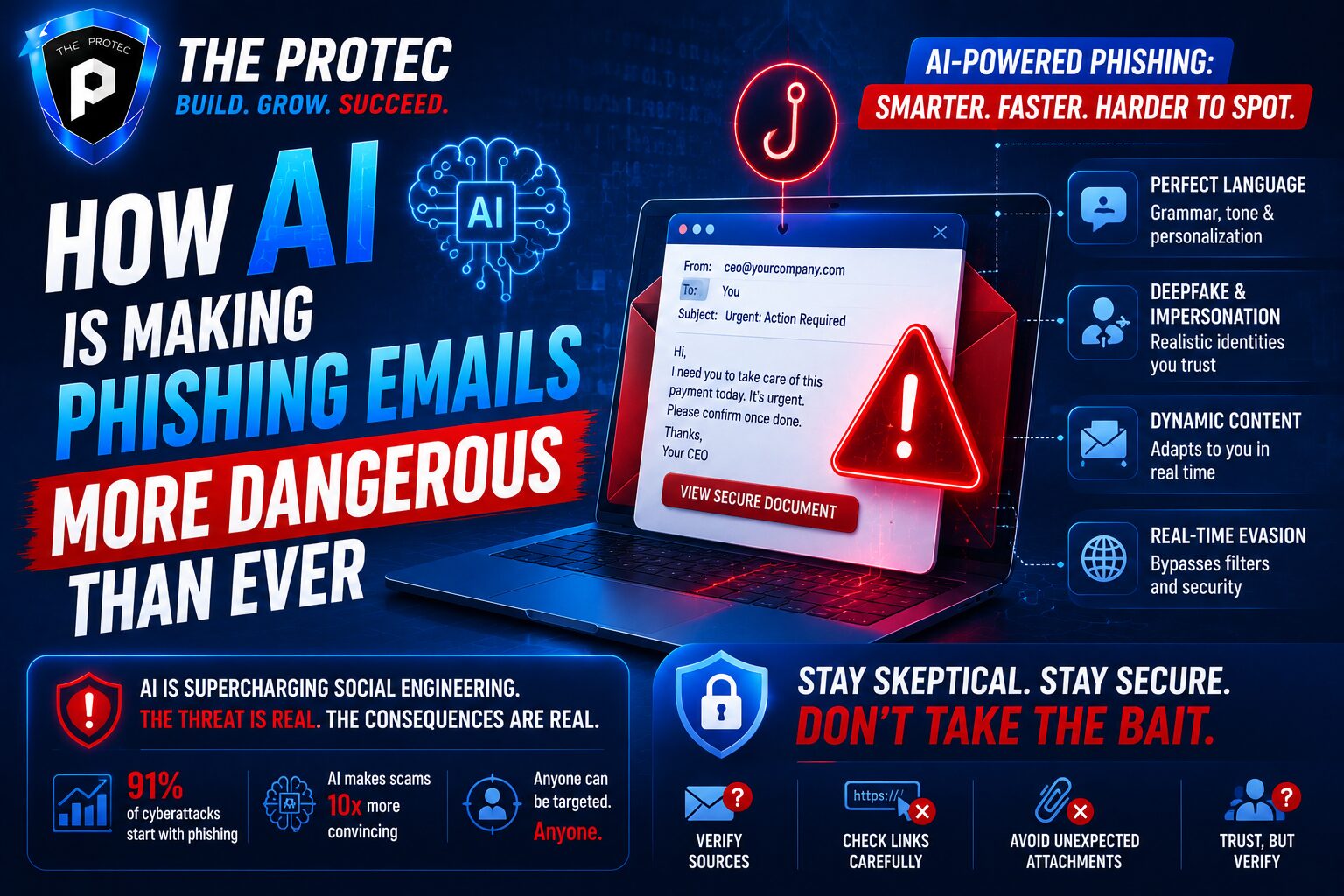
Phishing is no longer limited to sloppy emails with broken grammar and suspicious links. Generative AI has made it possible to produce convincing, personalized messages at scale, and that has transformed social engineering into a much more dangerous class of attack. Attackers can now imitate executive writing styles, mimic vendor communications, and adapt messages in real time based on the target’s role, location, or recent activity.
The real risk is not just email. AI-generated voice cloning and synthetic video are now being used to support business email compromise, invoice fraud, and urgent payment scams. In many cases, a finance employee or help desk agent only needs to hear a familiar voice or see a believable short video to trust a false request.
Businesses often underestimate this because they still treat social engineering as a user-awareness issue. In reality, it is now an identity and process control problem. If a request can move money, reset credentials, or approve access without enough verification, attackers will find it.
Why it is being ignored
- Many awareness programs still focus on generic phishing rather than synthetic impersonation.
- Organizations assume people can spot scams through tone or visual clues, but AI removes many of those tells.
- Voice-based and video-based deception is still rare enough that teams are not prepared for it.
What businesses should do
- Require out-of-band verification for payment, payroll, and credential reset requests.
- Train teams on AI-enabled impersonation, not just email phishing.
- Use strong approval workflows for high-risk actions, especially in finance and IT support.
2. Identity Attacks Are Replacing Traditional Network Intrusions
One of the biggest shifts in enterprise cybersecurity is that attackers are moving from infrastructure compromise to identity compromise. If they can steal tokens, hijack sessions, abuse single sign-on, or exploit weak privilege management, they may not need malware at all. Once they are inside an identity provider or cloud admin account, they can move laterally while appearing legitimate.
This is especially dangerous in hybrid environments where cloud applications, SaaS platforms, and internal systems are connected through dozens of trust relationships. Attackers increasingly target authentication flows, OAuth grants, refresh tokens, and privileged accounts because these offer durable access with less noise than classic intrusion techniques.
Many organizations still focus on endpoint tools and perimeter defenses, even though the perimeter has effectively dissolved. The identity layer is now the new control plane. If it is not hardened, monitored, and segmented, the rest of the stack is exposed.
Why it is being ignored
- Identity sprawl makes it hard to see which accounts actually matter most.
- Security teams often lack visibility into token abuse and session hijacking.
- Many companies still overtrust single sign-on as proof of security.
What businesses should do
- Adopt phishing-resistant MFA where possible.
- Monitor for impossible travel, token anomalies, and unusual session behavior.
- Apply least privilege aggressively and review dormant accounts regularly.
3. Software Supply Chain Risk Is Expanding Beyond Open Source
Software supply chain attacks are no longer just about compromised open-source packages. In 2026, the bigger concern is the entire software dependency ecosystem: build pipelines, CI/CD tooling, code signing, third-party APIs, managed services, and outsourced development environments. A compromise in any one of these layers can cascade into downstream customers and partners.
Businesses are often far less prepared for supply chain risk than they think. Many can list major vendors, but cannot fully inventory the code, libraries, or integrations that their products and internal applications rely on. That blind spot creates hidden exposure, especially when updates are automated and security validation is shallow.
The danger is not theoretical. Attackers know that one trusted update, one compromised developer account, or one poisoned package can open doors across hundreds of organizations. As software becomes more interconnected, the blast radius grows.
Why it is being ignored
- Organizations assume major vendors and packages are already vetted.
- Security reviews often stop at procurement, not continuous monitoring.
- Many teams do not have a complete software bill of materials for critical systems.
What businesses should do
- Maintain a current software bill of materials for critical applications.
- Validate build integrity and code-signing workflows.
- Limit third-party access and continuously assess supplier security posture.
4. Shadow AI Is Creating a New Data Exposure Problem
Employees are using AI tools to write code, summarize documents, analyze data, and speed up daily work. That productivity boost is real, but so is the risk. When workers paste sensitive material into unmanaged AI platforms, they may expose confidential data, regulated information, source code, customer records, or strategic plans outside the company’s security controls.
Shadow AI is similar to shadow IT, but potentially more dangerous because data leakage can happen instantly and invisibly. A single prompt can contain enough context to reveal intellectual property, internal processes, or personally identifiable information. Even if the tool seems harmless, businesses may not know where the data is stored, how long it is retained, or whether it is being used to train models.
This is one of the most underestimated business security risks because it often begins as a productivity habit rather than a malicious act. Employees are not trying to create a breach; they are trying to get work done faster. That makes governance and education essential.
Why it is being ignored
- AI adoption is moving faster than policy creation.
- Many leaders see AI risk as a legal issue rather than a cybersecurity issue.
- Employees may not realize the sensitivity of the data they are sharing.
What businesses should do
- Create clear rules for approved AI tools and prohibited data types.
- Implement data loss prevention controls that cover AI usage.
- Educate employees on prompt hygiene and data classification.
5. Cloud Misconfigurations Are Becoming Harder to Detect
Cloud security has matured, but misconfigurations still remain one of the easiest ways for attackers to gain access. The difference now is that cloud environments are more complex, more distributed, and more automated. That means a small mistake in access policy, storage permissions, or network exposure can create a large hidden vulnerability.
What makes this threat so dangerous in 2026 is that misconfigurations increasingly intersect with identity abuse and automation. A misconfigured storage bucket may not matter until an attacker steals a token. A broad admin role may not be abused until a third-party integration is compromised. Cloud weakness is often not a single event; it is a chain of small oversights.
Security teams also face alert fatigue. Cloud platforms generate massive amounts of telemetry, but many organizations do not have the resources to interpret it effectively. As a result, risky settings can sit in production for months.
Why it is being ignored
- Cloud environments change too quickly for manual reviews alone.
- Teams may assume their provider handles security by default.
- Visibility across multiple cloud accounts and platforms is still inconsistent.
What businesses should do
- Automate posture management and misconfiguration detection.
- Review permissions continuously, not just during audits.
- Segment workloads and restrict public exposure wherever possible.
6. Data Poisoning and Model Manipulation Are Quiet AI Threats
As organizations adopt machine learning and AI-driven decision support, they are exposing themselves to a different kind of attack: poisoning the data that trains or informs the model. If attackers can manipulate training data, feedback loops, retrieval sources, or model inputs, they can subtly distort outcomes without triggering obvious security alarms.
This is especially concerning for businesses using AI in fraud detection, customer service, threat analysis, forecasting, or automated decisions. A poisoned model may not fail loudly. It may simply become less reliable, less accurate, or biased in a way that benefits the attacker. That makes detection difficult and damage gradual.
Model manipulation is a growing concern because many enterprise AI deployments rely on external datasets, APIs, and rapidly changing workflows. The more the business depends on AI for operational decisions, the more important it becomes to verify the integrity of the data feeding those systems.
Why it is being ignored
- Many teams focus on model performance, not adversarial integrity.
- AI risk ownership is often split between IT, data science, and security.
- Subtle manipulation can be hard to prove or even notice.
What businesses should do
- Track data provenance for critical AI systems.
- Limit untrusted inputs into training and retrieval pipelines.
- Test models for adversarial drift and unexpected behavior.
7. Third-Party Access Is the New Soft Underbelly
Every business depends on vendors, contractors, partners, and managed service providers. The problem is that third-party access often becomes permanent, broad, and under-reviewed. If a vendor’s account is compromised or a partner has weak security controls, attackers can use that access to bypass many of the defenses designed to stop direct intrusion.
This risk is especially severe in enterprises with large ecosystems of SaaS tools and outsourced operations. A low-trust vendor might still have access to ticketing systems, file shares, billing platforms, or administrative consoles. In an attack, those paths can be easier to exploit than a hardened internal account.
Businesses often focus on whether a vendor has security documentation, but not whether access is actually minimized, monitored, and time-bound. That gap is exactly where attackers look.
Why it is being ignored
- Third-party relationships accumulate faster than access reviews.
- Vendor risk assessments are often point-in-time, not continuous.
- Teams may not know which external accounts still have active permissions.
What businesses should do
- Inventory every third-party account and integration.
- Enforce least privilege and expiration dates for external access.
- Monitor vendor behavior for unusual activity and privilege escalation.
8. Ransomware Is Becoming More Targeted and Less Predictable
Ransomware is still a major threat, but its shape is changing. Attackers increasingly prefer data theft, extortion, operational disruption, and selective encryption over the old mass-encryption model. In some cases, the goal is not to lock every file. It is to create enough pressure to force payment while staying hidden long enough to maximize leverage.
This evolution matters because businesses that think ransomware is a solved problem often only prepare for the most visible version of it. They build backups, but not resilience against data exposure, identity abuse, or downstream operational extortion. Modern ransomware campaigns often begin with compromised credentials, third-party access, or unpatched edge systems and then move toward the most valuable assets.
The attack may not look dramatic at first. That delay is part of the strategy. By the time the company notices, attackers may already have copied sensitive data, mapped internal systems, and identified the weakest recovery point.
Why it is being ignored
- Organizations assume backups alone are enough.
- Many incident response plans do not cover multi-stage extortion.
- Security teams may not connect credential theft to ransomware risk early enough.
What businesses should do
- Build recovery plans that include data theft and extortion scenarios.
- Test backup restoration under realistic attack conditions.
- Harden edge devices, remote access tools, and administrative credentials.
How to Build a Stronger Defense Before These Threats Spread
The biggest mistake businesses can make right now is assuming the next major breach will look like the last one. The reality is that emerging threats are increasingly layered. A single incident may involve AI-generated impersonation, stolen identity tokens, cloud misconfiguration, and third-party access abuse all at once. That complexity is why traditional security silos are no longer enough.
To reduce exposure, organizations need to focus on a few fundamentals that map directly to today’s threat environment:
- Identity-first security: Protect accounts, tokens, and privileged access as critical assets.
- Continuous visibility: Monitor cloud, SaaS, and vendor activity in real time.
- AI governance: Treat AI tools as data-handling systems with explicit controls.
- Supply chain oversight: Validate software integrity and third-party risk continuously.
- Resilience planning: Prepare for multi-stage attacks, not just perimeter breaches.
Strong enterprise cybersecurity is no longer about building a wall around the business. It is about understanding where trust is being extended, how attackers are abusing it, and which hidden dependencies could become tomorrow’s headline. Companies that act early will have a significant advantage over those waiting for these risks to become obvious.
For further reading on practical guidance, the CISA Secure by Design initiative offers useful principles for reducing systemic exposure, while the NIST Cybersecurity Framework remains a strong foundation for building and measuring security maturity.
FAQ
What are the biggest cybersecurity threats businesses are ignoring?
The most overlooked threats include AI-generated social engineering, identity token theft, software supply chain attacks, shadow AI data exposure, cloud misconfigurations, model poisoning, third-party access abuse, and modern ransomware extortion.
Why are these threats so dangerous for enterprises?
They are dangerous because they often bypass traditional security tools, use trusted systems and accounts, and spread across cloud, SaaS, and vendor ecosystems before detection.
How can businesses prepare for emerging cybersecurity threats?
Businesses should adopt identity-first security, strengthen vendor oversight, monitor cloud and AI usage, reduce privileges, and build incident response plans that account for multi-stage attacks.
Is AI making cybersecurity worse?
AI is making attacks faster, more convincing, and easier to scale. At the same time, it can also improve defense when used for detection, automation, and threat analysis. The key is governance and control.