









Introduction
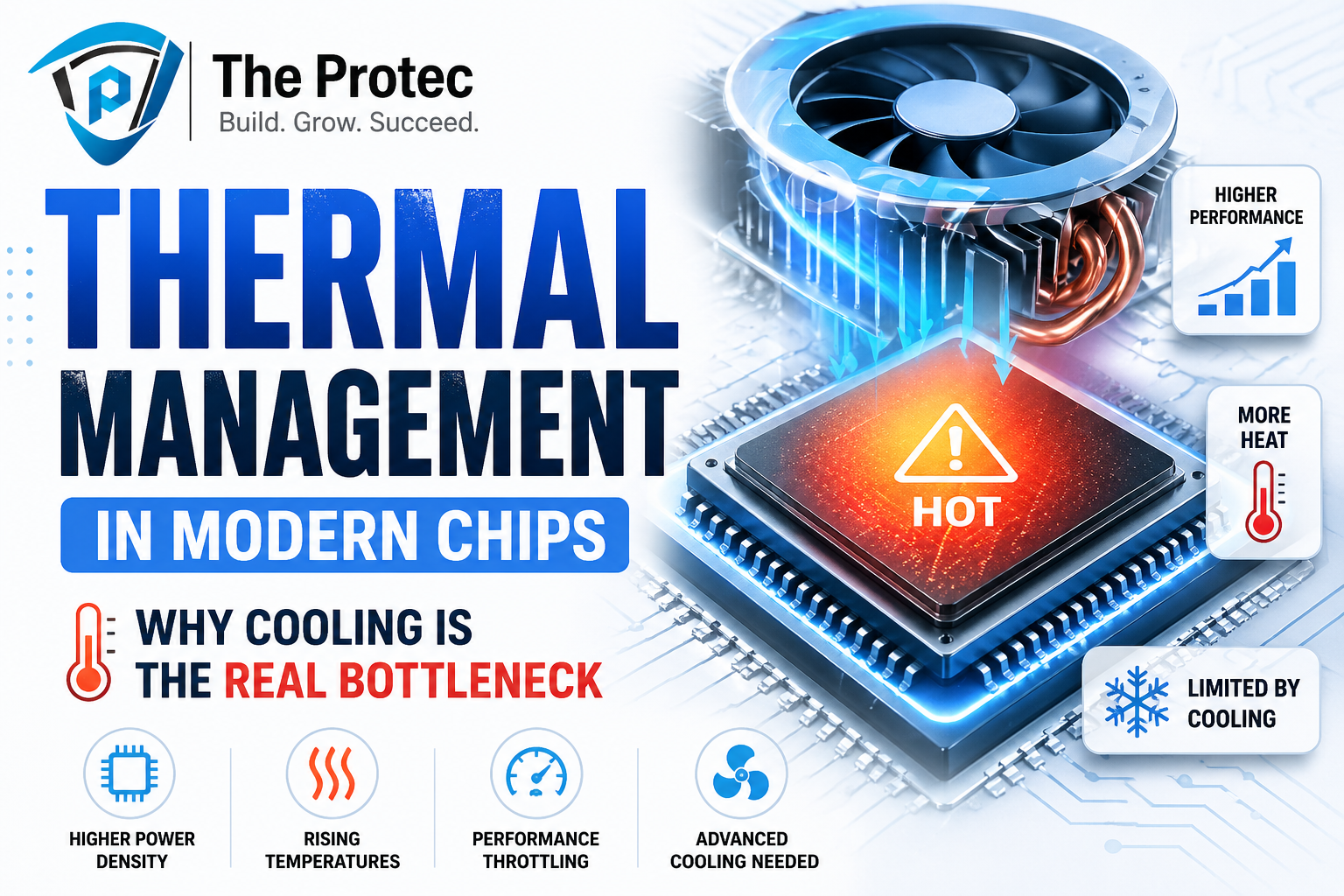
In the relentless pursuit of faster, smaller, and more efficient processors, thermal management has emerged as the critical limiting factor in chip performance. While advances in semiconductor fabrication and architectural design continue to push the boundaries of what chips can achieve, the heat generated during operation poses a formidable obstacle. When processors get too hot, they resort to thermal throttling, scaling back their performance to avoid damage. This natural defense mechanism, however, caps the overall computational power and efficiency of modern chips.
As density increases and transistor counts soar, traditional methods of heat dissipation are struggling to keep pace. The industry has begun exploring innovative cooling techniques such as vapor chambers and advanced materials, aiming to tackle processor heat more effectively. This article delves into why cooling remains the true bottleneck in contemporary chip design and how cutting-edge solutions are redefining thermal management.
The Thermal Challenge in Modern Chips
Processor heat is an inherent byproduct of the electrical activity powering modern chips. Every transistor switch generates a small amount of heat, and with billions of transistors integrated on a chip, the cumulative thermal load becomes significant. As clock speeds climb and power densities rise, managing this heat becomes essential to maintain reliability and performance.
Why Heat Limits Performance
Excessive heat disrupts the delicate balance in semiconductor operation. High temperatures increase resistance and leak currents, reducing transistor switching speeds. To prevent permanent damage, chips employ thermal throttling, which dynamically reduces clock frequencies and voltages when threshold temperatures are exceeded. While effective at preventing hardware failure, this throttling means chips must run below their peak capability under heavy loads, curbing overall performance.
Thermal Throttling: The Hidden Bottleneck
Thermal throttling acts like a governor on processor speed, deliberately compromising performance to keep temperatures within safe limits. This phenomenon is especially pronounced in compact form factors such as laptops, smartphones, and edge devices where cooling solutions have limited space and airflow. Moreover, the growing adoption of high-performance tasks like AI inference and gaming exacerbates thermal stress, leading to frequent throttling events.
The result is a paradox where the hardware is architected for excellence but is limited by the inability to shed heat efficiently. Even chips fabricated on cutting-edge nodes encounter diminishing returns because thermal management becomes the overriding constraint.
Traditional Cooling Methods and Their Limitations
Historically, chip cooling has relied on a combination of passive and active methods:
- Heat sinks: Metal fins that increase surface area for heat dissipation.
- Fans: Active airflow systems to move heat away from the chip.
- Thermal interface materials (TIMs): Compounds that improve thermal contact between chip and cooling assembly.
- Liquid cooling: Circulating coolants to transport heat away more effectively.
While these techniques remain staples in desktop and server environments, their efficiency is reaching critical limits. Heat sinks and fans are bulky and often noisy, unsuitable for thin, portable devices. Liquid cooling, though effective, adds cost, complexity, and risk of leaks. Moreover, as chips continue to scale, these methods struggle to maintain steady-state temperatures under high power densities.
Emerging Solutions: Vapor Chambers and Advanced Thermal Management
To break the thermal bottleneck, engineers are adopting innovative technologies that improve heat spread and dissipation fundamentally. Among the most promising are vapor chambers.
What Are Vapor Chambers?
A vapor chamber is a flat heat spreader consisting of a sealed metal enclosure filled with a small quantity of liquid. When the chip generates heat, the liquid vaporizes, absorbing latent heat and moving as vapor through the chamber. At cooler regions, vapor condenses back to liquid, releasing heat and flowing back via capillary action to repeat the cycle. This phase change mechanism provides extremely efficient, uniform heat distribution.
Advantages of Vapor Chambers
- Superior Heat Spreading: Vapor chambers distribute heat more evenly than traditional solid heat spreaders, reducing hotspots.
- Thin and Lightweight: Their slim profile suits modern slim devices without compromising performance.
- Passive Operation: No moving parts make them silent and highly reliable.
- Compatibility: Can be integrated with existing cooling solutions like heat pipes and fans for hybrid cooling.
Real-World Applications
Leading manufacturers are incorporating vapor chambers into smartphones, ultrabooks, and gaming consoles to mitigate processor heat. Recent reports indicate that these chambers can reduce peak temperatures by up to 10-15°C compared to traditional methods, significantly delaying thermal throttling onset and sustaining higher performance.
Other Innovative Thermal Management Approaches
Besides vapor chambers, research is actively exploring complementary technologies:
- Graphene and Diamond-Based TIMs: These materials boast extremely high thermal conductivity, promising more efficient heat transfer between the chip and cooler.
- Microfluidic Cooling: Embedded channels circulating coolant fluids through the chip package itself to remove heat rapidly.
- 3D Packaging with Thermal Vias: Integrating vertical heat-conducting structures in stacked chip architectures to channel heat away effectively.
- Active Liquid Metal Cooling: Utilizing liquids with extraordinary thermal conductivity to physically contact hotspots and carry heat away.
While some of these approaches remain in experimental or early commercial phases, their combination with vapor chambers offers a multi-pronged strategy to confront processor heat challenges.
Future Outlook: Towards Thermal-Aware Chip Design
Looking forward, the industry is increasingly adopting a holistic view of performance that directly incorporates thermal considerations. Architects are collaborating closely with thermal engineers to develop chips that balance computational power with thermal budgets. This involves:
- Designing processors with dynamic power management informed by real-time temperature sensors.
- Incorporating thermal simulation early in silicon and package development.
- Exploring new materials and form factors optimized for efficient cooling.
Furthermore, artificial intelligence and machine learning are being employed to predict workloads and adapt cooling strategies dynamically, minimizing thermal stress while maximizing usable performance.
FAQs
What causes thermal throttling in processors?
Thermal throttling occurs when a processor reaches temperature levels that could damage its components. To prevent this, the chip automatically lowers its operating frequency and voltage, reducing heat output at the cost of performance.
How do vapor chambers improve chip cooling over traditional methods?
Vapor chambers use phase change heat transfer to rapidly spread and dissipate heat more uniformly than metal heat spreaders. This reduces hotspots and lowers peak temperatures, enabling sustained performance without throttling.
Are vapor chambers suitable for all types of devices?
Vapor chambers are particularly beneficial in devices where space is limited, such as smartphones and thin laptops, due to their thin, lightweight design. However, for larger desktop or server processors, they are often combined with other cooling methods for maximum effect.
Can improving chip cooling significantly increase processor speeds?
Yes. Better cooling lowers operating temperatures, delaying or preventing thermal throttling. This allows processors to maintain higher clock speeds longer, effectively improving overall system performance and responsiveness.
Conclusion
Thermal management stands as the linchpin in unlocking the full potential of modern processors. As processor heat generation escalates with evolving architectures and higher integration, traditional cooling methods alone cannot keep pace. Chip cooling innovation, especially through technologies like vapor chambers, is critical in mitigating thermal throttling and sustaining peak performance.
By embracing advanced thermal solutions and integrating thermal-awareness into chip design, the tech industry can overcome the invisible but powerful bottleneck imposed by heat. For developers and consumers alike, this translates into faster, more reliable, and longer-lasting computing devices that meet the ever-growing demands of contemporary applications.
For more detailed insights on thermal solutions, the Thermal Management section at the Thermaltake website offers a comprehensive overview.