






Introduction
The backend landscape is evolving rapidly, driven by demands for scalability, cost efficiency, and seamless cloud integration. Among the most transformative changes is the rise of serverless databases. As organizations embrace cloud-native architectures, a natural question emerges: Are serverless databases the future of backend development? This article delves deep into the comparison between serverless and traditional database architectures, exploring how this shift aligns with cloud database trends and what it means for developers, businesses, and the broader technology ecosystem.
Understanding Serverless Databases
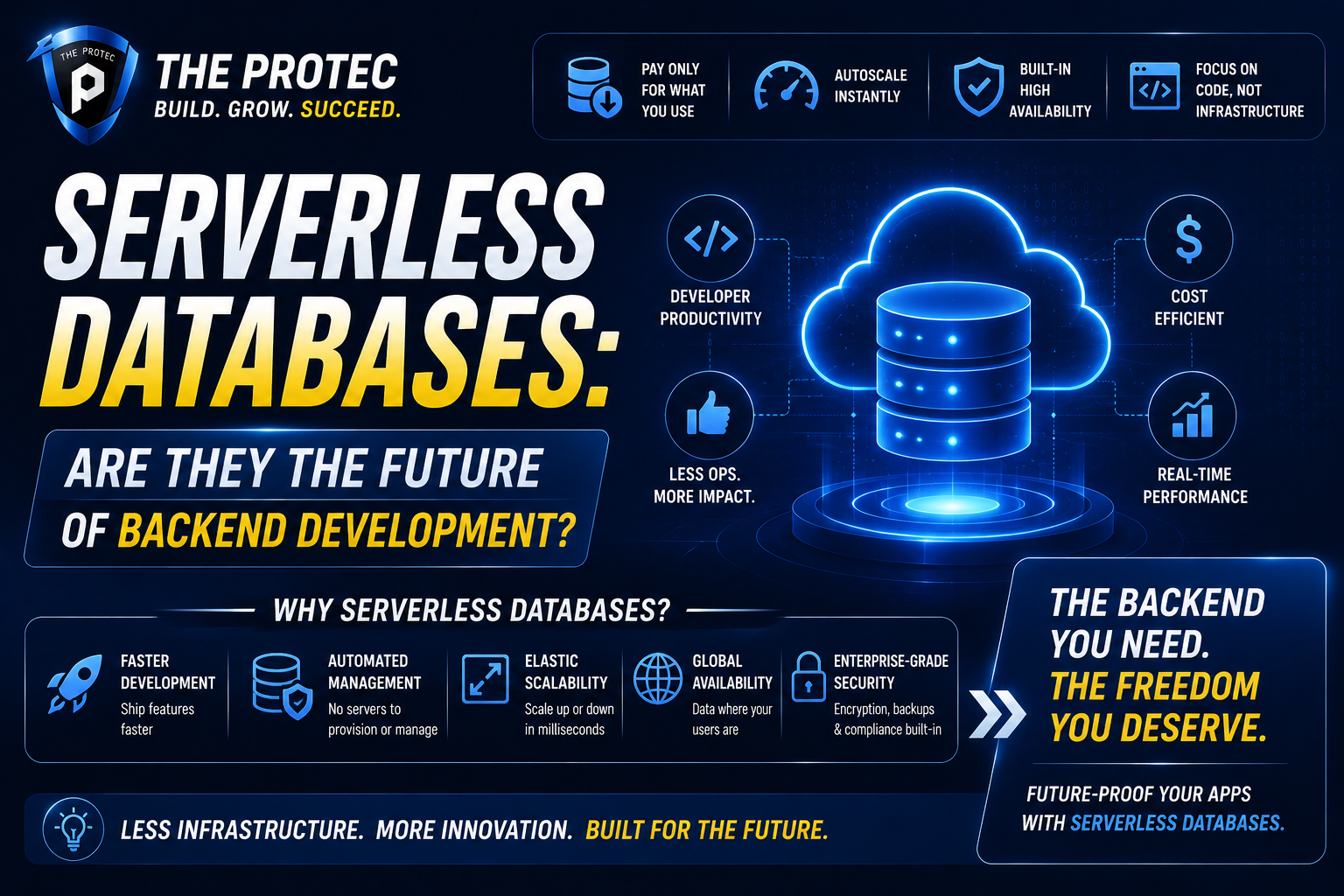
Serverless databases are database services that abstract away the infrastructure management layer from developers. Unlike traditional databases, where developers often need to provision, configure, and maintain server hardware or virtual machines, serverless databases let developers focus purely on data and application logic. The actual server management, scaling, and maintenance are handled automatically by cloud providers.
Key features that characterize serverless databases include:
- Auto-scaling: Instantly adapts to workload demands without manual intervention.
- Pay-per-use pricing: Charges based on actual consumption, reducing operational costs.
- Managed infrastructure: Eliminates the need for provisioning and patching servers.
- High availability and durability: Built-in redundancy and backups maintained by cloud providers.
Popular examples include Amazon DynamoDB, Google Firebase Firestore, and Azure Cosmos DB.
Traditional Backend Database Architectures: An Overview
Traditional databases have powered applications for decades, typically falling into relational (SQL) or non-relational (NoSQL) categories. Managed either on-premises or as infrastructure-as-a-service (IaaS), these systems require significant maintenance efforts:
- Provisioning: Selecting appropriate hardware or virtual machine sizes.
- Scaling: Often manual or scripted; horizontal scaling can be complex.
- Maintenance: Applying patches, backups, and ensuring high availability.
- Performance tuning: Requires DBA expertise for indexing and query optimization.
While highly customizable and powerful, traditional backend databases can slow down development velocity and increase operational overhead.
Comparing Serverless and Traditional Databases
To evaluate whether serverless databases are the future, let’s examine the core dimensions where they differ from traditional backend databases.
1. Scalability and Performance
Serverless databases shine in handling variable workloads effortlessly. Built on cloud-native infrastructures, they can scale instantly and seamlessly. Developers do not need to worry about traffic spikes or capacity planning. For example, Amazon DynamoDB’s on-demand mode automatically allocates resources as load increases, ensuring consistently low latencies.
In contrast, traditional databases often require pre-provisioning and manual tuning to scale, especially when horizontal scaling is needed. Complex distributed architectures and sharding are typically implemented by experienced database administrators, involving significant time and risk.
2. Cost Efficiency
One of the most compelling advantages of serverless databases is their pay-as-you-go model. You pay precisely for what you use, whether it’s storage, reads, writes, or data transfer. This removes the need to overprovision resources and reduces idle costs a critical benefit for startups, seasonal applications, or unpredictable workloads.
Traditional databases typically require upfront investment in hardware or reserved cloud instances. Even cloud-hosted traditional databases incur costs for minimum resource allocations, leading to inefficiencies when usage is low.
3. Operational Complexity
Serverless architectures abstract away a large portion of operational burden. Cloud providers handle backup, replication, patching, and failover automatically. This enables backend developers to focus on business logic, accelerating development cycles.
Traditional databases demand skilled DBAs and engineers to maintain uptime, security, and performance. The complexity increases with distributed architectures and disaster recovery requirements.
4. Flexibility and Control
The primary advantage of traditional backend databases lies in flexibility and fine-grained control. Developers can customize configurations, performance tuning, and security models to meet highly specialized requirements.
Serverless databases, while increasingly feature-rich, may not yet expose all layers of customization. Certain legacy applications or workloads with strict compliance needs might favor traditional control.
5. Data Models and Use Cases
Serverless databases are predominantly NoSQL or multi-model systems optimized for real-time applications, mobile backends, and IoT. Their suitability for relational workloads is growing with innovations like serverless SQL databases (e.g., Aurora Serverless).
Traditional databases maintain strong advantages in complex transactional scenarios and data warehousing. They support mature SQL capabilities, ACID compliance, and intricate join operations.
Emerging Cloud Database Trends Supporting Serverless Adoption
The momentum for serverless databases is propelled by broader trends shaping backend development:
1. Increased Demand for Cloud-Native Architectures
Enterprises are shifting to microservices and event-driven designs, which leverage scalable, loosely coupled components. Serverless databases integrate well in this environment by offering on-demand responsiveness and simplified management.
2. Edge Computing and Global Distribution
Modern applications require low-latency responses across geographies. Serverless databases, such as Azure Cosmos DB, provide multi-region replication and strong consistency models, underpinning globally distributed backends.
3. AI and Real-Time Analytics Integration
Data-intensive AI applications demand real-time ingestion and processing. Serverless databases facilitate this by scaling elastically and supporting event streaming integrations, crucial for cutting-edge analytics.
Challenges and Considerations When Adopting Serverless Databases
While serverless databases offer transformative benefits, some challenges remain for backend developers evaluating adoption:
- Vendor lock-in: Reliance on specific cloud providers’ serverless offerings can complicate migrations.
- Cold start latency: Although improving, initial connection delays during scaling events may impact performance-sensitive applications.
- Complex transactional support: Some serverless models have limited ACID compliance or weaker consistency guarantees.
- Debugging and monitoring: Less transparency into underlying infrastructure can make troubleshooting harder.
Evaluating these risks against operational benefits is critical in deciding the backend database strategy.
The Future Outlook: Are Serverless Databases the Next Standard?
The trajectory of backend database evolution suggests that serverless databases will become a mainstream choice for a growing segment of applications. Their alignment with cloud database trends such as automation, elastic scaling, and managed services addresses many pain points in traditional database management.
Hybrid approaches are also emerging. Many organizations are adopting serverless databases for rapid development and non-critical workloads, while maintaining traditional databases for complex transactions or legacy support. Innovations like serverless SQL engines and multi-model databases will narrow existing capability gaps, fostering broader adoption.
Ultimately, the future backend is likely heterogeneous, combining the strengths of serverless databases with traditional systems based on workload demands. For developers and businesses, embracing serverless is essential to staying competitive in a fast-evolving cloud landscape.
FAQ
1. What exactly is a serverless database?
A serverless database is a cloud-based database service where infrastructure management such as provisioning, scaling, and maintenance is abstracted away from developers. It automatically adjusts capacity based on demand and uses pay-per-use pricing.
2. How do serverless databases differ from traditional databases?
Serverless databases eliminate manual resource management, offer automatic scaling, and charge based on actual usage, while traditional databases typically require manual provisioning, scaling, and fixed cost infrastructure.
3. What types of applications benefit most from serverless databases?
Applications with variable or unpredictable workloads, real-time data needs, mobile backends, IoT, and event-driven architectures benefit greatly. Serverless databases also accelerate development by reducing operational overhead.
Conclusion
Serverless databases mark a pivotal shift in backend development, reflecting broader cloud database trends emphasizing automation, scalability, and cost efficiency. While traditional databases remain important for specific use cases, the rapid advances in serverless offerings signal a promising future. For organizations aiming to modernize their backends, understanding and integrating serverless databases is critical to harness the full potential of cloud-native innovation.
For further exploration of serverless databases and cloud database trends, visit Amazon DynamoDB and Azure Cosmos DB.