






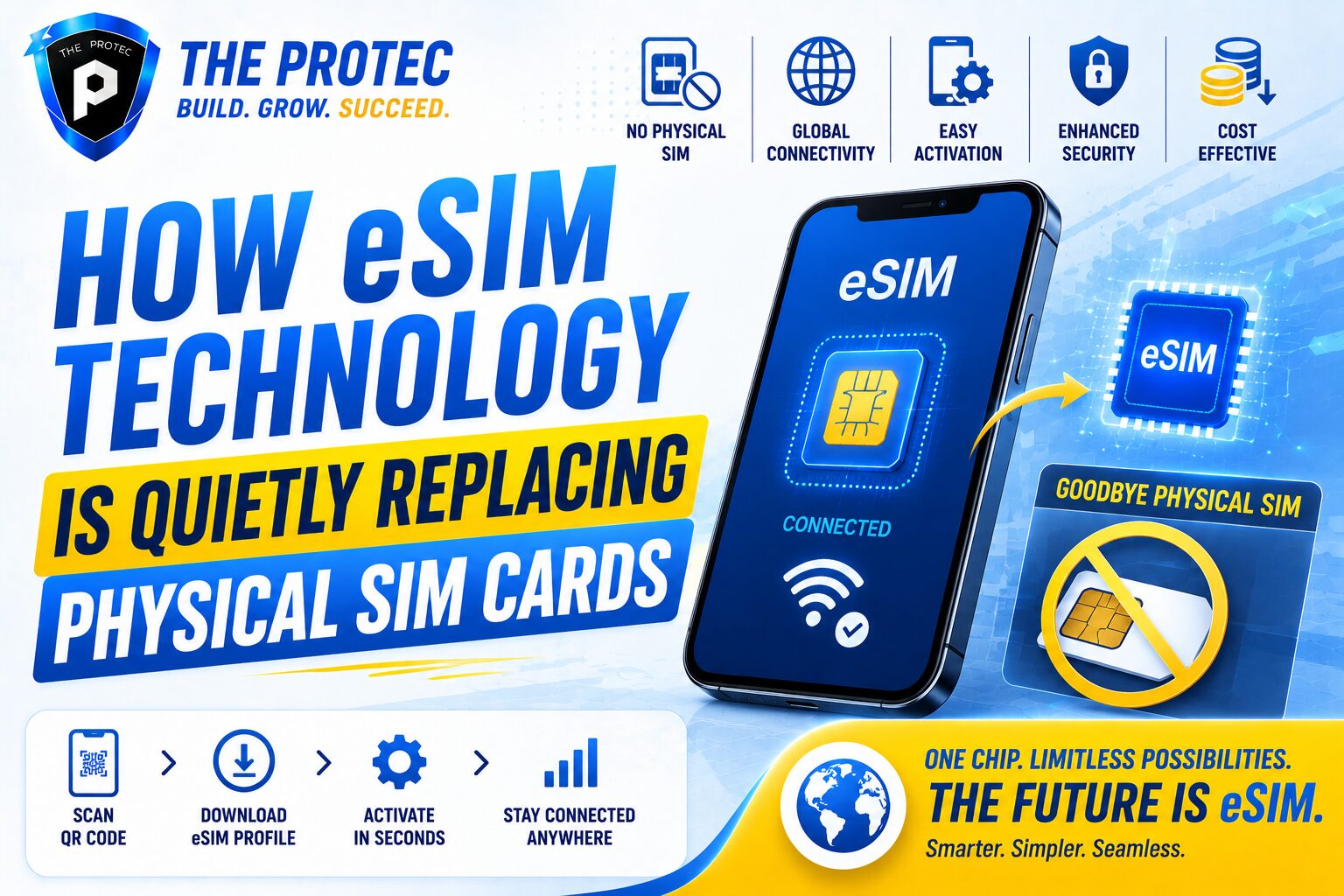
How eSIM Technology Is Quietly Replacing Physical SIM Cards Worldwide
For decades, the SIM card has been one of the most familiar pieces of mobile technology: a tiny plastic chip that connected phones to carriers and identities to networks. But that familiar card is slowly becoming less essential. Across premium phones, budget devices, wearables, tablets, and even enterprise fleets, eSIM technology is reshaping how people activate service, switch carriers, and travel with their devices.
This shift is happening quietly, but it is accelerating fast. The rise of eSIM smartphones, broader carrier support, and more flexible digital onboarding are pushing the mobile industry toward a future where physical SIM trays are no longer standard. What began as a convenience feature is now becoming a strategic shift in the future of SIM cards.
The change is not just about removing a slot from a phone. It affects security, device design, international roaming, logistics, sustainability, and the way consumers think about mobile plans. As more manufacturers ship eSIM-only or eSIM-first devices and more carriers streamline digital activation, the old plastic SIM is steadily losing relevance.
What eSIM Technology Actually Is
eSIM stands for embedded SIM. Unlike a removable SIM card, an eSIM is built into the device hardware and can be programmed digitally with a carrier profile. Instead of inserting a physical chip, users download a mobile plan through a QR code, carrier app, or activation process built into the phone.
At its core, eSIM technology replaces the physical swap with software-based provisioning. The device still connects to a mobile network, but the credentials are stored securely inside the phone’s embedded chip rather than on a removable card. This makes setup faster and gives users more flexibility to manage multiple plans, especially when traveling or juggling work and personal numbers.
According to the GSMA, the mobile industry group that helps define SIM standards, eSIM is part of a broader move toward more flexible and secure device provisioning. You can read more about the standard at gsma.com/esim.
Why eSIM Smartphones Are Growing So Quickly
The adoption of eSIM smartphones is rising for a simple reason: the user experience is better. Physical SIM cards require handling, shipping, insertion, and occasional troubleshooting. eSIM removes many of those friction points.
Consumers now expect devices to activate quickly, often without visiting a store or waiting for a card in the mail. That expectation has been reinforced by the growth of digital-first services across banking, travel, and payments. Mobile carriers are responding by simplifying onboarding with app-based activation and remote provisioning.
Several trends are driving this momentum:
- Device manufacturers want more internal space for batteries, cameras, and other components.
- Consumers want instant activation without physical delivery delays.
- Travelers want easier access to local data plans and short-term connectivity.
- Carriers want lower logistics costs and fewer support issues related to lost or damaged SIM cards.
- Businesses want scalable device management across large fleets and remote teams.
In many regions, eSIM is no longer a niche feature. It is becoming a mainstream expectation, especially in flagship phones and increasingly in mid-range models. The result is a mobile ecosystem where the physical SIM is no longer the default starting point.
The Quiet Shift Away From Physical SIM Cards
The replacement of physical SIM cards is not happening through a single dramatic change. It is unfolding gradually through device design, carrier support, and consumer behavior. Many users still use physical SIMs today, but the pressure is clearly moving toward embedded connectivity.
One of the clearest signs is the growing number of eSIM smartphones sold by major manufacturers. Some devices now ship with minimal or no reliance on a SIM tray in certain markets. Others support dual SIM configurations that combine one physical SIM and one eSIM, giving users a transition path without forcing an immediate change.
At the same time, more carriers now support digital activation, making it easier for customers to switch plans or add a second line without visiting a retail location. This has been especially important in markets where users frequently travel, use dual numbers, or manage multiple devices.
The shift is also visible in related categories. Smartwatches, tablets, laptops, and connected accessories increasingly rely on embedded connectivity. As consumers grow comfortable with eSIM in those devices, they become more willing to use it as their primary mobile solution too.
Security Benefits That Make eSIM Harder to Ignore
Security is one of the strongest arguments for eSIM technology. A removable SIM card can be lost, stolen, cloned, or physically swapped. While mobile carriers have safeguards in place, the physical nature of the card introduces risk. eSIM reduces many of those vulnerabilities by moving the credential into the device itself.
Here are the key security benefits:
- Harder to remove from a stolen device: A thief cannot simply pull out the SIM to avoid tracking or take over the line as easily.
- Reduced SIM swap exposure: While social engineering remains a risk for carriers, eSIM can make unauthorized physical replacement less practical.
- Better remote management: Users and IT teams can deactivate or replace profiles without shipping physical cards.
- Less tampering during transit: Devices can be shipped and activated digitally, reducing exposure in logistics.
- More controlled provisioning: Carrier profiles are typically managed through secure digital processes rather than physical handling.
It is important to note that eSIM is not a magic solution to all mobile security issues. Account takeover, phishing, and carrier-side fraud still exist. But by removing the physical card, eSIM narrows one important attack surface and makes device management more resilient.
Why Travelers and Frequent Flyers Are Adopting eSIM First
One of the clearest consumer use cases for eSIM technology is international travel. Instead of buying a physical SIM at the airport or hunting for a local store, travelers can purchase a data plan online, scan a QR code, and connect within minutes. This convenience has turned eSIM into a preferred option for many frequent flyers, digital nomads, and business travelers.
The travel use case is especially powerful because it solves a real pain point: roaming costs. Many users do not want to pay premium roaming fees from their home carrier, but they also do not want the hassle of swapping cards in every country. eSIM makes it easier to keep a home number active while adding a separate local or regional data line.
For modern eSIM smartphones, this often means dual connectivity with far less friction. A user can keep one line for calls and texts while using another for affordable data abroad. This flexibility has helped eSIM move from a technical feature to a practical everyday tool.
As more travel platforms, fintech apps, and carriers integrate eSIM purchase flows directly into their services, adoption is likely to become even more seamless. The convenience factor is one of the biggest reasons the future of SIM cards looks increasingly digital.
How eSIM Is Changing Carrier Competition
eSIM technology is not only changing the user experience; it is also changing the economics of mobile service. Physical SIM cards created an obvious point of friction that helped carriers control distribution. Customers often had to visit stores, wait for shipping, or rely on a retail representative to activate a line.
With eSIM, switching carriers can be much easier. A user can often compare plans, sign up online, and activate service in a matter of minutes. That makes it simpler for customers to shop around, which puts pressure on carriers to compete on price, coverage, and support quality.
This increased competition has several effects:
- Lower switching friction: Consumers can test new plans faster.
- More digital-first onboarding: Carriers must improve app experiences and online support.
- Faster product experimentation: Short-term, data-only, and travel plans can be launched more easily.
- Greater customer expectations: Users now expect self-service activation and instant plan changes.
For carriers, eSIM is both an opportunity and a challenge. It can reduce distribution costs and support a more modern customer journey, but it also weakens the old lock-in model that came with physical distribution. The winners will be the providers that make digital activation simple and reliable.
Why Device Makers Prefer Embedded Connectivity
From a hardware perspective, removing the SIM tray creates design freedom. Even a small component matters in modern smartphones, where engineers constantly optimize for battery size, water resistance, antenna layout, and internal space. eSIM technology helps device makers reduce complexity and build more streamlined products.
An eSIM-first design can support better sealing against dust and moisture, fewer mechanical failure points, and more efficient use of internal space. That may not sound dramatic, but in consumer electronics, small engineering gains often shape the final product.
It also simplifies manufacturing and global distribution. Instead of bundling physical SIM variants or relying on regional card logistics, manufacturers can ship a device that is ready for digital activation. That flexibility is especially valuable for companies selling devices across multiple markets.
The move does not mean every phone will immediately lose its SIM tray. In many regions, physical SIM support remains important during the transition. But the direction is clear: more devices are being designed around embedded connectivity rather than removable cards.
The Future of SIM Cards Looks More Digital Than Physical
The future of SIM cards is not likely to be defined by a complete overnight disappearance of plastic cards. Instead, it will be shaped by a long transition where eSIM becomes the standard and physical SIM support gradually becomes optional, then rare.
Several developments point in that direction:
- More eSIM-only devices: Some smartphone models are already moving toward eSIM-only designs in selected markets.
- Wider carrier adoption: More operators are expanding digital onboarding and remote provisioning.
- Multi-profile flexibility: Users will increasingly manage several plans on one device without swapping cards.
- Enterprise adoption: Businesses will use eSIM for fleet deployment, remote workers, and international device management.
- Cross-device connectivity: Phones, watches, tablets, laptops, and IoT devices will share the same embedded model.
As this shift continues, consumers will likely think less about the SIM itself and more about connectivity as a service. That is a major conceptual change. The identity of the subscriber will live in software-managed profiles rather than in a piece of plastic handed over at a store counter.
What This Means for Businesses and Mobile Teams
For businesses, eSIM technology offers a major operational advantage. Mobile device deployment has traditionally involved shipping SIM cards, managing inventory, replacing lost cards, and coordinating activation across regions. That process can become expensive and slow, especially for distributed teams.
With eSIM, IT teams can provision and re-provision devices remotely. This is useful for field service teams, logistics operations, hybrid workers, and international assignments. It also helps reduce downtime when devices are replaced or reassigned.
Business benefits include:
- Faster device rollout
- Less reliance on physical inventory
- Easier roaming and travel management
- Better continuity when devices are lost or replaced
- More consistent policy control across fleets
As enterprise mobility becomes more global and more distributed, eSIM may become the preferred standard for secure, scalable connectivity management.
What Consumers Should Expect Next
Consumers should expect eSIM to keep expanding across more phone categories and more regions. In the near term, many users will continue to see hybrid devices that support both physical SIM and eSIM. That dual approach helps ease the transition while carriers and users become more comfortable with digital activation.
Over time, eSIM may become the default in premium smartphones first, then spread further into the mainstream. As that happens, the setup process for mobile service will look more like signing into a digital account than handling a piece of hardware.
Users can also expect better integration with travel apps, carrier apps, and device setup flows. The process of adding a new line will likely become faster, more visual, and more automated. In other words, mobile connectivity will feel less like installation and more like onboarding.
FAQ: eSIM Technology and the Future of SIM Cards
Is eSIM technology more secure than a physical SIM card?
In many cases, yes. eSIM reduces risks tied to physical card theft, loss, and tampering. It also makes unauthorized removal harder. However, overall security still depends on carrier safeguards, account protection, and user behavior.
Can I still use a physical SIM if my phone supports eSIM?
Many phones support both formats, especially during the transition period. These dual-SIM devices let users combine a physical SIM with an eSIM or use two eSIM profiles, depending on the model and carrier support.
Why are carriers promoting eSIM smartphones so aggressively?
Carriers benefit from lower logistics costs, faster activation, and more digital customer interactions. eSIM also enables easier plan changes and helps carriers compete with online-first mobile services.
Will physical SIM cards disappear completely?
Probably not immediately, but their role will keep shrinking. The future of SIM cards is clearly digital, and physical SIMs are likely to become a fallback option rather than the primary standard in many markets.
Is eSIM good for international travel?
Yes. eSIM is one of the most convenient options for travelers because it allows quick activation of local or regional data plans without buying and swapping a physical card.
Conclusion
eSIM technology is not making headlines in the same way as foldable phones or AI features, but its impact may be even more significant. It is quietly changing how mobile service is activated, managed, secured, and scaled. The rise of eSIM smartphones, the growing comfort with digital onboarding, and the practical advantages for travelers and businesses all point in the same direction: the physical SIM card is becoming less central to mobile connectivity.
The transition will not happen everywhere at the same pace, and physical SIM support will remain important for many users in the short term. But the broader trend is unmistakable. As carriers, manufacturers, and consumers continue to embrace embedded connectivity, the future of SIM cards will look increasingly software-driven, flexible, and invisible. In many ways, that is exactly what modern mobile technology should be: simpler, faster, and built for a world that expects instant connection.