






Why the World Is Looking Beyond Lithium-Ion
Lithium-ion batteries transformed modern life. They made smartphones practical, laptops portable, and electric vehicles commercially viable. But as demand rises across consumer electronics, grid storage, and transportation, the limits of today’s dominant chemistry are becoming harder to ignore. The next wave of battery innovation is focused on solving the problems lithium-ion still struggles with: cost, energy density, charging speed, raw material supply, safety, and long-term sustainability.
That search has turned “future battery technology” into one of the most important engineering challenges of the decade. Researchers, automakers, and energy companies are not trying to replace lithium-ion everywhere overnight. Instead, they are building a portfolio of alternatives that can outperform it in specific use cases. Some are designed for faster charging and higher range in EVs. Others prioritize low cost, safer operation, or more sustainable materials for large-scale storage.
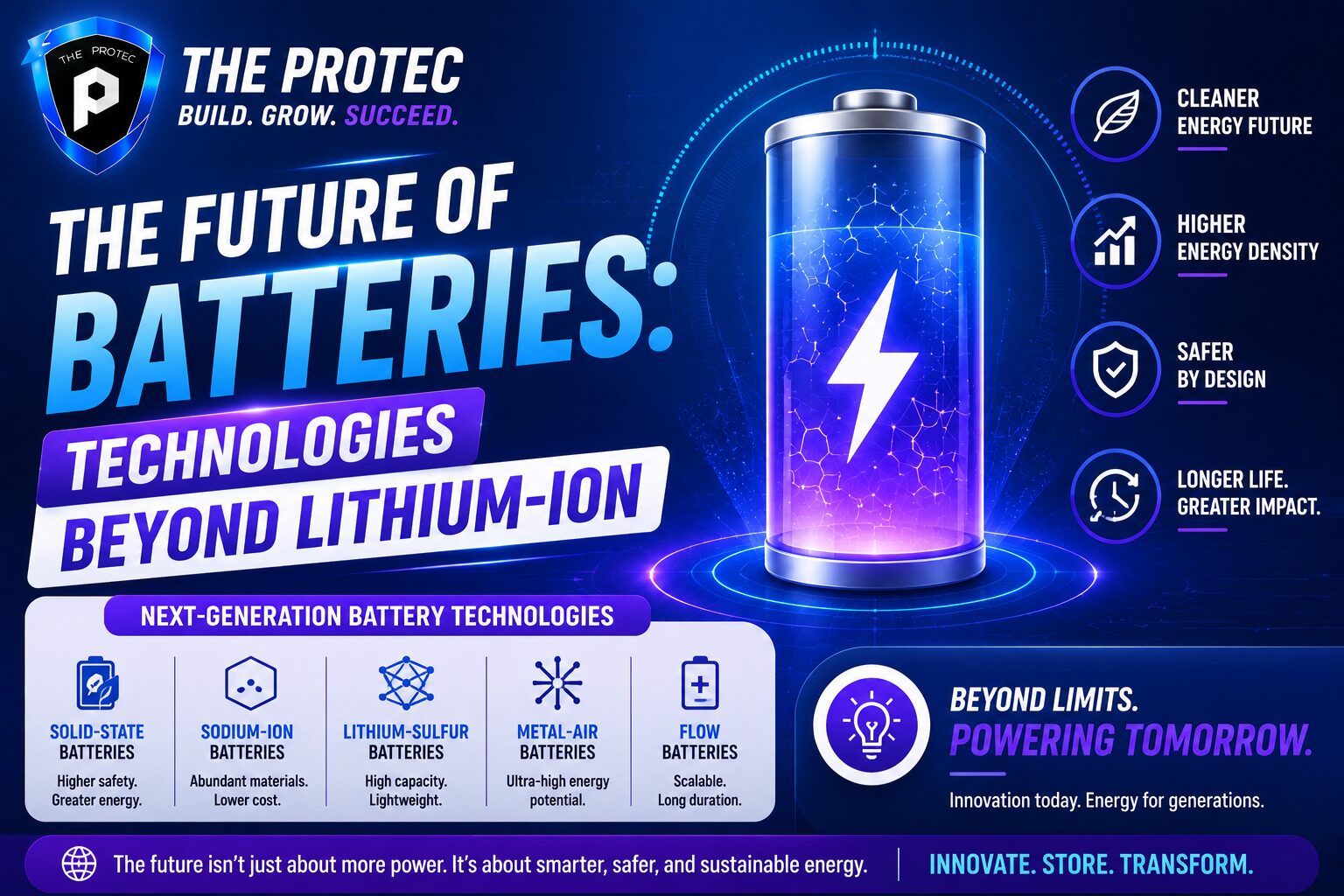
Among the most talked-about breakthroughs are solid state batteries, sodium-ion batteries, lithium-sulfur cells, silicon-anode designs, metal-air systems, and even emerging chemistries like potassium-ion and flow batteries. Each approach has its own strengths, trade-offs, and commercialization timeline. The result is not one single replacement, but a competitive landscape that could redefine how energy is stored and delivered.
For a useful overview of battery chemistry fundamentals, the U.S. Department of Energy’s battery research resources are a reliable starting point. For broader materials and commercialization updates, the IEA’s battery analysis is also worth reading.
What Makes a Battery the Next Big Thing?
To replace or augment lithium-ion, a new battery chemistry has to do more than sound futuristic. It must meet real-world requirements in manufacturing, cost, durability, and safety. In consumer electronics, that means compact size, fast charging, and predictable performance over hundreds of cycles. In electric vehicles, it means enough energy density for long range, stable behavior under heat and cold, and a supply chain that can scale without relying on scarce or geopolitically risky materials.
In practice, the next generation of batteries is being judged on six factors:
- Energy density: How much energy the battery stores per unit of weight or volume.
- Charging speed: How quickly it can accept power without damage or overheating.
- Safety: Resistance to thermal runaway, fire, leakage, and dendrite growth.
- Cycle life: How many charge-discharge cycles it can withstand before degrading.
- Cost: Materials, manufacturing complexity, and scalability.
- Sustainability: Environmental impact, recycling potential, and dependence on critical minerals.
Any chemistry that can outperform lithium-ion on at least a few of these metrics has a chance to find a market. That is why the future battery technology conversation is so active: different applications need different answers.
Solid-State Batteries: The Front-Runner for EVs and Premium Electronics
If there is one technology most often described as the heir apparent to lithium-ion, it is solid state batteries. The core idea is simple: replace the liquid electrolyte found in conventional cells with a solid electrolyte. That change could deliver multiple benefits at once, including higher energy density, improved safety, and potentially faster charging.
Solid electrolytes are less flammable than liquid ones, which reduces the risk of battery fires. They may also allow the use of lithium-metal anodes, a major advantage because lithium metal can store far more energy than today’s graphite anodes. In theory, that could unlock much longer EV range in the same pack size, or much thinner and lighter batteries for devices like wearables, laptops, and smartphones.
However, solid-state batteries are not a magic fix. Manufacturing them at scale is difficult. Interfaces between the solid electrolyte and electrodes can create resistance, reducing performance. Some materials are brittle or sensitive to moisture. Dendrite formation, a failure mode that can short-circuit cells, remains a major engineering challenge in several designs. Cost is another barrier, especially when a battery has to be built with tight tolerances and new production equipment.
Despite those hurdles, momentum is real. Automakers, battery startups, and major chemical companies are investing heavily in solid-state development. The strongest near-term use case appears to be premium EVs, where higher cost can be tolerated in exchange for longer range and improved safety. Over time, if manufacturing scales and yields improve, solid-state systems could expand into broader vehicle markets and high-end consumer devices.
Sodium-Ion Batteries: The Low-Cost Contender
Sodium-ion batteries have emerged as one of the most practical alternatives to lithium-ion, especially for applications where cost matters more than maximum energy density. The chemistry swaps lithium for sodium, a material that is far more abundant and widely distributed. That immediately reduces supply-chain pressure and could lower raw material costs.
Compared with lithium-ion, sodium-ion batteries typically have lower energy density. That makes them less attractive for long-range EVs where every kilogram matters. But they are well suited to stationary storage, low-cost electric mobility, and some entry-level consumer products. In many cases, the trade-off is acceptable: a slightly heavier battery is worth it if the price is lower and the materials are easier to source.
Recent commercialization efforts have made sodium-ion one of the most closely watched battery innovation stories. Manufacturers are targeting electric scooters, two-wheelers, backup power, and grid storage first. These markets value affordability, safety, and cycle life, and they do not always need the highest possible energy density. The technology also offers strong cold-weather performance in some designs, which is a useful advantage for northern climates.
For EVs, sodium-ion is unlikely to replace lithium-ion across the board, but it may become the default option for short-range vehicles and urban fleets. In the broader battery landscape, sodium-ion matters because it demonstrates a key principle of future battery technology: the best battery is not always the one with the most energy, but the one that best fits the use case.
Lithium-Sulfur Batteries: High Energy, Big Challenges
Lithium-sulfur batteries have long attracted attention because sulfur is inexpensive, abundant, and theoretically capable of very high energy density. In principle, this chemistry could offer a major leap over lithium-ion, making it appealing for aviation, drones, defense systems, and long-range mobility. The promise is especially compelling for applications where weight reduction is critical.
The problem is durability. Lithium-sulfur batteries have historically suffered from rapid capacity fade, poor cycle life, and the “shuttle effect,” where soluble polysulfides move between electrodes and degrade performance. These issues have made commercialization difficult, even though the raw chemistry remains attractive.
Recent battery innovation has focused on stabilizing the cathode, improving electrolytes, and using advanced separators or nanostructured materials to reduce degradation. Those developments have improved lab results and moved lithium-sulfur closer to practical deployment, but it is still a chemistry in search of the right market. It may first succeed in niche aerospace or defense applications before reaching mainstream consumer or automotive use.
In the future battery technology race, lithium-sulfur remains one of the most promising high-energy candidates. If engineers can solve the cycle-life problem at scale, it could become a serious competitor in sectors where energy density matters more than absolute longevity.
Silicon-Anode Batteries: An Upgrade, Not a Replacement
Silicon-anode batteries are not a full replacement for lithium-ion so much as a major enhancement to it. Traditional lithium-ion batteries use graphite anodes, but silicon can store far more lithium. That means higher energy density and potentially faster charging. For consumer electronics, this can translate into slimmer devices or longer battery life without changing the overall battery architecture.
The challenge is that silicon expands dramatically during charging, which can crack the anode and shorten battery life. Researchers have addressed this by blending silicon with graphite, using nanostructures, and designing binders that tolerate repeated expansion and contraction. The result is a more realistic path to commercialization than many entirely new chemistries.
Silicon-anode batteries are already appearing in some premium devices and are gaining traction in EV development as a way to boost range incrementally. This is an important point: not every battery innovation needs to replace lithium-ion completely. Sometimes the winning approach is to improve the existing platform until a cleaner break becomes unnecessary.
In the near term, silicon anodes may be one of the most commercially important upgrades in the market because they can fit into current manufacturing ecosystems more easily than many alternatives.
Metal-Air Batteries: Extreme Density, Limited Practicality
Metal-air batteries, including lithium-air and zinc-air systems, are often discussed as ultra-high-energy future battery technology. They work by using oxygen from the air as one of the reactants, which can dramatically reduce the amount of material stored inside the battery and, in theory, increase energy density far beyond lithium-ion.
That theoretical advantage comes with major practical limitations. Metal-air systems typically struggle with poor rechargeability, limited cycle life, sensitivity to contamination, and complex reaction pathways. The chemistry is fascinating, but the engineering is brutal. For many designs, performance drops quickly outside controlled laboratory conditions.
Still, metal-air batteries remain important because they illustrate the upper end of what battery innovation might eventually achieve. If future materials and catalysts can stabilize these reactions, metal-air systems could become relevant for specialized applications where extremely long endurance outweighs other concerns.
For now, they are better understood as a long-term research frontier than a near-term lithium-ion replacement.
Potassium-Ion and Other Emerging Chemistries
Beyond the best-known contenders, several other chemistries are gaining attention. Potassium-ion batteries are especially interesting because potassium is abundant and relatively inexpensive. Like sodium-ion, potassium-ion could reduce supply risk and cost. The trade-off is that the chemistry is still early, with challenges around electrolyte stability, electrode design, and cycle performance.
Flow batteries are another important category, though they are mostly aimed at grid storage rather than portable electronics or EVs. Their strength is scalability: energy is stored in external liquid tanks, making them ideal for long-duration stationary storage. While not a direct replacement for lithium-ion in devices, they are part of the broader battery innovation ecosystem that will shape energy infrastructure.
Researchers are also experimenting with aluminum-ion, magnesium-ion, zinc-based systems, and hybrid chemistries that combine the best features of multiple approaches. Many of these are years away from mainstream adoption, but they matter because innovation often advances through parallel experimentation rather than a single breakthrough.
What This Means for Electric Vehicles
EVs are the most visible battleground for next-generation batteries. Automakers want longer range, shorter charging times, lower prices, and better safety. That combination is difficult for lithium-ion alone to deliver, especially as vehicle weight, performance expectations, and charging demands all continue to rise.
In the short term, the most likely improvements will come from better lithium-ion variants, especially silicon-rich anodes and improved cell designs. Over the medium term, solid state batteries could appear in premium EVs if manufacturers solve scaling and cost issues. Sodium-ion may find a foothold in smaller, lower-cost EVs, city vehicles, and fleet applications. Lithium-sulfur may play a role in niche segments where weight is paramount.
The key takeaway is that the EV market will probably not move to a single replacement chemistry. Instead, different battery technologies will coexist. A luxury sedan, a delivery van, a city scooter, and a long-haul truck may each use a different chemistry based on cost, weight, and duty cycle. That is a more realistic future than waiting for one battery to dominate everything.
What This Means for Consumer Electronics
In phones, laptops, wearables, and AR/VR devices, the priorities are different. Consumers want longer runtime, faster charging, thinner devices, and reliable safety in compact form factors. Here, battery innovation is likely to arrive first as incremental improvements: silicon anodes, higher-voltage cathodes, better thermal control, and eventually solid-state cells.
Solid state batteries are especially attractive for premium consumer electronics because safety and form factor matter so much. A thinner, more stable battery could enable new device designs, better wearable comfort, and improved resistance to damage. However, because consumer electronics are extremely cost-sensitive at scale, widespread adoption will depend on manufacturing yield and price.
For many everyday devices, lithium-ion will remain dominant for quite some time. But the best-performing devices of the future may quietly rely on new cell architectures that allow them to be smaller, safer, and more efficient without users noticing the chemistry inside.
The Biggest Barriers to Replacing Lithium-Ion
Replacing lithium-ion is not just a scientific challenge. It is a manufacturing, supply-chain, and economics challenge. Lithium-ion has decades of optimization behind it, from materials sourcing and electrode coatings to pack design, recycling infrastructure, and quality control. Any replacement must compete with that mature ecosystem.
The biggest barriers include:
- Scale-up risk: Lab success does not guarantee mass-production success.
- Capital costs: New factories and equipment can be expensive to build.
- Material compatibility: New chemistries may require new separators, electrolytes, or cathodes.
- Supply chain development: Raw materials and processing capacity may be limited.
- Regulatory validation: Safety standards and certification take time.
That is why the future battery technology landscape is likely to be gradual rather than abrupt. Lithium-ion will not disappear quickly. Instead, it will be challenged first in niches where alternatives offer clear advantages. As those alternatives mature, they may take larger shares of the market.
The Most Likely Battery Winners
If current trends continue, the most likely winners will not all look the same. Solid state batteries have the strongest long-term profile for premium EVs and high-end electronics, especially if manufacturing can be scaled effectively. Sodium-ion looks like a strong fit for low-cost storage and short-range mobility. Silicon-anode improvements are poised to enhance lithium-ion products in the near term. Lithium-sulfur remains a high-risk, high-reward candidate for specialized applications.
In other words, the future is not a single battery. It is a layered ecosystem of chemistries optimized for different needs. That diversity is good news for manufacturers and consumers because it increases the odds that the right battery will exist for the right job.
FAQ
Will solid state batteries completely replace lithium-ion?
Probably not in the near term. Solid state batteries may replace lithium-ion in some premium EVs and electronics first, but lithium-ion will likely remain dominant in cost-sensitive and high-volume markets for years.
Are sodium-ion batteries better than lithium-ion?
Not overall, but they can be better for specific uses. Sodium-ion batteries are typically cheaper and use more abundant materials, but they usually store less energy than lithium-ion, making them better suited to stationary storage and short-range vehicles.
What battery technology is closest to mass adoption?
Silicon-anode improvements and sodium-ion batteries are among the closest to broader commercial use. Solid state batteries are advancing quickly, but scaling remains more complex. The timing depends on the application and production economics.
Which future battery technology is safest?
Solid state batteries are widely viewed as safer than conventional lithium-ion because they reduce or eliminate flammable liquid electrolytes. However, safety also depends on cell design, manufacturing quality, and operating conditions.
Why is lithium-ion still used if better batteries exist?
Because lithium-ion is mature, scalable, and relatively cost-effective. It has a global manufacturing base and strong performance across many applications. New chemistries must beat it on performance, cost, and reliability to take its place.
Conclusion: A Multi-Chemistry Future
The future of batteries is not about one miracle chemistry replacing lithium-ion overnight. It is about a shift toward specialized solutions that better match the needs of EVs, electronics, and energy storage. Solid state batteries may unlock safer, higher-density packs. Sodium-ion may lower costs and reduce raw-material pressure. Lithium-sulfur could power lightweight, high-energy systems. Silicon-anode batteries may quietly improve the products we already use every day.
That is what makes this moment so important. Battery innovation is no longer limited to incremental gains. It is moving toward a broader redesign of how energy is stored, transported, and used. As these technologies mature, they will reshape everything from phone design to grid resilience to electric mobility. Lithium-ion built the modern battery era, but the next chapter may be defined by diversity, specialization, and smarter chemistry choices.