







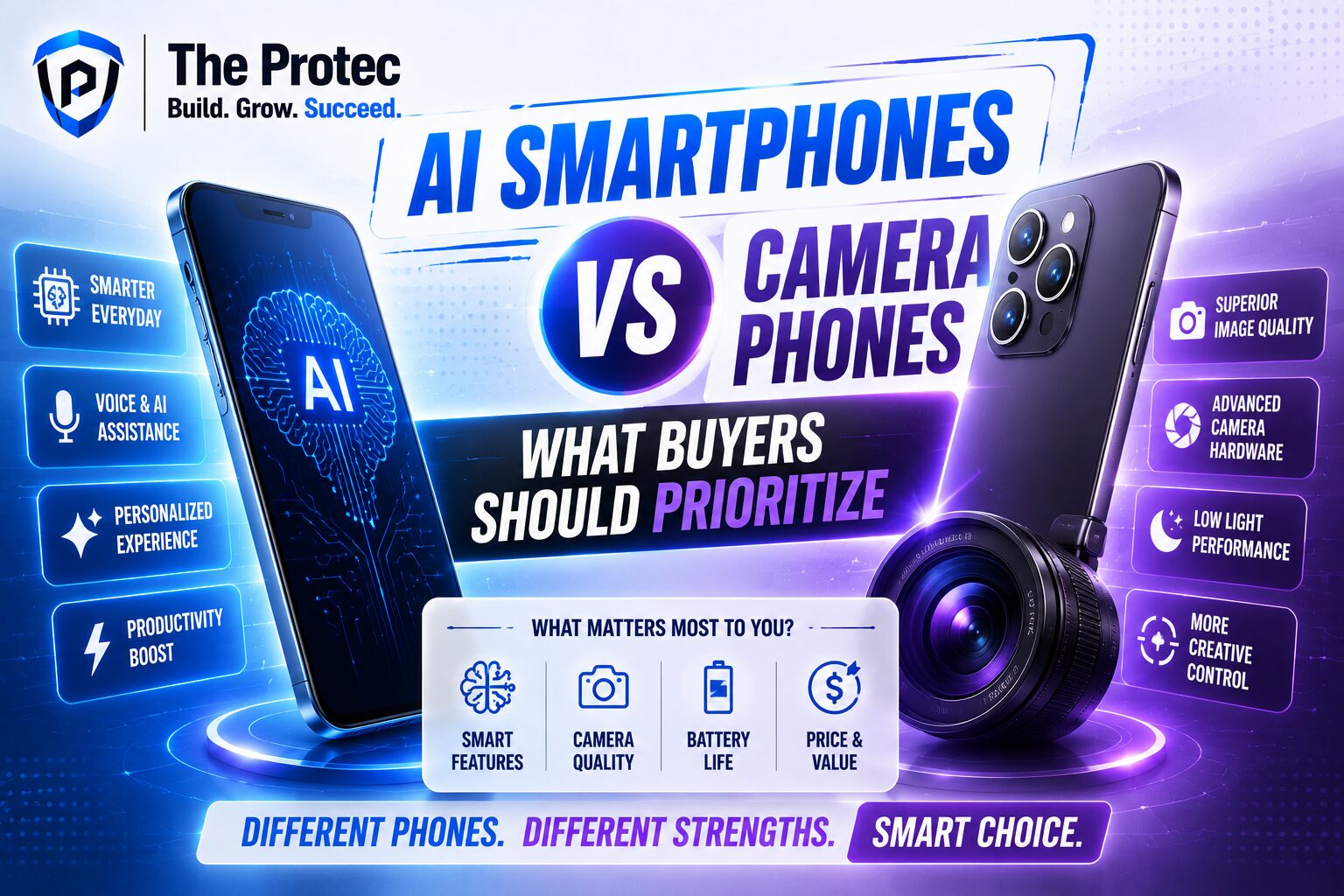
AI Smartphones vs Camera Phones: What Buyers Should Actually Prioritize
Buying a phone for its camera has never been more confusing. On one side, you have the classic camera phone formula: larger sensors, advanced lenses, stronger optical zoom, and tuned image processing. On the other, the newest AI smartphone camera systems promise smarter scene recognition, generative editing, better night shots, and automatic fixes that make ordinary snapshots look polished with almost no effort.
The challenge for buyers is that marketing often blurs the line between hardware and software. A phone can claim “AI photography” improvements, but that does not automatically make it one of the best camera phones. Likewise, a device with a massive sensor and premium lens stack can still disappoint if its software is weak or inconsistent.
The real question is not whether AI is better than camera hardware. It is which one matters more for how you shoot. If you mostly take portraits, social posts, travel photos, food pictures, or family videos, your priorities will be different from someone who shoots concerts, wildlife, or low-light scenes. This guide breaks down what AI actually improves, where traditional camera hardware still wins, and how to choose the right phone based on real-world use rather than spec-sheet hype.
What “AI Smartphone Camera” Really Means
An AI smartphone camera is not a separate type of camera. It is a phone camera system that uses machine learning and on-device intelligence to improve capture, processing, editing, and sometimes even composition. In recent years, this has become a major selling point across flagship phones and premium mid-range devices.
Today’s AI photography features usually include:
- Scene recognition that adjusts color, contrast, and exposure automatically
- Computational night mode for cleaner low-light images
- Subject tracking and face detection for sharper portraits and moving subjects
- AI upscaling or zoom enhancement to improve details after the fact
- Generative editing tools like object removal, background expansion, and reflection cleanup
- Auto-framing and video enhancement for more polished clips and calls
In practice, AI helps phones compensate for the limits of small camera sensors and thin lenses. That is the biggest reason it matters: smartphones are physically constrained. Because the hardware cannot match dedicated cameras or large imaging systems, software increasingly fills the gap.
For buyers, this means a phone can take excellent photos even if it does not have the largest sensor on paper. But it also means the results depend heavily on the quality of the software pipeline, not just the camera module itself.
Why Traditional Camera Hardware Still Matters
AI can improve an image, but it cannot replace optical physics. The best camera phones still win in certain areas because they combine better hardware with strong software. The hardware differences that matter most are sensor size, lens quality, zoom range, stabilization, and color tuning.
Here is why hardware still counts:
- Larger sensors capture more light and typically deliver better detail and dynamic range.
- Optical zoom preserves quality far better than digital or AI-enhanced zoom.
- Better lenses reduce distortion, flare, and softness at the edges.
- Optical image stabilization helps with handheld shots, especially in low light.
- Dedicated telephoto cameras are still the best option for portraits, sports, and distant subjects.
A phone with excellent hardware will usually be more consistent across different shooting conditions. If you care about capturing fast motion, shooting at a distance, or preserving fine detail, hardware remains the foundation of image quality.
Even with the rise of AI photography, a weak lens or small sensor can limit what the software can recover. AI can sharpen, brighten, and enhance, but it cannot fully recreate lost detail or replace true optical zoom.
Where AI Beats Traditional Camera Hardware
AI has changed smartphone photography in ways that genuinely improve the user experience. For many buyers, these improvements matter more than raw camera specs because they make better photos easier to get.
1. Low-light photography
Modern AI smartphone camera systems are exceptionally good at low-light processing. Night mode algorithms stack multiple frames, reduce noise, and brighten shadows while preserving detail. This is especially helpful for casual users who do not want to manually adjust settings or use a tripod.
In dim restaurants, evening streets, concerts, and indoor family moments, AI can turn a mediocre shot into a shareable one. In many cases, the difference between an older camera phone and a newer AI-focused model is dramatic.
2. Instant editing and cleanup
Generative editing is one of the biggest recent changes in mobile photography. Tools that remove unwanted objects, correct awkward reflections, or expand cropped edges make phones far more useful after capture. This does not improve the original photo in a technical sense, but it improves the final result users actually keep.
For social media creators and everyday buyers alike, this is a major convenience advantage. Instead of learning desktop software, you can fix and publish photos directly on the phone.
3. Better results for casual users
The average buyer does not shoot in manual mode. Most people want a camera that works automatically, produces appealing color, and handles tricky lighting without effort. AI excels here because it removes friction. It identifies faces, objects, scenes, and motion, then makes choices that often improve the image right away.
This is why some phones with modest hardware still earn a reputation for “great cameras.” The software is doing much of the heavy lifting, and for casual photography, that may be exactly what matters most.
4. Smarter video processing
AI is also becoming more important in mobile video. Features like noise reduction, subject tracking, stabilization enhancement, auto exposure balancing, and cinematic focus effects can all make video look more polished. If you record everyday clips, reels, or video calls, AI can dramatically improve output without extra effort.
That said, video is still an area where a strong sensor, reliable stabilization, and good lens quality matter deeply. AI can refine video, but it works best when the underlying camera hardware is already solid.
Where Camera Phones Still Have the Edge
Despite the rapid growth of AI photography, the best camera phones still earn that title because they combine superior optics and sensors with advanced processing. If you care about image quality beyond casual sharing, hardware still plays a decisive role.
1. Consistency across all lighting conditions
One of the biggest strengths of premium camera phones is consistency. They deliver reliable focus, balanced exposure, natural detail, and smoother transitions between lenses. AI can help, but it can also overprocess images, introduce unnatural textures, or misinterpret a scene.
Better hardware gives the software more information to work with, which usually means fewer surprises and more dependable results.
2. Optical zoom and telephoto quality
If you want to photograph a stage, wildlife, sports, architecture details, or distant landmarks, optical zoom remains crucial. AI-enhanced zoom can look impressive on a small screen, but it is still a reconstruction. It cannot fully match the fidelity of a real telephoto lens.
This is one of the clearest reasons to prioritize camera hardware over AI if you shoot subjects at a distance. A phone with a true telephoto camera often outperforms a software-heavy rival, even if the latter sounds more advanced in marketing.
3. Better portraits and subject separation
AI portrait effects have improved a lot, but real optical depth from a capable lens still looks more natural. Phones with strong portrait hardware can create smoother background blur, better edge detail, and more flattering subject separation. The result is often less artificial than software blur alone.
If portraits matter to you, especially of people or pets, a dedicated telephoto lens and strong sensor matter just as much as AI enhancements.
4. Creative control and professional use
Creators who shoot in RAW, adjust white balance, or edit heavily afterward often care more about source quality than AI-generated polish. A phone with stronger camera hardware provides more room to crop, color grade, and refine the image later.
That is why content creators, mobile photographers, and enthusiasts often still evaluate phones by sensor performance, lens quality, and stabilization before looking at AI features.
The Real Buying Decision: Match the Phone to Your Shooting Style
The smartest way to choose between an AI smartphone camera and a traditional camera-focused phone is to ask how you use your camera most often. The best camera phones are not always the ones with the most AI features, and the most advanced AI photography tools are not always the most valuable for every buyer.
Choose AI-first if you care most about convenience
An AI-heavy phone makes sense if you want automatic improvements, fast sharing, and easy editing. This is a strong choice for users who:
- Take mostly casual photos for social media
- Want better low-light shots without learning camera settings
- Use object removal, background cleanup, or generative editing often
- Prefer a phone that handles everything automatically
If this sounds like you, the right phone may not need the largest sensor or the most advanced telephoto lens. It needs excellent software, fast processing, and reliable AI tools that work well in everyday use.
Choose hardware-first if you care most about image fidelity
A hardware-focused camera phone is a better fit if you value true optical quality and flexibility. Prioritize hardware if you:
- Shoot zoomed subjects, sports, or wildlife
- Care deeply about natural detail and accurate textures
- Want stronger results for portraits and video
- Edit photos later and want the best possible source image
For these buyers, the best camera phones are usually the ones with large sensors, excellent lenses, and strong stabilization, even if they are not the flashiest AI devices.
Choose a balanced phone if you want the best overall experience
For most people, the ideal choice is a balanced phone with strong camera hardware and smart AI processing. This approach gives you the best of both worlds: good optics for image capture and helpful software for enhancement.
That balance matters because a great smartphone camera today is not just about taking a photo. It is about capturing, improving, editing, and sharing the image seamlessly. The most satisfying phones do all of that well without making you think about the technology behind it.
What to Look For Before You Buy
If you want to make the right decision, focus on a mix of hardware and AI features rather than chasing one category alone. Here is a practical checklist.
- Main sensor quality: Look for strong low-light performance, good dynamic range, and consistent detail.
- Telephoto camera: Essential if you want real zoom rather than software enlargement.
- Ultrawide camera: Useful for landscapes, interiors, and travel.
- Video stabilization: Important if you shoot a lot of clips or vlog content.
- AI editing tools: Valuable if you want easy cleanup, retouching, or generative fixes.
- Processing speed: Affects how quickly the phone captures bursts, processes night shots, and applies AI features.
- Consistency in review samples: Real-world examples matter more than spec sheets.
It also helps to compare sample images from trusted reviewers rather than relying on launch event photos. Phones often perform differently in real-world use than they do in promotional material.
How AI Is Changing the Definition of a Great Camera Phone
The rise of AI is not making camera hardware irrelevant. Instead, it is changing the definition of what “great” means. A decade ago, buyers mostly judged cameras on sharpness, zoom, and low-light performance. Today, the best camera phones are expected to do more: intelligently correct flaws, improve composition, reduce noise, and simplify editing.
This shift matters because it changes how phones are evaluated. A phone with excellent hardware but weak software can feel less impressive than one with slightly weaker optics but smarter AI. At the same time, a phone that leans too heavily on AI can produce images that look overprocessed or inconsistent. The sweet spot is a device that uses AI to enhance good hardware, not replace it.
That is why many of the most competitive phones now emphasize both sides: premium lenses and sensors paired with advanced computational photography. The future of smartphone imaging is not AI or hardware. It is AI plus hardware, working together.
Bottom Line: What Buyers Should Actually Prioritize
If you want the shortest possible answer, here it is: prioritize hardware if you care about true image quality, zoom, and consistency; prioritize AI if you care about convenience, automatic enhancement, and easy editing. For most buyers, the best camera phone is the one that balances both.
In practical terms, a strong AI smartphone camera can make everyday photography easier and more impressive. But if a phone lacks quality optics, sensor size, or stabilization, AI can only do so much. Meanwhile, excellent hardware without smart software may not produce the most pleasing results for casual users.
The best buying decision is not about choosing a side in the AI versus camera hardware debate. It is about understanding what kind of photographer you are. If you shoot for convenience, AI may matter most. If you shoot for quality, hardware should lead. If you want the best overall experience, look for a phone that does both well.
FAQ
Are AI smartphone cameras better than traditional camera phones?
Not universally. AI smartphone cameras are often better for automatic enhancement, low-light processing, and easy editing, while traditional camera phones with stronger hardware usually perform better for zoom, detail, and consistency.
Do AI photography features really improve photo quality?
Yes, especially for casual shooting, night photos, and post-capture editing. AI can improve exposure, reduce noise, remove objects, and make images more shareable. However, it cannot fully replace quality lenses and sensors.
What matters more for the best camera phones: sensor size or AI?
Both matter, but sensor size usually has the bigger impact on raw image quality, especially in low light and zoomed shots. AI then helps refine the final image and make the phone easier to use.
Should I buy a phone with the most AI features?
Only if those features match how you take photos. If you want fast, effortless results and like editing on your phone, AI features are valuable. If you care more about natural image quality or zoom performance, hardware should come first.
Is AI zoom as good as optical zoom?
No. AI zoom can improve the look of distant shots, but optical zoom still delivers better real detail and fewer artifacts. If zoom matters to you, a true telephoto lens is still the better choice.