







Contents
- 1 Best Portable Power Stations for Remote Work, Gaming, and Emergencies
- 2 What Makes a Great Portable Power Station Today?
- 3 Best Portable Power Station Use Case: Remote Work
- 4 Best Portable Power Station Use Case: Gaming
- 5 Best Portable Power Station Use Case: Emergencies
- 6 Portable Generator Tech: How It Has Changed
- 7 How to Compare Models Without Getting Lost in Specs
- 8 What Size Portable Power Station Do You Need?
- 9 Battery Safety, Charging, and Long-Term Value
- 10 Final Buying Advice
- 11 FAQ
Best Portable Power Stations for Remote Work, Gaming, and Emergencies
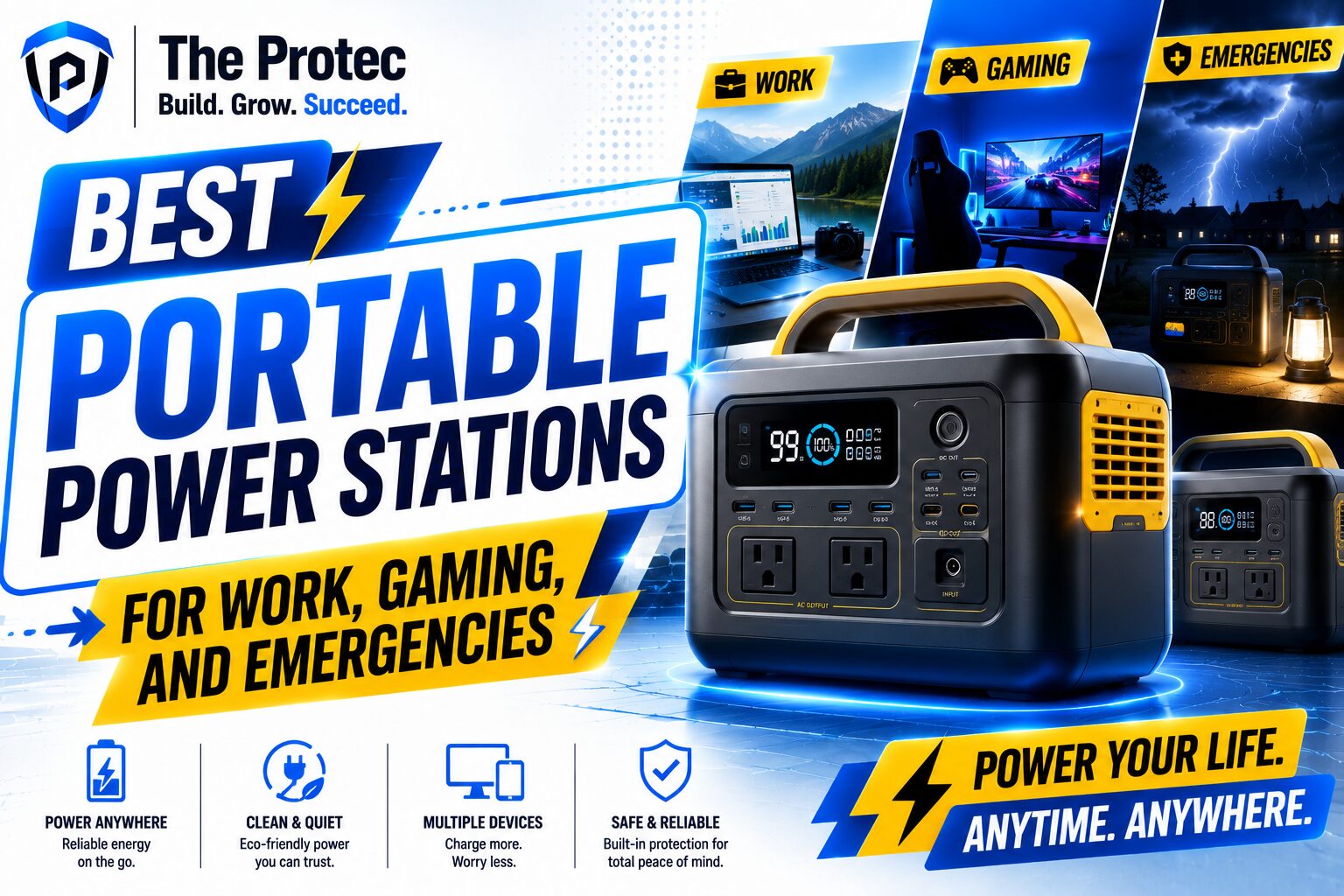
Power outages used to be a short-lived inconvenience. Today, they can disrupt a video call, cut off a gaming session, knock out a home office setup, or leave a household without backup power when it matters most. That is why the modern portable power station has become much more than a camping accessory. It is now a serious tool for remote workers, gamers, content creators, and anyone who wants dependable energy without the noise, fumes, or maintenance of a traditional gas generator.
Choosing the right backup battery station is no longer just about watt-hours on a spec sheet. Modern users need a balance of output, charging speed, battery chemistry, portability, expandability, and smart controls. The best models now combine fast UPS-style switchover, long-life LiFePO4 batteries, solar charging compatibility, app-based monitoring, and the kind of output that can run everything from a laptop and router to a gaming monitor and console setup. In other words, portable generator tech has evolved fast, and the best options now serve both everyday productivity and emergency preparedness.
This guide compares the best portable power station features and use cases for remote work, gaming, and emergencies, so you can choose a unit that fits your lifestyle instead of overbuying or underpowering your setup.
What Makes a Great Portable Power Station Today?
The best portable power station for modern use is not necessarily the one with the biggest battery. It is the one that delivers the right mix of reliable output, practical runtime, and easy recharging. For remote work and gaming, that often means clean power delivery, fast response time, and enough outlets for multiple devices. For emergency use, it means dependable battery chemistry, safe operation indoors, and the ability to recharge from wall power, a vehicle, or solar panels.
Here are the most important features to evaluate:
- Battery chemistry: LiFePO4 batteries are now the preferred choice for many buyers because they typically offer longer cycle life, better thermal stability, and strong long-term value.
- Output capacity: Measured in watts, this determines whether the unit can run power-hungry devices such as monitors, desktop PCs, or small appliances.
- Energy storage: Measured in watt-hours, this determines how long the station can power your gear between charges.
- UPS or EPS support: Important for remote work and gaming if you want a near-instant switch during outages.
- Fast charging: Modern stations can recharge from empty to usable levels much faster than older models.
- Expandable capacity: Some systems allow add-on batteries for longer backup windows.
- Port variety: AC outlets, USB-C PD, USB-A, DC ports, and 12V outputs increase flexibility.
- App control: Useful for checking input, output, battery health, and charge settings remotely.
These features matter because the best portable power station is increasingly expected to do more than sit in a corner waiting for an outage. It needs to fit into everyday workflows and still be ready when the lights go out.
Best Portable Power Station Use Case: Remote Work
Remote workers are often the first to feel the pain of unreliable power. A brief outage can disconnect a Zoom call, shut down a desktop, or interrupt a cloud sync at the worst possible moment. For this reason, a backup battery station for remote work should prioritize clean, stable power and quick response time over raw size alone.
For a typical remote setup, you may want to power a laptop, external monitor, Wi-Fi router, phone charger, and possibly a dock or small desktop. The total load may be modest, but uptime matters. A compact or mid-size portable power station with a fast UPS function can keep your network alive and prevent your devices from shutting off abruptly.
What to look for in a work-friendly station
- Pure sine wave AC output: Helps support sensitive electronics and reduces compatibility concerns.
- UPS-style switching: Essential if you work on a desktop or depend on a stable internet connection.
- Multiple USB-C ports: Especially helpful for modern laptops and tablets.
- Quiet operation: A fan that is too loud can be distracting during calls and recordings.
- Long battery life: Enough runtime to bridge short outages and ride through unstable grid power.
For many remote professionals, a 1,000Wh to 2,000Wh class unit offers a strong balance of portability and backup duration. Smaller models can still work well if you only need to keep a laptop and router alive, but if your job depends on a desktop workstation or multiple peripherals, more capacity is worth the investment.
Best Portable Power Station Use Case: Gaming
Gaming puts different demands on a backup battery station. Unlike a basic office setup, gaming systems can have large power spikes, especially when paired with a high-refresh monitor, console, streaming gear, or a gaming PC with a powerful GPU. That means the best portable power station for gaming needs not only enough continuous output, but also enough headroom for peak loads.
For console gamers, a smaller or mid-size unit may be enough to keep a console, display, headset charger, and router online during a power interruption. For PC gamers, however, the requirements are more serious. A desktop gaming rig can draw substantially more power, particularly if you are using a performance CPU and GPU together. In these cases, look for higher-wattage inverter output and enough battery capacity to finish a match, save progress, or safely shut down the system.
Gaming-specific priorities
- High inverter output: Important for PC towers and larger monitor setups.
- Low-latency backup behavior: Helps prevent hard shutdowns during a blackout.
- Multiple AC outlets: Useful for monitor, console, speakers, and networking gear.
- Battery expansion: Helpful for longer sessions or extended outage coverage.
- Thermal management: Gaming rooms already run warm, so a cool-running station is a plus.
One of the biggest trends in portable generator tech is the arrival of smarter power management. Some stations can now optimize charging and discharge behavior through companion apps, and that is especially useful for gaming households that want to keep the unit topped up without overloading a circuit. As more users rely on high-performance electronics at home, backup power solutions are being designed with faster switching and better surge handling in mind.
Best Portable Power Station Use Case: Emergencies
Emergency preparedness is where a portable power station becomes invaluable. Unlike a fuel generator, it can be used indoors safely because it produces no exhaust. That makes it ideal for apartments, townhomes, and households that need a quiet, low-maintenance emergency power source for phones, lights, medical devices, internet equipment, or refrigeration support in certain cases.
In an emergency, your priorities change. A backup battery station should be easy to deploy, simple to recharge, and reliable under stress. You may not need the largest unit available, but you do need one that can sustain critical loads long enough to get you through a blackout or weather event.
Emergency essentials to consider
- Indoor-safe operation: A major advantage over traditional gas generators.
- Multiple recharge methods: Wall charging, solar input, and vehicle charging add resilience.
- Clear display: Battery percentage, input/output wattage, and estimated runtime should be easy to read.
- Fast recharge: The quicker the station refills, the better it serves during rolling outages.
- Reliable build quality: Emergency gear should work when needed, not just look good on paper.
For emergency planning, battery chemistry matters a great deal. LiFePO4 has become the dominant choice for many newer models because it offers strong cycle life and improved safety characteristics compared with older lithium-ion formulations. That matters if you plan to store the station for months and only use it during outages or seasonal storms.
Portable Generator Tech: How It Has Changed
The term portable generator tech now covers a broad category of energy solutions, but the biggest shift is clear: users want clean power, quieter operation, and better portability without sacrificing useful output. That is why the market has moved strongly toward battery-based stations instead of fuel-burning units for everyday backup.
Several developments have shaped the current generation of portable power stations:
- Widespread LiFePO4 adoption: Longer cycle life and improved safety have made these batteries the preferred option in many premium models.
- Faster AC charging: Some stations can recharge far quicker than older units, reducing downtime.
- Solar readiness: Better MPPT charge controllers and wider solar input ranges make renewable recharging more practical.
- App connectivity: Users can now track battery usage and adjust settings from a phone.
- Modular ecosystems: Expandable batteries and stackable systems help users scale from a compact backup to a home-resilient setup.
These changes have made the portable power station more versatile than ever. It is not just a backup for camping or tailgating; it is a central part of modern resilience planning. For households that work from home, game regularly, or want quiet emergency readiness, that shift is especially important.
How to Compare Models Without Getting Lost in Specs
Specs can be overwhelming. One model may advertise a higher watt-hour number, while another claims a higher inverter rating or faster recharge. The best way to compare a portable power station is to match the specs to your actual use case.
Simple comparison framework
- For remote work: Prioritize UPS support, USB-C output, runtime for your router and laptop, and low noise.
- For gaming: Prioritize wattage headroom, AC outlet count, and the ability to handle spikes.
- For emergencies: Prioritize battery life, recharge options, and ease of use under pressure.
A useful rule is to estimate your combined load in watts, then decide how many hours of runtime you need. Multiply watts by hours to estimate the watt-hours required, then add a buffer for inverter losses and real-world inefficiencies. For example, a 100W work setup running for six hours needs roughly 600Wh before losses. A gaming setup may require much more depending on the hardware.
If you want a broader overview of battery safety and storage planning, the U.S. Department of Energy offers useful context on lithium battery technology, and NREL provides research-backed insights into battery systems and energy storage. Both are strong references for understanding the technology behind today’s backup battery station market.
What Size Portable Power Station Do You Need?
Size depends on your priorities. If you only need to preserve internet access and keep a laptop charged during short outages, a smaller station may be enough. If you want to support a full remote workstation or gaming setup, you will likely need a mid-size or large model. If you also want emergency coverage for more than a few hours, capacity becomes even more important.
- Compact class: Best for travel, light work, phones, tablets, and networking gear.
- Mid-size class: Best for remote workstations, small entertainment setups, and short emergency backup.
- Large class: Best for longer outages, higher-draw devices, and users who want more flexibility.
Remember that bigger is not always better. A massive power station may be too heavy to move easily or too expensive for the way you actually use power. The right fit is the one you can realistically deploy, recharge, and store.
Battery Safety, Charging, and Long-Term Value
When comparing portable power stations, safety and longevity should carry real weight. A well-built unit should include battery management systems, overload protection, short-circuit protection, and thermal safeguards. That is especially important if you plan to use the station indoors or around electronics that cost far more than the station itself.
Long-term value also depends on cycle life. A battery that lasts for thousands of cycles may cost more upfront but deliver far better value over time than a cheaper model that degrades quickly. This is one of the reasons LiFePO4-based stations have become the preferred option for many buyers in the current market.
Charging strategy matters too. If you keep your station plugged in all the time, make sure the manufacturer supports that usage pattern. If you expect to use solar, confirm the input range and panel compatibility. If you need to keep it ready for emergencies, test the recharge process before you need it.
Final Buying Advice
The best portable power station is the one that matches your real-world needs. Remote workers should focus on UPS behavior, quiet operation, and enough output to support a stable productivity setup. Gamers should look for higher wattage, stronger surge handling, and enough battery capacity to keep the system online long enough to save and shut down safely. Emergency buyers should prioritize indoor-safe operation, dependable recharge options, and long battery life.
As portable generator tech continues to improve, the gap between convenience and resilience keeps shrinking. Modern stations are quieter, smarter, safer, and more capable than ever. That makes them one of the most practical investments for anyone who wants to stay productive, keep gaming uninterrupted, or prepare for unexpected outages without relying on noisy fuel-powered backup.
If you want a single device that can support work, entertainment, and emergencies, look for a well-balanced portable power station with LiFePO4 chemistry, enough inverter output for your devices, fast charging, and a design that you will actually use every day.
FAQ
What is the best portable power station for remote work?
The best option for remote work is usually a station with UPS support, pure sine wave output, USB-C charging, and enough capacity to keep your laptop, router, and monitor running during short outages.
Can a backup battery station run a gaming PC?
Yes, but you need to check both the continuous wattage and the peak draw of your system. Gaming PCs can require much more power than laptops or consoles, so choose a model with extra output headroom.
Is a portable power station better than a gas generator for emergencies?
For indoor-safe, quiet, low-maintenance backup, yes. A portable power station is easier to use in apartments and homes where fumes, noise, and fuel storage are concerns. A gas generator may still make sense for very long outages and heavy appliance loads.
How long does a portable power station last?
That depends on capacity, battery chemistry, and how often it is used. LiFePO4 models generally last much longer than older battery types, especially when stored and charged properly.
Can I charge a portable power station with solar panels?
Many modern units support solar input, but you need to confirm voltage and wattage compatibility. Solar is a valuable option for emergency preparedness and off-grid use, especially when paired with a fast wall-charging setup.