









Why Laptop Innovation Matters More Than Ever
Laptops have become the default work device for knowledge workers, creators, students, and hybrid teams. But the demands placed on them are changing fast. Today’s professionals want more than speed and portability. They want devices that can handle local AI tasks, last through long workdays, connect instantly to cloud tools, and deliver clearer, more comfortable visuals for extended screen time.
That is why future laptop technology is moving in a new direction. The next generation of laptops is being designed around intelligent performance, better power efficiency, and more seamless connectivity. Instead of focusing only on raw CPU benchmarks, manufacturers are now optimizing for real work experiences: faster video calls, smarter multitasking, longer battery life, and displays that reduce fatigue.
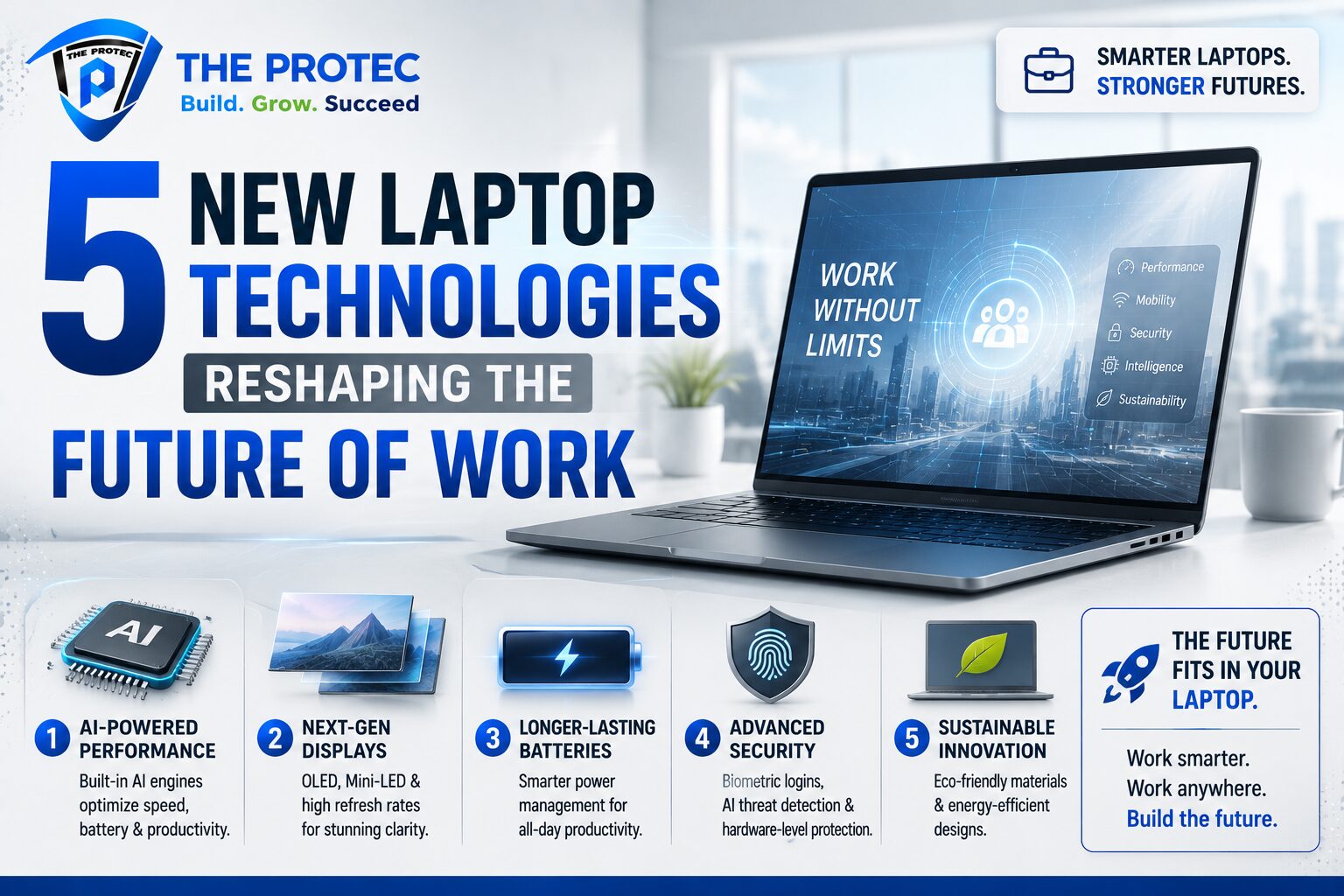
As AI laptops become more common and work patterns continue to shift, these innovations will define how teams collaborate, create, and move between office, home, and travel. Below are five laptop technologies that are shaping the next wave of workplace computing.
1. AI Processors That Handle More Work Locally
The biggest shift in next generation laptops is the rise of AI-first processors. These chips are not just faster versions of old designs. They are built with dedicated neural processing units, improved on-device machine learning acceleration, and smarter power allocation across performance cores and efficiency cores. The result is a laptop that can run AI tasks locally instead of sending everything to the cloud.
That matters for work in a few important ways. First, local AI processing improves speed. Features like transcription, background blur, image enhancement, meeting summaries, and smart search can happen almost instantly. Second, it improves privacy because sensitive data does not always need to leave the device. Third, it reduces dependency on an internet connection for certain workflows.
For professionals, this means everyday software is becoming more helpful. A laptop can now summarize a long document, improve a presentation, organize notes, and help draft content while using less power than older systems would have needed. In many cases, these AI features are integrated directly into the operating system or productivity apps, making them feel less like add-ons and more like part of the device itself.
The most important change is not that laptops can “do AI.” It is that AI laptops are becoming work assistants. They can learn patterns, anticipate what users need, and support faster decision-making. That could mean automatic meeting highlights, intelligent file recommendations, or real-time language translation for global teams. As these capabilities mature, AI processors will be one of the defining features of future laptop technology.
For a deeper look at how AI hardware is evolving, see Intel Core Ultra processors and AMD Ryzen AI processors.
2. Battery Innovation That Supports Real Mobile Work
Battery life has always been one of the most important laptop features, but it is now entering a new phase. The next generation of laptops is focusing on battery innovation that goes beyond simply making cells bigger. Manufacturers are improving energy density, thermal efficiency, charging speed, and battery management systems so users can work longer without worrying about outlets.
One major trend is the combination of more efficient processors with smarter batteries. If a chip consumes less power, the battery lasts longer without adding size or weight. That allows laptop makers to produce thinner devices that still deliver all-day performance. For workers who move between meetings, commute often, or travel frequently, this is a major advantage.
Fast charging is also improving. Many modern business laptops can recover a large portion of their battery in a short charging window, which is ideal for people who need a quick boost between sessions. More advanced battery management software is helping too. These systems learn when to charge, how to reduce wear, and when to limit full charges to preserve long-term health.
We are also seeing progress in battery chemistry and packaging. While not every breakthrough reaches the consumer market immediately, the direction is clear: better energy storage, lower heat, and longer life cycles. In practical terms, that means fewer interruptions during the workday and less concern about battery degradation over time.
Battery innovation is especially important for AI laptops because on-device intelligence can increase power demand. The challenge is to deliver more smart features without cutting runtime. Future laptop technology is solving that by pairing efficient AI hardware with better batteries and adaptive power profiles. The laptop of the near future should feel less like a device that needs constant management and more like a reliable mobile workstation.
3. Displays Designed for Comfort, Clarity, and Collaboration
Displays are becoming one of the most visible signs of progress in next generation laptops. The modern workday now involves video meetings, content creation, spreadsheet analysis, design review, and frequent switching between apps. That makes screen quality more important than ever. New display technologies are improving brightness, color accuracy, refresh rates, and eye comfort at the same time.
OLED and mini-LED panels are leading the way in premium models. These technologies produce deeper blacks, stronger contrast, and more vibrant images, which is useful for creatives and anyone who spends hours reading or editing on-screen content. Higher refresh rates also make scrolling and motion smoother, which reduces visual strain and makes everyday use feel more responsive.
Another important development is better support for productivity-focused aspect ratios and resolutions. Taller displays, such as 16:10 or even 3:2 panels, give users more vertical space for documents, code, and web applications. That means less scrolling and a more efficient use of screen real estate. For hybrid workers, this can make a surprisingly large difference in comfort and productivity.
Display innovation is not just about visual quality. It is also about reducing fatigue. Features like low blue light modes, improved flicker control, adaptive brightness, and anti-reflective coatings help make long work sessions easier on the eyes. As more people work from different locations with varied lighting, these features are becoming essential rather than optional.
Collaboration is another area where displays matter. Better webcams, integrated privacy shutters, and improved screen sharing experiences all contribute to a smoother meeting workflow. Some AI laptops are even pairing advanced displays with AI-powered camera adjustments that keep the user centered and well lit without manual tweaking. That combination of visual quality and smart assistance is exactly what future laptop technology should deliver.
4. Connectivity Upgrades That Make Work Feel Instant
Fast, stable connectivity is no longer a luxury. It is the backbone of modern work. Cloud applications, remote collaboration, large file syncing, and video conferencing all depend on reliable wireless performance. That is why one of the most important advancements in next generation laptops is the shift toward faster and more intelligent connectivity.
Wi-Fi 7 is one of the standout technologies here. Compared with earlier wireless standards, it can support higher throughput, lower latency, and better performance in crowded environments. For users in offices, co-working spaces, or shared homes, this means fewer bottlenecks and more consistent performance during calls, downloads, and cloud-based tasks.
Bluetooth is also improving, which matters for wireless headsets, mice, keyboards, and other peripherals. Better wireless stability helps eliminate frustrating dropouts during meetings or presentations. In addition, newer laptops are increasingly adopting modern port standards that support faster data transfer and better external display options, making it easier to build flexible desk setups.
Another major trend is smarter network switching. Future laptops may be able to move between Wi-Fi, cellular, and hotspot connections more gracefully, reducing interruptions when users are on the go. That kind of seamless handoff is particularly useful for professionals who need to stay connected while traveling between home, office, and client locations.
Connectivity is also being shaped by security. Modern laptops are integrating stronger hardware-based authentication, encrypted wireless communication, and improved device management tools for enterprise environments. That makes it easier for IT teams to support distributed work without slowing users down. In practice, better connectivity means less waiting, fewer dropped meetings, and a more reliable workflow overall.
5. Smarter Power, Thermal, and Form Factor Design
One of the biggest lessons of the past few years is that performance alone is not enough. A laptop must also stay cool, quiet, and comfortable to use. That is why thermal design and power management are becoming major innovation areas in future laptop technology. The goal is to deliver desktop-like capability in thinner, lighter systems without overheating or draining the battery too quickly.
New cooling approaches include more efficient heat pipes, vapor chambers, improved fan designs, and smarter airflow paths. Some models are also using machine learning to predict thermal loads and adjust performance dynamically. Instead of running at maximum power all the time, the laptop can allocate resources based on the task at hand. That helps maintain responsiveness while reducing noise and heat.
This matters more as AI laptops and creative workloads become more demanding. Running generative tools, large spreadsheets, video edits, and virtual meetings simultaneously can push a device hard. Better thermal design ensures the laptop does not throttle performance unnecessarily. It also improves comfort for users who type for hours with the device on their lap or desk.
Form factor innovation is equally important. Manufacturers are now finding ways to combine bigger batteries, better displays, and advanced chips into slimmer designs. Some models are also experimenting with modular components, easier repairability, and longer support cycles. These are not always the flashiest features, but they are increasingly important for business buyers and sustainability-minded teams.
The result is a category of laptops that feel more balanced. They are powerful enough for demanding work, efficient enough for mobile use, and refined enough to support long work sessions. That balance is exactly what modern professionals need from next generation laptops.
How These Innovations Will Change the Way We Work
These five technologies are not isolated improvements. Together, they are changing the role of the laptop itself. Instead of being a passive tool that simply runs applications, the laptop is becoming an active work companion. AI helps users move faster. Better batteries support true mobility. Advanced displays make long sessions more comfortable. Stronger connectivity keeps work flowing. Smarter thermal design makes the whole experience feel more polished.
For businesses, this shift has practical implications. Teams can collaborate more effectively, employees can stay productive outside the office, and IT departments can standardize around devices that are more capable and efficient. For individuals, it means fewer compromises between portability and performance.
It also changes purchasing decisions. Buyers are no longer asking only about processor speed or storage size. They are asking whether a laptop supports local AI, whether it can last through a full workday, whether the display is comfortable enough for extended use, and whether it can connect reliably in any environment. Those questions will shape the laptop market for years to come.
What to Look For in the Next Generation of Laptops
If you are planning a new device purchase, it helps to focus on the features that will matter most over the next few years. Not every laptop labeled “AI-ready” will deliver the same experience, and not every premium display is automatically suited for work. The best approach is to look for a balanced mix of performance, efficiency, and long-term usability.
Dedicated AI hardware: Look for a processor with a built-in NPU or AI acceleration for local tasks.
All-day battery life: Prioritize devices with efficient chips and fast charging support.
High-quality display: Choose panels with strong brightness, low eye strain, and a practical aspect ratio.
Modern wireless standards: Wi-Fi 7 and updated Bluetooth support can improve daily reliability.
Strong thermal design: A cool, quiet laptop often performs better over long work sessions.
These are the features that define future laptop technology today. They are the difference between a device that simply works and one that meaningfully improves the way you work.
FAQ
What makes AI laptops different from regular laptops?
AI laptops include dedicated hardware, such as NPUs, that can process machine learning tasks locally. This enables faster transcription, smarter camera effects, improved search, and other intelligent features without relying entirely on the cloud.
Will battery improvements matter if I mostly work plugged in?
Yes. Even if you are often near power, better battery systems usually come with improved efficiency, less heat, and better portability. They also reduce wear over time and make the laptop more reliable during travel or unexpected outages.
Are OLED and mini-LED displays worth it for work?
For many users, yes. They can offer better contrast, sharper visuals, and more comfortable viewing. If you spend a lot of time reading, editing content, or working in mixed lighting, the upgrade can be noticeable.
Is Wi-Fi 7 necessary for a work laptop?
It is not essential for everyone, but it is a strong future-proofing feature. If you work in busy networks, join video calls often, or want the best wireless performance available, Wi-Fi 7 is a valuable upgrade.
How long will it take for these technologies to become standard?
Many of them are already appearing in premium models, and they are expected to spread quickly through business and consumer laptops as prices fall and software support improves.
Conclusion
The future of laptops is being shaped by a smarter combination of hardware and user-centered design. AI processors, battery innovation, advanced displays, better connectivity, and improved thermal engineering are not just incremental upgrades. Together, they are redefining what a work device should be.
As next generation laptops continue to evolve, they will support faster decisions, longer mobility, and more seamless collaboration. For anyone choosing a laptop in the coming year, the most important question is no longer just how fast it is. It is how well it fits the way people actually work.