








For most of the Space Age, launching anything beyond Earth was an exceptional event. Rockets were built for a single flight, missions took years to prepare, and only the wealthiest governments could afford regular access to orbit. That model is rapidly giving way to something faster, more commercial and increasingly reusable.
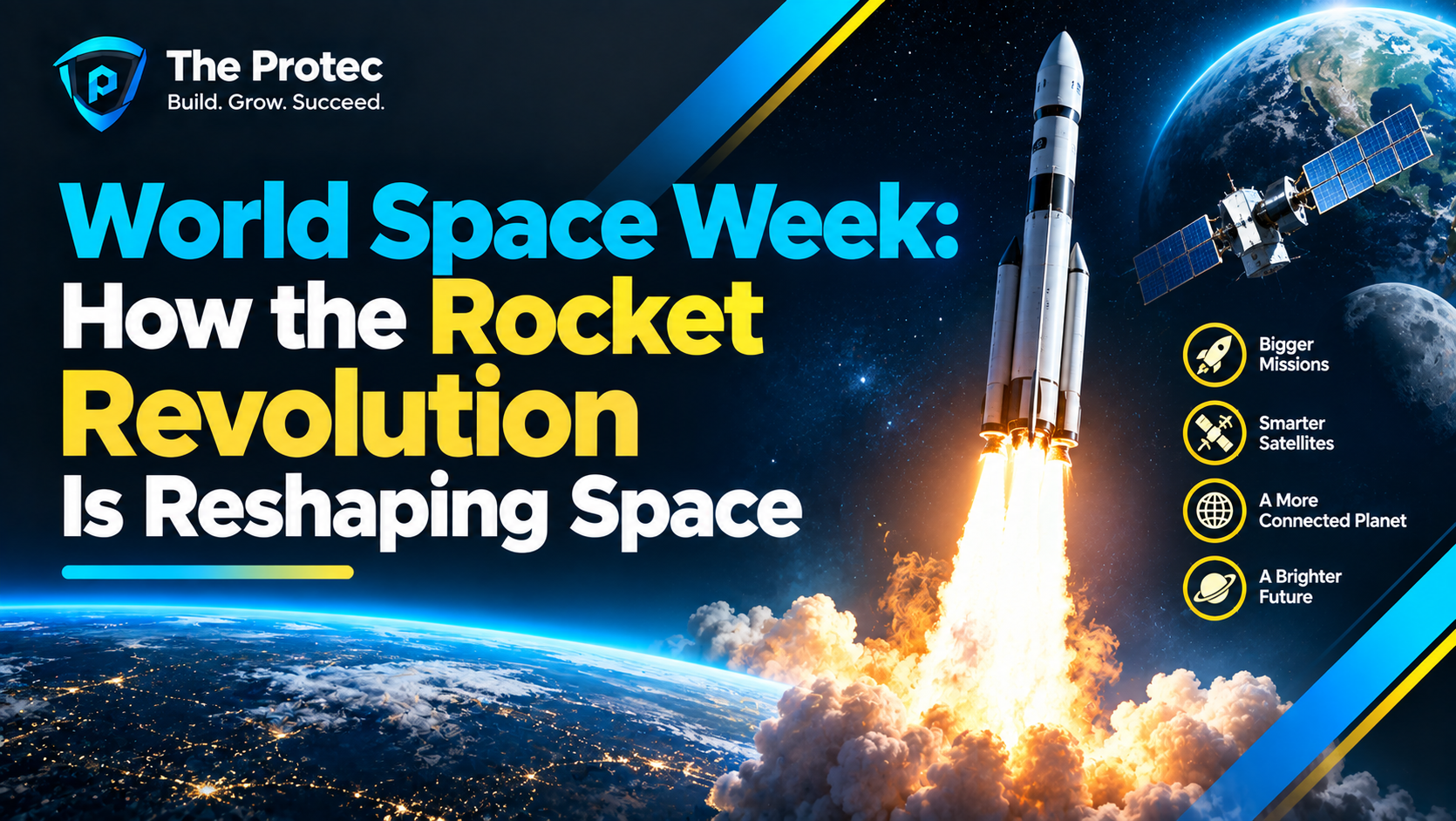
World Space Week 2026 captures this transition through its official “Rocket Revolution” theme. Held every year from October 4–10, World Space Week brings together schools, space agencies, researchers, businesses and the public to examine how space science and technology benefit humanity. The World Space Week 2026 theme puts launch innovation at the center of that conversation, reflecting the growing importance of rockets in the next phase of exploration.
The revolution is not simply about building larger engines or producing more spectacular launches. Reusable rockets, automated flight systems, artificial intelligence, robotics and more capable spacecraft are changing the economics of reaching space. Together, these advances could support denser satellite networks, faster Earth observation, expanded communications, sustained lunar missions and an increasingly diverse commercial space economy.
Why the World Space Week 2026 Theme Matters
The dates of World Space Week October 4–10 commemorate two defining milestones: the launch of Sputnik 1 on October 4, 1957, and the entry into force of the Outer Space Treaty on October 10, 1967. The annual event connects that history with emerging questions about humanity’s relationship with space.
According to the World Space Week Association, the celebration includes events organized around the world. The Rocket Revolution 2026 theme is especially timely because launch capabilities now influence nearly every part of the space sector. A scientific instrument, communications satellite, lunar lander or robotic probe can fulfill its purpose only after a launch system places it on the correct trajectory.
Better space launch technology therefore has effects far beyond the rocket itself. When launches become less expensive, more frequent and more flexible, universities can fly experiments, startups can test hardware, governments can replace aging satellites sooner, and mission planners can attempt projects that once looked financially unrealistic.
Reusable Rockets Are Rewriting Launch Economics
Traditional orbital rockets discard major hardware during flight. Even when a mission succeeds, engines, tanks and structures representing enormous investments may fall into the ocean or burn up in the atmosphere. Reusable rocket technology aims to recover, inspect and fly at least some of that hardware again.
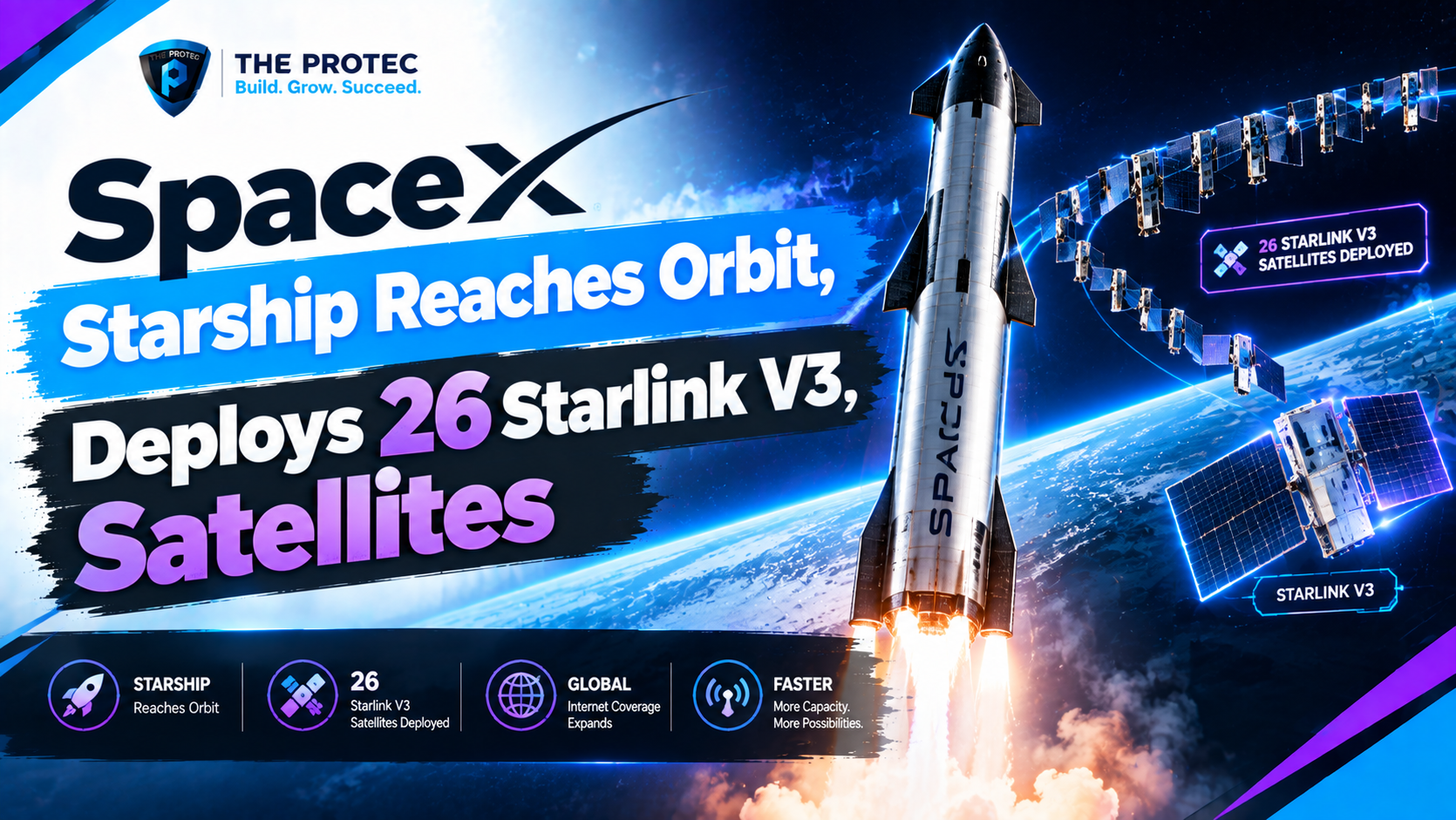
SpaceX’s Falcon 9 made booster landings and reflights a routine part of commercial rocket launches, demonstrating that an orbital-class first stage can support repeated missions. The company’s Starship program is pursuing a much more ambitious goal: rapid reusability of both the booster and spacecraft. Its test campaign has also shown how difficult that goal remains, especially when vehicles must endure extreme heat, aerodynamic forces and precise recovery maneuvers.
Other private space companies and national programs are following different paths. Blue Origin designed New Glenn around a recoverable first stage. Rocket Lab has been developing Neutron as a reusable medium-lift vehicle, while Stoke Space is pursuing a fully reusable architecture. European projects are testing reusable engines and demonstrators, and Chinese launch organizations are developing vehicles that incorporate vertical landing and recovery concepts.
Reusability alone does not guarantee cheaper space launches. A recovered stage must be transported, inspected, refurbished and certified. Savings depend on how often the hardware flies, how much maintenance it needs and whether recovery reduces payload capacity. Even so, experience with operational boosters has established reusability as a practical engineering approach rather than a distant idea.
Higher Launch Frequency Changes What Missions Can Do
The rocket revolution space exploration is experiencing also depends on production speed and operational simplicity. A launch vehicle that can fly repeatedly is most valuable when payload processing, range scheduling, fueling and ground support can keep pace.
Modern providers are adopting automated checkouts, modular manufacturing, standardized payload interfaces and software-driven launch operations. Some are also developing mobile or offshore systems, while spaceports are expanding facilities for a wider mix of vehicles. These improvements can shorten the time between a customer booking a mission and reaching orbit.
Frequent launches create more options. Satellite operators can deploy constellations in stages instead of placing the entire project on one rocket. A failed spacecraft can be replaced sooner. Dedicated small-launch missions can send a payload to a specific orbit, while rideshare services allow smaller customers to share the cost of a larger rocket.
This flexibility is particularly important for satellite launch technology. Small satellites have shorter development cycles than traditional multibillion-dollar spacecraft, and many use commercially available components. Regular access to orbit allows operators to refresh those satellites with improved sensors, processors and communications equipment rather than expecting one design to remain competitive for decades.
AI and Robotics Are Making Spacecraft More Independent
Rocket technology 2026 is increasingly connected to advances in software. Launch vehicles already rely on computers to monitor engines, adjust trajectories, manage staging and respond to changing conditions. The next step is greater autonomy throughout the mission, from launch operations to orbital servicing and planetary exploration.
AI in space exploration can help analyze sensor data, detect anomalies and prioritize information before it is transmitted to Earth. This matters because spacecraft may produce far more data than communications networks can immediately return. An Earth-observation satellite, for example, could use onboard processing to identify wildfires, storms, methane emissions or changes in sea ice and send the most urgent findings first.
AI space technology can also support navigation and maintenance. Spacecraft may need to avoid hazards, adjust their operations or diagnose faults without waiting for instructions. The need becomes even greater beyond Earth orbit, where communication delays prevent continuous human control.
Robotics in space exploration provides the physical counterpart to that intelligence. Robotic arms can capture spacecraft, move cargo and assist with assembly. Rovers and landers can survey hazardous terrain before astronauts arrive. Future servicing vehicles could inspect satellites, refuel compatible spacecraft or move malfunctioning objects away from important orbital paths.
What Lower Launch Costs Mean for Life on Earth
The most immediate benefits of the Rocket Revolution may be felt on Earth. More affordable and reliable access to orbit supports services that are already woven into daily life, including navigation, weather forecasting, broadband connectivity, financial timing and disaster response.
Earth Observation
Larger fleets of imaging and radar satellites can observe the planet more frequently. Faster updates help emergency teams track floods, fires and hurricanes, while farmers can monitor crops and water use. Governments and researchers can also measure deforestation, coastal change and greenhouse gas emissions with greater precision.
Communications
Low Earth orbit communications networks can deliver lower-latency broadband to ships, aircraft and regions with limited terrestrial infrastructure. The future of commercial spaceflight will include not only carrying people but also maintaining the orbital systems that connect them. Competition may improve coverage and hardware, although affordability, spectrum allocation and responsible constellation management remain critical concerns.
Science and Technology Testing
Universities and startups can use lower-cost launch opportunities to test materials, sensors, propulsion systems and biological experiments. More frequent flights make experimentation iterative: teams can learn from one mission and place an improved design on a later launch rather than waiting many years for another opportunity.
The Expanding Space Economy
The space economy 2026 encompasses launch providers, satellite manufacturers, data companies, insurers, ground-station operators, component suppliers and specialized software firms. As launch barriers fall, businesses can focus on services enabled by space rather than owning every part of the infrastructure. This mirrors the development of cloud computing, where shared platforms lowered the cost of creating new digital products.
Lunar Missions Show Where the Revolution Is Heading
Lunar missions 2026 illustrate how government and commercial capabilities are becoming intertwined. NASA’s Artemis campaign, commercial lunar delivery programs, China’s lunar exploration plans and missions pursued by other nations are building experience in landing, navigation, communications and surface operations.
Private spacecraft developers can carry scientific instruments and technology demonstrations under contracts with space agencies, while government programs provide long-term goals and early demand. Reusable launchers and orbital refueling could eventually allow lunar hardware to be assembled or supplied through multiple launches rather than requiring one enormous rocket to carry everything at once.
This approach may support communications relays, robotic prospecting, power systems and longer-duration surface missions. It could also lead to cislunar logistics businesses serving customers between Earth and the Moon. However, sustained lunar exploration will require reliable hardware, international coordination and careful decisions about how resources and scientifically important sites are used.
The Rocket Revolution Brings Serious Challenges
More access to space does not automatically produce a sustainable future of space exploration. The same growth that enables new services can create congestion, environmental pressures and competition for limited resources.
- Space debris: Defunct satellites, spent stages and fragments travel at speeds capable of disabling operational spacecraft. Operators need better tracking, collision avoidance, passivation and end-of-life disposal. The European Space Agency’s space debris resources explain the scale and persistence of the problem.
- Launch infrastructure: Higher flight rates require resilient pads, processing facilities, transportation networks and trained personnel. Communities near spaceports must also manage noise, road closures, safety zones and environmental effects.
- Regulation: Licensing systems must address launch safety, spectrum use, remote sensing, reentry and liability without becoming too slow for a fast-moving private space industry. International rules are especially important because debris and radio interference do not respect national borders.
- Atmospheric impact: Rocket emissions vary by propellant and vehicle design. Researchers are examining how soot, water vapor and other exhaust products affect the upper atmosphere, particularly as launch frequency grows.
- Orbital crowding: Large constellations can complicate collision avoidance and affect astronomical observations. Responsible deployment requires data sharing, maneuver coordination and spacecraft designed for reliable disposal.
- Market stability: Demand must support the growing number of proposed rockets. Consolidation and failed ventures are likely as customers favor providers that can demonstrate reliability, competitive pricing and dependable schedules.
What the Next Decade of Space Exploration Could Look Like
The most consequential change may be a shift from individual missions to persistent infrastructure. Instead of treating every launch as an isolated expedition, organizations could build networks of reusable transportation, standardized spacecraft, communications relays and autonomous systems.
Launch prices may continue to decline, but responsiveness could become just as important as cost. Customers will want to place a satellite into orbit when it is needed, select an appropriate destination and receive accurate information throughout the process. Meanwhile, AI and robotics will allow missions to operate with smaller ground teams and make more decisions away from Earth.
The World Space Week theme 2026 is ultimately about more than rockets. It is about what becomes possible when access to space is no longer the rarest and most expensive part of a mission. If innovation is paired with sensible regulation and sustainable orbital practices, the Rocket Revolution can widen participation in space while improving science, connectivity and exploration.
Frequently Asked Questions
When is World Space Week 2026?
World Space Week October 2026 takes place from October 4 through October 10. The celebration occurs on the same dates every year and includes public events, educational activities and industry discussions worldwide.
What is the World Space Week 2026 theme?
The official World Space Week 2026 theme is “Rocket Revolution.” It highlights how launch innovation, reusable rockets, commercial spaceflight and related technologies are transforming humanity’s ability to reach and use space.
Why are reusable rockets important?
Reusable rockets can reduce the need to manufacture an entirely new vehicle for every mission. When recovery and refurbishment are efficient, the technology can lower costs, increase launch frequency and help more organizations gain access to orbit.
How are AI and robotics changing space exploration?
AI helps spacecraft analyze data, detect faults and make time-sensitive decisions. Robotics allows missions to inspect hardware, handle cargo, explore dangerous terrain and perform tasks where direct human control is impractical.
Will commercial spaceflight make launches affordable for everyone?
Commercial competition and reusable hardware are reducing some costs, but spaceflight remains technically demanding. The future of commercial spaceflight depends on reliable vehicles, adequate demand, safe infrastructure, clear regulation and responsible use of crowded orbital environments.