








The AI boom is shifting from software hype to physical infrastructure
For the last few years, most of the attention in artificial intelligence has gone to foundation models, copilots, and breakthrough applications. That story is still important, but the real money is increasingly moving one layer deeper. The companies building the physical and technical backbone of AI are becoming the biggest winners. AI infrastructure is now one of the fastest-growing enterprise technology areas, and the reason is simple: every powerful model needs enormous amounts of compute, memory, networking, power, and cooling before it can generate a single output.
This is why AI infrastructure companies are drawing massive investment. The demand curve for training and inference is still rising, but the bottlenecks are no longer just software talent or model architecture. The bottlenecks are GPU supply, high-speed interconnects, rack-scale power delivery, liquid cooling, specialized servers, and the data center facilities that can actually support modern AI workloads. In many cases, the companies that enable AI are scaling faster than the companies that use it.
That shift matters for everyone: investors, cloud providers, enterprise IT teams, developers, and startups trying to ship AI products without burning through budgets or hitting hardware limits. The next AI gold rush is not only about who builds the smartest model. It is about who owns the rails that make intelligent systems possible.
Why AI infrastructure is becoming the center of the market
The economics of AI have changed dramatically. Traditional enterprise software could often be scaled on general-purpose servers with predictable costs. Modern AI systems are different. Large language models, multimodal systems, recommendation engines, search augmentation, code generation, and agentic workflows all require specialized infrastructure that can handle massive parallel processing and low-latency data movement.
As AI adoption expands, companies are moving from experimental deployments to production-grade systems. That means they need infrastructure that can support:
- Large-scale model training across thousands of GPUs
- High-throughput inference with predictable latency
- Massive storage and data pipelines
- Fast east-west networking inside AI clusters
- Power and thermal management for dense racks
- Operational resilience for 24/7 enterprise workloads
This is why AI hardware companies, data center operators, and systems integrators are seeing a surge in capital flows. The market is realizing that AI is not a lightweight software layer. It is an energy-intensive compute stack that depends on industrial-scale infrastructure.
GPUs remain the engine of the AI economy
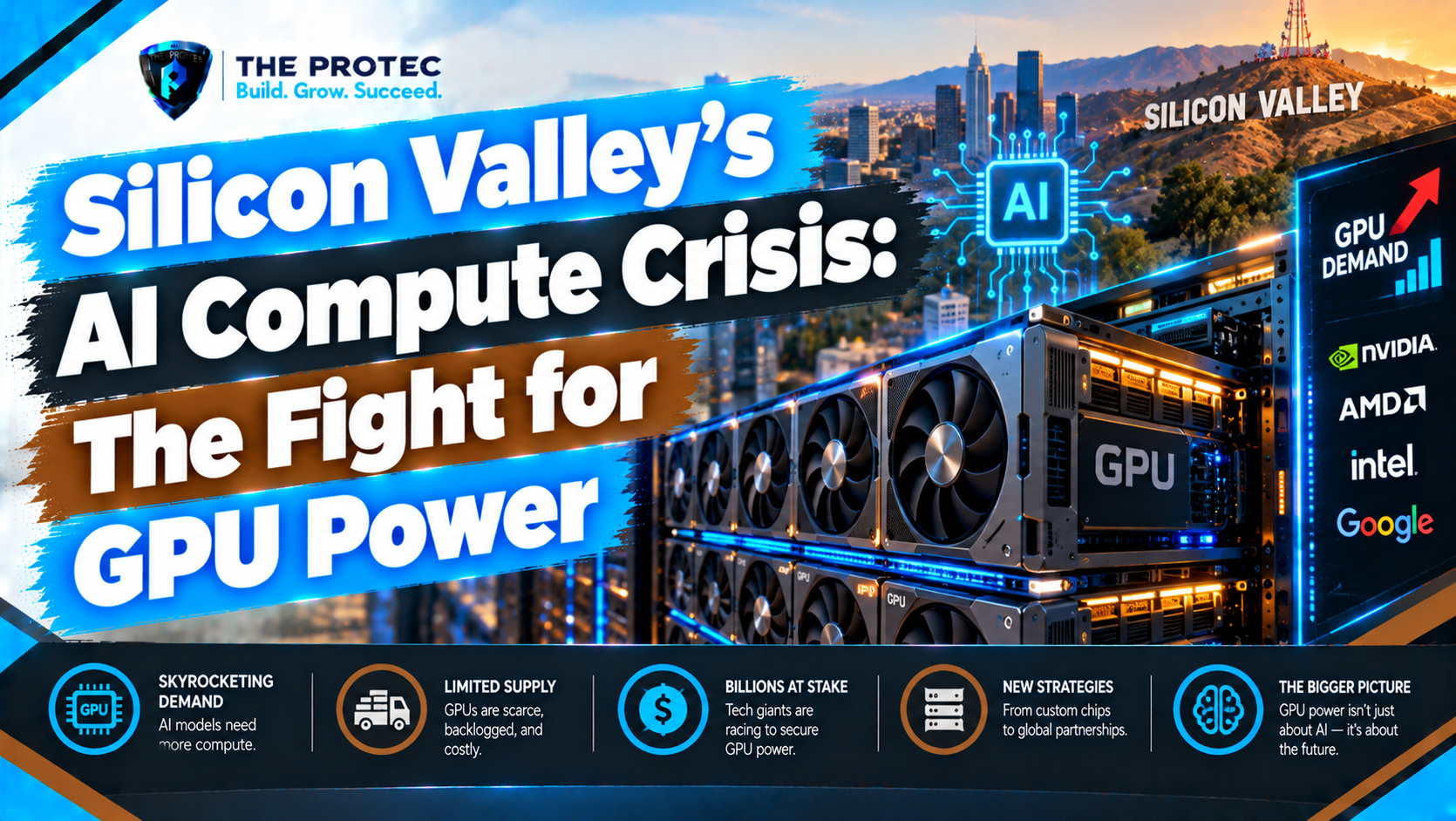
If there is one symbol of the AI infrastructure boom, it is the GPU. Graphics processing units have become the default engine for training and serving advanced AI models because they can execute highly parallel workloads far more efficiently than conventional CPUs. Demand has remained intense across cloud providers, hyperscalers, sovereign AI initiatives, research labs, and enterprises building private AI environments.
What makes GPUs so powerful from an investment perspective is not just their performance. It is their ecosystem value. A GPU sale often pulls through demand for networking gear, memory, storage, server chassis, power distribution, and cooling systems. In other words, the GPU is the anchor product, but the real opportunity extends across the entire rack.
We are also seeing a broader shift toward heterogeneous compute. Different AI workloads increasingly require different accelerators: training chips, inference accelerators, edge AI hardware, and specialized custom silicon. That means the winners may not be limited to one chip vendor. AI hardware companies that can optimize performance per watt, memory bandwidth, or cost per token are all positioned to benefit.
For businesses, this creates a new reality: access to compute is a strategic advantage. Organizations that can secure the right accelerators early can build better models, serve users faster, and iterate more quickly than competitors relying on constrained or outdated hardware.
Networking is becoming as important as compute
As AI clusters grow, networking has become one of the most critical and underappreciated layers of infrastructure. Training a large model is not just about adding more GPUs. Those GPUs must communicate efficiently, often at extreme speeds, with minimal bottlenecks. If the network cannot keep up, expensive compute sits idle.
This is why high-speed Ethernet, InfiniBand, RDMA, optical interconnects, and advanced switching are attracting so much attention. AI workloads are highly sensitive to latency and bandwidth. In distributed training, every inefficiency compounds across thousands of devices. In inference, network congestion can degrade response times and reduce user satisfaction.
AI infrastructure companies that specialize in networking are benefiting from this new demand profile. Enterprises are asking harder questions about topology, packet loss, congestion control, and cluster design. Cloud and colocation providers are redesigning their environments to support AI pods rather than traditional mixed workloads. The result is a new class of infrastructure spending that prioritizes data movement as much as raw compute.
For developers, this means AI performance is increasingly shaped by system architecture, not just model code. A brilliant model can still underperform if it is deployed on a poorly designed cluster. That is why infrastructure literacy is becoming a valuable skill for AI engineering teams.
AI servers are evolving into specialized systems
AI servers are not standard enterprise servers with a few upgraded components. They are purpose-built systems designed to maximize throughput, memory bandwidth, thermal efficiency, and reliability under sustained heavy load. The rise of large models has pushed server design into a new era.
Modern AI server configurations often include advanced GPU interconnects, high-capacity memory, redundant power systems, and support for liquid cooling or rear-door heat exchangers. Server vendors are competing on rack density, serviceability, deployment speed, and total cost of ownership. The goal is not simply to fit more compute into a box. It is to create an environment where thousands of accelerators can run continuously without overheating or creating network choke points.
This evolution has created a major opportunity for AI hardware companies that can deliver integrated solutions rather than just components. Enterprises increasingly want turnkey systems that are validated, optimized, and easier to support at scale. That preference is helping systems vendors, OEMs, and infrastructure integrators capture more value from the AI boom.
It also changes procurement behavior. Buyers are no longer purchasing servers in isolation. They are evaluating full-stack deployments that include compute, storage, networking, orchestration, and facility readiness. The vendors that can simplify that complexity are the ones winning deals.
Cooling has become a strategic advantage
One of the biggest misconceptions about AI infrastructure is that the challenge is only digital. In reality, one of the most important constraints is thermal. Dense AI systems generate extraordinary heat, and traditional air cooling is often no longer enough for the most advanced deployments.
That is why cooling technologies are becoming a major investment area. Liquid cooling, direct-to-chip cooling, immersion cooling, and hybrid thermal systems are all gaining momentum. These solutions allow operators to increase rack density, reduce energy waste, and improve long-term reliability. In some cases, cooling can determine whether a facility can support the latest generation of AI hardware at all.
The economics are compelling. Better cooling can lower downtime, reduce power overhead, and extend hardware performance under sustained load. For data center operators, this can translate directly into higher utilization and better margins. For enterprise buyers, it can mean lower operational risk and more room to scale.
As a result, cooling vendors and engineering firms are gaining a bigger role in AI procurement decisions. What used to be seen as a facilities issue is now a board-level infrastructure issue. AI infrastructure is no longer just about buying chips; it is about designing an environment where those chips can operate at their full potential.
AI data centers are being built for a new era of demand
AI data centers are fundamentally different from traditional enterprise facilities. They need more power, stronger cooling, denser networking, and faster deployment timelines. Many existing data centers were simply not built for the electrical and thermal demands of modern AI clusters.
This has triggered a wave of new construction, retrofits, and capacity expansion. Hyperscalers, colocation providers, sovereign cloud initiatives, and enterprise operators are all racing to secure land, power, and permits. In many markets, the limiting factor is not demand but infrastructure availability.
There are several reasons AI data centers are drawing so much attention:
- AI workloads require far higher rack density than conventional IT workloads
- Power availability is now a decisive site-selection factor
- Cooling design directly affects performance and uptime
- New builds can be optimized for AI from day one
- Demand is diversifying across cloud, enterprise, public sector, and research buyers
According to the U.S. Department of Energy, data centers already represent a significant and growing share of electricity use, and AI is accelerating that trend. That reality is forcing utilities, operators, and policymakers to coordinate more closely than before. You can read more about the broader energy implications of data center growth at energy.gov.
For businesses, the rise of AI data centers means capacity planning has become a competitive issue. Firms that can secure reliable infrastructure faster can launch new AI services sooner and with less risk.
Why investors are pouring money into AI infrastructure companies
There is a reason capital is flooding into AI infrastructure. The revenue model is easier to understand than many software narratives. If demand for AI compute keeps rising, then the companies providing the essential tools and facilities should continue to see strong utilization and pricing power. Unlike some software categories, infrastructure providers often benefit from tangible, recurring demand tied to real workloads.
Investors are also responding to the scale of the buildout. AI is driving a capex supercycle across semiconductor manufacturing, server assembly, networking, power systems, real estate, and cooling. That creates multiple investable layers, not just one.
Several trends are reinforcing the investment case:
- Persistent demand for training and inference capacity
- Enterprise adoption of private and hybrid AI deployments
- Need for sovereignty and regional compute availability
- Growth in AI-first startups and managed model services
- Ongoing pressure to improve performance per dollar and per watt
That said, infrastructure is not risk-free. Supply chains can tighten, power costs can rise, and technology cycles can shift. But the current balance of demand and scarcity has made AI infrastructure one of the most attractive enterprise technology segments in the market.
What this means for businesses adopting AI
For businesses, the rise of AI infrastructure companies has practical implications. AI is becoming more accessible, but it is also becoming more operationally complex. Teams that want to deploy models at scale need to think beyond the application layer and plan for compute access, latency, data governance, and lifecycle management.
Companies should expect AI infrastructure decisions to affect:
- Deployment speed and iteration cycles
- Cost per inference and total AI operating expense
- Data security and compliance posture
- Model reliability and uptime
- Ability to scale from pilot to production
Some organizations will continue relying on public cloud AI services. Others will move toward private infrastructure, especially when data sensitivity, cost control, or performance requirements become more important. In either case, infrastructure is no longer a background concern. It is part of the product strategy.
Businesses that understand the infrastructure layer can make smarter decisions about vendor selection, architecture, and long-term AI roadmaps. Those that ignore it may face higher costs, slower performance, and limited scalability.
What this means for developers and engineering teams
Developers are also being affected by the infrastructure boom. AI engineering is increasingly a systems discipline. It is not enough to know how to fine-tune a model or prompt an API. Teams need to understand distributed training, inference optimization, batch sizing, memory constraints, throughput, and observability.
In practice, this means developers are working closer to infrastructure than ever before. They are evaluating GPU availability, benchmarking model latency, managing vector databases, and optimizing pipelines for cost and performance. The more ambitious the AI product, the more important the underlying stack becomes.
That creates a strong opportunity for infrastructure-aware development practices. Teams that design with hardware constraints in mind can deliver faster and more efficient products. They can choose the right model sizes, caching strategies, deployment environments, and serving architectures to balance quality with economics.
As AI adoption matures, developers who can bridge the gap between software and infrastructure will be especially valuable. They are the ones who can turn AI from a demo into a dependable system.
The new winners are the companies that enable AI at scale
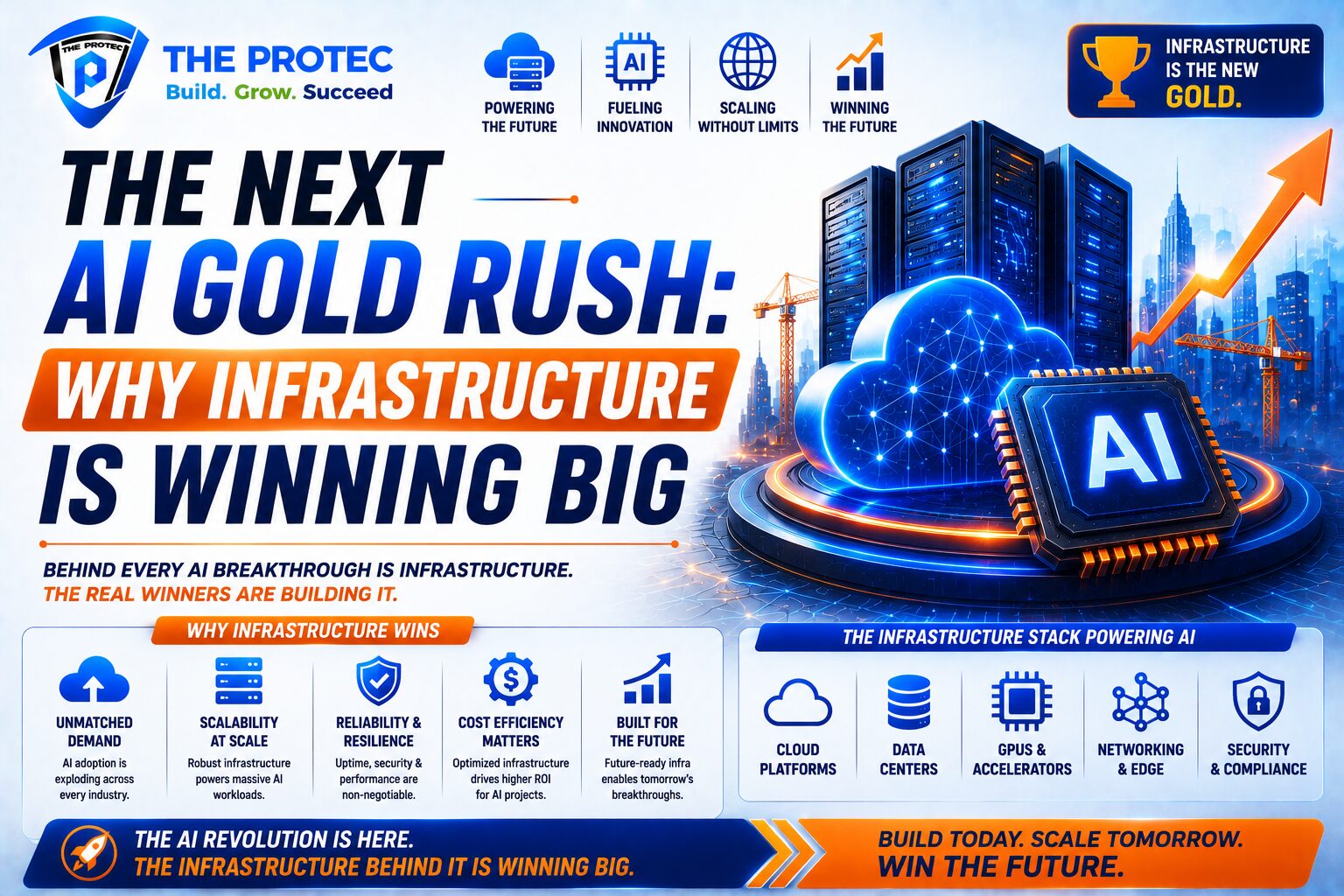
The biggest lesson from the current AI cycle is that value is spreading beyond model builders. The companies winning the most attention today are often the ones selling the picks and shovels: GPUs, AI servers, networking gear, cooling systems, power equipment, and data center capacity. They are the enablers of the entire ecosystem.
This does not mean software companies are unimportant. Far from it. But the market is learning that AI progress depends on a deep industrial stack. Without enough compute, even the best model strategy stalls. Without networking, distributed systems fail to scale. Without cooling and power, data centers cannot sustain density. Without integrated infrastructure, AI remains a promise rather than a platform.
That is why AI infrastructure companies are emerging as some of the biggest winners in the next phase of the AI economy. They are not just supporting the boom. They are making the boom possible.
FAQ
What is AI infrastructure?
AI infrastructure refers to the hardware, networking, data center capacity, cooling, storage, and software systems needed to train and run AI models at scale. It includes GPUs, AI servers, interconnects, and the facilities that support them.
Why are AI infrastructure companies attracting so much investment?
They are attracting investment because AI workloads require massive compute and specialized facilities. Demand for GPUs, networking, cooling, and data center power is growing quickly, creating strong revenue opportunities for infrastructure providers.
How are AI data centers different from traditional data centers?
AI data centers are designed for much higher power density, faster networking, and more advanced cooling. They must support large clusters of GPUs and handle sustained workloads that generate more heat and traffic than typical enterprise environments.
What should businesses consider before adopting AI at scale?
Businesses should evaluate compute availability, latency, cost, data governance, reliability, and whether their current infrastructure can support production workloads. In many cases, the infrastructure decision is just as important as the model choice.
Will AI infrastructure remain a growth area?
Yes. As AI adoption expands across enterprises, cloud platforms, and sovereign deployments, demand for compute, power, networking, and cooling is expected to stay strong. AI infrastructure remains one of the fastest-growing enterprise technology areas.
For more on enterprise technology and emerging infrastructure trends, see research and market context from Gartner.