




Why Advanced Grok Prompts Matter for Logo Design and Branding
Logo design is no longer just about creating a pretty mark. Modern brands need flexible visual systems that work across apps, social avatars, packaging, pitch decks, motion graphics, and AI-generated content. That shift has made Grok logo prompts, branding prompts, and broader AI logo design prompts far more valuable than simple one-line requests.
Grok is especially useful for fast ideation because it can respond to detailed creative direction, brand positioning, tone, audience cues, and visual constraints. When written well, a prompt can produce a logo concept that feels strategic instead of random. The difference between an average prompt and an advanced one is often the difference between a generic icon and a brand-ready identity direction.
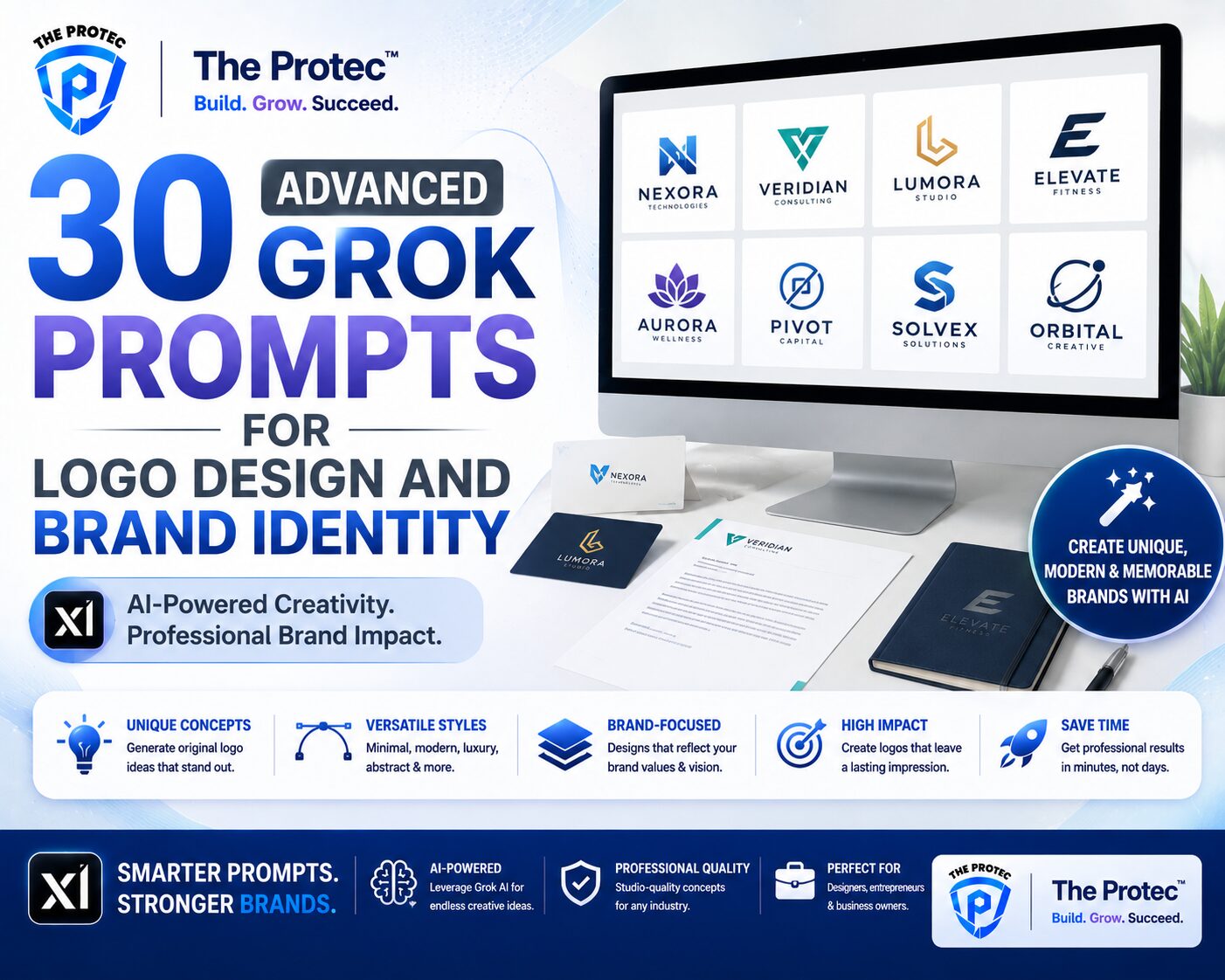
This guide expands the idea of logo prompting into a full branding workflow. You will find 30 advanced prompts for logos, wordmarks, monograms, icon systems, visual identity kits, and business branding. Each prompt is written to help you generate sharper concepts, faster iterations, and more usable creative output. If you are building a new brand, refreshing an existing one, or testing visual directions before hiring a designer, these prompts can help you move with more clarity.
For a deeper look at AI-assisted design workflows, Adobe’s overview of generative tools is a useful reference: Adobe Firefly. And for practical logo evaluation principles, the 99designs logo design guide is a helpful companion resource.
How to Write Better Grok Logo Prompts
Before jumping into the prompt library, it helps to understand what makes a logo prompt strong. The best prompts do not simply ask for a logo. They define the brand, the audience, the style, the mood, the composition, and the intended usage. In other words, they give the model enough structure to create something useful.
- Define the brand type: startup, luxury label, SaaS company, restaurant, wellness brand, or personal brand.
- Specify the logo style: wordmark, monogram, emblem, icon, abstract symbol, mascot, or combination mark.
- Set the visual tone: premium, minimal, futuristic, playful, bold, editorial, technical, organic, or heritage-inspired.
- Add design constraints: flat vector, scalable, monochrome-friendly, no mockups, no gradients, no 3D, or no stock-like symbols.
- Include brand strategy cues: target audience, market category, values, differentiators, and emotional positioning.
Good branding prompts also tell Grok what to avoid. If you want a serious B2B identity, say no cartoon style. If you want a premium beauty logo, say avoid loud colors and overly geometric iconography. Clear guardrails produce stronger creative outcomes.
30 Advanced Grok Prompts for Logo Design, Branding, and Business Identity
1. Minimal wordmark for a modern tech startup
Create a clean, minimal wordmark logo for a modern AI software startup named [Brand Name]. The identity should feel innovative, trustworthy, and highly scalable. Use custom typography with subtle letterform modifications, balanced spacing, and a premium tech aesthetic. Avoid clichés, futuristic gimmicks, and generic circuit imagery. Design as a flat vector suitable for app icons, websites, and pitch decks.
2. Luxury monogram for a fashion or lifestyle label
Design an elegant monogram logo for [Brand Name], a luxury lifestyle brand. Combine the initials into a refined, symmetrical mark with high-end editorial appeal. The design should feel timeless, understated, and fashion-forward, with strong negative space and a black-and-gold brand direction. Avoid ornamental clutter, overly decorative flourishes, and anything that looks mass-market.
3. Bold emblem for a craft brewery
Create a bold emblem logo for a craft brewery called [Brand Name]. The logo should reflect heritage, craftsmanship, and a slightly rugged personality while still feeling contemporary. Use a badge structure, strong line work, and a memorable central symbol. Keep it versatile for cans, tap handles, labels, and merchandise. Avoid overly complex illustrations and vintage styles that feel dated.
4. Abstract symbol for a fintech company
Generate an abstract logo symbol for a fintech brand focused on speed, security, and clarity. The mark should imply trust and innovation without relying on common finance icons like shields, arrows, or dollar signs. Use geometric precision, clean curves, and a distinctive silhouette. The symbol must work as a standalone app icon and remain recognizable at small sizes.
5. Premium beauty brand identity
Design a sophisticated visual identity logo for a premium skincare or cosmetics brand. The logo should feel calm, clean, and elegant, with a soft yet confident personality. Use refined typography, balanced spacing, and a subtle icon or monogram if appropriate. Avoid harsh angles, overly clinical visuals, and generic leaf motifs unless they are meaningfully reinterpreted.
6. Eco-conscious brand with a modern edge
Create a brand logo for an eco-conscious business that wants to feel contemporary rather than rustic. The design should communicate sustainability, trust, and modern product quality. Use organic forms, clean lines, and a restrained color direction. Avoid predictable tree, leaf, and globe clichés. Make it suitable for packaging, digital ads, and social media avatars.
7. High-growth SaaS identity system
Design a complete logo direction for a B2B SaaS company serving enterprise teams. The identity should feel intelligent, efficient, and credible. Create a wordmark plus a supporting icon system that can be extended into product UI, slide decks, and onboarding materials. Use a modern sans-serif base, precise proportions, and an identity that signals operational excellence.
8. Hospitality brand with elevated warmth
Create a logo for a boutique hotel or hospitality brand that feels warm, elevated, and memorable. The visual identity should balance sophistication with comfort. Use typography that feels curated, paired with a subtle emblem or symbol inspired by architecture, place, or atmosphere. Avoid generic resort imagery and overly playful shapes.
9. Fitness brand with performance energy
Design a fitness brand logo that communicates movement, discipline, and confidence. The logo should be strong and dynamic without looking aggressive or overly masculine. Use sharp but controlled geometry, energetic spacing, and a mark that can be applied across apparel, supplements, and digital coaching platforms. Avoid stock muscle imagery and cliché lightning bolts.
10. Creative agency identity with editorial polish
Generate a logo for a creative agency that wants to feel strategic, modern, and editorial. The identity should suggest taste, adaptability, and a strong point of view. Use typography-led design with a refined composition and a subtle experimental detail. Avoid loud gradients, trendy distortions, and anything that feels too gimmicky.
11. Restaurant identity with modern heritage
Create a logo for a restaurant that blends heritage and modern dining. The mark should feel established, memorable, and adaptable across menus, signage, packaging, and digital reservations. Use a balance of classic structure and contemporary typography. Avoid cliché chef hats, forks, and overly rustic textures unless they are reimagined in a sophisticated way.
12. Personal brand logo for a consultant or creator
Design a personal brand logo for a consultant, speaker, or digital creator named [Name]. The logo should feel polished, versatile, and professional without looking corporate or stiff. Use a refined monogram or initials-based wordmark with strong personal-brand appeal. Keep it clean enough for profile photos, presentation templates, and social content branding.
13. Monoline icon for a wellness brand
Create a monoline logo icon for a wellness brand focused on balance, restoration, and clarity. The design should feel calm and premium, with a smooth line structure and a symbolic form that is easy to recognize. Avoid overly spiritual clichés, busy floral patterns, and soft visuals that lack structure. The result should feel modern and calm at once.
14. Heritage logo for a family business
Generate a heritage-inspired logo for a family-run business that wants to communicate trust and longevity. The design should feel established without looking old-fashioned. Use a classic emblem or typographic treatment with modern restraint. Focus on craftsmanship, continuity, and authenticity. Avoid distressed textures and overly antique styling unless the brand specifically calls for it.
15. Startup mascot with brand credibility
Create a mascot logo for a startup that wants personality without sacrificing credibility. The mascot should be clean, simple, and expressive, designed in a way that works with modern digital branding. Avoid childish or cartoon-heavy design. The character should feel like a smart brand ambassador, suitable for product onboarding, community marketing, and merchandise.
16. Geometric identity for an architecture studio
Design a geometric logo for an architecture or interior design studio. The mark should express structure, precision, and spatial intelligence. Use clean geometry, subtle symmetry, and an elegant typographic system. Avoid literal house icons and overused building silhouettes. Make the identity feel contemporary, premium, and conceptually strong.
17. Icon-led logo for a mobile app
Create an icon-led logo for a mobile app brand. The icon should be distinct, simplified, and instantly legible at small sizes. It should feel native to product interfaces while still working as a standalone brand mark. Use strong negative space, simple geometry, and a memorable silhouette. Avoid details that collapse at favicon scale.
18. Editorial-style logo for a media brand
Generate an editorial logo for a media, newsletter, or content brand. The identity should feel credible, modern, and intelligent, with a strong typographic backbone. Include a wordmark that has personality without reducing legibility. Avoid overly playful icons and dense compositions. The final design should suit articles, thumbnails, podcast covers, and social graphics.
19. Futuristic identity without sci-fi clichés
Create a futuristic brand logo that feels advanced but not gimmicky. The identity should communicate innovation, forward motion, and technical sophistication without using obvious sci-fi tropes. Use clean forms, subtle asymmetry, and a restrained color palette. Avoid neon overload, random glitches, and overdesigned digital effects.
Design a logo for a handcrafted goods brand that feels authentic, premium, and modern. The identity should convey artisan quality without becoming rustic or messy. Use a thoughtful emblem or custom wordmark with carefully balanced imperfections. Avoid generic handmade scripts and overused stamp-style layouts unless they are meaningfully elevated.
21. B2B logistics brand with operational clarity
Create a logo for a logistics or supply chain company that needs to communicate speed, reliability, and operational clarity. The identity should feel structured and dependable, with a mark that can work across fleets, dashboards, invoices, and warehouse signage. Avoid clip-art trucks, arrows everywhere, and crowded visual metaphors.
Generate a logo for an education brand, online learning platform, or training business. The logo should feel knowledgeable, welcoming, and credible. Use a modern academic tone without looking traditional or rigid. The identity should be adaptable for course thumbnails, certificates, mobile apps, and webinar slides.
23. Wellness tech brand with human warmth
Design a wellness technology logo that feels both human and advanced. The brand should communicate care, personalization, and trust in a digital environment. Use soft geometry, thoughtful spacing, and a balanced color direction. Avoid sterile medical aesthetics and overly abstract shapes that lack emotional warmth.
24. Bold retail brand with shelf impact
Create a bold logo for a retail brand that needs strong shelf presence and immediate recognition. The logo should be confident, adaptable, and visually loud in a smart way. Use a strong typographic system with a compact icon or symbol if needed. Avoid cluttered layouts and overly delicate details that disappear in packaging systems.
Generate a minimalist logo that contains a subtle hidden meaning related to the brand name or mission. The mark should be simple on the surface but smart in concept, with a refined visual twist revealed through negative space or letterform integration. Keep it elegant, clean, and brandable. Avoid forced symbolism and overly clever tricks that hurt legibility.
26. Community brand with modern inclusivity
Design a logo for a community-focused brand that wants to feel open, modern, and inclusive. The identity should communicate belonging, connection, and positivity without becoming generic. Use welcoming shapes, balanced typography, and a visual system that can support events, content, and digital communities. Avoid heart icons unless they are thoughtfully reinterpreted.
Create a premium consulting logo that feels intelligent, strategic, and high-trust. The design should appeal to enterprise clients and leadership audiences. Use a refined wordmark, subtle monogram, or structured symbol that communicates confidence and clarity. Avoid decorative elements, overcomplicated marks, and anything that reduces executive-level credibility.
28. Product-first brand with modular identity
Generate a modular brand identity logo for a product company that needs multiple logo variations. The mark should have a core symbol, flexible lockups, and clear system logic for different use cases. Design it so it can expand into sub-brands, feature labels, and campaign visuals. Avoid one-off logos that cannot scale into a larger identity system.
29. Music or entertainment brand with personality
Create a logo for a music, entertainment, or culture brand that feels expressive and memorable. The identity should capture rhythm, energy, and attitude while remaining usable across streaming covers, social assets, and event posters. Use a strong visual hook, but keep the design disciplined enough to remain brandable over time.
30. Full identity concept for a new business launch
Design a complete business identity concept for a new brand called [Brand Name]. Include a logo, supporting symbol, color direction, typography style, and a short brand personality summary. The identity should feel launch-ready, cohesive, and scalable across digital and print touchpoints. Focus on strategic clarity, not just aesthetics. The final result should look like a real brand system, not a random AI image.
How to Get Better Results from These Branding Prompts
Advanced Grok prompts work best when you treat them like creative briefs. Add the brand name, industry, audience, and personality traits. Then refine the output by asking for specific iterations such as “make it more minimal,” “reduce visual noise,” “increase luxury appeal,” or “create three alternative directions.”
It also helps to define what success looks like. For example, a logo for a SaaS brand should be legible at 24 pixels. A beauty brand may need premium packaging compatibility. A restaurant logo may need to work in both horizontal and circular layouts. The more practical the prompt, the more useful the result.
If you are using AI-assisted design in a production workflow, think beyond the first image. Use Grok to explore the concept, then refine the best direction in a vector design tool. That approach keeps the speed of AI while preserving brand quality and control.
Prompting Tips for Logo, Brand, and Business Identity Work
- Ask for flat vector style when you want clean logo directions.
- Use brand adjectives like premium, calm, bold, trustworthy, or experimental.
- Specify use cases such as app icons, packaging, signage, or social avatars.
- Exclude weak ideas with phrases like avoid generic symbols, no mockups, or no 3D effects.
- Request multiple directions to compare wordmarks, monograms, and symbols.
For brands that need consistency across channels, the smartest AI logo design prompts are the ones that think in systems, not single images. A logo is only one part of a business identity. The real value comes from the visual language around it.
FAQ: Grok Logo Prompts and AI Branding
What makes Grok logo prompts different from basic logo prompts?
Advanced Grok logo prompts go beyond asking for a logo and instead define brand strategy, visual style, usage context, and design constraints. That leads to more relevant and polished outputs.
Can AI logo design prompts replace a professional designer?
AI logo design prompts are excellent for brainstorming, concept generation, and early exploration, but they do not fully replace a skilled designer. A professional can refine typography, spacing, brand fit, and system consistency in ways AI still struggles with.
How do I make branding prompts produce more original results?
Be specific about the brand’s audience, values, and differentiation. Avoid generic terms like “modern” or “cool” on their own. Add contrast, such as “premium but approachable” or “technical but human,” and exclude overused symbols.
Should I ask Grok for a logo or a full identity system?
If you are building a serious brand, ask for both. A logo is useful, but a full identity system gives you more flexibility across products, social media, marketing, and future expansion.
Final Thoughts
The strongest logos are not created by chance. They come from clear direction, strong constraints, and a solid understanding of what the brand needs to communicate. These 30 advanced Grok prompts are designed to help you build better concepts faster, whether you are working on a startup, a personal brand, a product launch, or a full visual identity system.
Use them as starting points, then refine them with your own brand details. The more strategic your prompts become, the more useful Grok becomes as a creative partner. In a crowded market, that speed and clarity can make a meaningful difference.