








Apple’s AI Strategy Is Entering a New Phase
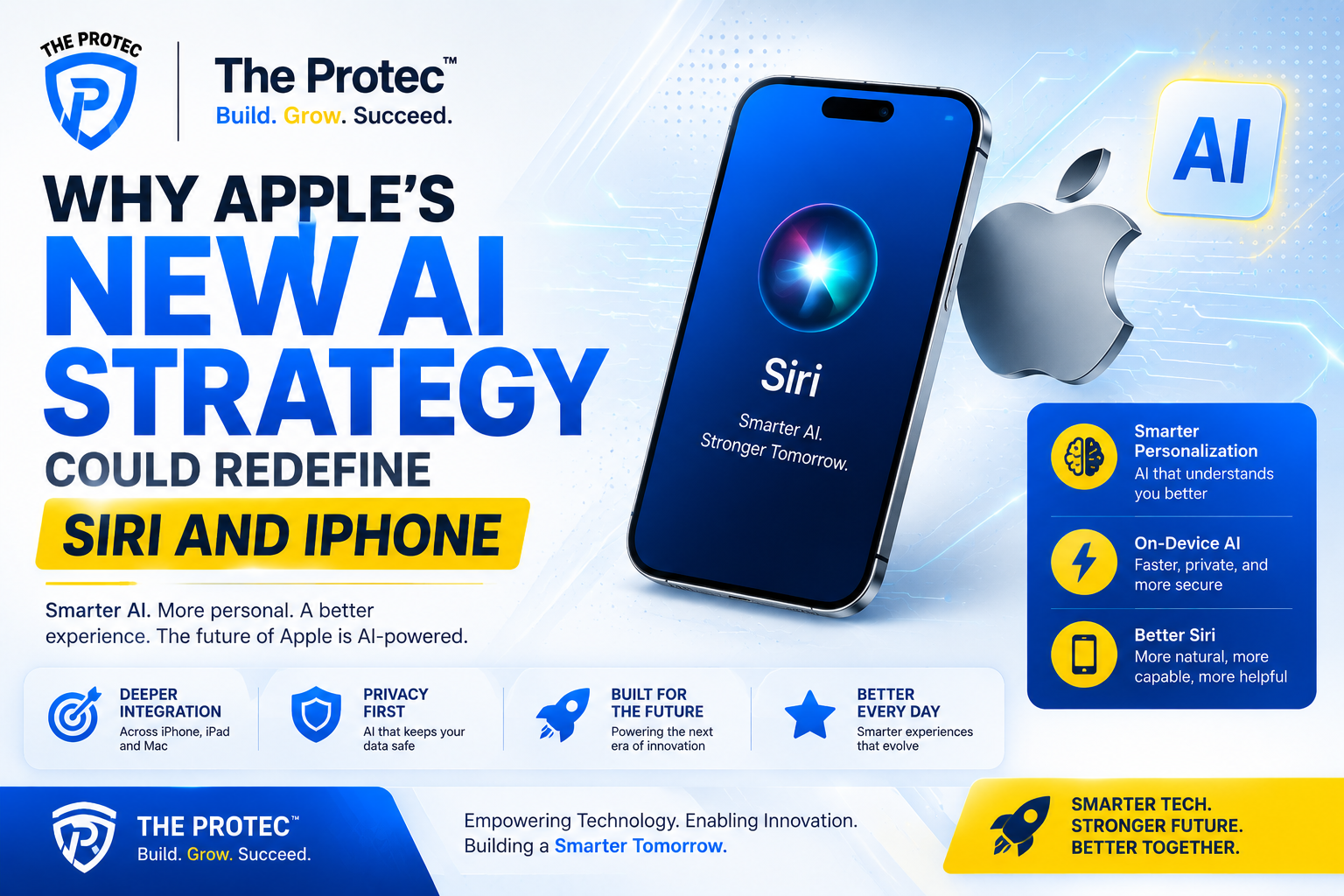
Apple has spent years taking a measured approach to artificial intelligence, preferring privacy, on-device processing, and product integration over flashy demos. That strategy is now shifting in a way that could reshape the future of Siri, Apple Intelligence, and the entire iPhone experience. The biggest reason is simple: users no longer want AI as a side feature. They want it to be the interface.
That expectation is forcing Apple to rethink how its devices understand context, manage tasks, and respond naturally. The company’s evolving Apple AI roadmap suggests a future where Siri becomes more capable, more personal, and more useful across iPhone, iPad, Mac, and even wearables. Just as important, Apple is no longer acting like it must build every model itself. Reports and industry signals around potential Gemini integration show that Apple may be willing to combine its own AI systems with external models when it improves the user experience.
This is a big deal. If Apple executes well, Siri AI could finally move from a voice command tool to a true assistant layer that sits across the operating system. That would affect how people search, write, organize, create, and automate tasks on Apple devices. It could also change how developers build apps and how users judge premium smartphones and computers. In other words, the stakes are high.
Why Apple’s AI Approach Has Always Been Different
Apple has never chased AI headlines the way some competitors have. Instead of releasing the biggest model or the most visible chatbot, Apple has focused on practical intelligence built into the OS. That philosophy has always aligned with the company’s core strengths: hardware, software, and services working as one system.
This approach has several advantages. First, it lets Apple optimize performance for its chips, especially the Neural Engine in Apple silicon. Second, it gives Apple more control over privacy, a major selling point for iPhone and Mac users. Third, it helps Apple present AI as a seamless feature rather than a separate app people have to learn.
But the downside is equally clear. While rivals raced ahead with generative AI, Apple’s assistant experience began to feel limited. Siri became reliable for basic tasks, but less impressive when compared with more flexible AI systems. The gap was not only about intelligence; it was about perception. Users started to expect AI that could reason, summarize, compose, and connect context across apps. Apple had to respond.
Apple Intelligence: The Foundation for the Next Siri
Apple Intelligence is Apple’s answer to the new AI era. It is not just a bundle of features. It is the framework that will likely support the next generation of Siri AI and future device intelligence across the ecosystem.
At its core, Apple Intelligence is designed to blend on-device processing with secure cloud-based assistance when needed. That hybrid model matters because it allows Apple to keep sensitive tasks local while still enabling more advanced AI behavior. For users, that can mean smarter writing tools, better notification summaries, more contextual actions, and deeper understanding of what is happening on screen.
The important point is that Apple is building AI where it matters most: into the operating system. Rather than making people open a separate assistant app, Apple wants intelligence to appear inside the tools they already use. Drafting messages, editing documents, controlling device settings, managing calendar events, and finding information should all become easier without forcing users into a new interface.
For Siri, this foundation is essential. Siri has long struggled because it was built for command-and-response tasks, not for broader language understanding. Apple Intelligence gives Apple a chance to rebuild Siri around richer context, improved intent recognition, and better app awareness. That could finally make Siri feel like a true assistant instead of a voice remote.
Why Gemini Integration Could Matter So Much
One of the most interesting developments in Apple’s AI strategy is the possibility of Gemini integration. If Apple chooses to integrate Google’s Gemini models in some form, that would signal a very pragmatic move: Apple may use the best available model for certain tasks while still preserving its own user experience and privacy controls.
This would not necessarily mean Apple is giving up on its own AI. Instead, it could mean Apple is building an AI stack that is more modular than many expected. Apple’s own models could handle on-device tasks, sensitive requests, and system-level intelligence. A partner model like Gemini could potentially be used for more complex reasoning, broader knowledge queries, or specialized language tasks.
That kind of hybrid strategy makes sense for several reasons:
- It reduces the pressure on Apple to match every frontier model capability immediately.
- It allows Apple to improve Siri faster without compromising its product philosophy.
- It gives users a more capable assistant experience while Apple continues to refine its own models.
- It keeps Apple competitive in a market where AI performance is becoming a major hardware differentiator.
If Gemini is integrated carefully, Apple could deliver a Siri that is both more powerful and more trustworthy. The challenge will be making the transition invisible to users. Apple’s best products do not feel stitched together; they feel inevitable. The company will need the same discipline here.
How Siri AI Could Change on iPhone
The iPhone is where Apple’s AI strategy will matter most. For years, Siri has been useful for quick actions, but limited when requests become nuanced. A smarter Siri AI could change that in several ways.
First, Siri could become far better at understanding intent. Instead of relying on rigid phrasing, it could interpret what a user actually means. That would make everyday interactions much smoother. For example, a request like “send the photos from dinner to mom” could involve identifying the right images, opening the correct messaging app, and composing the message with minimal back-and-forth.
Second, Siri could become more context aware. If the assistant can understand what is on the screen, what app is open, and what the user is likely trying to do, it can offer far more relevant help. This kind of on-screen awareness is one of the clearest signs that Apple Intelligence is designed to move beyond simple voice commands.
Third, Siri could become more action-oriented. The real promise of AI on iPhone is not just answering questions. It is completing tasks across apps. That means editing a note, adjusting a calendar event, finding a file, or generating a summary based on multiple data sources. A Siri that can do that would be far more valuable than the current version.
Fourth, AI could improve personalization without sacrificing privacy. Apple’s challenge is to make Siri feel aware of the user’s preferences, habits, and routines while keeping data protected. If Apple can strike that balance, it will have something many competitors still struggle to achieve.
What Apple AI Means for the Future of Mac
Apple’s AI strategy is not only about iPhone. The Mac stands to benefit significantly as well, especially for professionals, creators, and people who rely on productivity workflows.
On Mac, Apple Intelligence could become a powerful layer across writing, research, file management, and multitasking. Imagine asking your Mac to summarize a long PDF, rewrite a client email in a more concise tone, organize project files, or pull together information from different apps based on a single instruction. That is the kind of utility users increasingly expect from modern computing.
Mac users may also benefit from deeper system-level automation. Apple has long offered shortcuts and workflow tools, but AI could make them more accessible. Instead of building complex routines manually, users might describe what they want and let the system generate the workflow. That lowers the barrier to productivity and opens advanced features to more people.
For creative professionals, Apple AI could also improve search, asset management, and editing workflows. A smarter system could find specific clips, identify themes in notes, or help organize work faster. Combined with Apple silicon performance, this could make Mac an especially strong platform for local AI-assisted productivity.
Why Privacy Still Defines Apple’s AI Future
Apple’s biggest competitive advantage in AI may not be raw model size. It may be trust. Privacy has become one of the main reasons many users stay within the Apple ecosystem, and Apple knows it cannot undermine that advantage while expanding Siri and Apple Intelligence.
This is why Apple’s emphasis on on-device intelligence matters so much. When tasks can be processed locally, users gain speed and privacy at the same time. When cloud assistance is needed, Apple can limit what is sent and how it is handled. That design philosophy is a major differentiator in a market where many AI tools depend heavily on external servers and broad data access.
Apple also tends to introduce new capabilities with strong user controls. That means the next generation of Siri is likely to be selective, transparent, and configurable rather than always-on in an intrusive way. For many users, that will be a feature, not a limitation. Apple is betting that people want useful AI, but not at the cost of control.
What This Means for Future iPhones and Apple Silicon
If Apple’s AI strategy keeps evolving in this direction, future iPhones and Macs will likely be judged not just on speed and battery life, but on how intelligently they assist users. That changes the hardware conversation.
Apple silicon will remain central because AI performance depends heavily on dedicated neural processing. Future chips will likely continue improving the Neural Engine, memory architecture, and efficiency of local model execution. That means the device itself becomes part of the AI strategy, not just the container for software.
For iPhone buyers, this could influence upgrade decisions more than ever. If a newer device can run more advanced Apple Intelligence features locally, respond faster, or support a better Siri experience, it becomes a stronger reason to upgrade. On Mac, chip generations may increasingly be marketed around AI capability in addition to CPU and GPU gains.
There is also a broader platform effect. As Apple pushes deeper AI into the operating system, apps may need to adapt to a world where the system itself can summarize, suggest, and act. That could lead to new app design patterns where developers build around AI-assisted workflows rather than traditional menus and taps.
Challenges Apple Still Needs to Solve
Apple’s strategy is promising, but it is not guaranteed to succeed. The company faces several important challenges.
- Expectation management: Users now expect dramatic AI leaps. Apple must deliver meaningful improvements, not just incremental ones.
- Siri modernization: Rebuilding Siri into a truly conversational assistant is a difficult technical and product challenge.
- Model competitiveness: Apple must keep pace with fast-moving AI leaders even if it relies partly on partners like Gemini.
- Consistency across devices: Apple Intelligence has to feel coherent on iPhone, iPad, and Mac, not fragmented.
- Trust and reliability: AI mistakes can quickly damage confidence, especially when the assistant is supposed to act on behalf of the user.
Apple has the resources to solve these problems, but it will need to move carefully. The company’s strength has always been turning complex technology into something ordinary users can adopt easily. That same skill will determine whether Siri’s next chapter succeeds.
Why This Could Be the Most Important Apple AI Shift Yet
The reason Apple’s new AI strategy matters so much is that it is not just about features. It is about redefining the role of the device itself. If Siri becomes more capable, if Apple Intelligence becomes deeply embedded in daily workflows, and if Gemini integration helps fill capability gaps, Apple could deliver the most practical AI experience in consumer tech.
That would be a major change from the current state of mobile computing. Instead of users adapting to apps and menus, the device would adapt to the user’s intent. Instead of asking Siri to perform isolated tasks, people could rely on a system that understands context and acts across apps. Instead of AI feeling like a novelty, it would become part of the operating system’s core value.
Apple has often changed markets by doing less than competitors in the short term, then doing it better in the long term. The company may be following that pattern again. If so, the next iPhone and Mac generations could be remembered not for a single flashy feature, but for quietly making AI useful enough to become indispensable.
FAQ
Will Apple Intelligence replace Siri?
No. Apple Intelligence is more likely to power a new generation of Siri rather than replace it. The goal appears to be making Siri more context aware, more useful, and more capable across apps and devices.
Why is Gemini integration important for Apple?
Gemini integration could help Apple improve Siri and broader Apple AI capabilities faster. It may allow Apple to combine its own privacy-focused systems with a powerful external model for more advanced tasks.
How will Apple AI affect future iPhones?
Future iPhones may offer smarter on-device assistance, better task automation, stronger personalization, and a more capable Siri. AI performance could become a major factor in upgrade decisions.
Will Apple keep user data private with AI features?
Apple is likely to continue emphasizing privacy through on-device processing and tightly controlled cloud use. That privacy-first approach remains one of Apple’s strongest differentiators in AI.
Could Macs benefit from Apple’s new AI strategy too?
Yes. Macs could gain stronger productivity tools, better file and document handling, improved automation, and more natural ways to work across apps using Apple Intelligence.
Final Takeaway
Apple’s AI strategy is becoming more ambitious, more flexible, and more important to the future of its devices. With Apple Intelligence as the foundation, Siri AI as the user-facing layer, and possible Gemini integration expanding what is possible, Apple is positioning its ecosystem for a major shift. If the company gets this right, the next generation of iPhone and Mac experiences could feel less like using software and more like working with a genuinely intelligent system.
That is the promise Apple has been chasing for years. Now, it finally looks within reach.
External sources: Apple Intelligence overview | Google Gemini updates