





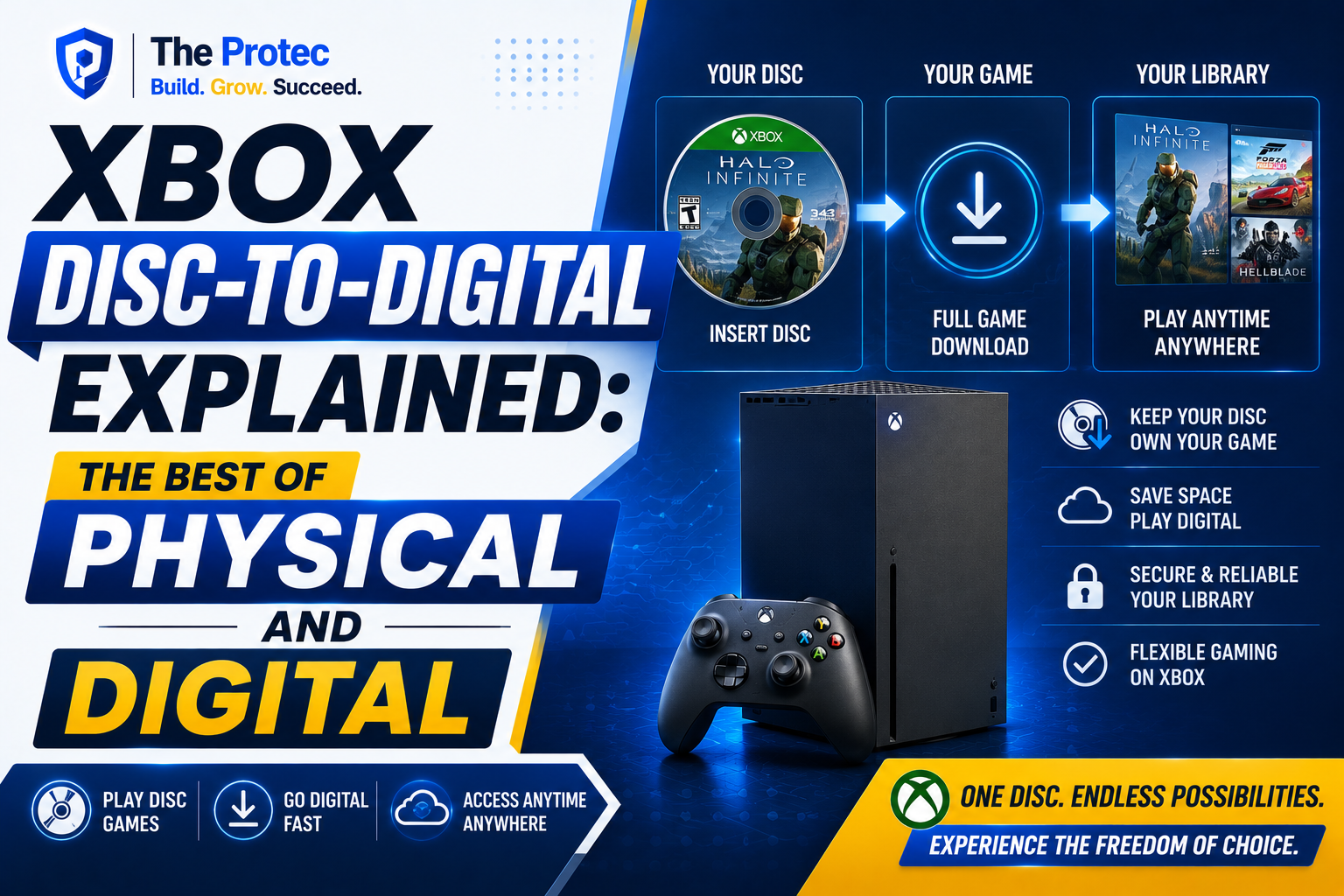
Physical Xbox games offer something digital purchases cannot fully replicate: a disc that can be collected, displayed, shared, or resold. Digital games, however, are easier to launch and better suited to a future built around disc-free consoles, handheld devices, PCs, and cloud streaming. An Xbox disc-to-digital system could connect those two models instead of forcing players to choose between them.
The idea is straightforward: verify that a player owns an eligible Xbox disc, then provide an associated digital entitlement that can be used on supported Xbox devices and services. For Xbox physical game owners, that could mean fewer reasons to repurchase games simply because a new device lacks an optical drive.
There is an important caveat. Players should not assume that every physical game can already be permanently converted. A universal consumer program depends on Microsoft, publishers, licensing agreements, and a reliable process for preventing one disc from generating multiple active copies. Patents, technical concepts, and ecosystem capabilities can show how Xbox disc-to-digital might work, but they do not guarantee eligibility for a particular game.
What Is Xbox Disc-to-Digital?
Xbox disc-to-digital refers to a system that verifies ownership of a physical Xbox game and grants some form of digital access. Depending on the implementation, that access could be permanent, limited to a particular console, or periodically revalidated using the original disc.
Today, a physical game disc generally acts as both installation media and proof of ownership. Even when an Xbox console downloads most of a game from the internet, the disc normally must remain in the drive when the game starts. Installing a title does not create a standalone digital license.
An Xbox digital entitlement changes that relationship. The entitlement is an account-level or device-level authorization telling Xbox services that the user has permission to launch the game without relying on a conventional digital purchase. A disc conversion system would need to create that authorization only after confirming the disc is authentic and eligible.
How Xbox Physical Games to Digital Conversion Could Work
A practical conversion process would likely involve several stages:
- Disc verification: A supported Xbox console, external optical drive, retailer, or verification device reads the original game disc.
- Eligibility check: Xbox checks the title, edition, region, publisher participation, account status, and backward-compatibility support.
- Ownership registration: The game is associated with the player’s Microsoft account or designated Xbox console.
- Digital entitlement delivery: The user downloads or launches the supported digital version through the Xbox network.
- Disc handling: The original disc is retained for future checks, marked as converted, surrendered, or otherwise prevented from creating duplicate licenses.
The final step is the hardest. Most retail game discs were not designed as unique, individually trackable license keys. If a permanent digital copy were granted while the disc remained fully usable and resellable, multiple people could claim ownership from one purchase. Any real Xbox disc-to-digital games program must solve that licensing problem.
Which Physical Xbox Games Could Be Eligible?
Eligibility would almost certainly be determined title by title rather than applying to the entire Xbox catalog. The most likely candidates are Xbox One and Xbox Series X games that already have matching digital versions in the Microsoft Store. Titles using Smart Delivery could also be easier to support because Xbox already identifies and installs the appropriate console version.
Several factors could exclude a game:
- The publisher does not participate in the conversion program.
- The physical and digital editions contain different licensing rights or content.
- The game has been delisted because music, sports, vehicle, or character licenses expired.
- The disc is a promotional, rental, trial, import, or otherwise restricted copy.
- The title requires multiple discs or includes one-time download codes.
- The game is not supported on the target Xbox device.
Backward-compatible Xbox 360 and original Xbox games present additional complexity. Many already use the inserted disc to authorize a downloaded compatibility build, but transforming that verification into a permanent account entitlement would require separate technical and publishing approval.
What Happens to the Original Xbox Disc?
This question determines whether Xbox physical game owners truly receive the best of both worlds. There are three realistic models, each with a different trade-off.
Periodic Disc Verification
The player keeps the disc but must insert it into a compatible console or verification device occasionally. The digital entitlement remains convenient between checks, but the disc still functions as the underlying license. This model would reduce daily disc swapping without creating an unrestricted second copy.
Permanent Conversion With Disc Surrender
A participating retailer or mail-in service could collect the disc and issue a permanent digital license. This is easier to control, although collectors may dislike losing the case or playable media. A retailer might allow the owner to keep the case while retaining or disabling the disc.
Transferable or Revocable Entitlement
A more ambitious system could revoke the digital entitlement if ownership of the physical copy is transferred. That would preserve resale, but it requires a secure method of identifying individual discs or recording verified transactions. Existing discs may not contain the unique identifiers needed for a seamless version of this model.
Microsoft would need to state the applicable method clearly before conversion. A user should never surrender, sell, or damage a disc unless the terms confirm that the resulting entitlement is permanent.
How Xbox Play Anywhere Could Expand the Value
The most compelling version of Xbox disc-to-digital would extend beyond disc-free consoles. If an eligible conversion included Xbox Play Anywhere rights, a physical console purchase could potentially unlock supported versions on Xbox and Windows PC, often with shared saves, achievements, and progression.
That benefit would be significant for players moving between a living-room console, gaming laptop, desktop PC, or compatible handheld. A boxed Xbox game would no longer be useful only on hardware with a disc drive.
However, Xbox Play Anywhere is not automatically included with every Xbox game. Publishers choose whether to support it, and the program usually applies to specifically designated digital purchases. Converting a console disc would not inherently create a PC license. Microsoft and the publisher would need to include that right in the digital entitlement.
Edition matching would matter as well. A standard-edition disc should not be expected to unlock a deluxe PC release or downloadable content that was never included with the physical copy. The store listing would need to identify exactly which console and PC versions become available.
Xbox Cloud Gaming Could Make Discs Portable
Cloud access could provide an equally important benefit. Xbox has been expanding the concept of streaming selected games a player owns, rather than limiting cloud play exclusively to a rotating subscription catalog. A verified entitlement could allow an eligible physical purchase to participate in that model.
Through Xbox Cloud Gaming, a converted title might be playable on supported phones, tablets, browsers, televisions, consoles, or handheld devices without installing the game locally. The physical purchase would effectively become portable even though the disc never leaves the shelf.
Cloud access would still have conditions. The game must be approved for streaming, available in the user’s region, and supported by Xbox’s cloud infrastructure. A qualifying subscription may also be required. Streaming rights can differ from ordinary console distribution rights, so ownership of a digital entitlement does not guarantee cloud availability.
Important Limitations of Xbox Disc-to-Digital Games
The convenience is appealing, but a conversion system would not erase the differences between physical and digital ownership.
- Publisher participation: Microsoft cannot unilaterally expand every third-party game’s license across PC and cloud platforms.
- Account dependence: A converted entitlement may be tied to one Microsoft account, making account security and recovery essential.
- Resale restrictions: Permanent conversion could remove the disc’s trade-in or resale value.
- Internet requirements: Verification, downloads, license checks, and cloud streaming require connectivity.
- Edition mismatches: Bonus codes, expansions, and collector’s-edition extras may be excluded.
- Delisted games: Technical compatibility does not override expired contracts or unavailable digital packages.
- Regional rules: A disc purchased in one market may not qualify for conversion in another.
- Service availability: Cloud features and subscriptions can change independently of the underlying game license.
Consumers would also need to distinguish ownership from access. A subscription-based benefit that works only while a membership remains active is not equivalent to receiving a permanent digital copy. Clear terms should explain whether the entitlement survives subscription cancellation and whether offline console play is supported.
Why This Could Change How Physical Xbox Games Are Used
Xbox hardware is increasingly diverse. The ecosystem includes consoles with optical drives, all-digital models, Windows PCs, mobile devices, smart televisions, handheld-style hardware, and cloud-connected screens. Physical libraries do not naturally move across those categories.
Xbox disc-to-digital could protect the relevance of boxed games while giving Microsoft more freedom to build devices without internal disc drives. Instead of asking loyal customers to buy the same game again, Xbox could recognize an existing purchase and carry its value into a more flexible ecosystem.
Publishers could benefit too. A conversion fee, retailer partnership, or upgrade offer could create revenue from older physical copies while reconnecting players with downloadable content and online communities. Retailers could remain involved through verification, trade-in, and collector-focused services rather than being removed from the transaction.
Most importantly, the feature could turn physical ownership into an entry point rather than a hardware limitation. The disc would establish the original purchase; the entitlement would make that purchase usable wherever Xbox supports the game.
What Players Should Check Before Converting a Disc
- Confirm that the offer comes from Xbox or an authorized partner.
- Check whether the digital entitlement is permanent or temporary.
- Verify which edition, platforms, and regions are included.
- Look for separate Xbox Play Anywhere and cloud eligibility.
- Understand whether a subscription is required.
- Find out whether the original disc must be retained or surrendered.
- Confirm what happens if the disc is sold, lost, or damaged.
Until a conversion option is explicitly offered for a title, owners should keep their discs. Installing a physical game, registering it to an account, or earning achievements does not by itself create a digital license.
Frequently Asked Questions
Can I convert any Xbox disc into a digital game?
No. A conversion requires an official Xbox or publisher-supported process. Eligibility may depend on the title, edition, region, platform, and licensing status. Simply inserting or installing a disc does not grant permanent digital ownership.
Would I still need the disc after conversion?
That depends on the conversion model. A temporary entitlement may require periodic disc verification, while a permanent program could require the disc to be surrendered or deactivated. The terms should explain this before the player accepts the conversion.
Does an Xbox digital entitlement include the PC version?
Not automatically. PC access generally requires the title to support Xbox Play Anywhere or another cross-platform license. A console-only physical game could remain console-only after conversion unless the publisher grants additional rights.
Could converted physical games work with Xbox Cloud Gaming?
Potentially, but only when the converted title is approved for cloud streaming. Regional availability, supported devices, licensing, network quality, and subscription requirements may still apply.
Can I sell the disc after receiving a digital entitlement?
Players should not assume so. Selling a disc while retaining a permanent digital copy could violate the conversion terms or cause the entitlement to be revoked. A legitimate system must prevent one physical copy from producing multiple independent licenses.
Would downloadable content transfer with the game?
Only content included in the verified edition or already owned digitally should be expected to transfer. Used discs often do not include redeemed one-time codes, and expansions may remain separate purchases.
The Bottom Line
Xbox disc-to-digital has the potential to preserve the collectability and resale heritage of physical media while adding the convenience expected from modern digital libraries. The strongest version would recognize eligible discs, issue clear digital entitlements, and extend supported games to disc-free consoles, Xbox Play Anywhere devices, and Xbox Cloud Gaming.
The details will decide whether it is genuinely consumer-friendly. Eligibility, disc handling, resale rights, subscription requirements, and platform access must all be transparent. If Microsoft and publishers solve those issues, physical Xbox games could become more useful—not less—as gaming moves beyond the traditional console.