







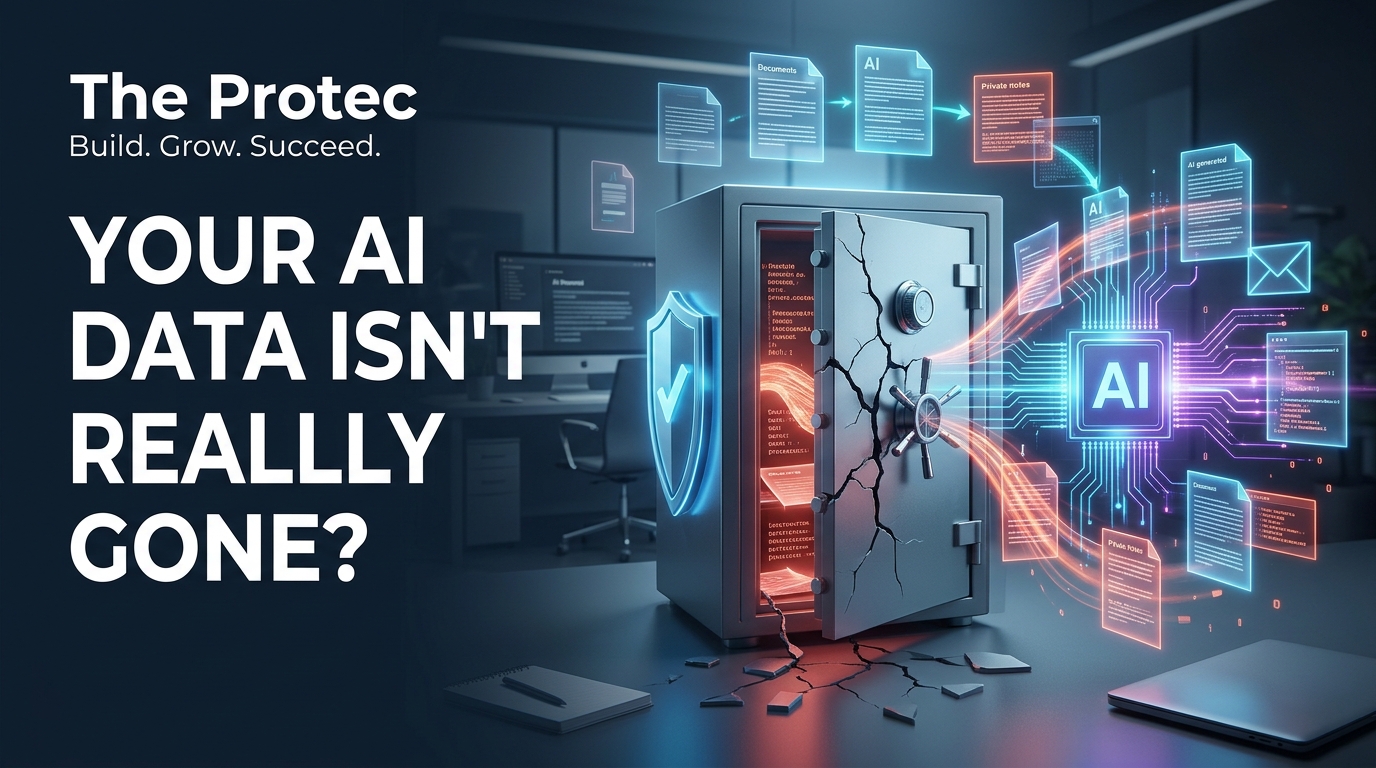
The Notion AI data breach did not begin inside Notion’s own systems. It emerged from an October security incident at Fireworks AI, an infrastructure provider used for a limited Notion AI feature. The incident matters because some Notion AI chat transcripts were exposed—and because data that Notion expected to be covered by contractual zero data retention had, in fact, been retained.
As of November 2026, Notion says fewer than 1% of its workspaces were affected. The exposure was limited to transcripts associated with AI Insights, not every Notion AI conversation, and it did not include AI Meeting Notes. Even with that limited scope, the event offers a consequential lesson for enterprise AI buyers: a zero-retention promise is only as reliable as the technical controls, product workflows and subcontractors behind it.
What happened in the Fireworks AI breach?
According to the companies’ incident disclosures, attackers gained unauthorized access to Fireworks AI development infrastructure through an environment hosted by a third-party cloud provider. This made the event both a third-party data breach and an example of cloud supply chain risk: one provider’s infrastructure exposed information belonging to customers farther down the service chain.
Fireworks reported that the intruders accessed several categories of information within the affected development environment. These included some customer information, billing-related data, datasets and incomplete model weights. Those categories related to Fireworks and its customers as a whole; they should not be interpreted as a list of data taken from individual Notion users. In particular, billing information mentioned in the Fireworks incident does not mean that Notion customers’ payment card details were exposed.
Incomplete model weights are also different from customer prompts. They are partial artifacts associated with machine-learning models and may not be sufficient to reconstruct a usable model. Their presence nevertheless illustrates how AI development environments can contain a mixture of operational data, customer content, credentials, training assets and proprietary intellectual property.
Fireworks published an October security incident update describing its investigation and remediation. The disclosed pathway underscores why development infrastructure requires controls comparable to production systems. Development environments can still hold valuable datasets, configuration details, secrets and retained customer content.
What Notion customer information was exposed?
Notion confirmed that the affected Fireworks systems contained chat transcripts generated through its AI Insights feature. These Notion AI chat transcripts included messages entered by users and responses produced by the AI. If a user pasted confidential material into an Insights conversation, that material could therefore have appeared in an affected transcript.
Potentially sensitive content might include internal strategy, draft contracts, customer records, source code, financial projections, employee information or other material copied from a workspace. The sensitivity of each transcript depends on what its user submitted; the incident does not establish that every exposed conversation contained confidential information.
Notion also stated that most affected transcripts did not contain metadata directly identifying a user, workspace or company. That reduces immediate attribution risk, but it does not automatically make the text anonymous. A conversation can identify an organization indirectly through project names, email addresses, customer details, document excerpts or other context included in the messages.
The exposure was limited, not universal
Several boundaries are important when assessing the incident:
- Fewer than 1% of Notion workspaces were affected, according to Notion.
- The exposed records were associated with AI Insights rather than all Notion AI usage.
- Notion said AI Meeting Notes were not affected.
- Most transcripts lacked metadata directly connecting them to a specific user, workspace or company.
- The incident does not show that all Fireworks inference traffic was accessed or retained.
Calling the event the Notion AI data breach is useful shorthand for search and discussion, but the underlying compromise occurred at a third-party AI vendor. That distinction is important for understanding both the attack and the controls needed to prevent similar incidents.
The central problem: expected zero data retention did not hold
Notion said its agreement with Fireworks required zero data retention. During the investigation, however, Notion discovered that information processed for Insights had been retained. This discrepancy transforms the incident from a conventional vendor compromise into a broader warning about AI data retention policies.
Zero data retention generally means a provider does not persist customer prompts or model responses after completing an inference request, except for narrowly defined transient processing. The precise meaning depends on the contract and technical implementation. It may not automatically cover every service, endpoint, log, analytics pipeline or optional feature sold by the same vendor.
A standard real-time inference endpoint, for example, may process a prompt in memory and discard it after returning an answer. A product feature layered on top of that endpoint might separately store the request and response for evaluation, troubleshooting, analytics, abuse detection, asynchronous processing or product improvement. From the user’s perspective, both interactions look like AI chat. From an architectural and contractual perspective, they may follow very different retention paths.
That appears to be the critical concern here: Notion expected Fireworks not to retain the relevant data, yet records used by Insights remained available in an affected environment. The incident demonstrates why contractual language must be matched with evidence about how each product feature actually handles data.
Why enterprise AI privacy reviews must cover the full workflow
An organization cannot evaluate AI chat privacy by reviewing only the application visible to employees. A single prompt may pass through an application provider, API gateway, model host, observability platform, cloud provider, safety filter and analytics service. Copies may also enter queues, backups or debugging systems.
Enterprise reviews should map retention across at least the following areas:
- Real-time inference: Determine whether prompts and outputs are written to logs, caches or abuse-monitoring systems.
- Batch and asynchronous inference: Jobs may remain in object storage or queues longer than synchronous requests.
- Analytics and evaluation: Features measuring answer quality can preserve full prompts and responses even when the core model endpoint does not.
- Model providers: Establish whether an AI platform operates the model itself or forwards data to another provider.
- Training and improvement: Confirm whether customer content is excluded from model training, fine-tuning, human review and evaluation datasets.
- Subcontractors and processors: Identify cloud hosts, logging vendors, support platforms and other entities that can access or retain content.
- Backups and deletion: Verify how quickly deleted records disappear from replicas, snapshots and disaster-recovery systems.
This is the practical core of LLM infrastructure security. A policy that applies only to one inference endpoint is not equivalent to zero retention across a complete product. Procurement teams should require vendors to define the scope, exceptions, deletion timelines and technical enforcement of every retention claim.
How Notion responded
Notion’s security incident notice says the company disconnected Fireworks from its systems after learning of the issue. It also worked to delete Notion data held by the vendor and disabled Insights while investigating the incident.
The company notified affected customers and made a Security incident review process available for organizations seeking additional information. These steps helped contain further exposure and gave customers a basis for their own legal, compliance and incident-response assessments.
For affected enterprises, notification should trigger more than a password reset. The exposed material consisted of conversation content, not necessarily account credentials. Organizations should identify employees who used Insights, determine what information may have been submitted and consider whether any referenced secrets, customer records or regulated data require additional action.
Enterprise checklist for AI vendor security
- Strengthen data-processing agreements. Define prompts, responses, embeddings, uploaded files and derived data as protected customer content. Specify permitted processing, retention limits, deletion deadlines, breach-notification obligations and subcontractor requirements.
- Verify retention technically. Ask for architecture diagrams, data-flow maps and evidence that retention controls operate as described. Confirm whether zero data retention covers analytics, batch jobs, support logs, abuse monitoring, backups and product-specific features.
- Audit vendors and critical subcontractors. Review independent assurance reports, penetration-test summaries and cloud security practices. Contractual audit rights are especially important when a vendor depends on additional model hosts or infrastructure providers.
- Improve secrets management. Development credentials should be short-lived, scoped to the minimum necessary permissions and stored in a managed secrets system. Rotate exposed credentials quickly and monitor their use across cloud environments.
- Minimize submitted data. Prevent employees from pasting passwords, API keys, regulated records or unnecessary personal information into AI tools. Use redaction, classification controls and approved workflows for sensitive tasks.
- Segment development infrastructure. Treat development systems as sensitive environments. Separate customer content from model artifacts, restrict administrative access and prevent one compromised account from reaching unrelated datasets.
- Prepare an AI-specific incident plan. Maintain an inventory of approved tools, features, vendors and subprocessors. Define how security teams will trace prompt exposure, notify data owners, rotate secrets and evaluate regulatory duties.
- Reassess features when they change. A previously approved vendor may add analytics, agents, memory or evaluation tools with different retention behavior. Security approval should attach to a defined workflow, not merely a company name.
What this incident changes for AI data privacy
The most important lesson is not that enterprises must stop using hosted AI. It is that AI vendor security requires continuous verification. Contract language remains essential, but it cannot replace product-level data mapping, technical testing and oversight of the cloud supply chain.
Zero data retention should be treated as a testable control rather than a marketing label. Buyers need to know what is retained, where it is stored, which feature created it, who can access it and when every copy is deleted. The Fireworks incident shows how a narrow implementation gap can become a customer-facing privacy event when an upstream environment is compromised.
Frequently asked questions
Were all Notion AI conversations exposed?
No. Notion said fewer than 1% of its workspaces were affected, and the exposed transcripts were associated with AI Insights. This was not a blanket exposure of all Notion AI conversations. AI Meeting Notes were not affected.
What did the exposed Notion AI transcripts contain?
The transcripts contained user-entered messages and AI-generated responses. They could include sensitive information pasted into an Insights conversation. Most lacked metadata directly identifying a user, workspace or company, although the text itself could still contain identifying context.
Did Fireworks expose Notion customers’ billing information?
Fireworks reported billing-related data among the categories accessed in its environment, but that does not mean Notion users’ payment information was exposed. The Notion-specific disclosure focused on AI Insights chat transcripts.
Why was data stored if zero data retention was required?
Notion said it expected contractual zero data retention but later learned that data used for Insights had been retained. The incident highlights a common distinction between non-retaining inference endpoints and surrounding features that may store prompts and responses for analytics or other processing.
What should affected organizations do now?
They should review Notion’s notification, identify relevant Insights use, assess whether users entered confidential or regulated information, rotate any secrets that may have appeared in chats and document decisions through their incident-response and privacy processes.